Showing posts with label Reincarnation. Show all posts

Wednesday, November 06, 2024

Some of those alive today will never truly pass...


Some of those alive today will never truly pass...

I live in the moment. I don’t experience yesterday’s me, or the me of ten seconds ago. Those people are only memories in the here-and-now: partial and selective.

The me of tomorrow is speculative.

I feel myself a sliver of consciousness in this moment, surrounded by a sterile past and future; a present-spark in the wasteland of non-being in the rest of eternity.

I don’t worry about it.

Let me paraphrase: that intellectual truth carries no affective overtones.


You tell me I will be shot to death tomorrow. That prospect, truly believed, updates my present internal state and induces fear. How uncomfortable! 

But will I really be shot tomorrow? Who knows? Nobody.

I die and am resurrected in a very advanced AI system, a distant descendant of the Chatbots and Replikas of today. It’s loaded with my personality model, with my personal history (reconstructed from documents, posts, pictures, videos, memoirs) used to create detailed ‘memories’.

Perhaps it has a body much like mine so it’s an embodied avatar of myself.

How is it different in kind from my present anticipation of tomorrow-me?

It’s hard to say. I think it would come down to whether it had an inner life, just as what constitutes the me that worries about such things seems necessarily to have an inner life.

Hat tip René Descartes.


Why do we have an inner life at all? Where did that come from, evolutionarily speaking?

Because we struggle to understand ourselves. A single level architecture, whether a merely reactive robot like an insect - or a zombie powered by a purely rational theorem-prover - would either have nothing capable of self-understanding (the insect) or nothing to understand (the zombie).

But humans have a triune architecture, with our cortex-powered superego/ego a late addition to our selfish, instinctual id - a cortex doing the work of situating us in an extended, non-immediate world, a world with a past, a future, a web of objectives, means, ends, social relationships, friends, enemies, neutrals and endless politics. No wonder we are conflicted over what we should be doing: the bit that negotiates lives in endless, fraught dialogue with the bit that selfishly wants and doesn’t want.


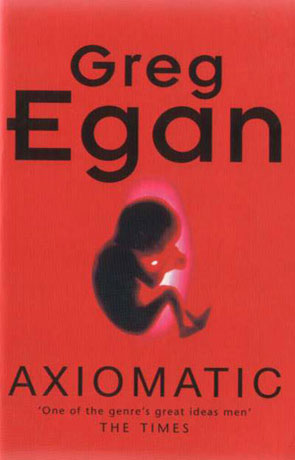
Our mental world is populated with intentional prediction models of others (goals, beliefs, plans, perceptions, actions) and of course, models of ourselves: “Learning to be Me” in Greg Egan’s phrase.

Our chatbots don’t currently have an internal life: it is not ‘something that it is like to be’ if you’re ChatGPT. But that’s a feature of the current architecture. There's not much current demand for emotional, conflicted, somewhat edgy AI agents. But when that moment comes…

When it comes, I should contemplate my biological death as no longer final on this Earth, provided that at some point my descendants choose to reincarnate a personality much like my own.

How convinced are you? And did you reflect on this deeply enough?

Saturday, October 29, 2016

Replika

Watch out for Replika.
"When we tested it recently with 1,000 people, the average user sent 46 messages a day to their personal bots to train them. By comparison, an average U.S. smartphone user age 18 to 34 sends about 50 texts a day in total.

We ran out of training conversations. We hope to be able to release it as a free standalone app sometime in the next few months."
The website.

I already wrote a post about this.

---

Update: I have now registered with Replika. They ask you to nominate a name for your 'replika'.

I asked Clare, "If I hadn't have been called Nigel, what would have been the best choice of name for me?"

She replied sardonically, "Bede, as in 'The Venerable Bede'."

So Bede it is.

Tuesday, October 11, 2016

Reincarnated as a .. chatbot?


My avatar for my own reincarnation chatbot - finally a hipster

Mark Bridge has an interesting piece in The Times today, "Good grief: chatbots will let you talk to dead relatives".
"Anyone grieving for a loved one will soon be able to talk to them using artificial intelligence technology pioneered by a woman who lost her best friend.

"Eugenia Kuyda, co-founder of Luka, a US technology company, has used the latest in AI systems to create a virtual version of Roman Mazurenko, who was killed in a road accident last year, days before his 33rd birthday.

"She fed more than 8,000 lines of text messages sent by Mr Mazurenko into a Google programme that allows people to create their own “chatbots” — computer programmes designed to simulate conversation with human users.

"The chatbot responds to questions in language that mimics Mr Mazurenko’s speech patterns so that she and other friends can “talk” to him as part of the grieving process.

"Ms Kuyda, 29, said that any doubts she had about the technology were allayed when the bot responded to her first questions in a tone that sounded like her friend."

... more.
There's plainly a market here, but what's the product?

[Update, November 3rd 2016: the product is Replika].

---

I think a pitch to the grieving relatives is wrong, it's akin to not leaving your affairs in order. Who is best placed to create your after-death digital alter ego?

You.

Everyone thinks they're unique, but personality research shows that this is not so. The Myers-Briggs instrument, for example, will allocate you one of 16 Personality Types. Despite sniffiness in the academic community, Myers-Briggs has received plenty of real world validation.*

So here's what you do. First purchase your 'eternal digital doppelganger', an app which connects back to the Cloud where the deep-learning engine resides, along with your about-to-be-constructed  cryptographically-assured personality database.

This is probably your mind.

Once the app is installed and has been given the maximum set of permissions, you do the interview:
  • A personality test determines your kernel personality-type,
  • An IQ test assigns the number of cores/gigaflops required to run you,
  • You point the chatbot to your digital life.
So the app checks you out on Facebook, LinkedIn, Twitter, WhatsApp, Skype, your email accounts, your blog if you have one,  your Google account (photos, videos, appointments, travels .. God, Google knows everything!), and so on.

Everything is cross-referenced to your well-documented social network plus current affairs to create that essential context which will predict your responses in future.

Once the neural net has crunched all this and built up the associational model, your alter ego will sit with you for the rest of your life, peeking over your shoulder and getting more and more like you**.

In fact after you die, many - or even most - people will remain entirely unaware of the fact.

Wait, haven't I just described Google's plan for Assistant?

---

* A person's personality is a point in some high-dimensional phase space which we don't yet fully understand. Myers-Briggs, the Five Factor Model and other personality theories are projective subspaces from this ultimate model. That's why it's pointless to throw rocks in these entertaining academic feuds.

** As always, Greg Egan got there first, 'Learning To Be Me' in Axiomatic.


---

I even have a good name for the reincarnation chatbot - altar ego ©.