Showing posts with label Death. Show all posts

Thursday, March 05, 2026

A Quinternion of Thoughts about Death

A Quinternion of Thoughts about Death


1. So I want to talk in a rational and analytical style about death and to explore different approaches to thinking about it. One approach that people have, is to say that dying is essentially equivalent to going to sleep. When you go to sleep, time passes, you have no consciousness of it. When you die, time passes, you have no consciousness of it.

So one should take the same attitude to death, to your own personal death, as going to sleep, which sounds attractive superficially, but I would say that a counter argument to that easy equivalence is that you feel that you are enmeshed, most of us, in personal relationships with a partner, with children, with relatives, with friends, with communities.

When you go to sleep, you imagine that you'll wake up again and resume your duties of care and your relationships with all those significant people. When you die, it's like you suddenly walk away and you never come back. So that sense of loss, both on your part, your loss of other people forever, and also their presumed loss of you, surely makes you think that death is very non-equivalent to falling asleep.


2. Okay, let's progress then. So, if you're a religious believer, whether you're in the Jewish - well, perhaps not the Jewish, but certainly the Islamic or the Christian tradition, and you are essentially a down-the-line, fairly literal believer, then you will believe that when you die, if you're a good person, you will go to a better place. It might be purgatory, it might eventually be heaven. Various things might be in your personal future which are not of this world, but certainly it's not nothingness.

But as has often been observed, Christians are no less concerned about death than non-Christians. Nobody seems to look forward to it, except in the few cases of the martyrs who perhaps have specially fervent beliefs. But for most people, the general background belief that death is not the end of their personal experience doesn't seem to come as all that much of a consolation, although it's obviously some.

One might say, by analogy, that back in earlier centuries, if somebody in Europe, say an Irish person during the Great Famines, went to America, leaving their family and extended kin network behind, then they might have every expectation of being able to make a new life for themselves, but a life perhaps with no communications back home at all. They might never be heard of again, it would be like going to heaven, where the heaven, say, was America or Australia, and the rupture with that kin group might be total in the absence of mail services and so on.

Would people think that, on the point of departure on that ship to America or to Australia, that they would have the same feelings about the lack of future connections with all of their relationships to date, whether they would feel the same way about that rupture, as they would if they were about to die, do you think?


3. All of this sort of assumes the extreme individuality of one's sense of consciousness, the sense that you are a person with a personal history, personal memories, and personal relationships, and everybody else is really quite different. Even if they really exist at all, some might secretly believe.

But perhaps it's equally arguable that essentially we're all much the same, so humanity is really almost like a commonality of consciousnesses, which are extremely similar to each other, in the same way that we think all ants in an ant's nest are essentially almost interchangeable from a distance.

In which case, if my consciousness gets snuffed out by death, in the broader scheme of things, most consciousnesses do not get snuffed out by my death. They carry right on: the memories, the feelings, the emotions, the hopes, the relationships - they all carry on. And perhaps I should not feel so isolated. I should just feel that the continuation of that web of relationships and of consciousnesses, the flame of consciousness, spread over many, many, many individuals, is what really needs to carry on, and which should be welcomed as carrying on. And that my personal contribution and role as a node in that is really somewhat minimal, even disposable.

And I'm wondering whether certain, perhaps Eastern philosophies, Buddhism, or Confucianism, or some other similar thought systems might tend to emphasise that view?


4. Okay, so now we could move on to some other, frankly speculative ways of thinking. Let's consider panpsychism, which is seeing new popularity; the sense that consciousness is perhaps something that is more depersonalised than some pseudo-reality that lives inside your skull only, and has no existence apart from the functioning of one's neurons.

Although materialism obviously has its attractions, at the end of the day we don't understand how material reality gets to create qualia and emotions and feelings and all those experiential aspects of being a person for oneself - being ‘something like it is like something to be’ as the jargon has it. It might instead be argued that there's a kind of analogy here with the way radios work in the context of broadcast radio signals.

Okay, so here's the analogy. Suppose consciousness is an ontologically valid category. It's something that exists as part of the structure of reality, and by analogy it's like a modulated electromagnetic radiation field which permeates space and time. We generally can't - or matter in general doesn't - interact with, say, Radio 3 as a transmitted signal. You require a very specialized piece of equipment called a radio, which can interact with and engage with the electromagnetic source signal, which is a radio station.

And in the same way, it might be argued that you need very specialized things called nervous systems to interact with the universal category of consciousness as an ontological reality. We don't know how that interaction would work because we don't understand consciousness at all. Nobody knows anything about consciousness in reality, certainly not affectively, at the level of experiential qualia. One is therefore free to speculate about a variety of ways of thinking about it.

On that model, what religion is talking about is trying to make sense out of consciousness as an independent dimension of the reality of the universe, peopling it with personalised, immediate, familial-type notions like Personal Gods and all kinds of God-human interactions which reflect family dynamics, essentially to create some dramatic backcloth to the underlying common experience of consciousness and the belief that perhaps when we die, it's more like that the radio has broken or worn out; the signal somehow is still there and maybe it's two-way.

But of course there is zero evidence for such a view.


5. So let me just conclude by saying that everybody dies, and we understand from an evolutionary biology point of view why complex creatures die, and why the disparate lifespans that different species have are adaptive trade-offs between immediate reproductive success and the benefits of living in and mastering that complicated world within which organisms exist.

You know, there's a lot of discussion about repair mechanisms and their cost, r/K selection theory, and so forth. We know a lot about the mechanics of lifespan and the almost-inevitability of death. Apparently, there are some non-senescent organisms but most complex organisms are not immortal for very good reasons.

So it seems, on that basis, that since death is not only inevitable as a matter of fact, but it's also pre-programmed as a matter of genetic and evolutionary optimisation, and one understands that not only does it happen as a matter of fact, contingently, but it's kind of necessary for it to happen - by design - we should develop a philosophy which accepts that fact, and trying to fight it, and trying to say that it's somehow unfair or wrong or that it's something that we have an intellectual problem with seems to be confusing ourselves and rejecting something on emotional grounds, which actually we know we should not be rejecting.

So perhaps, in the end, we need to understand why quite naturally people are afraid of death and why people don't want it, understand it in the sense that organisms which are careless about their existence are not necessarily the ones that are going to leave the most descendants. 

So there is a biological reason for caring about not dying, but at the same time, rejecting the idea of dying altogether also seems to be something which is delusional and not at all in tune with the way we correctly function as finite organisms.

So, as the stoics suggested, we should naturally seek to prevent avoidable death, but not obsess about its natural inevitability?


Monday, July 21, 2025

Between Death and Resurrection

---

This is a short ChatGPT primer on Catholic orthodoxy.

Catholicism speaks with confidence about death, but with careful, and at times obscure, restraint about what comes next.

The soul, we are told, survives the body. It is judged. It enters either the presence of God, the purifying fires of mercy, or a state of final alienation. These teachings are firm. They are old. And they are, in a sense, bare-bones truths: clear enough to guide the faithful, spare enough to resist fantasy.

One thing, however, is ruled out firmly: the soul does not sleep.

The Church has never countenanced the idea - common among some Protestant sects and occasional mystics - that the dead lie in unconscious suspension, awaiting the Last Day. The phrase “soul sleep” is shorthand for what Catholic tradition has always refused: the thought that the dead are not yet awake to God.

Instead, Catholic orthodoxy affirms a more vivid, though less defined, reality: that the soul, after death, remains conscious - alert to judgment, to mercy, to whatever God has prepared. That the saints are not resting but interceding; that the faithful departed are not slumbering, but undergoing transformation. That while time may pass here, in the soul’s encounter with eternity, something more mysterious unfolds.

Still, for all this confidence, the details recede. The Church does not describe the soul’s perceptions, its mode of being, its experience of time. We are not given a picture of the soul in purgatory: no dioramas, no progress bars. There is no cosmology of the interim.

And this, perhaps, is the most telling thing of all.

For here, amid the certainties of creed, the Church chooses silence over invention. The saints are alive, but how they live we do not know. The dead are not asleep, and yet their waking life is veiled. There is an unspoken acknowledgment that the soul, without the body, escapes our categories. It is not less real, but differently real: unmapped, ungrasped.

Some theologians have gestured at solutions. Ratzinger suggested that time, for the soul, may not flow as ours does. Balthasar proposed that judgment might be the soul’s own recognition of truth, drawn out in God’s loving light. Such insights illuminate, but they do not resolve. They are the shimmer of light on the surface of the water, not the bedrock beneath.

And perhaps that is as it should be. In the end, Catholic eschatology offers not an itinerary but a promise. It says the soul endures. That it meets the God who knows it. That nothing is wasted, and nothing left unfinished. It forbids soul sleep not to impose dogma, but to preserve the dignity of the soul’s encounter with the divine: not as a delayed broadcast, but as an immediate reality.

And so Catholicism says that we stand at the grave not with certainty, not with charts, but with faith. That the dead are awake, awaiting the parousia. And that what they see is more than we can imagine.

Tuesday, December 17, 2024

There Is No Such Thing as ‘Now’


---

Does the universe know it is ‘now’? No it does not. Special and general relativity describe a cosmos without any unique concept of 'nowness'. The notion of ‘now,’ far from being an absolute, is a fleeting, local and arbitrary phenomenon - a creation of consciousness rather than any well-defined property of the universe.

The Psychological Construction of ‘Now’

Nowness’ makes sense only within a specific context: conscious agents who are physically small and in close proximity. Smallness ensures that cognition remains coherent, unaffected by signal-propagation delays in the brain (or computing cluster); proximity ensures that signal-propagation delays in information transfer between agents remain negligible. Within this narrow domain, collective cognition synchronises to what feels like a shared present.

Consciousness is localised in the present

Consciousness, the self-aware experience of existence, is wholly localised in the present. It inhabits a single time-slice of the vast and universal expanse of space-time. The rest of what we think of as time, the past and the future, exists only as constructs available to present consciousness. Memory recreates an image of the past, and anticipation projects an image of the future. We live neither in the past nor the future but are psychologically perpetually anchored in the fleeting now.

Is that a logically-necessary property of consciousness? I have no idea. Maybe it derives from the differential nature of the laws of physics.

You do not fear death

Fear of anticipated future perils is rational and necessary. It motivates action to mitigate threats: our evolutionary imperative to survive.

Putting the fear of painful, distressing dying to one side, fear of death itself deserves a different treatment. Death is non-consciousness beyond some future point in time. To fear this is as irrational as fearing the non-consciousness of a dreamless night.

You say scornfully that you expect to wake up tomorrow when you go to sleep tonight. Yet - right now - you are not that tomorrow person; you only imagine them. Perhaps you have a warm feeling towards that anticipated person who you identify with your present self, an amour de soi

In which case there is not a fear of death itself - that abstraction! - but a present anticipation of the future loss of a loved one, someone pretty similar to you! Grief, not fear.

This would be similar to how you empathically anticipate how your lack of existence from tomorrow would cause suffering to your family and friends; understandable and wholly merited emotions for you to feel in this current moment of the present: no-one said we should be indifferent to the many negative consequences of death to those still living.


Thursday, November 23, 2023

What we think of when we think of death


The soldier: the first one can be hard; after that it's pretty easy.

The dualist: there may be some connection between the person I feel myself to be and the squidgy mass of cells-in-soup inside my skull - but the same thing?!

The neuroscientist: it's process - the mind is what the brain does; I concede we don't know how that could work.

The evolutionary biologist: natural selection has favoured the complex human nervous system. It supports sophisticated social behaviour in challenging, dynamic but mostly predictable environments. What's the problem?

The philosopher: to explain consciousness is categorically different to experiencing it. We both know you're in pain and why, but you're the one screaming.

---

Me:

Sometimes when I think of dying I feel that a complex organ (my brain) will stop functioning and its constituents disperse into the biosphere. No big deal.

Sometimes I think that human subjective experiences are extraordinarily similar. Millions of people have sensations, feelings, thoughts and consciousness just like mine. My personal deletion in death is not dissimilar to me falling asleep and waking up next morning as a… slightly different person: someone very like me who is not me.

The human race (or successor conscious beings) may advance in times to come - or may become extinct. We all feel that to secure the former is worth any sacrifice (most of us!) but there is no evidence the universe is the kind of entity which could care either way.

The process of evolution ensures that we have to care - selection bias - so that's really no surprise. We each live within our individual consciousnesses, so structured that we have to care about ourselves and those others we take to constitute our mutually supportive community. If you like, those are the boundary conditions for being a socially adjusted human (not sociopathic, schizophrenic, psychotic, etc).

When we die, a universe may die with us and within us, but let's not be precious. The flow, the continuity of the collective consciousness of humanity gives me reassurance. Just like I'll not be too concerned about falling asleep tonight - as someone will likely awaken tomorrow morning with whom I identify.

Like most people trained in physics, I happen to accept the block universe concept in which the passage of time is a psychological construct, a product of local spacetime interaction between our bodies and the environment. In this sense the past and the future are equally existent and our lives exist in entirety - just as a DVD contains the whole movie, all at once.

(Maybe the universe is really some complex multiverse structure in Hilbert space - who knows?).

Anyway, because I'm a reasonably adjusted human being, I'm a fan of sensual, emotional, smart, prosocial consciousnesses having an indefinite, fulfilling future. I'm reassured by progress so far - at least in this branch of the universal wavefunction. These emotions are conditioned by my future-ignorance, of course.

And for reasons mentioned, I'm not too scared about the eventual unavoidable extinction of the personal consciousness of this author.

You, dear reader, will take up the torch.

---

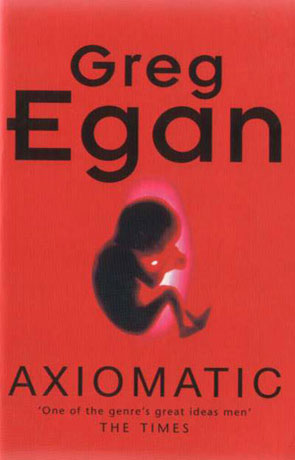
Greg Egan's short story "The Walk" in his collection "Axiomatic" uses this approach as setting. 

Roger Scruton in his book "On Human Nature" makes the distinction between being conscious and having a theory of consciousness.

And I wrote a short piece about this - 'Live Forever' - at sciencefiction.com.

See also Adam Carlton's short story, "Doppelgänger": memory discontinuity hangs heavy.

Wednesday, July 24, 2019

So long, Marianne .. and Michele

Albert Einstein wrote the following, in a letter of condolence to the sister and son of his long-time closest friend, Michele Besso, upon his death, four weeks before Einstein's own (18th April, 1955).
"Now he has departed from this strange world a little ahead of me. That means nothing. People like us, who believe in physics, know that the distinction between past, present and future is only a stubbornly persistent illusion."
Leonard Cohen wrote an emotional final letter to Marianne Ihlen, the woman who inspired his “So Long, Marianne” and “Bird on the Wire,” just days before her July 29th death.
‘Well Marianne it’s come to this time when we are really so old and our bodies are falling apart and I think I will follow you very soon. Know that I am so close behind you that if you stretch out your hand, I think you can reach mine.

And you know that I’ve always loved you for your beauty and your wisdom, but I don’t need to say anything more about that because you know all about that. But now, I just want to wish you a very good journey. Goodbye old friend. Endless love, see you down the road.'
She died two days after receiving it; he died three months later.

There's quite an art to the final goodbye.


Leonard Cohen's work is a Rorschach diagram, a  mirror to your own pre-occupations and persona and signalling needs .. .

Tuesday, February 06, 2018

The Mystery of Death

Amazon link

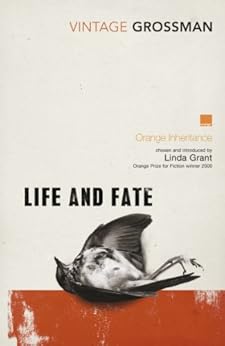
This is chapter 49 from "Life and Fate", by Vasily Grossman.
"When a person dies, they cross over from the realm of freedom to the realm of slavery. Life is freedom, and dying is a gradual denial of freedom. Consciousness first weakens and then disappears. The life-processes - respiration, the metabolism, the circulation - continue for some time, but an irrevocable move has been made towards slavery; consciousness, the flame of freedom, has died out.

The stars have disappeared from the night sky; the Milky Way has vanished; the sun has gone out; Venus, Mars and Jupiter have been extinguished; millions of leaves have died; the wind and the oceans have faded away; flowers have lost their colour and fragrance; bread has vanished; water has vanished; even the air itself, the sometimes cool, sometimes sultry air, has vanished. The universe inside a person has ceased to exist.

This universe is astonishingly similar to the universe that exists outside people. It is astonishing similar to the universes still reflected within the skulls of millions of living people. But still more astonishing is the fact that this universe had something in it that distinguished the sound of its ocean, the smell of its flowers, the rustle of its leaves, the hues of its granite and the sadness of its autumn fields, both from those of every other universe that exists and ever has existed within people, and from those of the universe that exists eternally outside people.

What constitutes the freedom, the soul of an individual life, is its uniqueness. The reflection of the universe in someone's consciousness is the foundation of his or her power, but life only becomes happiness, is only endowed with freedom and meaning when someone exists as a whole world that has never been repeated in all eternity. Only then can they experience the joy of freedom and kindness, finding in others what they have already found in themselves."
---

Our consciousness probably evolved to share experiences - a necessary function for an adaptable, flexible and competent social animal. Of course, to share experiences you first have to have them.

We are used to experiencing in consciousness the objective events of our lives: events and reflection engage in parallel. Death is anomalous. Like your own deep sleep, you don't experience it yourself, although others can. For yourself, you're never dead as such, you experience only the process of dying: that is, being alive.

Monday, May 15, 2017

"I have already been absent, non-existent"

Jenni Diski - writer

I thought this Jenni Diski (1947-2016) article worth noting. Here's an excerpt.
" I am appalled at the thought, suddenly, that someone at some point is going to tell me I am on a journey.

"But much as I hate it, the journey – that deeply unsatisfactory, often deceitful metaphor – keeps popping into my head. Like my thoughts about infinity, my thoughts about my cancer are always champing at the bit, dragging me towards a starting line.

From ignorance of my condition to diagnosis; the initiation into chemotherapy and then the radiotherapy; from the slap of being told that it’s incurable to a sort of acceptance of the upcoming end. From not knowing, to "knowing", to "really" knowing; from being alive and making the human assumption that I will be around "in the future", to coming to terms with a more imminent death. ...

"The end of the 'journey' doesn’t come until you either die cancer-free of something else, or die of the effects of a regeneration of the cancer cells. Good and bad; from here to eternity, and from eternity to here.

"But I have been not here before, remember that. By which I mean that I have been here; I have already been at the destination towards which I’m now heading. I have already been absent, non-existent.

"Beckett and Nabokov know:
I too shall cease and be as when I was not yet, only all over instead of in store.

From an Abandoned Work

The cradle rocks above an abyss, and common sense tells us that our existence is but a brief crack of light between two eternities of darkness.

Speak, Memory
"This thought, this fact, is a genuine comfort, the only one that works, to calm me down when the panic comes. It brings me real solace in the terror of the infinite desert. It doesn’t resolve the question (though, as an atheist I don’t really have one), but it offers me familiarity with:
“The undiscovered country from whose bourn/ No traveller returns.”
"I’ve been there. I’ve done that. And it soothes. When I find myself trembling at the prospect of extinction, I can steady myself by thinking of the abyss that I have already experienced. Sometimes I can almost take a kindly, unhurried interest in my own extinction. The not-being that I have already been."
---

Jenni Diski's insight here is real, but for those who know some physics a deeper consolation (perhaps) is that our lives persist in spacetime, a consequence of Einstein's great discovery which I wrote about in my sciencefiction.com article "Sub Specie Aeternitatis".

Sunday, February 12, 2017

"When I am dead, my dearest"

Poignant poem in The Sunday Times today: by Christina Rossetti, (1830 - 1894).


When I am dead, my dearest,
    Sing no sad songs for me;
Plant thou no roses at my head,
    Nor shady cypress tree:
Be the green grass above me
    With showers and dewdrops wet;
And if thou wilt, remember,
    And if thou wilt, forget.

I shall not see the shadows,
   I shall not feel the rain;
I shall not hear the nightingale
   Sing on, as if in pain:
And dreaming through the twilight
    That doth not rise nor set,
Haply I may remember,
    And haply may forget.

---

I think that's a realistic view of death and its aftermath, beautifully stated.

Tuesday, October 11, 2016

Reincarnated as a .. chatbot?


My avatar for my own reincarnation chatbot - finally a hipster

Mark Bridge has an interesting piece in The Times today, "Good grief: chatbots will let you talk to dead relatives".
"Anyone grieving for a loved one will soon be able to talk to them using artificial intelligence technology pioneered by a woman who lost her best friend.

"Eugenia Kuyda, co-founder of Luka, a US technology company, has used the latest in AI systems to create a virtual version of Roman Mazurenko, who was killed in a road accident last year, days before his 33rd birthday.

"She fed more than 8,000 lines of text messages sent by Mr Mazurenko into a Google programme that allows people to create their own “chatbots” — computer programmes designed to simulate conversation with human users.

"The chatbot responds to questions in language that mimics Mr Mazurenko’s speech patterns so that she and other friends can “talk” to him as part of the grieving process.

"Ms Kuyda, 29, said that any doubts she had about the technology were allayed when the bot responded to her first questions in a tone that sounded like her friend."

... more.
There's plainly a market here, but what's the product?

[Update, November 3rd 2016: the product is Replika].

---

I think a pitch to the grieving relatives is wrong, it's akin to not leaving your affairs in order. Who is best placed to create your after-death digital alter ego?

You.

Everyone thinks they're unique, but personality research shows that this is not so. The Myers-Briggs instrument, for example, will allocate you one of 16 Personality Types. Despite sniffiness in the academic community, Myers-Briggs has received plenty of real world validation.*

So here's what you do. First purchase your 'eternal digital doppelganger', an app which connects back to the Cloud where the deep-learning engine resides, along with your about-to-be-constructed  cryptographically-assured personality database.

This is probably your mind.

Once the app is installed and has been given the maximum set of permissions, you do the interview:
  • A personality test determines your kernel personality-type,
  • An IQ test assigns the number of cores/gigaflops required to run you,
  • You point the chatbot to your digital life.
So the app checks you out on Facebook, LinkedIn, Twitter, WhatsApp, Skype, your email accounts, your blog if you have one,  your Google account (photos, videos, appointments, travels .. God, Google knows everything!), and so on.

Everything is cross-referenced to your well-documented social network plus current affairs to create that essential context which will predict your responses in future.

Once the neural net has crunched all this and built up the associational model, your alter ego will sit with you for the rest of your life, peeking over your shoulder and getting more and more like you**.

In fact after you die, many - or even most - people will remain entirely unaware of the fact.

Wait, haven't I just described Google's plan for Assistant?

---

* A person's personality is a point in some high-dimensional phase space which we don't yet fully understand. Myers-Briggs, the Five Factor Model and other personality theories are projective subspaces from this ultimate model. That's why it's pointless to throw rocks in these entertaining academic feuds.

** As always, Greg Egan got there first, 'Learning To Be Me' in Axiomatic.


---

I even have a good name for the reincarnation chatbot - altar ego ©.

Monday, July 04, 2016

Shadow: August 2000 - July 1st 2016

#TheCatDied    #ShadowPassedOver

He'd been off-colour for a week or so, spending much of his time sleeping. On his last day he vanished into the garden before returning in the evening to rest in his basket. Clare put the electric heater under his towel there to ease his swollen stomach.

Just after 8.30 pm he stood up, as if he wanted to experience nature one last time. We put him outside the front door and he looked around. Then, with an effort, he walked up the steps and into the hall. There he stood panting, before collapsing onto his side. The unblinking eyes delivered the news, although the odd twitch continued for a while.

He was placed (and buried) on a copy of The Guardian.

It is what he would have wanted.

Shadow, moments after his passing

Wednesday, October 08, 2014

Shirley Porter

My aunt, Shirley Porter, died in the early hours of this morning. I remember her as a very attractive and pleasant woman, married to my mother's brother Gordon who pre-deceased her by a number of years.

Shirley and Gordon Porter


Shirley Porter in the 1960s

Shirley with my mother, and (L to R) myself, Elaine and Adrian (early-sixties)
---

Shirley Grace Porter (née Brown): b. 26th July 1935, d. 8th October 2014 aged 79.

Husband: Gordon Alexander Porter: b. 30th October 1925, d. April 30th 1990 (lung cancer) aged 65.

Update (Friday October 17th):

Clare and myself attended Shirley's funeral today at South Bristol Crematorium. There were 30 mourners, mostly her family. The presiding Minister noted that Shirley had trained as a shorthand typist and had worked at the firm John Hall & Sons in Bristol as a secretary and later PA. It was said that anyone she PAed for ended up as a Director, testifying to her competence and, I suppose, her shrewdness in choosing good bosses.

It was there that she met her husband-to-be Gordon Porter (my uncle) who was working as an electrician. They were married in March 1958.

Here are some pictures from today.

Our bouquet

The dedication

The author and his wife preparing to attend the funeral

Order of Service: cover - click to enlarge

Order of Service  - click to enlarge

Saturday, March 22, 2014

Things to regret about being dead

People point to a pleasing symmetry about life. No one cares that billions of years of eventful history occurred before they were born - why care about the billions of years following our relatively-imminent deaths?

An obvious difference: asymmetry of information. I used to think about how sad it would be to die without knowing how the unification of quantum physics and general relativity would eventually be accomplished. But on that happy day only about 500 people in the world will actually understand it - everyone else will be wandering around in the illusory swamps of metaphor  (B-mode polarisation and primordial gravitational waves, anyone?).

Another popular hankering is to see if humankind gets off this planet and colonises the universe. Of course we know a lot about the universe - its galaxies, stars and planets and frankly it's not that exciting unless you're a scientist in a relevant specialisation. And don't get me started about exciting future civilizations amongst the stars. What we know about the 'drama of everyday life' - in any time or place - is that it's bland, banal and boring. That's why we always prefer to watch drama - contrived scenarios which stimulate our hyper-developed limbic systems.

So much for the worldview of a misanthropic curmudgeon, you say. In my jaded way I reply: "So surprise me then."

Tuesday, July 04, 2006

Einstein's view of death

Albert Einstein wrote the following, in a letter of condolence to the sister and son of his long-time closest friend, Michele Besso, upon his death, four weeks before Einstein's own (18th April, 1955).

"Now he has departed from this strange world a little ahead of me. That means nothing. People like us, who believe in physics, know that the distinction between past, present and future is only a stubbornly persistent illusion."

Thinking of oneself four-dimensionally is challenging. We think the phrases 'past self' and 'future-self' are metaphors, but actually they are literally true. Somewhere 'up-time' is the future you and me, just as real as myself at this moment of writing, or your moments of instantaneous reality as you read these words.

My past self-slice can communicate with a future self-slice through use of media. If I read this blog later, that's exactly what will happen. I try to imagine that future self, but it's hard. It's not a dialogue: my future self can't answer me back.

Note added on December 10th 2025

Hi, it's your future self just re-reading this post. I feel quite real I have to say but it's been a while - nineteen and a half years. You'd be pleased to know it turned out pretty well.

Up-time from here is the now-more-imminent moment of my own death.

I sure hope that guy is having an easy time of it - but he can't tell me...