Showing posts with label Behavioural Genetics. Show all posts

Saturday, March 16, 2019

Post-capitalist and post-human?

Amazon link

I finally completed Poulantzas's turgid, repetitive, over-abstract and slightly-dated book. Far from a page-turner. Yet really important for the final few chapters.

Poulantzas turns his educated, sophisticated Marxist eye on the problem of transition and the nature of the socialist state. Let me crudely summarise.

Poulantzas understands completely the Leninist model of 'soviet democracy': that is, a hierarchy of workers' councils running everything as the proletarian state. He understands that this doesn't work. It requires a mobilisation of the masses which cannot last indefinitely. It isn't an efficient decision-making mechanism due to the need for expertise. It cannot replicate the enormously complex and specialised functions and services undertaken by the bourgeois state apparatus, which would only increase after the supercession of capitalism.

His solution is a transformed and transforming bourgeois-like state apparatus (i.e. a state bureaucracy) kept on the straight and narrow by parallel popular structures. The interplay between these two loci of power is under-defined, and, as he himself point out, inevitably leads to existential conflict. It's unstable.

Really, Poulantzas sees no way out.

I would add that with actually-existing humanity, both bureaucratic structures and a hierarchy of councils invariably ossify into self-serving elites which stagnate as they succumb to the principal-agent problem.

Altruism meets its limit in Dunbar's number.

How does capitalism avoid these problems? Poulantzas correctly observes that the state is not a dominant participant in the relations of production, which are those of privately ownership of the means and objects of production. A hegemonic bourgeoisie tolerates nationalisation only in the event of market failure.

We can additionally note that the only thing which keeps social agencies competent and innovatory is competition. The fear of losing everything saves a structure from complacent featherbedding and elite-capture. Remove competition and things slow to an ossified crawl and the tyranny of the elites is assured.

And so the destruction of the capitalist mode of production and its replacement by central planning leads to Stalinism. This is Poulantzas's compelling (and unwanted) conclusion.

---

Amazon link

I'm debating getting this. I read the intro, where Žižek seems to share Poulantzas's general conclusions, but seems to have reverted to a strategy which Poulantzas correctly rejects: the encirclement of global imperialism by municipal, localised, counter-initiatives.

This has been a popular, albeit minority view in the Left: I wrote about Paul Mason's similar views. A counter to reformist social-democracy, a paradigm in worldwide collapse.

Utterly unconvincing of course.

Žižek gets brownie points for taking notice of the scientific advances in psychometrics, behavioural genetics and the like (cf. Plomin). Most writers in the Marxist tradition have taken the intellectually-suicidal route of turning their blind eyes to this and retaining a touching faith in blank-slatism verging on vitalism.

Žižek has little idea, however, as to how to integrate these new understandings of human nature into the traditional Marxist world-view. But in the longer term (which will still be co-extensive with the reign of capital) humanity will be as labile as any other innovating technological factor.

A society of clones could make communism - as anticipated by the founders - work, at least for a while. It is the only possible genetic underpinning of the perfect altruism required. Such a solution is, of course, genetically unstable. Utterly at the mercy of defection-mutations (if they are not ruthlessly suppressed). Oh, and evolution doesn't much like clone-species - too brittle with zero population variation.

It's imaginable that capitalist dynamism could be combined with a greater propensity to income-equality and tolerance of transfer payments. But I don't think we could take it too far, a kind of über-Denmark. The psychological attributes which make capitalism - red in tooth and claw - work seem incompatible with excessive hand-wringing liberalism. Ask Justin Trudeau.

Wednesday, November 28, 2018

Forensic psychology: struggling to become a science

Amazon link

I received a free copy of this to review through the Amazon Vine programme. It's a lengthy textbook and I won't be finished anytime soon. But reading the introduction and initial chapters is enough to discern a profession transitioning through intellectual crisis.

Here are my notes so far.

---

"We do have a scientific paradigm for psychology. We know that genes and environment construct brains, brains produce behaviour. Individual differences in genome plus environmental divergences result in non-identical brains, differences which have a measurable effect on neuroanatomy .. and thence on behaviour.

From behavioural genetics we know that the heritability of psychological traits is generally more than 50%. Nurturing differences are often really the consequence of genetic correlations: disturbed parents tend to have disturbed children. Heritability in action. Non-shared environmental effects (eg not family) typically have random and transient effects on psychological traits such as personality and intelligence. Real abuse and damage always excepted.

Psychology sort of knows this and sort of doesn't. There are researchers who know what a GWAS is, who know their way round a brain scan. And then there is the long legacy of pure nurturism:  behaviourism, psychoanalysis, attachment theory, sociomoral reasoning, social information-processing theory and so on.

These one-sided plausible-sounding abstractions of commonplace observations have sadly produced neither real insight, reproducible results nor consistently-effective interventions. In many cases large scale experiments using twin studies and GWAS have shown that their conclusions are simply false. Perhaps though this will change, now we're beginning to really understand the etiology of normal and abnormal psychology. Robert Plomin's "Blueprint" is a readable review covering all these points.

All this has additional force in the case of forensic psychology. But who would wish to be in the position of the textbook editor in 2018, forced to straddle competing and incompatible paradigms while maintaining that forensic psychology is a mature discipline on firm foundations, whose professionals can be relied upon in the investigation process, in court and during the follow-on treatment of prisoners.

Forensic psychology has two main aspects: the legal aspect deals with evidence, witnesses and the courts while the criminological aspect deals with crime and criminals. Our textbook starts by reviewing theories addressing the causes of crime: why do criminals offend and what is the effect on their victims? As mentioned above there are many kinds of theory, and they tell very different kinds of story.

Here is an illustrative quote (p. 58, section 2.2.1 - LCPs are life-course persistent offenders).
“The main factors that encourage offending by the LCPs are cognitive deficits, an under-controlled temperament, hyperactivity, poor parenting, disrupted families, teenage parents, poverty and low socioeconomic status (SES).

Genetic and biological factors, such as a low heart rate, are also important (see Chapter 4).”

Of course all of the so-called main factors on the first list are strongly heritable, and therefore have substantial genetic causation which would be captured by a polygenic score (not mentioned in the copious index).

Amazing to read this in a 2018 textbook."

Full review here.

Wednesday, June 15, 2016

This & that

After putting the kettle on, my second most important task first thing is to feed the cat.

This morning I carefully diced his cheddar cheese into bite-sized chunks, scooped beef-pâté from a can and added a little salmon from a packet on to his plate.

I walked into the hall, bent my knees and leaned forward to place his plate in the floor. As I did so, I experienced a sudden arc of pain horizontally across my lower back. As I sat immobilised on the stairs, my first thought was: "No gym for me today."

I'm moving around cautiously at the moment and not sitting too much - this is not the first time I've had a lower back strain - and I expect several days of recovery time. Next time I'm at the gym, I hereby remind myself to ask about specific exercises to strengthen the lower back.

The cat enjoyed his breakfast.

---

Later this morning I went for a therapeutic walk to town - Clare wanted some straw for the strawberries.

Clare distributes the straw


She carried the bale back.

---

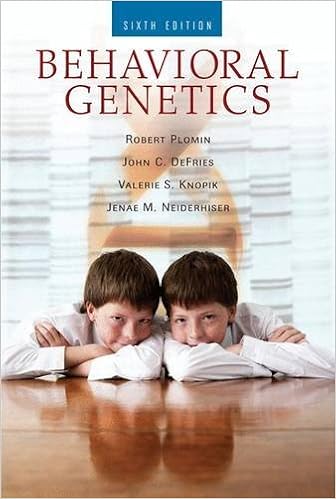
I've just finished the interesting (for a textbook) "Behavioural Genetics" by Robert Plomin et al.


I salute the bravery and sheer persistence of the pioneers (including the authors) who patiently worked over their professional lives to work out the heritability of almost everything. The social sciences establishment had (and has) little but contempt for their efforts.

Since almost all behavioural traits are heritable in the range 0.3 - 0.7, (even working out at the gym) such agenda-based prejudice against any role at all for genetics makes you want to weep.

The robust results reported were teased-out mostly from twin and adoption studies. The sections with least detail are those which try to identify specific alleles underpinning the measured heritability. At time of publishing (2013) the GWAS revolution had barely got started and here in 2016 it's still in the early phases.

If a new edition is published c. 2020, I imagine genotype chapter and verse will be available for most behavioural traits.

Blank-slate elite culture (media, TV, politicians) will continue to ignore these results, while mendaciously claiming that environment is everything.

---

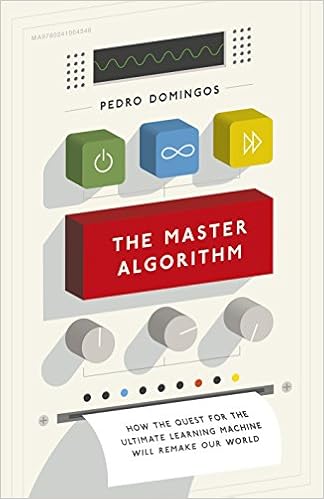
I was in two minds about "The Master Algorithm" (Pedro Domingos) as the reviews were mixed. And then Bill Gates gave the book his imprimatur and I read the reviews more closely. It's not that the book is overly non-technical (which was my fear) - more that it's uneven and perhaps a little badly written.


I can cope with that. As the only popular science book about AI deep learning out there, I'm keen to start reading it. More later.