Showing posts with label Kondratiev wave. Show all posts

Wednesday, November 20, 2024

Cheer up! Better times are on the way


From Amazon

Introduction

The theory of long cycles - first identified by Nikolai Kondratiev and later refined by Joseph Schumpeter - proposes that capitalist economies undergo long waves of growth and renewal, spanning 40-60 years. 

These cycles are kicked off by periods of innovation, followed by economic expansion - but eventually stagnation and decline set in, as existing technologies mature and productivity gains dwindle.

The first Kondratiev wave, the Industrial Revolution (circa 1780–1830), introduced mechanised production in textiles, iron, and water power, catalysing industrial growth and urbanisation.

The Age of Steam and Railways (1830–1880) followed, marked by steam power and extensive rail networks, creating national markets and driving economic expansion.

The third wave, the Age of Steel, Electricity, and Heavy Engineering (1880–1930), brought advancements in steel, electricity, chemicals, and the internal combustion engine, fostering new industries like automotive and chemical manufacturing.

The Age of Oil, Automobiles, and Mass Production (1930–1970) then transformed society through petroleum-fueled growth, automobiles, and consumer-oriented mass production, ushering in widespread prosperity post-WWII.

Finally, the Information and Digital Age (1970–present) has redefined economies with computing, the internet, and digital communication, creating an interconnected, information-driven world.

Now, we are entering a sixth wave led by AI, biotech, robotics, and green energy.

Our current period of economic slowdown is, therefore, not an anomaly. We are living through the tail end of the fifth long wave, which began with the information and digital revolution of the 1970s and 1980s. Its initial explosive productivity has long gone, leaving us mired in the ensuing "Long Stagnation".

But that is about to change.

The Cycle of Disruption and Rebirth

Long cycles do not begin smoothly; they are born out of upheaval. 

Schumpeter referred to this as “creative destruction” - a period when old industries, ways of working, and social structures are uprooted to make way for new, more efficient ones. Historically, each new wave brings disruption that manifests as political resistance, temporary labour displacement, social restructuring, and financial volatility.

These challenges are not unique to the coming cycle; they were seen in all the major economic transformations. Steam power in the 19th century led to the mechanisation of labour and the rise of cities. More recently the spread of electricity and assembly lines in the early 20th century saw society adapt to large-scale industrialization - eventually bringing prosperity to unprecedented numbers of people.

Emerging Technologies Drive Growth

Technological advancements in AI, robotics, biotech, and sustainable energy are not merely incremental improvements - they represent transformative shifts:

  • Artificial Intelligence will drive efficiency gains in manufacturing, logistics, healthcare, and finance.
  • Biotechnology will transform personalised medicine, gene editing, and sustainable agriculture.
  • Robotics and Automation will enhance pretty much every industry it touches.
  • Sustainable Energy Technology, (renewables and energy storage) decouples growth from environmental degradation, improving the quality of life.

The Timeline for Prosperity

The initial, disruptive phase of this new cycle will advance to prosperity in roughly a decade as these technologies mature and integrate into the economy, creating dramatic efficiencies and driving growth.

During the early 2030s, expect accelerated adoption as infrastructure, expertise, and regulatory frameworks catch up.

This will culminate in a long period of stable growth in the 2040s, comparable to the post-WWII economic boom.

The Dawn of a New Cycle

The Long Stagnation has seen political volatility as cohorts of university educated young people have failed to achieve the futures their education appeared to promise them. Meanwhile, for most people, personal incomes have not advanced in decades, and the future looks bleak. No wonder they're cynical and angry.

Politically, the veto networks of established interests have conspired to block off hopes of change. Yet these new economic forces will not be forestalled. Through political turmoil new leaders and parties are unjamming the process.

How ironic if the self-styled Progressives are now the reactionary ones, wedded as they are to their static and lifeless equilibrium models which serve only to justify their privileges. Meanwhile the so-called Conservatives, riding the waves of change, are the real revolutionaries, the motors of progress going forward!

Monday, November 11, 2024

"The Vanishing of Investment Opportunity" - Schumpeter

From Amazon

“The present generation of economists has witnessed not only a world-wide depression of unusual severity and duration but also a subsequent period of halting and unsatisfactory recovery. 

"I have already submitted my own interpretation of these phenomena and stated the reasons why I do not think that they necessarily indicate a break in the trend of capitalist evolution.

"But it is natural that many if not most of my fellow economists should take a different view.

"As a matter of fact they feel, exactly as some of their predecessors felt between 1873 and 1896 - though then this opinion was mainly confined to Europe - that a fundamental change is upon the capitalist process.

"According to this view, we have been witnessing not merely a depression and a bad recovery, accentuated perhaps by anti-capitalist policies, but the symptoms of a permanent loss of vitality which must be expected to go on … .” 

(Page 111 of 407).

This was written in 1942. Les Trente Glorieuses were about to transform the world in a new cycle of robust capitalist growth in the 1950s and 60s. Schumpeter's prescience in opposing doom and gloom was based on his evolutionary idea of capitalist development, leveraging the theory of long cycles first identified by Nikolai Kondratiev.

I shall have more to say next week on this, but here is a preview:

"Now, we are entering a sixth wave led by AI, biotech, robotics, and green energy.

"Our current period of economic slowdown is, therefore, not an anomaly. We are living through the tail end of the fifth long wave, which began with the information and digital revolution of the 1970s and 1980s. Its initial explosive productivity has long gone, leaving us mired in the ensuing "Long Stagnation".

"But that is about to change."

Tuesday, August 29, 2017

Diary: what I'm reading

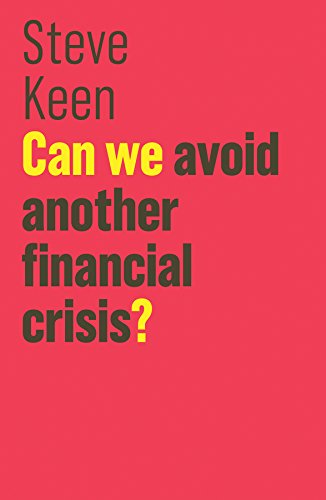
Amazon link

Peter Turchin recommends this book in his latest, rather blood-curdling post. He writes,
"It is strange to actually live in a society experiencing a structural-demographic crisis, after studying many examples of such crises in the past. Unfortunately the crisis is developing largely according to the classical pattern. The degree of political polarization is at its highest levels since the (First) American Civil War. Intra-elite infighting is tearing the Republic apart. ...

"Steve is one of the “heterodox economists” (meaning that they are pretty much ignored by the mainstream). His starting point is the theory of Hyman Minsky (another economist who was largely ignored by the profession). Minsky’s theory makes a lot of sense to me, however. Let me try explain it in one paragraph.

"The main dynamical driver is the magnitude of private debt (combining what’s owed by both corporations and households) in relation to GDP. Currently this indicator is at 150% of the US GDP. Why is it bad?

"Actually, for a while, as private debt grows, things are just fine because expanding credit drives economic growth (think of new housing construction during building booms). But eventually the cost of servicing accumulated debt starts to depress consumption (the more you pay for your mortgage, the less money you have to buy things). Falling consumption results in overproduction of goods and declining profits for businesses, which makes investment a losing proposition. Credit collapses, businesses go bankrupt, or downsize their labor, less employment means even less consumption, and (absent large-scale increase in government spending) the economy enters a downward-trending “death spiral” of a prolonged depression.

"The precise timing of the turn-around point is very difficult to predict (it’s another example of earthquake-like dynamics). Yet Steve Keen is one of very few economists who predicted the General Financial Crisis (GFC) of 2007–2008.

"If Steve is right in identifying the main cause of the GFC, then we should listen to what he says in the book about the likelihood of another crisis in the next few years. Unfortunately, the news is bad, because we are still at a very high level of private debt in relation to GDP."
Turchin also sees the world economy in the 'winter' phase of the current Kondratiev cycle (I recently wrote about these here).


In any event, I acquired the book and will read it along with this:


They say the first four chapters are tedious, and that after that, things pick up (most readers have abandoned by then). In these early chapters Marx writes at length and repetitiously about the nature of the commodity, use-value and exchange-value, money and the transformation of money into capital.

He's a lively writer, always good for a venomous quip at the expense of an opponent; his knockabout style is far from politically-correct. It helps to be aware of just how important - how foundational - these concepts are for the whole development of Marxist economics.

Still, I'm glad I've got beyond chapter four.

Monday, May 22, 2017

The next Kondratiev wave?


Wikipedia article

Fortunate we are to develop our careers in the rising phase of a Kondratiev wave. As new platform technology is widely introduced, the economy grows, wages and salaries rise and a host of fascinating and challenging socio-technological problems present themselves. Work can be fun!

Yes, I remember the late 80s through the mid-2000s, when the Internet was bright and young and we made a new world of computing and telecoms!

The stagnation and depression phase of a Kondratiev wave is something else. The economy flatlines, wages and careers stagnate, everything is flat and immobile; the story of the last ten years.

---

A new wave starts with new platform technologies, sufficiently mature to make a practical difference, which revolutionise production at a higher level. At the same time, the required (and vast) capital investment has to be profitable with a promise of demand sufficient to absorb the new products.

Are we there yet?

It's been predicted for a while now that the next Kondratiev wave will be driven by a combination of AI (in its new neural net incarnation), robotics and genomics - driving industries such as pharmaceuticals and healthcare - but in practice almost everything.

I don't think we're at the lift-off point yet. None of these technologies are ready for prime-time: they're niche and require too much scarce expertise to make work. Nor is it clear that the political conditions are in place for massive new investments.

Peter Turchin has predicted that we're in for a rough decade, suggesting civil turmoil until the mid-twenties. His view may be no more than inappropriate curve-fitting: we shall see.

---

Ernest Mandel (Late Capitalism - PDF) correctly observed that massive investments in transformational new technologies will not occur unless they are profitable, which, he argues, requires that working class resistance (to losing jobs and perhaps lower wages) has been broken. He sees fascism and the second world war (thirties and forties) and Thatcher's union-busting (eighties) as typical precursors to new waves.

The next wave would, however, seem to require very little in the way of cheap unskilled labour (which in fact it proposes to - eventually - replace). If we take Google as the current industry leader in next-wave technologies, the economic and political strength of the working class en large hardly seems to matter as regards their truly enormous investment in AI and robotics.

But if the impact of the next wave will be the massive elimination of both middle class and working class jobs, then a precondition for across-the-board capital investment would surely have to be a belief that such high rates of job loss and unemployment could be successfully achieved.

Is such an outcome politically deliverable today? Plainly not.

I anticipate the next decade to be one of the steady imposition of job-elimination technologies, accompanied by increasing worker resistance. Those states which succeed by force and/or inducements in advancing total automation will open the floodgates for the next wave.