
Thursday, October 17, 2019

"Freyja’s Deathbed Conversations" - Adam Carlton

Amazon link

I joined this blog a couple of weeks ago. I'm pretty aligned with its view of the world. I've been writing political and technical science-fiction on the literary website Booksie for almost a year and have just published my first book on Amazon (Kindle and paperback). Hence the picture above.

For more about me look here.

This is the description of the book.
"Adam Carlton’s thirty four stories are set in a world of total surveillance, pervasive AI and high-tech interrogation. A revolutionary organisation fights repression in the streets of Paris; in a sordid Internet sweatshop, an AI is trained - its successors will build starships and contemplate a disposable humanity; an artefact found on the moon, impervious to study, recounts an unacceptable truth. These are the stories of our times, suffused with the victories of stupidity, the deceit of our friends and the betrayal of our deepest hopes."
I'm interested in the biggest issues: future society, technological trends, where we're all going. I tend to publish new material regularly on Booksie - it's flagged on the webview blog sidebar here along with all the other blogs. I usually try to get something out once a week. Eventually the material will find its way into new published volumes.

If you want a flavour of what I'm doing, visit the Amazon site and download a Kindle sample to get the first 10% of my book for free.

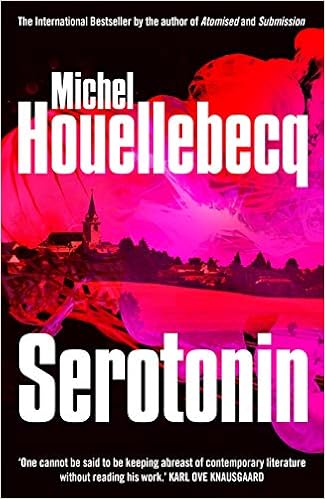
I hope to publish occasionally here - book reviews (like my take on 'Serotonin') and perhaps some political stuff which I can repost on Booksie. The audience over there is not as sophisticated politically or technically as the readership here, so I may be a little hand-wavy and introductory.

More to come, anyway.

---

Update Thursday November 28th 2019

I've today withdrawn my book from Amazon (both Kindle and paperback versions). It may take a day or two to take effect.

Why?

First off it hasn't sold at all. Zero sales in October and November. Four in September - to known individuals. This was expected as I'm an unknown author and did no marketing.

Instead I'm choosing the harder route, which is to seek to get past the gate-keepers of SF magazines with my short stories. Assuming I can succeed I will build up a portfolio of published work in paying outlets - this is what a published writer does.

My next step will be - on the strength of this - to seek an agent who can perhaps package my stories into a bundle which will be effectively marketed. This is the key to getting sales. But my self-publishing efforts are a major obstacle here - it makes me look amateurish and ties up material which could be better used elsewhere.

Tuesday, October 15, 2019

"Serotonin" - Michel Houellebecq

Amazon link

This is Wikipedia's summary.
"The narrator, Florent-Claude Labrouste, is a depressed agricultural scientist who lives in a Parisian apartment block, the Tour Totem. He commutes to Normandy to help promote French cheese.

Sympathetic to the plight of local farmers, he is powerless to help them retain their traditional methods:

    In short, what is taking place with French agriculture is a vast redundancy plan, but one that is secret and invisible, where people disappear one by one, on their plots of land, without ever being noticed.

After watching a television documentary about people who choose to disappear from their life without telling anyone, Labrouste abruptly leaves his girlfriend, a young Japanese woman who is sexually hyperactive but devoid of affection, quits his job under a false pretence and flees to a chain hotel in another part of Paris. A doctor prescribes him an antidepressant to remedy his low levels of serotonin, hence the title of the novel. Although the drug dulls his sex drive, Labrouste returns to Normandy in search of former lovers. While there, he visits an old college friend, Aymeric, a divorced and suicidal aristocratic landowner.

At the climax of the novel, farmers equipped with assault rifles blockade a motorway. Aymeric is among them and shoots himself, sparking a clash with riot police in which 10 more people die.

Later on, for a couple of weeks, Labrouste secretly observes the love of his life, Camille, who has a son from another man. Initially intent on killing the child with one of Aymeric's sniper rifles in order to win back her love, he finds himself unable to go through with it.

Finally, Labrouste moves back to Paris, contemplating suicide by jumping out of a window."
Reviews were mixed: bourgeois horror from Robert Harris in The Times; other reviews suggested it was a bit boring (as compared to "Submission").

Very superficial, these reviews.

Houellebecq gives voice to the modern petite-bourgeoisie. This vastly-expanded social stratum, left behind by the ascendant neoliberal elite (the 0.1%), is increasingly precarious, alienated and desperate. The Idealists amongst them, the Myers-Briggs NFs, increasingly assemble themselves around displacement activities: fads such as veganism, climate change, plastic waste. Meanwhile, the Rationals, the NTs, have become skeptical and nihilistic - seeing no way out.

Houellebecq speaks for the latter group.

In Houellebecq's previous novel, "Submission", his protagonist cynically converts to Islam and gets the material rewards of a remunerative position in the newly-Islamicised Parisian university sector .. and the sexual benefits of four provided nubile wives.

"Serotonin" is darker: the ministry bureaucrat has no way out except death itself. Houellebecq follows his spiritual guide, Albert Camus, to the end.

Just because the author does not see an end to the decay of neoliberalism, as here instantiated in the EU project, does not mean that there isn't one. While the Macron regime has no solutions to the excluded (most visibly the gilets jaunes), in the UK the Boris Johnson - Dominic Cummings axis is actively seeking a rebasing of post-neoliberal capitalism aimed at recapturing inclusivity.

It's not hard to see the outlines of such a solution: transfer payments for regional infrastructure, directed investments in areas which can mop up surplus (and over-educated) professionals, a non-faked sense of national purpose. It's the will to move in that direction which is so fiercely contested... under so many fake banners.

Monday, October 14, 2019

"It is easier to imagine the end of the world ..."


This quote, "it is easier to imagine the end of the world than to imagine the end of capitalism," has been attributed to the cultural analyst, Fredric Jameson.

It bears deep reflection.

Capitalism is the first mode of production which separated the mass of people from the means of securing their own livelihood. Previous modes of production saw ordinary people as hunters, gatherers, pastoralists or farmers.

Given the economic precariousness of the proletariat, some social organising principle is needed to coordinate actions to secure the reproduction of collective life. This is called an economy.

Historically there have been only two forms of economic organisation consistent with the existence of a proletariat (a class of resourceless labourers): the privately-owned, decentralised means of production constitutive of capitalism; and bureaucratically-owned means of production in a centrally-planned 'socialism'.

We know the track record of both models. In particular we know that a statist centrally-planned economy does not work - it lacks incentives to grow and optimise, and is captured by bureaucratic elites.

There are two further models: the naive Leninist-Trotskyist model of a worker-controlled (soviet) state and economy .. and a fully-automated economy.

The Leninist-Trotskyist model was only ever theorised in the sketchiest form and founders under modern political, industrial and financial complexity .. and human nature.

The fully-automated economy is a limit point of the natural tendency of capitalism to automate (the law of increasing organic composition of capital). However in that limit the last workers are displaced and therefore surplus value can no longer be created. Profits tend to zero as competition equalises prices to costs.

So no more capitalist economy, but that does not mean no economy. A collection of fully-automated companies (perhaps with non-waged human involvement in setting objectives - and certainly in consumption) is rather like a collection of villages each of which has a monopoly of some kind of natural resources (water, fruits, meat, ...) which are essentially not scarce. Such an economy engages in exchange, because human needs straddle the portfolios of the various producers, and it's similar to petty-commodity production, albeit without the involvement of human labour.

The working class may have vanished as a social category (no wage labour) but humans certainly haven't. Provided the machines have not been so badly designed as to eliminate humanity, people experience this world as super-aristocrats: their every feasible, practical need met.

"The future is already here — it's just not very evenly distributed," said William Gibson. And if we look at the super-rich today we see a preview of behaviours which could be open to all in a society of totally-automated abundance.

As expected, the behaviour-set is just what would be expected given the innate nature of the human animal - all drives are exhibited from the most prosocial to the most antisocial.

On a sufficient timescale (a century or two) human nature can itself be engineered and hopefully there will be major speciation events. We will find it easier and more robust to adapt to Mars than to make Mars adapt to current-us, for example.

Capitalism will abolish itself not through socialism but through self-elimination. And the human race will diversify into every possible ecological niche in this awaiting universe.

Unless we're stupid about it.


Friday, September 27, 2019

Can you write factorial anonymously? Yes


Of course you can. Use the Y-combinator.

This would look cleaner if the author had not used Church numerals. Here's something simpler:

   (λf λn. if n=0 then 1 else n*f(n-1) ) (λf λn. if n=0 then 1 else n*f(n-1)) 6.

But this isn't quite right, since recursion stops after one step. The Y combinator is more devious even than this.


So the factorial function is: Y (λf λn. if n=0 then 1 else n*f(n-1) ).

See section 7 of this PDF for a worked example.

---

Wednesday, September 25, 2019

"Something Deeply Hidden" - some thoughts

Amazon link

The title is a quote from Einstein, revealed at the end of the book. Carroll is on Einstein's side in the great Einstein-Bohr debates on the meaning and completeness of quantum theory. Sort of.

Carroll writes well, mostly. He's a fluent author and has the surpassing virtue of conceptual clarity. This is a book about concepts: conceptual analysis and what the equations are telling us. This works well at the beginning where he covers the material in a typical undergraduate course, falters later when he discusses quantum field theory, and stutters at the end, where he sketches the research program of deriving spacetime from Hilbert space.

Who is this book for? Not the layperson - it's too unfamiliar, too conceptually abstract and dense. It's for people who know quantum mechanics - the mathematics and the calculations - people who understand the machinery but, like everyone else, struggle to understand what it's telling us about the universe itself. The math he doesn't mention underpins the concepts he's keen to articulate and talk around.

He's persuasive on the many-worlds interpretation, mostly because it seems plausible to start with the wave-function of the universe-as-a-holistic-entity. He's at pains to point out that the MWI is really no more than that: austere quantum theory.

He's excellent on how decoherence works, giving a clear conceptual overview. You have to have covered superpositions and entangled states in your QM course - and to have thought about it - to really grasp what he's saying, though. He writes like it's pretty clear but it isn't.

Should one walk away from this book an Everettian?  Carroll makes a very strong case for this over all the other interpretations - his critiques sometimes feel like shooting fish in a barrel. He's convincing that we should conceptualise QM as if the MWI were true.

But is the universe really a state vector in a high-dimensional Hilbert space? With our familiar classical-looking spacetime something emergent? A reality emergent from entropic-entanglement (hence locality and metric) and then local sampling of that so-structured Hilbert space?

No-one knows. It might be nice .. but the research isn't in.

And then there are the lacunae. The genesis of the standard model is nowhere mentioned. It may all be quantum fields - but how did we get separate quantum fields for all the different fermions and bosons?

My conclusion: every physics undergraduate should read this book. All the questions they have about how quantum theory is put together (the map of the territory in fact) and how it all relates to the universe we experience are honestly discussed here. They won't find those issues addressed in class or in their textbooks.

They will also appreciate how much we still don't understand about the fundamentals of the theory and about reality itself. Quantum gravity is still, most likely, the holy grail. But in the absence of meaningful experiments (the collider plans don't really help) solid progress is likely to remain stalled.

Wednesday, September 18, 2019

“Metaphorical Worlds Interpretation” (Chad Orzel)

Amazon link

I bought this a couple of weeks ago (Kindle) but it still sits in my stack. Soon!

Peter Woit has this post today, however, where he links to a piece by Chad Orzel.

Orzel thinks there is a better way to think about the "Many Worlds Interpretation":
"The problematic aspect here is that the wavefunction of the universe has everything in complicated superposition states, but when we select out a tiny piece of it as our system of interest, we often see that system only in single states, not a superposition of multiple states. The question that’s too often un-asked, though is: What measurement would you do to demonstrate that your system is really in a superposition?

The answer to this doesn’t need to be a procedure specific enough to actually do the experiment; a general outline would be sufficient. And, in fact, we have a couple of centuries of experience at doing exactly this: When we want to show that something has been in two states at the same time, we do an interference experiment. We put our system of interest in a superposition of two states, arrange for those two states to evolve at slightly different rates for some time, and then bring them back together and measure the final state.

If a superposition exists, there will be some oscillation in the probability of a given final state that depends on the differential evolution in the middle. This takes lots of forms– if the two states of the superposition correspond to passing through spatially separated slits, it’ll show up as an interference fringe pattern in space; if they’re two states of a cesium atom in an atomic clock, it’ll show up as a varying probability of ending up in one of those states as you adjust the frequency of your microwave oscillator.

In every case, though, you’re measuring a probability. And not even a Bayesian can accurately measure a probability from a single experiment. To get a good measurement of a probability of some outcome– let alone the variation in probability that is the signature of a superposition state– you need a large number of repeated measurements. And those measurements have to be made under the same conditions every time.

That’s the key feature that lets you carve out some parts of the giant wavefunction of the universe and choose to treat them as systems in definite states, while others need to be treated as full quantum superpositions. The vast majority of the universe that we’re bracketing off as “the environment” affects the measurement conditions, which changes the probabilities you’re measuring.

If the interaction with the environment is small, though, you can ensure that the conditions are close to identical for enough trials to unambiguously see the changing probabilities that show a superposition exists. That subpart of the universal wavefunction needs to be dealt with as a fully quantum system.

If the interaction with the environment is strong and poorly controlled, though, the conditions of your measurement change enough from one repetition to the next that you’re not really doing the same measurement multiple times. If you could know the full state of the environment for a given trial, you would predict one probability, but knowing the full state of the environment for the next trial would lead you to predict a different probability.

In the absence of that knowledge, adding together repeated results just gets you junk– you won’t see a clear dependence on the different evolution of the different states in the superposition, because it’s swamped by the unknown effect of the environment. If you can’t see the interference effect, that system “looks classical,” and you can treat it as having a definite state.

That process of interaction with the changing state of an unknown environment gets the name “decoherence,” and it’s what enables the bookkeeping trick that lets us split off pieces of the wavefunction and consider them in isolation. If the piece you’re interested in is big enough and interacts with the environment strongly enough, there’s no hope of doing the interference measurement that would show it’s in a superposition state. If you can’t do a measurement that would show the existence of the other piece(s) of the superposition, you can safely treat it as being in a single definite state.

It should be emphasized, though, that this is just bookkeeping, not a real separation between “copies of the universe,” or even copies of the system of interest. There’s only one universe, in an indescribably complex superposition, and we’re choosing to carve out a tiny piece of it, and describe it in a simplified way.

It’s not even true, strictly speaking, that the results of a given experiment for a particular object are unaffected by the presence of the other parts of the superposition for that specific object. If you could do the full probability calculation for the whole wavefunction, including all of “the environment,” the probability you would predict for that experiment would include a contribution from all the various states that are superposed. In the absence of that complete knowledge, though, you can get away with ignoring them, because you’ll never be able to repeat the measurements in the way you would need to see the influence.
...
Rather than “Many-Worlds Interpretation,” I’d go with “Metaphorical Worlds Interpretation,” to reflect the fact that all the different ways of cutting up the wavefunction into sub-parts are fundamentally a matter of convenience, a choice to talk about pieces of the wavefunction as if they were separate, because the whole is too vast to comprehend."
Peter Woit likes this story. What do you think?

---

What is decoherence? Read this.

Tuesday, September 03, 2019

The Office as Utopia

I am quite aware that a professional office in an interesting company with a solid mission is a really nice place to be.

I would not like to live in any part of a neolithic or feudal society. I'll leave it to others to hanker after Viking raiding parties.

I loathe the horsing-around mateyness of the combat-facing armed forces.

I'm repelled and disoriented by overt displays of emotion, emotional appeals which make no sense, excessive moralising on emotional grounds.

No, I am truly a psychological creature of mature-capitalist cool: the NTs bred to dwell in cupboards and back-offices: useful when needed.

Nevertheless.

---

A fragment:
"They talk about the feminisation of society. How in the absence of a mortal, existential enemy the liberal world has become a supersized hearth and home. No room for the masculine virtues of the warrior, or for the disinterested seeker after truth.

Yet this is only half-true. The liberal world is not modelled after the family but from an idealised model of the modern, capitalist workplace, where:
  • emotion equates to transactional sociability between strangers
  • strong emotional bonds would violate rational outcomes
  • interpersonal violence would undermine systemic processes.
The middle-class, professional work-environment is optimally populated by lesbian women and gay men*: personality-types combining diffuse, non-aggressive, impersonal pseudo-warmth together with loyalty to corporate-outcomes rather than individuals.

Think ESFJ.

The office as utopia."
Modern liberal ideology - woke culture - seeks to make this protean, historically-conditioned target-state the foundational theory of normative human nature. A mass exercise in self-delusion, orchestrated by the ideologues who have captured the media in all the advanced western democracies, where an entrenched capitalism has already done its selective work.

---

* In MB terms, people at the centre of the F-T axis: not too feminine, not too masculine. See "Capitalism is for wimps".

Friday, August 30, 2019

Nicos Poulantzas: Capitalism in the next decade

I wrote a series of generally admiring posts about the work of Nicos Poulantzas (here, in declining order of relevance).

I was reading this evening an outstanding recent summary of his work by David Sessions.

Nicos Poulantzas
Generally I'm a huge fan.

Poulantzas tried to break out of the simplistic stereotypes of both the Stalinists and the Trotskyists concerning the nature of the capitalist state and its role in mediating and enforcing capitalist class dynamics.

Poulantzas's great problem, the issue that destroyed his theoretical position, was that he wanted an accurate analysis of contemporary capitalism which also predicted transition to socialism (the supercession of capitalist relations of production) as a reachable goal.

All his analysis kept trying to tell him this wasn't on the cards. It simply wasn't possible.

What does the future hold if not a transition to socialism?

The central political problems 'we' face today: the breakdown of consensus politics, the rise of 'populism', leftist hysteria - these symptoms are all rooted in the obsolescence of the neoliberal phase of capitalism. Neoliberalism has created a gulf between the super-elite beneficiaries of a financialised, globalised capitalism and vast swathes of the proletariat and petit-bourgeoisie (old and new - Poulantzas emphasised the distinction) which has not shared in this largesse, which correctly feels abandoned, disrespected, atomised, alienated and futureless.

The problem has been accentuated by 'elite overproduction': the flow of c. 40% of the population through the universities, which has created a febrile petit-bourgeois mass which has internalised neoliberal ideologies and then naively tried to realise them in actuality.

This is the genesis of the SJW, equal-outcome, blank-slate-believing mass movements which self-define as 'left' but which are thoroughly bourgeois-liberal. They have captured the traditional labour parties of the left.

I expect a new capitalist synthesis to arise out of all this turmoil over the next decade. The shape is hard to discern but it will be whatever serves to restore class cohesion - that's the stability point.

Probably a little more socially conservative, a little more redistributive. Only time will tell. The process won't be pretty: I agree with Peter Turchin about that.

It's worth watching the project of Dominic Cummings and Boris Johnson in the new UK Government. That's exactly the project they're trying to define.

I expect the Brexit project now to go through, because there's a gathering consensus in the more strategic and hard-headed section of the British political elite that Britain's future is best assured by a strategic alliance with the US rather than being semi-locked-in to a disunited Europe, a power both politically and militarily weak.

In the past there has been the famous 'bridge' or 'straddling' policy, which saw the UK acting as a 'value-adding' middleman between the US and Europe. But in an increasingly multipolar political world resulting from the decay of the naive neoliberal globalisation project and catalysed by the rise of China and an incipent global recession, the UK finally, has to choose sides.

I think the Johnson government understands that, while the Remainers, locked into crumbling, sterile visions of the past, do not.

Such a shame that Nico Poulantzas is no longer with us. I wish I knew what he would have thought.

Thursday, August 29, 2019

O’Sullivan’s First Law

 O'Sullivan's First Law: All organizations that are not actually right-wing will over time become left-wing.

---

Just thought I would give you a link to the original statement of this (as it's so relevant today).
"Robert Michels - as any reader of James Burnham's finest book, The Machiavellians, knows was the author of the Iron Law of Oligarchy. This states that in any organization the permanent officials will gradually obtain such influence that its day-to-day program will increasingly reflect their interests rather than its own stated philosophy.

To take a homely example, congressmen from egalitarian parties somehow end up voting for higher pay and generous expenses for congressmen. We can also catch an ironic echo of Michels's law in Stalin's title of General Secretary, as well as in the fact that powerful mandarins in the British government creep about under such deceptive pseudonyms as "Permanent Under-Secretary."

All of which is by way of introducing a new law of my own. My copy of the current Mother Jones (well, it's my job to read that sort of thing — I take no pleasure in it) contains an advertisement for Amnesty International.

Now, AI used to be a perfectly serviceable single-issue pressure group which drew the world's attention to the plight of political prisoners around the globe. Many people owe their lives and liberty to it. But that good work depended greatly on AI's being a single-issue organization that helped victims of both left- and right-wing regimes and was careful to remain politically neutral in other respects. Its advertisement in Mother Jones, however, abandons this tradition by calling for an end to the death penalty.

The ad itself, needless to say, is the usual liberal rhubarb. "In American courtrooms," it intones, "some have a better chance of being sentenced to death." That is true: the people in question are called murderers. But Al naturally means something different and more sinister — namely that poor, black, and retarded people are more likely to face the electric chair than other murderers.

Let us suppose this to be the case. What follows? A mentally retarded person incapable of understanding the significance of his actions cannot be guilty of murder or of any other crime. A law that punishes him (as opposed to one that confines him for his own and society's safety) is unjust and should be changed — whether or not he faces the death penalty.

On the other hand, someone who is guilty of murder may be executed with perfect justice. His race or economic circumstances do not affect the matter at all. The fact that other murderers may obtain lesser sentences does not in any way detract from the justice of his own punishment. After all, some murderers have always escaped scot-free.

Would Amnesty have us release the rest on the grounds of equality of treatment?

Finally, Amnesty's argument from discrimination could be met just as well by executing more rich, white murderers (which would be fine with me) as by executing no murderers at all. Significantly, Amnesty's list of death-penalty "victims" does not include political prisoners. America does not, have political prisoners, let alone execute them. Why, then, Amnesty's campaign on the issue?

That is explained by O'Sullivan's First Law: All organizations that are not actually right-wing will over time become left-wing.

I cite as supporting evidence the ACLU, the Ford Foundation, and the Episcopal Church. The reason is, of course, that people who staff such bodies tend to be the sort who don't like private profit, business, making money, the current organization of society, and, by extension, the Western world. At which point Michels's Iron Law of Oligarchy takes over — and the rest follows."
Yes. There's a lot of it about.

Tuesday, August 13, 2019

Arnold Kling: the significance of Dunbar's number

Arnold Kling writes:
"Referring of course to the Dunbar number that marks the boundary between small-scale society and large-scale society.

The public operated in the sub-Dunbar sphere. You were concerned with your own family, friends, and co-workers.

The elite managed in the super-Dunbar sphere, running government and large organisations, including mass media. The public knew that the elites were out there, but the public felt no direct connection to the elites. When elites contested with one another, the public were largely bystanders."
There's a lot more at the link.

Kling is a libertarian economist who thinks in terms of models applied to an amorphous social reality. This makes him an over-reductionist. The right way to think about society is:
  1. Social formation - society as it concretely presents itself.
  2. Mode of production - which generates the class structure and social dynamics.
  3. Human nature - which defines the human elements from which behaviour originates.
Orthodox Marxism gets (1) and (2) right and ignores or misunderstands (3), hence its utopian perspectives.

The more enlightened bourgeois intellectuals like Kling think the world is constituted from (1) and (3) and forgo a class analysis - we see ahistoric, universalist categories such as 'public' and 'elites'.

Kling is better than most, though. The orthodox neoclassical economists simply present patently ideological models of (1), with (2) and (3) being replaced by the atomised egoists of homo economicus. Steve Keen is not a Marxist but his critique of this is not inaccurate.

The idea of the Dunbar limit is a powerful one. It allows the concept of nationalism to be approached without misleading ideas that it's either an empty illusion (a logical consequence of neoclassical economics) or that it's some reactionary antithesis to an ideal state of perfect global compassion and universal love. We can safely leave the latter to the overly religious, the social-liberals and SJWs.

In practice people care about their immediate circle, people they know individually and find they like. They care about the concept of their nation insofar as their co-nationals conform to an ideal of behaviour: one which they believe - with substance - buttresses the stability of the institutions and relationships which guarantee their security and their way of life: an ideal-supertribe of generally-amicable 'us'.

There is a lot to be said about a correct theory of nationalism, and how relevant, useful and indeed functional the phenomenon may be in the 21st century.

But without Dunbar's number the analysis doesn't get very far.