Showing posts with label Temperament. Show all posts

Tuesday, February 17, 2026

I was once in a Blues-Rock Band


As a teenager in the late sixties, I was drawn magnetically to the blues - not the unpolished American acoustic Delta blues but its English, electric blues-rock offspring: Eric Clapton, Peter Green, Paul Kossoff.

As a teen, I practiced on my first acoustic-guitar-with-electric-pickup in my bedroom until my fingers calloused - blasting the house through the valve-radio amp; at university I played lead guitar in a four-piece band with a second-hand Fender Stratocaster, covering Cream, Free, Hendrix, and the standard electric blues repertoire.

We once opened for Free, blew up the university amp, and had to borrow theirs - an act of stunning kindness.

I actively disliked The Rolling Stones (pretentious strutting, I reckoned) and Pink Floyd (just pretentious).

I wanted directness and authenticity - delivered with craft and extreme volume. Unfortunately I wasn't really that good.

Now, in my seventies, I have a renewed appreciation for the virtuosity and diversity of Led Zeppelin and the stage impact of Rory Gallagher; I listen to Walter Trout, and sometimes to Ally Venable, Joe Bonamassa, and the Zac Schulze Gang.

And, as I practise blues fingerstyle, my callouses have come back.

Saturday, January 10, 2026

Temperament is both mutable and adaptive


---

Temperament and Ecology: From the Ice to the Metropolis

The Inuit, it is said, are calm, cooperative, and low in interpersonal aggression. In a fragile Arctic ecology, quarrelsome or selfish behaviour could tip the balance from survival to starvation. The group cannot afford much variance in temperament. Cooperation is enforced by necessity, and stabilising selection pushes personality into a narrow channel.

It's said that in an interview, an Inuit elder was asked what would happen to a sociopathic member of their community: "We never see anyone like that," he replied, "But I suppose if they did exist, they would probably 'slip off an ice floe'."

Selection in action.


Arctic Hunter-gatherers and the uniform profile

In small-scale subsistence groups under harsh conditions, the costs of conflict are high and both productivity and the gains from specialisation are low.

There are no niches for entrepreneurs, mystics, or generals. To live, people must share, restrain aggression, and align with the collective rhythm of foraging and hunting.

Studies of Big Five traits across such traditional societies show lower variance than in modern, complex states: high Agreeableness, moderate Conscientiousness, and subdued Extraversion dominate.

Deviants risk expulsion or death; homogeneity is the adaptive optimum.


Stratification and the rise of temperament diversity

Agriculture changes the game. Surplus generates hierarchy and a structural division of labour. States bring priests, rulers, warriors, merchants, peasants.

Each role rewards different psychological traits. Natural selection and cultural reinforcement begin to sustain multiple strategies side by side: a polymorphic ecology of personality.

  • Warriors: low Agreeableness, high Extraversion, risk-seeking. Suited to violence, dominance, and command.
  • Priests and bureaucrats: high Conscientiousness, low Openness. Suited to rule-following, ritual, and maintenance of order.
  • Merchants: high Extraversion, moderate Openness, pragmatic Conscientiousness. Suited to negotiation and innovation.
  • Peasants and artisans: high Conscientiousness, high Agreeableness. Suited to routine, diligence, and communal cohesion.
  • Mystics, prophets and innovators: high Openness, variable Conscientiousness. Suited to exploration of ideas and invention - and disruptive interventions.

Unlike arctic hunter-gatherers, complex societies can absorb and exploit the tension between diverse temperaments. Personality differentiation becomes adaptive.


Why Keirsey’s four temperaments persist in modern nations

Keirsey’s broad types: Guardians (SJ), Artisans (SP), Idealists (NF), Rationals (NT), map neatly onto enduring niches of advanced Western societies:

  • Guardians (SJ, ~40%): pillars of institutions. Their orderliness and duty sustain bureaucracies, schools, healthcare, and local communities. Adaptive because complex systems need reliable maintenance.
  • Artisans (SP, ~30%): energetic, improvisational, risk-tolerant. They dominate sport, performance, entrepreneurship, the military, and manual trades where quick reactions and courage are rewarded. Adaptive because societies need doers and risk-takers.
  • Idealists (NF, ~15–20%): seekers of meaning, authenticity, and moral vision. They fuel religion, activism, psychotherapy, art, and cultural innovation. Adaptive because societies need moral critique, cohesion narratives, and cultural renewal.
  • Rationals (NT, ~10%): abstract, system-building, strategic. They drive science, technology, management, and statecraft. Adaptive because societies need planners, inventors, and organisers of scale. They are the intellectual force driving Total Factor Productivity.

The ecological logic

Advanced nations are complex ecosystems. Different niches reward different strategies; no single temperament can dominate. Guardians stabilise, Artisans energise, Idealists inspire, and Rationals engineer. 

This coexistence is not accidental but functional: a distributed division of psychological labour that allows industrial societies to sustain armies, bureaucracies, religions, markets, universities, cultural movements and technology-driven growth all at once.


From ice floes to empire

The Inuit case illustrates how fragile ecologies select for a uniformity of human personality. The history of states and empires shows the opposite: how surplus and stratification expand the niche space for personality, sustaining temperamental diversity.

In modern Western countries, Keirsey’s four temperaments remain adaptive because they continue to map onto roles without which the social system would collapse.

Tuesday, September 03, 2019

The Office as Utopia

I am quite aware that a professional office in an interesting company with a solid mission is a really nice place to be.

I would not like to live in any part of a neolithic or feudal society. I'll leave it to others to hanker after Viking raiding parties.

I loathe the horsing-around mateyness of the combat-facing armed forces.

I'm repelled and disoriented by overt displays of emotion, emotional appeals which make no sense, excessive moralising on emotional grounds.

No, I am truly a psychological creature of mature-capitalist cool: the NTs bred to dwell in cupboards and back-offices: useful when needed.

Nevertheless.

---

A fragment:
"They talk about the feminisation of society. How in the absence of a mortal, existential enemy the liberal world has become a supersized hearth and home. No room for the masculine virtues of the warrior, or for the disinterested seeker after truth.

Yet this is only half-true. The liberal world is not modelled after the family but from an idealised model of the modern, capitalist workplace, where:
  • emotion equates to transactional sociability between strangers
  • strong emotional bonds would violate rational outcomes
  • interpersonal violence would undermine systemic processes.
The middle-class, professional work-environment is optimally populated by lesbian women and gay men*: personality-types combining diffuse, non-aggressive, impersonal pseudo-warmth together with loyalty to corporate-outcomes rather than individuals.

Think ESFJ.

The office as utopia."
Modern liberal ideology - woke culture - seeks to make this protean, historically-conditioned target-state the foundational theory of normative human nature. A mass exercise in self-delusion, orchestrated by the ideologues who have captured the media in all the advanced western democracies, where an entrenched capitalism has already done its selective work.

---

* In MB terms, people at the centre of the F-T axis: not too feminine, not too masculine. See "Capitalism is for wimps".

Thursday, January 11, 2018

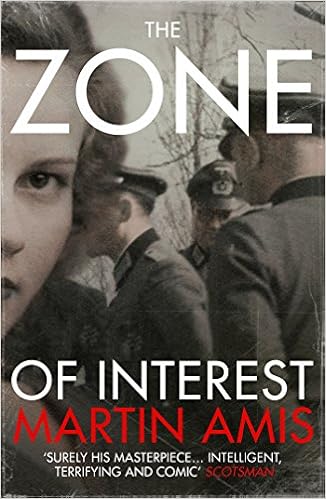
"The Zone of Interest" by Martin Amis

Amazon link

This is, I think, the first Martin Amis novel I've actually read.

Shocking.

I guess I had him pegged as a North London liberal, one of the golden generation who probably couldn't actually write that well, or who was transfixed by self-referential Islington-angst like Ian McEwan (am I being unfair?).

But no. Amis can write, he's interested in big questions and he's not restrained by bien-pensant shibboleths (or not much).

Hence a novel concerned in minute detail with human relationships between the Nazis at .. Auschwitz.

Very brave.

---

Here's a plot summary.
"The novel begins in August 1942, with Thomsen's first sight of Hannah Doll, wife of Paul Doll, the camp's commandant. (Doll's name is similar to Otto Moll, a notorious camp commandant in real life.)

He is immediately intrigued and initiates a few encounters with her. In time their relationship becomes more intimate, even though it remains unfulfilled. Despite their attempts at discretion, Paul Doll's suspicions are raised. He has her followed by one of the camp's prisoners, and is informed by him that they did indeed make two exchanges of letters.

While spying on Hannah in the bathroom (as he does regularly), Paul watches her read the letter from Thomsen secretly and rather excitedly, before destroying it. From that point onward, his wife becomes increasingly contemptuous of him, viciously taunting him in private, and embarrassing him in public.

Paul decides to assign Szmul, a long-serving member of the Sonderkommando, to the murder of his wife. He does so by threatening to capture Szmul's wife, Shulamith. The murder is scheduled to take place on April 30, 1943 - at Walpurgisnacht."
Thomsen is the nephew of Martin Bormann and leads a rather charmed life. Not that this saves him in the end.

In his afterword, Amis writes about the paradox of Nazism. Why the final solution? Why did they do it?

And quotes Primo Levi:
"“Perhaps one cannot, what is more one must not, understand what happened, because to understand [the Holocaust] is almost to justify ... no normal human being will ever be able to identify with Hitler, Himmler, Goebbels, Eichmann, and endless others. This dismays us, and at the same time gives us a sense of relief, because perhaps it is desirable that their words (and also, unfortunately, their deeds) cannot be comprehensible to us. They are non-human words and deeds, really counter-human...”
and then comments, "Historians will consider this more an evasion than an argument."

But Amis offers no analytical thoughts of his own.

---

Martin Amis is a novelist, not a sociologist. We look to his characters for explanations .. that is to say, their personality types. And here the Myers-Briggs/Keirsey schemes add value once again.

In the novel, Auschwitz presents itself as an environment of selection for Nazi staff. They are physically located at the gas chambers, the ovens, the pyres, the slave-labour factories and the centres for vivisection. It is impossible to ignore the smells, the screams and .. just what you see in front of you.

The primary screening attribute is empathy coupled with imagination. No-one with any degree of generalised empathy could possibly tolerate the place. Few Idealist NFs amongst the camp-Nazis.

Next focus on role: these are either abstract (policy and strategic) or concrete (operational).

Amis's hands-on characters, those who conduct 'selections' and 'actions' at Auschwitz are concrete ST types, generally logistical Guardian STJs. They have internalised that the jews, 'untermenschen', the handicapped and insane are to be classified as 'other', and are inured to 'the process'.

They're rule-followers.

The 'racial purity intellectuals' (like Goebbels and Hitler himself) do not physically attend the camps: for them, the raw physicality of death never intrudes. Their lack of empathy is abstract - the same as that of any military person or politician who is prepared to carpet bomb, or detonate nuclear weapons over cities.

For these people in themselves, Nazism is only an act of the intellect: either a deduction from certain principles or the righteous struggle on behalf of one imagined community ('the Aryan race') against its outgroups (the 'untermenschen'). Yes, the Nazis have their own version of SJWs - call them Racial Justice Warriors.

There is a third category of person: those who are caught up in the process but not directly involved in implementation. IG Farben business executives who are allocated concentration camp slave-labour, the protagonist Thomsen who serves as liaison between Auschwitz operations and Bormann's Party Chancellery. Thomsen describes his position as a 'Mitlaufer', (p. 148),
".. we were obstruktive Mitlaufer. We went along. We went along, we went along with, doing all we could to drag our feet and scuff the carpets and scratch the parquet, but we went along. There were hundreds of thousands like us, maybe millions like us. "
I think people like that, trapped by circumstance, were of diverse psychological type - though naturally all exhibiting an overarching deficit of empathy and imagination (few NFs then).

---

It's both interesting and sad that none of the four temperaments leads to good governance.

  • The rule of Rationals, Plato's Republic, leads to (always over-simple and inadequate) grand theory dominating humanitarianism. It doesn't have to be fascism .. Stalinism is another example. And the neocon-sponsored Vietnam and Iraq wars.

  • The rule of Idealists, which we have - at least ideologically - in the West at the moment, imposes (very selectively!) a normative model of human nature which sterilises human relationships. It's also profoundly reactionary in scientific terms, demonising research which 'feels uncomfortable'.

  • The rule of Guardians, as seen with Theresa May, is the domain of the concrete - without insight and imagination, politically ballistic, focused on operations over strategy. Destined to hit the wall when new thinking is required.

  • And finally, and perhaps most scary, the rule of Artisans. Those thrill-seeking adventurers who shoot from the hip, are easily bored and crave excitement. Welcome aboard, Mr Trump!
Yes, we are truly doomed to stumble from trap to trap.

---

What was Hitler's type by the way? Apparently INFJ, Of course, he never personally visited a death camp.

Hitler was an emotional and chaotic Idealist leader, whose moralistic drives had to be turned into policies and strategies by Rationals - and then implemented by Guardians and Artisans.

Reading his Wikipedia entry, Martin Bormann comes across strongly as a Guardian ESTJ.

Friday, January 05, 2018

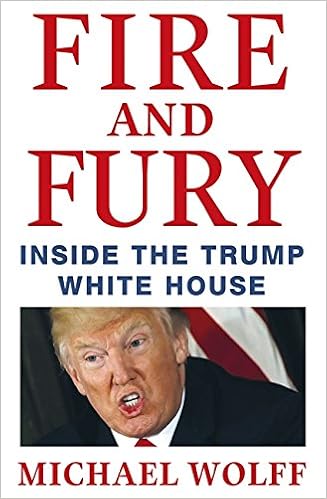
Way too much Fire and Fury

Amazon link

I think it was David Keirsey in "Please Understand Me II" who observed that the feminism of the sixties and seventies was driven by female ENFJs.


Amazon link

The Keirsey/Myers-Briggs NF ('Idealist') temperament describes a combination of abstract-intuition and compassion which forms the essence of liberalism. The extraversion (E) and Judging (J) work to turn that abstracted-compassion loose on the world - let the campaign begin!

Rationals like myself (ineffectually inclined to Libertarianism) tend to value truth and logical coherence. We are prepared for our ideas to be refuted.

Idealists, by contrast, are driven by moral fervour, not intellectual rigour. When they meet opposition, their opponents get classed as heretics, their positions a value-atrocity.

It's no fun debating SJWs.

So when the liberals got their claws into Donald Trump for not being one of them (and for refusing to sign up to their agenda - as Obama and Clinton had done), it was very tempting to defend the current POTUS.

But the political enemy of my enemy can also be .. my enemy.

---

Trump is most likely an ESTP. The lack of interest in ideas or coherent policy-making is not unusual for a self-indulging, prickly and egocentric Artisan.

The higher ranks of modern society tend to be overpopulated with intellectuals. Rationals do strategy and policy; the Idealists focus on the people stuff: the media and the campaigns. People who traffic in ideas usually write off concrete types (Guardians and Artisans) as stupid.

But Trump has made a successful business and television career and by all accounts has a mesmerising eye for detail. Stupid he is not.

Out of his depth, aggressive and unintellectual? - Well, we are where we are.

---

I would advise to dial down the panic. Trump is not Hitler. There is no American fascist movement of any consequence. One person alone does not control what happens in any modern society. Trump is undoubtedly the boss from hell - Wolff can be relied upon in his numerous anecdotes of glazed eyes and childish petulance - but the managing of such people is a well-trodden path.

You give them options and ensure the right one is the most attractive. It does require a good chief of staff as butler-in-chief, supported by a solid team across the silos of government.

The military, however, excels at developing senior officers with that kind of talent. This last year has seen a Darwinian process operating in the White House to form a senior government leadership team which actually kind of works.

Thursday, June 22, 2017

A chatbot could morph into someone quite like you

Version 1.0. -- June 22nd 2017

Download the PDF.

---

Available as a PDF

Birds of a feather flock together: it's well known from psychometric studies that friends psychometrically match; that is, they are more similar in personality type and intelligence than randomly chosen pairs of people.

This is a problem for chatbot designers in the business of designing virtual friends (eg Replika). By default, the chatbot starts with each new user as a standardised blank-slate, slowly individuating through lengthy and often tedious get to know you dialogue. See this transcript of a dialogue with my Replika instance, Bede.

It seems likely that concepts of intelligence and personality type are not even architectural present for these kinds of chatbot, limiting their ability to optimally-match their human partners.

We can do better than this.

---

Before chatbot-friends there were online dating agencies. They too faced the problem of assortatively matching people who came to them unknown, as strangers. Dating agencies therefore constructed detailed online questionnaires designed to elicit salient psychological traits.

Which particular traits did they investigate? That's proprietary, part of their USP. No doubt they experimented - lots of data! - but the starting point was surely the standard models of personality and IQ.

---

Many people (think employers) are interested in knowing your personal psychological qualities. The most popular evaluation framework is the Myers-Briggs Type Indicator which comes with an intuitively-compelling personality classification scheme (I'm an INTP) plus an underlying narrative of type dynamics which can be powerful in an informed analyst's hands.

The Myers-Briggs establishment is quite proprietorial with its canon of intellectual property, but it naturally holds no monopoly over personality research in general. The Keirsey system tells a different story, but generates similar results.

Academics tend to dismiss both camps as pseudo-science, with constructs unanchored in rigorous observation. The five-factor model (FFM), based on the 'lexical hypothesis' processed through factor analysis, is claimed as both rigorously-empirical and fundamentally atheoretic as regards underlying genetic, environmental, or neurophysiological etiology.

No matter: from the point of view of dating agencies and chatbot design, it is sufficient to define an appropriate personality space and to be able to classify people within it. It is commonly observed that in the five-dimensional space of the FFM there is a four-dimensional subspace broadly isomorphic to the MBTI and Keirsey as follows:
E = Extraversion
N = Openness
F = Agreeableness
J = Conscientiousness
Neuroticism (a tendency to experience and channel negative emotions - contrasted with emotional stability) is not a feature of MB/Keirsey. Some people have advocated adding it.

I would also suggest adding the somewhat-orthogonal dimension of intelligence as an equally relevant attribute, so using six dimensions overall.

For the chatbot (or dating agency) designer, a new user should be allocated a coordinate in personality/intelligence space: the means of doing so is through their answering questions.

The design of psychometric questionnaires is interesting and well-studied. Lists of candidate questions are generated for each trait and then tested with large samples of subjects. Question-responses are cross-correlated to identify those questions with the greatest diagnostic power. The idea is to prune down to a much-reduced, highly-efficient subset of key questions.

The whole process is quite expensive, uses large sample sizes and takes a while. Luckily, for dating agencies and chatbots, we're doing engineering, not science; we just need to allocate people to the right 'bins' (to use a technical term).

The best approach is to take one of the many FFM questionnaires freely available on the web and simply edit the questions to the needs of your own scripts while maintaining their general tenor. A cursory google search, for example, turns up this.

Once you have a starting point of maybe 50-100 questions, they should then be tested on a tame audience (eg your employees) where you already have psychometric data. This will ensure initial calibration.

Next, the surviving, and duly modified questions can go live in the chatbot dialogue. They need to be instrumented so evaluation can continue on the much larger user datasets to come, looking for high within-trait correlation clustering - and ideally, further factor analysis.

---

The process so far is asymmetric: the personality type/IQ of the user is being assessed. This is vital for a dating agency - it's the raw material for the matching algorithm. However, the chatbot designer further requires that the chatbot should use this data to 'morph' itself.

In the FFM + IQ model, construct a six-vector with two-valued components:


This will be used to configure 64 chatbot variants.

---

How do we do this? Let me give you an example from an area I'm somewhat familiar with: automated theorem-proving. Intelligence is associated with the ability to competently handle abstractions, both deductive and abductive (the latter being associated with creativity/openness).

For the theorem-prover designer, humans are pretty useless at deduction - they have to be modelled as exhibiting severely-bounded search spaces, with smarter people having larger bounds - greater lookahead, if you like. You can see how a chatbot could have an adjustable parameter here.

Abduction (reasoning from facts to larger, embedding contexts) is also a search problem. An automated system will start from the topic under discussion and seek matches in its wider database of concepts. Smart people have larger and more sophisticated 'concept-bases' plus a greater ability to find productive matches.

All this is readily emulated by bounded search in diverse semantic nets (or similar formalisms). This gives two dimensions of inter-personal variability; two parameters to be varied.

---

In my more GOFAI-moments, I would be tempted to create algorithms, data-structures and search strategies for the computational realisation of FFM traits. But that would not be the ML-way. Instead, take the conversation datasets from FFM-labelled users and run them through a machine learning process to extract the relevant conversational feature traits.

Then use those traits in generative-mode.

Someone who scored
"(concrete, organised, introvert, tough-minded, stable)"
would produce very different conversational feature-vectors than a typical
"(abstract, spontaneous, extravert, friendly, emotional)".
---

It would be deeply unfashionable these days to do too much hand-crafting of the 64 chatbot variants. The thing is to architecturally distinguish them, so that machine learning has explicit parameters to adjust based on the classification assigned to each new user.

So here is how I would see it working.

You sign up with a chatbot-friend provider (such as Replika) which initially knows nothing at all about you. Your first interactions with the chatbot are friendly but rather impersonal. It's like talking to an amiable stranger - whiling away the time on a long journey.

The chatbot is subtly directive. The questions are those which elicit your personality six-vector values. As you become more localised in personality-space, the chatbot itself begins to transition. Like an empathic colleague, it alters its own configuration parameters to mirror your localisation in personality space. If you are more extravert, its conversational style veers that way; if you are intellectual its mode becomes .. perhaps more discursive.

Subconsciously you begin to feel more at home with your chatbot-partner, it seems to be 'like you', sharing your style. It's comfortable.

---

Like the dating agencies, this would just be a start. The end-game is to tailor chatbot empathic-convergence to each user as rapidly as possible.

This is a problem for which big data was designed. Interactions must be instrumented and analysed in a process of continuous improvement.

It sounds like a really interesting programme!

Monday, February 01, 2016

How Much Do Our Genes Influence Our Political Beliefs?

This is the title of a New York Times piece in July, 2014, which had an illuminating thesis. Click on the table below to make it larger.
"Identical twins are more likely than fraternal twins to share traditional values with their twin siblings, suggesting a biological link on cultural outlook.

"In this table, 0 represents no correlation in outlook; 1 represents identical outlooks. In reality, the numbers fall in between, but identical twins are much more culturally alike (higher numbers) than fraternal twins.


"In an email, Ludeke explained how to interpret this information: “These correlations represent the extent to which members of a given type of twin pair resemble each other for the trait in question,” he wrote. “Low correlations, like those we found for fraternal twins, indicate that knowing the scores of one twin won’t give you much, if any, clue for figuring out the scores of the other. On the other hand, based on the correlations presented here, knowing the scores of one identical twin gives you a pretty good indication of the scores of the other.”

"The significance of the different correlations for identical and fraternal twins, Ludeke added, is that “when we see identical twins who are this similar, while fraternal twins are much less similar, we have a good indication that genes account for some of the difference between people for the trait in question.”
High heritability for political outlook doesn't mean you are destined to share your parents' views; after all, you are neither a clone nor an average mixing of your parents. It does mean that your unique genome is providing you with temperament/personality settings which inform your political outlook.

In my previous post, I quoted Scott Alexander's figures that elite US universities, like Harvard or Yale, sort something like 90:10 liberal vs. conservative. That academics - particularly in the social sciences - are bleeding-heart lefties is a truth universally acknowledged. In business, to the contrary, I have rarely found the ranks of management thus populated. Occupations are a great sorter, not just for intelligence but also for temperament and personality type.

In Keirsey/Myers-Briggs terms I suggest:
  • Liberal-leftists tend to be NF-Idealists
  • Libertarians (of left and right) are NT-Rationals
  • Conservatives (of left and right) are ST-Guardians
  • Populist insurgents are often SP-Artisans.
So some examples.
  • The emotion-driven, fuzzy-thinking, heart-on-sleeve, leftist BBC/Guardianista is the classic Idealist-NF. My favourites include Lyse Doucet and Shami Chakrabarti.

  • Left-wing Rationals include Jeremy Corbyn and Bernie Sanders; on the Right you have US neocons such as Paul Wolfowitz, John Bolton, Richard Perle - and Michael Gove.

  • You find small-c conservative Guardians in all political parties. David Cameron is one, and so is Tom Watson, deputy leader of the Labour Party. Also Hillary Clinton.

  • My favourite Artisan is the leader of the Italian Five Star movement, Beppe Grillo, ... and then there's Trump.

We're all puppets of our own temperaments. Rod Liddle (a working-class Rational) rages at bien-pensant liberals; they rage at heartless and utilitarian dessicated intellectuals ... so it goes.