Showing posts with label Libertarianism. Show all posts

Wednesday, July 24, 2019

'The Fifth Wave' by Martin Gurri - new blog featured here

New blog on the sidebar: 'the fifth wave' by Martin Gurri. As often cited by Arnold Kling's blog.

"The same unmodulated whine about present conditions circled around and around, without even the ambition to achieve wit, depth, or originality:
    The internet is the enemy:  of rationality, of democracy, of truth.  It must be regulated by enlightened minds.

    The public resembles an eight-year-old who is always fooled by tricks and lies.  For its own protection, it must be constrained by a Guardian class.

    Populism is the spawn of lies.  Even if it wins elections, it is never legitimate, and must be swept away by a higher authority.

    Climate change is a scientific mandate for torturous economic and political experiments, implemented by experts. To deny this is worse than error – it’s a crime against humanity.

    Hate speech, offensive words, fake news, deep fakes, privacy violations, information bubbles, bitcoin, Facebook, Silicon Valley, Vladimir Putin, Donald Trump, Brexit:  all must be controlled, criminalized, exploded, broken up, exposed, deposed, or repeated until the right answer is obtained.
None of this was up for discussion. None of it was uttered with the least semblance of self-awareness.  In the same breath, a speaker called for the regulation of the web and the education of children in “tolerance.” If I had pointed out the contradiction, the speaker, I’m certain, would have denied it.  Tolerance, for her, meant the obliteration of opinions she disliked.   ..."

Monday, July 02, 2018

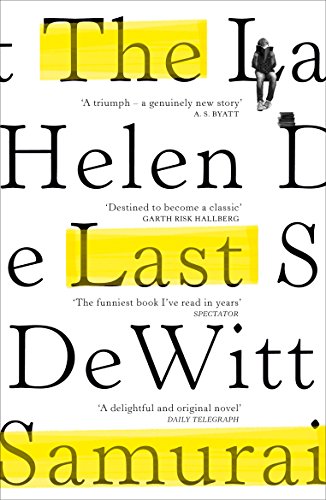
"The Last Samurai" is a work of genius

Amazon link

From the New York Times review:
"The progenitor of these projects is Sibylla, a woman of frightening intellectual intensity who trades America for Oxford in an attempt to avoid a family tradition of dreams deferred. Frustrated by the limited scope of her Oxford studies, she soon drops out, opting for a precarious existence at society's margins in a sad parallel to the American life she had tried to escape.

Nine months after a drunken tryst with a popular travel writer, Sibylla gives birth to Ludo, a child prodigy who at 4 is reading the ''Odyssey'' in Greek. Sibylla refuses Ludo knowledge of his father because she can't bear the idea of involving such a banal man in the life of her son.

As a father substitute, Sibylla offers Kurosawa's film ''The Seven Samurai,'' which she watches obsessively in her attempt to escape the drudgery and mediocrity of the real world. Rather than sating Ludo's paternal yearnings, the film inspires him to embark, at 11, upon a quest to choose his own father. ...

Ludo shares the novel's narrative center with a cast of seven potential fathers, one literal and six wishful, whom Ludo seeks out during his Kurosawa-inspired quest. The lives of these men are provided in asides that almost constitute a short-story collection within the body of the novel.

DeWitt's imaginative powers are showcased here as she details these engaging and eccentric men, luminaries in fields ranging from astronomy to professional bridge. DeWitt's facility with their stories is so convincing that you wonder, briefly, if these characters are based upon historical figures -- a true marker of effective fiction.

Ironically, these men often feel more real than Sibylla herself, who becomes more a collection of quirks than a multidimensional presence."
The Last Samurai is laugh-out-loud funny, highly ingenious and a page-turner; it's rationalist-libertarian, self-satirical and smart. I have her latest, Some Trick, on the stack downstairs.

Amazon link

Here's the more erudite Paris Review on DeWitt's novel.

Thursday, January 05, 2017

And if they had failed?

Amazon link

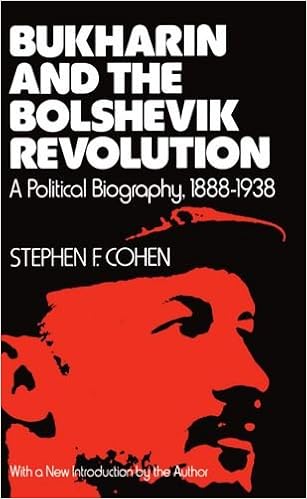
This year is the centenary of the October Revolution, and everyone is sharpening their agendas.

I expect the dominant narrative will be that the whole thing was a tragic mistake, and that if only Kerensky could have retained power, today Russia would be the new Germany. Or something.

---

It's a delight to read an intelligent, scholarly account of events through the eyes of a slightly second-rank player. You've heard of Leninists and Trotskyists but seldom of 'Bukharinists'.

No agenda, except to rehabilitate this most-traduced man.

I'm not far into this weighty tome, but two things immediately stand out:
  1. In the summer of 1917, the workers and peasants across Russia were out of control. The peasants were busy expropriating the landlords and creating that regressive peasant-utopia of small self-owned landholdings; the workers had seized the factories and were running them themselves; the army had elected soldiers' councils and was ungovernable.

  2. Kerensky's Provisional Government of moderates and liberals was powerless, while many prominent Bolsheviks balked at leadership. It was only Lenin's iron determination to take charge that avoided a collapse into chaos, probably followed by a German takeover .. and later Allied dismemberment.

Cohen is clear that the new Bolshevik Government had no clue as to what to do next; nothing in the Marxist canon provided a blueprint. Then came the Civil War, as the counter-revolution plus Allied forces tried to topple the new revolutionary power, and top-down bureaucratic command-and-control became the order of the day.

Bukharin was instrumental in the introduction of the New Economic Policy in 1921, which revived the moribund economy (for more about that, scroll down here).

---

I keep coming back to Marxism on this blog: you will look in vain for a clearer analysis of capitalism as a construct of specific recurrent human social relationships. But the focus on the social construction of reality is not well-grounded in human nature. We know a lot more than Marx did.

Capitalism goes with the grain of human nature (at least a human nature with a certain level of intelligence, conscientiousness, agreeableness, trust and low time preference) - it was not consciously designed.

Post-Capitalism - as conceived within the Marxist tradition - requires an attainable human nature at the outer limits of a Social Justice Warrior's wish-list.*

---

I continually speculate on the future target social architecture which synthesises our best understanding of human psychology with the social insights of Marxism. My best attempt, compassionate libertarianism:
  • a safety net for those who don't cope
  • maximal equality of opportunity 
  • highly-constrained elite power.

As Marx suggested, this depends on a much greater development of the productive forces, and as Marx didn't say, some improvements in 'human capital'.*

Scott Alexander once suggested that the task of the current generation might be to take care of the world until we get AI automation and genetic engineering to work. Perhaps that's task enough.

---

* OK, here's the nightmare.