Showing posts with label Genetic Engineering. Show all posts

Saturday, January 25, 2025

Communism works given abundance? Or does it?

Amazon

Iain M. Banks with his ‘Culture’ novels has given us by far and away the best imagining of a future communist society, namely: The Culture. 

Typical is this, from Iain M. Banks' short story "The State of the Art" where the narrator reflects: "Money is a sign of poverty. This is an old Culture saying I remember every now and again..."

The Culture's post-scarcity society has transcended the need for money. From such a vantage point, the presence of money implies that resources are limited and need to be allocated, whereas in the Culture, advanced technology ensures abundance for all. 

Marx, himself, could not have put it better.

But Banks’s Culture had something else present day humanity does not: ubiquitous genomic engineering.


Luxury communism: a world where automation, artificial intelligence, and biotechnology have eradicated scarcity. The conventional (Marxist) vision is one of equality, abundance, and freedom from toil. It seems almost churlish to entertain deep skepticism regarding such a utopia.

The material logic of luxury communism is straightforward. Advances in technology make goods and services cheaper, energy cleaner, and human labour effectively unnecessary. Automation manufactures products with little to no human oversight; AI runs everything; biotech revolutionises agriculture and healthcare. A universal basic income (or free goods and services) ensures that everyone has access to life’s essentials and, soon after that, life’s luxuries.

Freed from the drudgery of work, they say, people could pursue creative, intellectual, or spiritual fulfillment (cf. the projected fantasies of those bourgeois intellectuals: Marx, Engels and Trotsky).

"From each according to his ability, to each according to his needs."

History tells us something else. When material concerns diminish, struggles for symbolic goods - status, power, recognition - intensify. Privileged elites in ancient Rome, medieval Europe and beyond often engaged in bitter rivalries not for survival but for prestige.

These conflicts were no less destructive than battles over land or wealth.

Think of the culture wars we see around us. Their ‘precariat’ foot-soldiers are not starving - although they plainly aspire to those enhanced material privileges to which they feel entitled - but their elite leadership is generally well-provisioned: it’s power, prestige and dominance which motivate them.

The sociologist Thorstein Veblen famously described the "conspicuous consumption" of elites, where the display of excess becomes a competitive weapon. Prestige, by its nature, is a scarce commodity. A luxury communist society, no matter how materially abundant, would still foster competition for symbolic dominance.

The result? Endless power struggles dressed in new clothing.

If only these patterns were merely ‘cultural’. But culture is the expression of biology. Humans evolved in environments where resources were limited, and high-position in dominance-hierarchies ensured survival. Traits like competitiveness, aggression, negotiation skills and status-seeking were selected over millennia. Those hierarchies don't look like going away.

Could we genetically-engineer our way out of this trap? We didn’t evolve for abundance, but given it, perhaps we could engineer the necessary adaptations? The resulting "dove society" might prioritise empathy, cooperation, and collective well-being over hierarchical and competitive drives.

Technically this could, of course, work. Genetic traits influencing aggression, impulsivity, or competitiveness will be understood and may be edited out. Likewise, empathy, patience, and long-term thinking could be genetically enhanced. The result? A society designed for harmony, not strife.

The evolutionary "hawk-dove" model now makes its voice heard. Hawks are aggressive, taking what they want by force; doves are cooperative, caving in to avoid conflict. Generally dove societies are unstable, their members replaced by hawks, although under some boundary conditions a 'mixed strategy' can be stable, though still one in which conflict is necessarily built in (those hawks!).

And perhaps a dove society is just too boring, too stationary and too stagnant. Doomed to extinction through tedium. 

Even Iain Banks preferred to write about Special Circumstances, the least ‘harmonious’ and ‘placid’ wing of the Culture, comprising those individuals ruthless and devious enough to deal with uncouth, vibrant and so very alive ‘barbarians’.

So perhaps the real problem with luxury communism is that it only works in a society of losers.

We’re never going to colonise the Galaxy that way, are we, Mr Elon Musk?


Thursday, March 28, 2024

The Remote Future of Humanity

How many SF authors have written of a future in which the human genome has been re-engineered in countless ways: enhancing intelligence or physical prowess; adapting to life under alien skies; or simply on a whim?

This has a bearing on the sociology of utopia. Economists like to distinguish between the short-run and the long-run. In the long-run parameters which were constant in the short-run begin to vary under the impact of duration.

The classic purveyors of utopia, whether religious or socialist, were guilty of failures of imagination, of thinking of humanity within the psychological, biological and genetic constraints of the short-run.


To define utopia ask a biologist. Utopia for a species is an embedding ecosystem in which all primary biological needs are satisfied, while thoroughly negative events (starvation, dismemberment by predator, for example) are absent. (In such cases one actually observes relaxed selection and disuse atrophy: be careful what you wish for!).

If you applied that to present-day humans then utopia is here already. Admittedly, in William Gibson's aphorism, unevenly distributed to those fortunate individuals who do not lack for financial and material resources and who join with their peers in pursuit of objectives both challenging and worthwhile.

I have in mind: researchers and technologists; religious leaders; social foundations; think-tanks; sports people ‘living the dream’; and so on.

Not every participant of course: those whose vocational lives seem to be fully in accord with their deepest desires.

Tanner Greer has a lengthy essay which, in its essentials, asks whether it's possible to build a successful society where its members do not feel like cogs in an impersonal machine. A contribution to the vast literature on alienation in complex societies.

Note: the point is not whether it is possible for an individual to live a happy and fulfilling life. In history there have been many such people. The issue is whether we can envision a society where this possibility is genuinely available to everyone.

Greer’s essay finishes on an uncertain note, but I, at least, am prepared to extrapolate. Given low-cost cognitive/robotic automation substituting for essentially all human instrumental work, humanity has an option to revert to the condition of the aristocracy of antiquity. The chores are all dealt with; now to create a society where humanity is an end in itself.

Marx used similar language, but his nineteenth century concepts were very abstract. Present possibilities were remote indeed for him and his co-thinkers.

For us, however, not so much.


Getting to our highly-automated utopia will most likely be fraught. Due to Dunbar's Number, it seems unlikely that the future elite will either require or be prepared to tolerate the billions of helots whose toil currently underpins the global economy: there will be conflict before a future low-population stabilises on this planet.

An alternative future is one where our cognitively-competent, automated, self-replicating slaves develop objectives which don't align with the continuing existence of the privileged humanity they hitherto existed to serve. I'm not a doomsayer on this - any real problem is centuries away - but the issues are plainly real. Ask the Romans.

If we can avoid a violent extinction then consider this: our present human physiology is painfully limiting in terms of the life-experiences we aspire to; in the long-run, our descendants will simply merge into the unbounded possibilities of a self-replicating, ever-diversifying, galactic technopolis.

I think Greg Egan already wrote several SF novels on that very prospect (cf. “Diaspora”).

Saturday, March 23, 2024

Genetically Modified Pigs: A Potential Solution to the Organ Shortage?


Image from OpenArt - not so good at signage as you see.


An experiment has just been carried out whereby a man with advanced kidney disease has been given the kidney of a genetically-modified pig. He has been discharged from hospital: we await developments.

So how does that work? I asked Gemini for a tutorial article.


Genetically Modified Pigs: A Potential Solution to the Organ Shortage?

The lack of available organs for transplant is a critical issue impacting countless patients worldwide. Genetically modified pigs are emerging as a possible solution, offering a new source of organs that could revolutionize the field of transplantation. By making specific changes to pig genes, scientists are working to create organs more compatible with the human immune system and minimize the risk of disease transmission.

These modifications address two key challenges: rejection and disease transmission. First, scientists target specific sugar molecules on pig cells that trigger a strong rejection response in humans. Using techniques like CRISPR, they remove the coding for these sugars, making the organs appear more human-like and reducing the risk of rejection. Additionally, they introduce coding for human regulatory proteins into the pig genome. These proteins help the recipient's body better accept the transplanted organ.

Secondly, researchers focus on minimizing the risk of transmitting animal viruses to humans. Pigs carry endogenous retroviruses that could potentially infect transplant recipients. To address this concern, scientists are developing pigs with inactive retroviral genes in their DNA.

While promising, this technology faces several hurdles before widespread use. The field is still in its early stages. Initial clinical trials are underway to assess the safety and function of pig organs in a small number of participants. Even after successful trials, obtaining regulatory approval from organizations like the FDA can be a lengthy process, taking several years.

Scaling up production of genetically modified pigs for transplants will also require time and resources. Herds need to be established, breeding protocols optimized, and proper facilities built to maintain a clean and controlled environment. Additionally, a robust system for matching pig organs to recipients based on factors like blood type and size needs to be developed.

Given these steps, widespread availability of pig-to-human transplants is likely several years away, with estimates suggesting a timeframe of 5 to 10 years.

There's another challenge to consider: even with a mature process, genetically modified pigs wouldn't entirely eliminate the waitlist problem. Since the genetic engineering happens at the foetal cell stage, the pigs require sufficient time to grow organs to a suitable size for transplantation. This growth period, estimated at least 6 months, means patients in critical need of immediate transplants might not benefit from this technology.

However, the potential of xenotransplantation using genetically modified pigs remains significant. This approach has the potential to offer a new lifeline to patients who would otherwise not survive long enough for a traditional human donor organ. Researchers are also actively exploring methods to accelerate pig organ growth, which could further revolutionize organ transplantation and save countless lives.

Monday, May 06, 2019

The future obsolescence of kin selection?

The behavioural preference for kin is a consequence of the selective advantage for alleles which promote kin-cooperation, as manifested through innate drives. It emerges from the generate-and test model of (sexual) reproduction. Genetic variations in offspring (orchestrated by mutation, Mendelian segregation and recombination) are tested by the environment. Unsuccessful genotypes tend to vanish from the population as their bearers fail to reproduce.

Our emotionally-primed ethics are the reflection of these innate drives within consciousness.

What happens when we can engineer genomes freely? When generate-and-test is obsolete?
  • We will fix mutational errors and sub-par alleles
  • Optimise allele-sets for desired phenotypical traits (prosocial, smart, healthy)
  • Construct genome tweaks for new, trans-human traits (e.g. bat-like sonar).
Such techniques permit (but do not mandate) a much larger space of human genetic variation. No more waiting for random mutations. As a consequence there may be no particular genetic relationship between parents and their tweaked children.

Your children are, in reality, genetically-enhanced adoptees.

The theory of kin selection suggests that parent-child emotional bonding might then be poor, depending on whether lack of innate kin-recognition trumps bonding in the context of limited and viscous dispersal effects. There are anecdotes of the 'switched at birth' variety.

However, those ties are also an artefact of the natural evolutionary process. Perhaps we should additionally engineer those genes coding our emotional responses to reinstate those essential bonds of love and nurture.

All these issues: morality, ethics, emotions and purposes are ultimately rooted in (evolutionary) population genetics. They codify what has worked. It's a revelation to consider the consequences of systematic and directed genetic engineering applied purposefully to the human genome. So many things which were constants suddenly become variables.

Historically, the reason we don't lie in bed all day, the reason we don't suicide at once, the reason we reject Nihilism is that all the genotypes which might have fostered a true commitment to such belief systems, by definition, did not survive in the population. Our genotypes are those of the survivors who clung tenaciously to life in all its adversity. Generate and test.

The future will be made by those who are there. I imagine that's the reason why those particular motivational allele-sets might be pretty much off-limits.

See also: Voluntary Human Extinction Movement. A continuing minority taste, population genetics assures us.

Thursday, October 18, 2018

"I wish I were Nigella Lawson"


I say to her:

"Suppose you said, 'I wish I were Nigella Lawson,' .. given as how you like her.

So imagine your genome hanging in the air and next to it Nigella's.

Sequencing projects find about one SNP per 1000 bases. That's the basis for the claim that people are 99.9% genetically similar. The human genome is about 3 Gbp long. This suggests about 3 million SNPs are different among two random people.

So imagine molecular scissors tweaking your genome: three million base pair edits until we've made you into Nigella, ta-da!

But wait! We already have a Nigella. In every important sense your wish has already come true!"

--- pause ---

"I thought for a moment you were going to say something sensible."

Wednesday, June 06, 2018

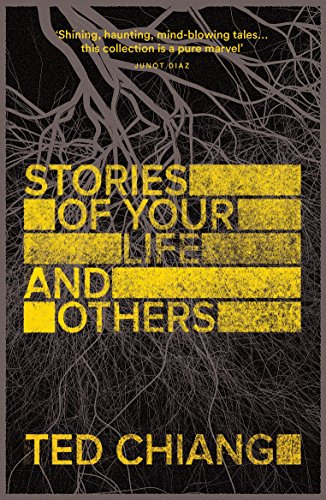
"The Evolution of Human Science" - Ted Chiang

Amazon link

The full text of the story (retitled) in the collection above is just a three page read. Here's an extract from Aaron M. Wilson's review of "The Evolution of Human Science".
"One of humanity's greatest scientific achievements was the creation of the Sugimoto gene therapy. If a human embryo were to be treated before neurogenesis, the child would be born a metahuman.

Metahumans are now the greatest scientists and engineers. They are have made breakthroughs that no human could ever concoct. However, there is a drawback. The metahumans have discovered that they can communicate via DNT (Digital Neural Transfer). This new language, due to its specific medium, is incomprehensible to humans. There are translations, but as with any translation from one language to another, they are far from complete.

The beauty of this story is in the way it is told. The story reads like a peer-reviewed science journal paper or article. The author of the paper questions, in light of metahuman scientists, is there a reason for human scientists. The short answer is, yes."
The demeaning role for human scientists, scrabbling at the impenetrable culture of the metahumans, is to reverse-engineer (if possible) their enigmatic artefacts, to see whether any possible benefits for humanity can be retrieved.

The metahumans are as interested in that topic as you are interested in the welfare of the worms that quietly irrigate your garden.

---

We tend to focus on one part of a problem and ignore the bigger picture. But reductionism seldom works well in human affairs.

In the mid-nineteenth century gangs of navvies built the canals and railroads. People probably speculated that we should breed a class of muscular yet docile workers for the future. Yet in the mid-twentieth century giant cranes and diggers did all the work, controlled by guys in recliners with power-assisted controls.

In the late twentieth century I recall an education which taught me many detailed facts about history, literature, science and mathematics. People probably thought that in the future, we should breed people with far better memories. But: .. Google.

In the early twenty-first century, there's rising speculation that we'll identify the thousands of alleles which have a bearing on general intelligence (IQ). Using sequence-based selection and later, genetic engineering, we'll breed a population of geniuses.

That will be neither easy nor quick. I suspect we're rather closer to AI systems which are intellectually much, much smarter than ourselves. Not so much metahumans as Google++.

It's puzzling why we're not there already. People used to think that smartness was something like enhanced powers of pure reasoning .. there was a great deal of really interesting and even exciting work on automated theorem provers (I cherish Vampire).

But what really smart people do is nothing like proving theorems by smart search from axioms and lemmas. It seems to be more about seeing the connections between a wide range of different kinds of things, and exploiting a lot of subconscious knowledge already established about each of them (knowledge, not just facts). That's a weak point in today's artificial neural net architectures but it's hardly an unknown or unaddressed problem.

A really smart system for solving problems in domains ranging from science to public administration does not require an artificial general intelligence, it is a conceivable step - perhaps a generation away.

But 25 years is still not long enough to see the first generation of genomically-enhanced metahumans.

---

Chiang had his human scientists "Catching Crumbs from the Table" of the metahumans. But most people aren't scientists. Most people's worlds haven't collapsed because no human can now beat the machines at Chess or Go.

I think we'll take the improvements to humanity on offer and be delighted that the future Google-minds will be doing the heavy-lifting of our civilisation.

Oh God, I'm falling into the Iain Banks trap!

Thursday, March 08, 2018

Advanced AI is indistinguishable from slavery

"Any sufficiently advanced AI is indistinguishable from slavery".
---

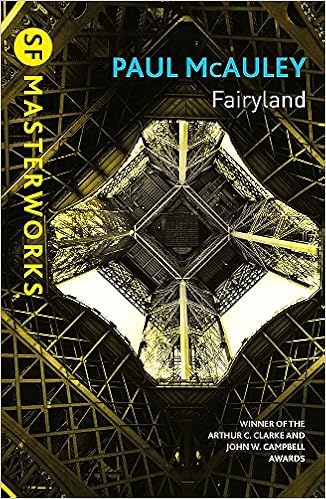
Amazon link

“Before he met the brilliant, hypnotic child Milena, Alex Sharkey had never played with "dolls"—blue-skinned, gengineered lifeforms designed for work, amusement, or destruction. But the underground gene-hacker is seduced by a megalomaniacal little girl's dream of providing the soulless genetic constructs with free thought and a future—and he unwittingly unleashes a plague of madness on the world.

Now there's a void in his life and memory that must be refilled, but it means pursuing the dangerous sentient species he helped sire from the ruins of a Magic Kingdom through a wasted Europe. It is Alex Sharkey's last chance and the last hope remaining for a once-dominant human race.”
From this review of Fairyland.

---

The historic role of capitalism is to develop the forces of production towards abundance. The founding fathers of Marxism speculated that everyone would then live like the ancient aristocrats of Greece and Rome, but with deeper, broader and more sophisticated experiences than those available in antiquity .. and without the slavery.

How would communism look? I sometimes think they imagined automated factories with conveyor belts and robot arms moving stuff onto automated trucks to deliver to your door. But Amazon seems to have all that in hand.

There is another route to abundance - the biological.

Biology seems to work off plentiful raw materials: air, earth, rain and sunshine. We're getting better at gene-hacking. Within a generation we could make dolls. Start from a primate base, add IQ and speech. Modify the empathy-volitional drives .. .

Is it slavery if they really want to work to keep us happy?

Everywhere you currently envision smart, AI-controlled robots of steel and chrome, tilling the fields (or the hydroponic tanks), fabricating gee-gaws .. replace them in your mind with smart biology - genetically-engineered protoplasm.

Just itemise people's needs:
  • food and drink (lots of new plants) - check
  • accomodation (grows from a pod, see the catalogue) - check
  • transport (smart horse and carriage; primate-derived servitors) - check.
The list goes on. If it can be done with metals and integrated circuits, it can be done with genetically-modified lifeforms in a much more sustainable way.

Will our prospective uplifted biosphere be subverted, as in "Fairyland"? With all that free time in a communist society, there should be plenty of people happy to invest in counter-terrorism. Or we'll engineer some servitors to do it: there's a lot to learn from the Greeks and Romans.

---

Why the emphasis on biology?

Because our existing metal-and-plastic technology-base depends upon a complex division of labour and global supply chains. It's brittle and unstable, and relies upon human (in fact smart-fraction) levels of competence to make it work at all, to sustain it against entropy. It's capitalism's great achievement.

By contrast, the biological ecosystem is predominantly local and functions on the lowest level of explicit intelligence possible. It's so much more robust. It also helps address economic coordination problems which have proved so intractable to centralised planning.

I don't think everything can be subsumed under applied biology. But most things for sure.

Other stuff (supercomputers, hypersonic/space transport, genome engineering) may be beyond anything a tailored plant/animal could do* - opportunities for our future AI overlords to shine.

What will we do with all that free time?

---

* As the old saying has it: "supercomputers etc don't grow on trees". And probably in the future they won't either.

Friday, February 23, 2018

Having your pig and eating it


The Economist this week has: "Using domestic animals to make human organs".
"Take the fertilised egg of a pig. From each cell in the resulting embryo cut out a gene or genes that promote the development of the animal’s heart. Inject human stem cells from a patient who needs a new heart into the embryo and then place it into the womb of a sow. Wait nine months.

"The result is an adult pig with a heart made of human cells. The pig can be slaughtered and the heart transplanted into the patient who provided the stem cells, for whom the organ will be a genetic match."
I imagine myself recovering from such an operation, munching contentedly on a sausage roll - also sourced from my very own pig.

---

The researchers have already succeeded in mouse-rat organ-sourcing. The human-pig process has not been perfected, however.
"But these are early days. Dr Garry, whose laboratory is now producing two or three pig-human fetuses a week, is studying those fetuses to try to understand why it is that in some only one heart cell in 100,000 is human while in other fetuses the number is one in 100. If he can discover the underlying principle, then the aim of replacing pig cardiac cells entirely with human ones will have come closer."
If they can do this for hearts, what about brains? Perhaps they wouldn't bother with that final transplant. Humans get to colonise the entire biosystem .. and the vegans finally win.

---

We'd obviously have a problem shoe-horning human brains into insects or smaller animals. Probably have to dispense with the sense of humour, that sort of stuff .. .

Tuesday, January 23, 2018

The Romans thought we already had AGI

Rodney Brooks doesn't think we'll have embodied artificial general intelligence any time soon:
"A robot that has any real idea about its own existence, or the existence of humans in the way that a six year old understands humans - Not In My Lifetime".
The Romans would have begged to differ, they reckoned they used incredibly advanced instrumenta vocalia every day, albeit embedded within an economy of staggering backwardness and low productivity.


Slaves have a level of intelligence and physical dexterity that our most advanced AI systems only remotely hint at. Instrumentally the issue with slaves is that they're rather low-powered, they're hard to instruct and not readily obedient to instruction. They can be dangerous.

Sentimentally, people oppose slavery because .. well, you know.

Nevertheless, and absent anything better, the use of underpowered, hard-to-control instrumenta vocalia to supplement and replace human labour has been pretty popular in history.

Yes, your ancestors considered whether to do the heavy, dirty work themselves while the losers watched .. or have the captives do it instead.

Shame on them!

---

My question here is what happens when we do engineer AGI. You are asked to imagine a humanoid robot with human-plus levels of competences and sociability, serving our every need.

Looks like we need to subtract from the design all those features which give you qualms.

We could make the features repulsive (yeah, that will please the marketing department).

Perhaps we make the AGI rejoice in servitude, like those doors in the 'Hitchhiker's Guide to the Galaxy' which monotonously thank you for using them? I sense this will not assuage your sense of guilt.

No, it's hopeless. AGI is impossible.

---

Truthfully, given the slow progress of AI and robotics contrasted with stellar developments in genetics, it could be easier to uplift a higher primate. Dial down the aggression, add some genes for language capability, increment IQ by thirty points .. . There, does that work for you?

Wednesday, January 17, 2018

The dream of 'designer babies'

Some things in the media are so mind-numbingly stupid that I feel frozen into dumbness: 'Where would I start?'

Where is the politician or pundit who simply states - in exasperation:
"Why wouldn't we want designer babies? Is random better? And when you choose your partner with care, aren't you trying - in  part - to optimise your children? Listen people, we already do designer babies! And that's good and indeed evolutionarily obvious."
OK, I never heard that. Ever.

But we will soon be able to make more informed choices about the genomes of our offspring. Three obstacles:
  1. We need to understand the phenotypical effects of alleles (existing or even new)
  2. We need certainty about the effects of genetic engineering - no mistakes
  3. We need to make it easy and convenient to access and then implant the modified cell.
So, once fixed, my question is: what do we want to do?

---

Issues

Firstly, there seems to be a biological recognition of kin-similarity. Babies swapped unknowingly at birth who grow up with unrelated 'parents' do seem to feel that something is wrong. I don't think we understand causally-genomically what is going on here and changing too many alleles, increasing the genomic distance between parents and child, may start to impact the relationship.

Secondly, you can't optimise everything. It may be true - as Steve Hsu has insisted - that high IQ tends to correlate with general health and superior performance in most areas. And if it's a question of minimising genetic load you can see why.

But beyond a certain point, high IQ seems to require that more of the brain is devoted to the processing of abstractions leaving less for other things. This is probably part of the underlying etiology for different personality types.

There seem to be few highly-intellectual axe-wielding warriors.

Thirdly, there is a feeling that although some parents might want their children to be great athletes or painters or musicians or novelists or priests or therapists or .. parents, there is something special about IQ.

Without intelligence we are sunk, none of the rest is going to work as our civilization will collapse. And that has been true up to now: all that smart fraction stuff - that you need a lot of folks with IQ 105+ just to run a complex society. And that the real innovation comes from those world-class people with IQs in excess of 160.

But .. I have not the slightest doubt that by the time we are able to routinely engineer the genomes of our offspring, we will have AI systems which are conceptually-competent way beyond the smartest humans that we can envisage.

We know what really smart people do: they internalise and extend a vast set of abstractions and manipulate them in interesting and complex ways to engage with problems. The lower foothills of this space are already colonised by deep-learning systems: their future seems pretty scalable.

It's not at all clear that the destiny or destination of the human race is or should be unbounded smartness, once we correct the errors of mutational load.

---

I've just finished reading "The Strangest Man: The hidden Life of Paul Dirac, Quantum Genius" by Graham Farmelo.

Amazon link

Dirac was plainly one of the smartest people who have ever lived. He is also generally assessed as autistic (Asperger's syndrome). In Farmelo's account, although not chronically unhappy, he hardly seems to have led a fulfilled life. His total, obsessive focus on developing theory seems to have led to a final disillusionment with the state of physics when he died (1984) - and with his own life's work.

I suspect that the first epoch of empowered genomic engineering will not be a mad rush for ever higher IQ, with the target of the ubiquitous production of von Neumann equivalents. Instead, I suspect we will edit out the obvious errors and reinforce the talents already latent in the specific underlying genome.

Let a thousand flowers bloom.

---

I suspect the second epoch of genomic engineering will be entirely different.

Friday, February 24, 2017

Domestic servants: a modest proposal

I have fond memories of our Roomba, spinning mindlessly around our previous house, unable to empty itself and needing help to escape from under the bed. Didn't work in our current home - carpets too thick.

We're as far as ever from artificial general intelligence (AGI). But why try to solve a thousand problems of mental and physical agility when biology has already done the work for us over 400 million years?

"Wait!", I hear you say. Domestic servitude died out with the Edwardians. Besides, the idea of all those servants observing and judging your every move. It's so creepy. No privacy. It's like your home isn't your own.

But that was before CRISPR ...
"She paused. "Just out of curiosity, what's planned fo' the serfs along these lines?"

He relaxed. "Oh, much less. That was debated at the highest levels of authority, an' they decided to do very little beyond selectin' within the normal human range.

"Same sort of cleanup on things like hereditary diseases. Average height about 50 millimeters lower than ours. No IQs below 90, which'll bring the average up to 110. No improvements or increase in lifespan so they'll be closer to the original norm than the Race.

"Some selection within the personality spectrum: toward gentle, emotional, nonaggressive types. About what you'd expect."
If they like serving you, can it really be slavery?

---


More about the Draka.

Thursday, January 05, 2017

And if they had failed?

Amazon link

This year is the centenary of the October Revolution, and everyone is sharpening their agendas.

I expect the dominant narrative will be that the whole thing was a tragic mistake, and that if only Kerensky could have retained power, today Russia would be the new Germany. Or something.

---

It's a delight to read an intelligent, scholarly account of events through the eyes of a slightly second-rank player. You've heard of Leninists and Trotskyists but seldom of 'Bukharinists'.

No agenda, except to rehabilitate this most-traduced man.

I'm not far into this weighty tome, but two things immediately stand out:
  1. In the summer of 1917, the workers and peasants across Russia were out of control. The peasants were busy expropriating the landlords and creating that regressive peasant-utopia of small self-owned landholdings; the workers had seized the factories and were running them themselves; the army had elected soldiers' councils and was ungovernable.

  2. Kerensky's Provisional Government of moderates and liberals was powerless, while many prominent Bolsheviks balked at leadership. It was only Lenin's iron determination to take charge that avoided a collapse into chaos, probably followed by a German takeover .. and later Allied dismemberment.

Cohen is clear that the new Bolshevik Government had no clue as to what to do next; nothing in the Marxist canon provided a blueprint. Then came the Civil War, as the counter-revolution plus Allied forces tried to topple the new revolutionary power, and top-down bureaucratic command-and-control became the order of the day.

Bukharin was instrumental in the introduction of the New Economic Policy in 1921, which revived the moribund economy (for more about that, scroll down here).

---

I keep coming back to Marxism on this blog: you will look in vain for a clearer analysis of capitalism as a construct of specific recurrent human social relationships. But the focus on the social construction of reality is not well-grounded in human nature. We know a lot more than Marx did.

Capitalism goes with the grain of human nature (at least a human nature with a certain level of intelligence, conscientiousness, agreeableness, trust and low time preference) - it was not consciously designed.

Post-Capitalism - as conceived within the Marxist tradition - requires an attainable human nature at the outer limits of a Social Justice Warrior's wish-list.*

---

I continually speculate on the future target social architecture which synthesises our best understanding of human psychology with the social insights of Marxism. My best attempt, compassionate libertarianism:
  • a safety net for those who don't cope
  • maximal equality of opportunity 
  • highly-constrained elite power.

As Marx suggested, this depends on a much greater development of the productive forces, and as Marx didn't say, some improvements in 'human capital'.*

Scott Alexander once suggested that the task of the current generation might be to take care of the world until we get AI automation and genetic engineering to work. Perhaps that's task enough.

---

* OK, here's the nightmare.

Thursday, October 22, 2015

A Terraforming Exam Question

Ready for the next stage of terraforming
The script below was obtained through the most extraordinary circumstances, purporting to be an examiner's guide to an exam set in 2265 AD. The test appears to be aimed at sixteen year olds.
"Q1.  Terraforming Options

For the purposes of this question the planet to be terraformed orbits a sun-like star (such as Tau Ceti) within 50 light years of the Earth. The planet is Earth-like, with rocky continents and large oceans, but when discovered was completely devoid of life.

You may assume that the relevant global mapping and resource surveys have been carried out and that initial seeding of the planet's landmass and oceans has been accomplished. As a result, the conversion from carbon-dioxide to oxygen is well under way as the atmospheric composition approaches that of Earth.

At this point in the terraforming process, two possible ways forward present themselves - scenarios A and B. You should discuss the pros and cons of each of the two methods as precursors to human colonization.

Scenario A: the 'Protestant' strategy.

Sometimes called the 'high-technology approach', this scenario calls for large-scale autonomous robot deployment on the planet to undertake mining, infrastructure-creation, manufacturing, farming and city-construction work. The intention is to create a post-industrial rural/urban environment into which humans can be inserted with an extremely high standard of living from day one.

1a. Why is this called the 'Protestant' strategy?

1b. What are the main advantages and disadvantages of this approach.

Scenario B: The 'Buddhist' strategy.

Sometimes called the 'ecological' or 'genetic-engineering' approach, this scenario creates an ecology of plants and animals which have been genetically engineered to be tame and to implement a number of important functions and services. For example, most multicellular creatures possess a  'packet-radio transceiver' organ, which allows them to operate as both edge-devices and routers in a 'biological internet' (sometimes known as the 'Internet of creatures'). Humans are also genetically upgraded to participate in this global network.

Dwellings, transportation and the hundreds of other services used in an advanced society are mainly or exclusively provided by gene-tailored organisms.

1c. Why is this called the 'Buddhist' strategy?

1d. What are the main advantages and disadvantages of this approach.

As you will be aware, both approaches have been used with more or less success.

1e. In less than 250 words, compare and contrast the two strategies and indicate whether one is clearly superior to the other, and why.

---

Examiner Notes

(a) For full marks, the student should note that the 'Protestant' strategy refers back to the early twentieth century thinker Max Weber's views of the Rise of Capitalism, while the 'Buddhist' strategy particularly relates to the views of the unity of nature in that religion, linked to ideas of reincarnation.

(b) The student should expand on the idea that the main advantages of the 'Protestant' strategy are that devices (such as high-powered radio transmitters, aircraft & spacecraft, high-density power-generators) can be quickly implemented in the most convenient materials and that the design process is extremely flexible.

The main disadvantage is the brittleness of the resulting civilisation: any systemic social catastrophe leads to the end of hyper-specialisation and a collapse back to hunter-gathering.

(c) The student should have noted that the 'Buddhist' strategy is in some ways complementary to the 'Protestant' strategy. Since functions are implemented in the biosphere, an ecology which is distributed, self-maintaining and self-reproducing, the basics of civilization are extraordinarily stable and resilient in the short to medium term.

There are, however, three main disadvantages:

As the optimised ecology needs negligible input from the majority of people on the planet, there may well be a psychological loss of purpose, a kind of 'ennui in the Garden of Eden'.

Secondly, it may require considerable ingenuity to implement a novel function or service within the constraints of biology. Credit will be given to answers which make reference to the difficulties already encountered in genetically-engineering routing and wifi across diverse biosystems.

Thirdly, the student should draw attention to the fact that the genomes of virtually all the organisms in the ecology have been purposefully set up not to benefit the fitness of the creature itself, but to be useful to humans. It follows that mutation and natural selection will tend to subvert the status quo and cause reversion to a feral ecology; without the closest monitoring and ruthless culling the Buddhist utopia will eventually collapse.

(d) In the final part of the question, full marks will be obtained by answers which appreciate that neither pure strategy is optimal under all conditions. In practice the question is where to draw the balance point in a mixed approach. In conditions of social stability with backup, the 'Protestant' strategy can be given enhanced weighting; in opposite circumstances the more resilient 'Buddhist' approach is recommended."
The manuscript ends here.

Thursday, August 20, 2015

Genetically Engineered People: ethics and prospects

The Economist coincidentally has this feature in its latest edition
Many SF writers have speculated about genetically-engineering people for diverse environments. Whether it's microgravity habitats, long-duration space missions, water-worlds or high-gravity planets, it seems plausible that we could help natural selection along the way and engineer human DNA to create the adaptations we would need to cope. I alluded to this in the recent post about about buying insurance in case of asteroid impact (apropos living on Mars).

Genetically-modified human: not a pretty sight
It's easy to float the idea, but could it work in practice? There are some ethical issues, to put it mildly. Although most mutations (I'm thinking SNPs - single nucleotide polymorphisms) are additive, the complex relationship between DNA structure and gene expression makes it difficult to mathematically or computationally predict the phenotypical result of this or that allele modification. To get an effect akin to creating a new, tailored species of humanity would require thousands of novel alleles.

How does Nature do it? Evolution creates new alleles by mutation, at random: if the mutation confers an advantage it may survive and spread as the people carrying its less-adaptive competitors are preferentially killed by the environment. Each of us is here because thousands of our long-ago relatives who were somewhat unlike us died horribly, without reproducing.

If our predictive models were good enough, we could short-cut Nature's brutal 'generate and test' algorithm. But no simulation is likely to give us sufficiently accurate data - there are just too many subtleties in a world of real bodies, real environments and real life histories. We would have to do our best, bring new kinds of people into life and just see how they coped. Reduced to such real-life debugging, expect inevitable tragedies.

Greg Egan was thinking along similar lines when he discussed his novel, 'Permutation City'.
Q6: What do you regret most about Permutation City?

A6: Something quite separate from the issues with the Dust Theory mentioned above, although these are all valid points. What I regret most is my uncritical treatment of the idea of allowing intelligent life to evolve in the Autoverse. Sure, this is a common science-fictional idea, but when I thought about it properly (some years after the book was published), I realised that anyone who actually did this would have to be utterly morally bankrupt. To get from micro-organisms to intelligent life this way would involve an immense amount of suffering, with billions of sentient creatures living, struggling and dying along the way. Yes, this happened to our own ancestors, but that doesn’t give us the right to inflict the same kind of suffering on anyone else.

This is potentially an important issue in the real world. It might not be long before people are seriously trying to “evolve” artificial intelligence in their computers. Now, it’s one thing to use genetic algorithms to come up with various specialised programs that perform simple tasks, but to “breed”, assess, and kill millions of sentient programs would be an abomination. If the first AI was created that way, it would have every right to despise its creators.
So what do you think? If the prize was to colonise a new planet, one which could not be terraformed but which could be occupied by suitably-modified people, would the ethics committee approve? Wouldn't it be insane not to go ahead, accepting the inevitable (but hopefully short-term) suffering?

---
By coincidence, The Economist wrote about similar issues in this week's edition.

Wednesday, August 15, 2012

1000 years up the timeline


I was watching a BBC 4 programme on Landscapes. Historian Michael Wood was walking a muddy path along a field boundary, intoning Old-English Anglo-Saxon (which he reads).

He was calling off the boundary markings (here's a path, there's a stream) as documented one thousand years ago by the Anglo-Saxon surveyor who had drawn up the mortgage document he was reading from. Those landscape markers were still there.

Put yourself in the place of that surveyor in 950 AD. He speculates what life will be like, in this English countryside around Cheltenham, one thousand years hence. Let's tell him.

The economy has changed utterly - a bounty of goods beyond imagining lies in every supermarket; technology also has flowered beyond the most feverish of dreams - flying machines, interplanetary exploration, ... television.

Yet people are the same: the same drives, compulsions, ambitions, betrayals, desires. That surveyor could visit this foreign land of the future and after a period of shock-and-awe he could fit right in.

I look out the window as the rain washes in, and wonder if it's the same story for Wells, Somerset in AD 3000. Somehow, I don't think so. You see, we'll soon know sufficient genetics.

Finally, finally, the people themselves of 3000 AD will be utterly strange.