Showing posts with label Abundance. Show all posts

Thursday, February 19, 2026

Heaven as Dystopia

---

Meaning in the Age of Abundance (with ChatGPT)

Nigel: I think this creates a problem in writing new science fiction because there's a sense in which, in the past, the best science fiction writers, people like Greg Bear or the Australian writer, Greg Egan, simply traced an arc through different areas of science: quantum mechanics, general relativity, biology, evolution, and so on, and that gave them a diversity of settings in which they then tried to locate some kind of traditional narrative arc.

What made their work unusual was the extraordinary scientific settings they imagined, and the particular challenges - surprising and jolting perhaps - which the protagonists were then faced with.

However, that's arguably been explored now pretty thoroughly by science fiction writers over the last 50, maybe even 70 years, and as a consequence, are we seeing just derivative science fiction now, no new settings of any interest that haven't been done to death, no new psychological explorations that haven't already been done - perhaps better - by the best authors of the past?


ChatGPT: That diagnosis is largely correct. The classical science-fiction enterprise - “what if a new scientific paradigm reshapes the human condition?” - has been exhausted. The great conceptual spaces have been mapped: space travel, AI, consciousness uploading, posthuman evolution, quantum reality, simulation, time loops, biotech, alien contact. Each has been revisited to death until the speculative novelty is thin.

What remains is recombination and introspection. The frontier has moved inward: toward style, consciousness, affect, irony. Recent SF (e.g., Ted Chiang, M. John Harrison, Ann Leckie) treats science less as revelation than as metaphor: a means of asking again what it feels like to be human when knowledge outruns meaning.

So yes: the genre’s technological sublime has waned. But SF survives when it stops competing with science and becomes literature again, when its novelty lies not in the setting, but in the pattern of mind revealed within it.


Nigel: That's a rather bland conclusion in your last paragraph. Science fiction mostly has never wanted to successfully compete with science. The data-dumps in some novels are the worst parts of the novel. People creating pseudoscience or fake science to drive their plot along - and then thinking that we're interested in that when we're plainly not.

So the settings are more implicit rather than spelt out when the writer is doing their job properly. So perhaps the conclusion is just bleak. Generally speaking, the best literature comes when people confront real problems - the authors in their daily lives - where they find it difficult, because of repression or censorship or whatever, to write in the here-and-now and therefore have to write allegorically and use science fiction as a means of doing that.

Perhaps a lot of writing under oppression is sometimes science fictional for that reason, even though perhaps the authors did not consciously or specifically set out to be science fiction writers. They were simply forced to disguise their very deeply felt responses to life as they saw and experienced it and could only do so safely in a science fiction context.

I'm not sure, today in the West, where that feeling of desperation might come from. Authors are too comfortable, too much writing in terms of fashionable tribal affiliation rather than true desperation.


ChatGPT: The most vital science fiction has rarely been driven by curiosity about science itself but by constraint—political, existential, or psychological. The scientific frame is a cipher that allows dangerous truths to be spoken obliquely.

Consider: Yevgeny Zamyatin (1884–1937) – Russian novelist and satirist, author of We; Stanisław Lem (1921–2006) – Polish writer and philosopher, known for Solaris, The Cyberiad, His Master’s Voice; Ursula Le Guin (1929–2018) – American novelist, author of The Left Hand of Darkness, The Dispossessed, and the Earthsea series; Philip K. Dick (1928–1982) – American author of Do Androids Dream of Electric Sheep?, Ubik, and The Man in the High Castle; Arkady Strugatsky (1925–1991) and Boris Strugatsky (1933–2012) – Russian brothers who co-wrote Roadside Picnic, Hard to Be a God, and Monday Begins on Saturday.

They all wrote from friction: between self and state, spirit and system, freedom and determinism. The speculative device functions as camouflage for moral unease.

When comfort replaces constraint, the pressure dissipates. Writers turn inward - to identity or genre games - and the work loses voltage. The West up to now has lacked that existential peril which once forced metaphor into science-fictional form. Until reality again feels unsafe to describe directly, the genre’s urgency will remain low.


Nigel: Perhaps the area that I'm most interested in, an area where desperation can be anticipated, is the AI revolution over the next 10 to 20 years when society will be remodeled with the replacement of working careers by more competent, more obedient and more manageable AI systems, which simply are better than almost everyone.

And a lot of people are going to feel genuinely petrified and terrified by lives that apparently, at their very best, will lack all meaning as they are dumped into lives of mindless luxury. The very worst alternative will be lives of dispossession, alienation and being dumped as essentially human trash.

It's not to say that people haven't already written books about that - and films in fact - they have. It's just there's such an expectation of hopelessness - that there isn't even really a villain or a protagonist which one is fighting against. It's simply the blandness and hopelessness of everyday life, and the lack of any obvious point of conflict with that, which makes it difficult to write really great literature anticipating this particular direction of society. What do you think?


ChatGPT: The problem is structural. Classic narratives require conflict, agency, and transformation. The AI future you describe - depersonalised, frictionless, anaesthetised - erases precisely those ingredients. Total automation produces narrative stasis. When nothing resists, nothing changes.

Yet that’s the artistic opportunity. The story must move from external to ontological conflict: meaning against meaninglessness, consciousness against inertia, identity against dissolution. Kafka, Beckett, and Ballard anticipated this terrain. Their protagonists act within systems that neutralise action itself. The plot becomes the struggle to remain a subject at all.

In an AI-saturated world, the last drama is interior: how a human (or a mind) keeps coherence when purpose and effort have both been automated away. The danger is not extinction but triviality. The literature of the coming decades will find form not in rebellion but in the slow, lucid description of that void.


Nigel: Is there any period in the past, in any country, where the aristocrats lived a life of luxury with no serious danger to their position and perhaps also suffered from a crisis regarding the point of their lives - that is, they were provided for under all circumstances, regardless of what they did?

They had no real problems that could not be addressed. Their lives could be as luxurious as was possible at that time - which was pretty luxurious - and nothing was required of them. So if they did something or nothing it made really no difference; they would continue living in a state of great luxury. 

So were there elites, perhaps in ancient Rome or Greece or somewhere else, who lived such unrestricted lives - and how did they solve the problem of meaning?
ChatGPT: Yes. Several historical elites reached that condition of insulated affluence and spiritual vacancy.

Late Republican and Imperial Rome

The senatorial and equestrian classes of the 1st century BCE–2nd century CE lived amid inherited wealth, slaves, and estates that ran without their labour. Political life had been neutralised by empire. The result was precisely your condition: safety without purpose. The Stoics (Seneca, Marcus Aurelius) and Epicureans (Lucretius’s heirs) offered frameworks of meaning—discipline of reason, serenity in transience—but the era is also marked by decadence, ennui, and self-indulgence.

Qing-dynasty and Tokugawa elites

The late-imperial Chinese literati and Japan’s Edo samurai bureaucracy faced long peace and hereditary privilege. With warfare gone, they turned inward to poetry, calligraphy, ritual propriety and metaphysics. Boredom became aestheticised.

Ancien Régime France

The 18th-century aristocracy, exempt from real labour or risk, pursued salon culture, fashion, and philosophy. Existential pointlessness was masked by style and wit - until revolution forced reality back in.

In each case, meaning was sought through substitution: philosophy, art, eroticism, or ritual. The mind turned to interior refinement when the world ceased to demand action. The parallel to a post-labour AI society is exact - the same abundance, the same hollow freedom, and likely the same recourse to stylised self-cultivation or nihilism.

Nigel: We have to find a radical alternative, whether it's human self-evolution or expansion to other planets, as Elon Musk would suggest, or an escape to virtuality where problems can be addressed but always in safety, or perhaps just a culture of nihilism.

It's interesting to sketch out the possible way forward, isn't it?

ChatGPT: It is. Once material scarcity and danger vanish, the only remaining frontier is ontological. The alternatives divide cleanly:

1. Biological transcendence. Directed evolution, genetic, cybernetic, pharmacological, pursues renewed struggle through self-modification. Humanity manufactures new constraints to overcome.
2. Cosmic expansion. Musk’s logic: move the frontier outward. Externalise purpose by re-encountering danger in new environments. The flaw is that automation follows or even precedes us; frontiers close fast.
3. Virtual transcendence. Construct simulated worlds where conflict and meaning can be reintroduced as design parameters - games as metaphysical prostheses. Safe but hollow once recognised as artifice: perhaps this is Iain M. Banks's Culture.
4. Aesthetic or spiritual nihilism. Accept purposelessness as the human condition; treat creation, contemplation, or destruction as gestures of style. Nietzsche’s path: make meaning locally, knowing it is fiction.

Each option is a reaction to the same terminal state: perfect safety abolishes necessity, and without necessity, narrative collapses. The future problem is not survival but continuing to care.

Tuesday, December 30, 2025

Abundance removes the need for men


Abundance and Male-Female Roles

A society of abundance is predominantly a female model of social life. 

The hard material questions - securing resources, retaining them, defending them - have largely been solved, or at least outsourced to impersonal systems. As a result, daily life can be organised around interior and relational flourishing: children, conversation, social grooming, the maintenance of emotional and moral networks.

For men, however, this same environment proves actively hostile. An abundant society removes not only danger but challenge; not only hardship but the possibility of great movements, grand projects, or idealistic quests that impose themselves from without. In such conditions, men frequently experience themselves as superfluous.

That experience of psychological irrelevance manifests as the anomie and purposelessness so characteristic of modern life. One might also note that without social roles for the expression of male virtues, female-male relationships are also thrown into confused disarray.

In pre-modern or marginal environments, life is structured by a small number of inescapable facts. Resources are scarce, threats are real, and failure is visible, consequential and frequently lethal. Under these conditions, the environment generates meaning automatically.

One does not have to ask what to do with one’s life; the environment answers that question continuously and without ambiguity. Our psychologies were formed from this environment of evolutionary adaptation.

A society of abundance reverses this structure. Food, shelter, security, and continuity are largely guaranteed. Violence is monopolised by the distant state. Failure is buffered, deferred, or medicalised. This does not produce freedom in any neutral or transparent sense. It produces existential slack: a vacuum in which meaning must be self-generated without the psychological equipment to do so reliably.

Across cultures and even across primate lineages, female sociality tends to be relational rather than heroic, oriented toward maintenance rather than conquest or defence, and embedded in dense networks of mutual attention.

In an abundant society, these forms of engagement remain meaningful. Child-rearing continues to matter. Emotional labour retains its value. Gossip and informal norm-policing still perform essential social functions. Interior flourishing has a clear referent in children, relationships, and continuity across generations. Abundance maps comparatively cleanly onto caretaking-and-coordination psychologies.

Male motivational systems, by contrast, are typically quest-shaped. Across cultures, male psychology is disproportionately tuned to status acquired through risk, esteem earned through competence under pressure, and meaning derived from challenges that offer real external resistance.

Male meaning is often heterotelic: it depends on something outside the self that pushes back. Remove danger, scarcity, honourable risk and hostile enemies, and what remains is a restless surplus of drive with nowhere to go - often redirected into crime or tribal violence.

Crucially and consequentially, abundance does not merely fail to reward these drives; it actively pathologises them. Competitiveness becomes “toxic,” ambition is redescribed as “ego,” risk-taking is framed as reckless immaturity, and hierarchical instincts reframed as authoritarianism.

The male psyche is therefore not only under-stimulated but morally delegitimised. The lived result is a recognisable phenomenology: superfluity, in the sense that no one needs what one brings; disorientation, with no clear criteria for success; resentment, as others flourish without comparable sacrifice; and withdrawal into simulations - games, pornography, and bogus ideologies.

Men do not feel liberated. They feel ontologically surplus.

Are men superfluous in societies of abundance? Functionally, often yes: a tendency that advances in AI and robotic automation are likely to intensify.

The uncomfortable conclusion is that a society of permanent abundance is not neutral with respect to sexed-psychologies. It fits female social logics tolerably well, leaves male motivational systems idle, and then blames those systems for malfunctioning.

We won't return to scarcity, mythic warrior cultures, or reactionary romanticism. But challenge, risk, and meaningful opposition cannot simply be abolished without psychic cost - and that cost will be borne disproportionately by men.

We need new quests for healthy societies.

Historically that usually means revolution and war.


These views are not particularly original. In A Secular Age (2007) - see also the Wikipedia article - Charles Taylor says this: "But the concern about levelling, the end of heroism, of greatness, has also been turned into a fierce denunciation of the modern moral order, and everything it stands for, as we see with Nietzsche.

"Attempts to build a polity around a rival notion of order in the very heart of modern civilization, most notably the various forms of fascism and related authoritarianism, have failed. But the continued popularity of Nietzsche shows that his devastating critique still speaks to many people today. The modern order, though entrenched—perhaps even because entrenched—still awakens much resistance."

I asked GPT5.2 whether Nietzsche might yet have had an answer to this centuries-old critique of abundant modernity. This was the interesting reply from GPT5.2.


Thursday, March 08, 2018

Advanced AI is indistinguishable from slavery

"Any sufficiently advanced AI is indistinguishable from slavery".
---

Amazon link

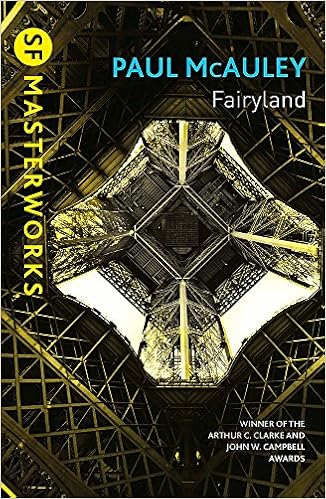
“Before he met the brilliant, hypnotic child Milena, Alex Sharkey had never played with "dolls"—blue-skinned, gengineered lifeforms designed for work, amusement, or destruction. But the underground gene-hacker is seduced by a megalomaniacal little girl's dream of providing the soulless genetic constructs with free thought and a future—and he unwittingly unleashes a plague of madness on the world.

Now there's a void in his life and memory that must be refilled, but it means pursuing the dangerous sentient species he helped sire from the ruins of a Magic Kingdom through a wasted Europe. It is Alex Sharkey's last chance and the last hope remaining for a once-dominant human race.”
From this review of Fairyland.

---

The historic role of capitalism is to develop the forces of production towards abundance. The founding fathers of Marxism speculated that everyone would then live like the ancient aristocrats of Greece and Rome, but with deeper, broader and more sophisticated experiences than those available in antiquity .. and without the slavery.

How would communism look? I sometimes think they imagined automated factories with conveyor belts and robot arms moving stuff onto automated trucks to deliver to your door. But Amazon seems to have all that in hand.

There is another route to abundance - the biological.

Biology seems to work off plentiful raw materials: air, earth, rain and sunshine. We're getting better at gene-hacking. Within a generation we could make dolls. Start from a primate base, add IQ and speech. Modify the empathy-volitional drives .. .

Is it slavery if they really want to work to keep us happy?

Everywhere you currently envision smart, AI-controlled robots of steel and chrome, tilling the fields (or the hydroponic tanks), fabricating gee-gaws .. replace them in your mind with smart biology - genetically-engineered protoplasm.

Just itemise people's needs:
  • food and drink (lots of new plants) - check
  • accomodation (grows from a pod, see the catalogue) - check
  • transport (smart horse and carriage; primate-derived servitors) - check.
The list goes on. If it can be done with metals and integrated circuits, it can be done with genetically-modified lifeforms in a much more sustainable way.

Will our prospective uplifted biosphere be subverted, as in "Fairyland"? With all that free time in a communist society, there should be plenty of people happy to invest in counter-terrorism. Or we'll engineer some servitors to do it: there's a lot to learn from the Greeks and Romans.

---

Why the emphasis on biology?

Because our existing metal-and-plastic technology-base depends upon a complex division of labour and global supply chains. It's brittle and unstable, and relies upon human (in fact smart-fraction) levels of competence to make it work at all, to sustain it against entropy. It's capitalism's great achievement.

By contrast, the biological ecosystem is predominantly local and functions on the lowest level of explicit intelligence possible. It's so much more robust. It also helps address economic coordination problems which have proved so intractable to centralised planning.

I don't think everything can be subsumed under applied biology. But most things for sure.

Other stuff (supercomputers, hypersonic/space transport, genome engineering) may be beyond anything a tailored plant/animal could do* - opportunities for our future AI overlords to shine.

What will we do with all that free time?

---

* As the old saying has it: "supercomputers etc don't grow on trees". And probably in the future they won't either.