Showing posts with label Twin. Show all posts

Monday, August 21, 2017

Exercise fetishism, genetic confounds


I observed a few days ago that, at age 66, my physical capabilities were in visible decline.
"Let it be noted that in my mid sixty-sixth year I finally realised that my body was not immortal and that age would wreak its toll on both competences and recovery time.

"I observed recently that due to over-enthusiastic lifting, I was now experiencing chronic elbow joint and tendon twinges which have not yet recovered. As a consequence I have to rethink this whole weight-lifting thing.

"I suspect I will be doing more running and cardio work going forwards, with strength stuff more focussed on the core and upper back, where I have historically had muscle issues. Biceps and triceps can maybe go hang!"
So at some point I'll be packing away those weights, and going for a brisk walk rather than a run.

But will it make any difference?

---

We're led to believe that vigorous exercise is the only way to stave off the myriad complaints of old age: heart disease, cancer, dementia .. .  But such exciting and well-publicised studies are correlative and seldom investigate genetic confounds. The only way to be sure is to conduct twin studies.

And so I was led to this news item: "Exercise Differences Do Not Produce Longevity Differences in Identical Twins". You should read it, but I will just quote the bottom line.
"High physical activity level was associated with longer lifespan when looking at non-identical twins that differ for their genetic background.

"However, in identical twins, that share the same genetic background, in pairwise analyses comparing physically active members of a twin pair with their inactive co-twin, there was no difference in lifespan.

"Our results are consistent with previous findings, that animals that have high aerobic capacity are physically more active compared to animals with low aerobic capacity. The findings in human twins were in agreement with this: discordance in physical activity level was clearly more common among non-identical twins than in identical twins showing an effect of genetic background on physical activity level.

"Vigorous physical activity in adulthood did not increase lifespan in human twins, even though physical activity is well-known to have various positive effects on health, physical fitness, and physical function.

"Based on our findings, we propose that genetic factors might partly explain the frequently observed associations between high physical activity level and later reduced mortality in humans. "
I therefore conclude that backing off from intensive physical exercise is unlikely to have much impact on either my general state of health or my longevity, assuming I avoid perverse outcomes such as complete indolence or gross obesity.

We sometimes counterpose exercise to everything else we do, as if our bodies would turn into jellyfish if we failed to lift those weights, or run those miles.

But formal exercise simply adds the icing on the cake to any reasonably active lifestyle.

It's not as if the opposite to vigorous exercise is going to be chronic bed rest.

Sunday, January 31, 2016

Do it for fun, but not for profit

Just a couple of choice selections from the cornucopia which is Jess Riedel's blog.

---

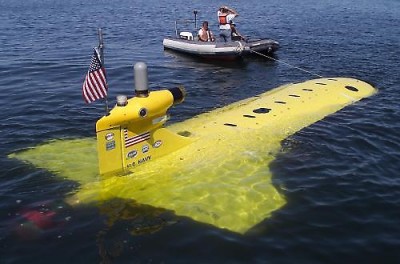
American drone for covert underwater warfare

Trident will be obsolete before the next-generation hits the water
"For half a century, big missile submarines, known as boomers, have been arguably the most decisive weapon systems in modern warfare – the queen on the strategic chessboard – because of their capacity to remain unseen until the critical moment, unleashing enormous destructive force without warning.

"Now that dominant position is under threat. A submarine can hide from a few noisily obvious ships and planes, but it is harder to hide from a swarm of small, virtually undetectable drones. The robots being developed here can potentially be made cheap and expendable, and capable of being deployed in large numbers to cover vast expanses of sea. Once fully developed, they could tilt the balance of power beneath the waves – much as airborne drones are already doing in the sky.

"It is unclear how far other countries have got with underwater drone technology; it is known that the Russian navy is working on it intensively."
I foresee an arms race where the ballistic missile submarine deploys a screen of 'drone fighters' to take out the enemies underwater surveillance drones. Good luck with that.

---

Propensity to exercise and increased lifespan are correlated but not causal
"Observational studies report a strong inverse relationship between leisure-time physical activity and all-cause mortality. Despite suggestive evidence from population-based associations, scientists have not been able to show a beneficial effect of physical activity on the risk of death in controlled intervention studies among individuals who have been healthy at baseline. On the other hand, high cardiorespiratory fitness is known to be a strong predictor of reduced mortality, even more robust than physical activity level itself.

"Here, in both animals and/or human twins, we show that the same genetic factors influence physical activity levels, cardiorespiratory fitness, and risk of death. Previous observational follow-up studies in humans suggest that increasing fitness through physical activity levels could prolong life; however, our controlled interventional study with laboratory rats bred for low and high intrinsic fitness contrast with these findings.

"Also, we find no evidence for the suggested association using pairwise analysis among monozygotic twin pairs who are discordant in their physical activity levels. Based on both our animal and human findings, we propose that genetic pleiotropy might partly explain the frequently observed associations between high baseline physical activity and later reduced mortality in humans."
What this is saying is that the same set of good genes are both encouraging higher physical activity levels and giving you a longer life. If you happen to have the good genes and for some reason you're not physically active ('monozygotic twin pairs who are discordant in their physical activity levels') you still get the long life.

This is not genetic determinism. Your genes give you a set point: a certain lifespan, body-plan, weight; your choices of diet and exercise will have a varying effect, but only around that set point - not arbitrarily.

Riedel comments, "Stunning if true. Think this will slowdown our culture’s obsession with exercise for health? Me neither."

Friday, November 07, 2014

Estimating IQ from genotype

This post is a simple back of the envelope calculation based on Davide Piffer's paper as discussed in my earlier post.

First a quick reminder about opinion polls and sampling.

Opinion Polls

We assume a large population of interest and we sample n individuals (often 1,000) with a yes-no question. Something like "Are you going to vote for the Labour Party in the forthcoming election?" We want to know how likely it is that the population as a whole votes in the same proportions as found in our survey. Suppose p is the fraction of the sample-population who tell us they will vote yes (example: 0.32).

This is just the same as throwing a biased coin (Heads with probability 0.32) a thousand times and seeing how many Heads we actually get. Clearly on average we'll get 320 Heads [the mean of our sample is np]. Of more interest, however, is the standard deviation of the mean if we took sample after sample (or coin-throwing exercise after coin-throwing exercise). We would like to know the upper and lower bounds of 'yes' respondents we would get in, say, 95% of the samples we took, corresponding to +/- 1.96 standard deviations. We can be pretty confident that those bounds would play out in real life (nineteen times out of 20).

The standard deviation of a binomial distribution, which is what we have here, is √(npq) where n is the size of the sample (example, 1,000), p is the probability of the 'yes' outcome (example: 0.32) and q is the probability of the 'no' outcome (0.68 = 1-p).

The 95% confidence interval around the mean np is +/- 1.96 standard deviations - which we approximate here to 2. We also approximate p and q to 0.5 as this is the largest value of √(pq).

Plugging the numbers in, we get the 95% confidence interval as: 2 times √(0.5 x 0.5 x n) = √n.

In our running example with 1,000 people sampled (√1000 equals around 32), this tells us that the interval 320 +/- 32 will  contain the number of 'yes' answers we'll get 95% of the time. We sometime prefer to have the results as a proportion, usually written as a percentage, in which case we divide everything by n.

The mean number of 'yes' voters here is 320/1,000 = np/n = p (0.32 or 32%).

The 95% confidence interval here is 32/1,000 = √n/n = 1/√n  (usually described as +/- 3%).

Note that if we had sampled just 100 voters, we would have a 95% confidence interval of +/- 1/√100 = +/- 10%. We're already losing quite a bit of predictive power.

Asking just 10 people, the 95% confidence interval is 1/√10 = 0.32 = approx. 30%. So the three people who said they'd vote 'yes' .. in multiple surveys that number could dip as low as zero and as high as six. Pretty much worthless in forecasting the election.

---

To apply this to IQ I'm going to use the data in Davide Piffer's paper, as discussed in my earlier post - to which you may need to refer.

Looking at my own results I had 16 alleles to play with, of which 7 were 'good for intelligence'. So this is an opinion poll where I was able to survey only 16 people. Duh!

My computed allele frequency was 44% against a European average of 35.5% so I'm 8.5 percentage points up from the average.

Looking at the Chinese/Japanese figures we see an allele frequency score of 39.1% (a difference of 3.6% from the European mean) which corresponds to an IQ difference of 5 IQ points from Europeans. I'm going to assume a linear relation - an additive model.

To convert a difference of mean allele frequency to IQ difference we multiple by 5/3.6 = 1.4. So the estimate of my IQ is 8.5 * 1.4 = 12 points above the European average of 100. In my incorrigible vanity I'd like to believe that 112 is rather on the low side! What is the 95% confidence interval for this calculation?

Since n = 16, and following the path described above, the 95% confidence interval is +/- 1/√16 = 25%.

That's the allele frequency limits so my true allele frequency (of those hundreds or thousands of 'good alleles driving IQ') is probably in the range 44% +/- 25% or [19%, 69%]. To change these limits into IQ scores multiply the confidence interval of +/-25%  by 1.4 giving +/- 35 IQ points

We may be 95% confident that my IQ is in the range [77, 147].

So I guess we can be 95% confident that I'm neither extremely educationally subnormal nor Albert Einstein!

The take-home message is that we need hundreds of alleles to give us a big enough sample to get the error bounds down. The concordance of twins brought up together for IQ is around 0.86 so non-genetic factors will still prevent us getting all the way.

BTW we're just a few years from getting to that 'hundreds of IQ-affecting alleles' point, so although this is a fun exercise, reality will be along soon enough.