Showing posts with label Exercise. Show all posts

Tuesday, November 14, 2017

Things they don't tell you about exercise

From Dr Mark Porter today in The Times (emphasis added):
"The real risk [of cardiac arrest] occurs when you push yourself, as can happen in a competitive setting (the squash court) or, as I discovered at the weekend, when hiking up and down the Jurassic Coast with two physically fit daughters.

Older people with “hardened”, furred-up arteries are likely to develop chest pain (angina) if they over-exert, giving them a warning sign that they need to slow down. In advanced cases this can occur on the flat after walking a couple of hundred yards, but with minor narrowings the pain may be evident only 10 to 15 minutes into a cycle ride. If you try to push through the pain, the starved heart muscle beyond the narrowing can trigger a cardiac arrest. Sensible people stop.

More of a concern are silent “soft plaques” that coat the lining of the coronary arteries of otherwise outwardly healthy middle-aged and elderly people. These are like poached eggs covered in a thin crust, and the shearing action caused by the twisting motion the heart adopts when it is beating at very high rates can cause them to rupture, with catastrophic consequences.

The fatty pool (the yolk of the egg) is released into the narrow coronary artery, triggering a clotting reaction that can block blood flow, causing chest pain and starving the muscular heart wall (a heart attack or myocardial infarction). And if you are my age it is often not a matter of if you have some of these plaques, but how many.

This is the rationale behind wearing a pulse-rate monitor and capping your heart rate during exercise as you get older (see the formula below). This is one reason why I am sceptical of the trend for high-intensity workouts that require you to max out on a bike or treadmill in short blasts rather than go for a steady ride or jog for 20 minutes. In my opinion this type of interval training is highly effective but, for the over-50s, best limited to lifelong athletes."
Peta Bee continues:
"while couch potatoes face impending doom in the form of a raised risk of heart disease and diabetes, the aspirationally athletic are encountering their own set of health issues — injuries that threaten to cause long-term harm if left untreated.

Hardcore workouts and high-intensity interval training sessions have contributed to a shift in our perception of what is required to get fit. A survey of more than 4,000 people from across the UK, commissioned by Bupa health clinics, reveals that more than a quarter of gym-goers assume that they have had a good session only if they feel pain during or after it.

Pushing through the pain barrier is taking its toll, with 4.5 million or 43 per cent of people in training for a fitness challenge getting injured in the process; 60 per cent of those who encountered a strain or pulled a muscle or worse never sought treatment and 22 per cent carried on regardless.

...

Lifting weights

Common problem: Haemorrhoids

Prevention

A trend for lifting heavy weights has resulted in an unexpected rise in haemorrhoids, or piles, among gym users. “Weight training is a common cause as people often hold their breath while lifting weights, which forces the air in your lungs downward, putting pressure on your internal organs and the veins in your rectum,” says Dr Amyn Haji, a consultant colorectal surgeon at the Whiteley Clinic in London. “As a result, the veins near your anus become swollen and are forced outside the body, which can cause uncomfortable and sometimes painful haemorrhoids.”

Treatment

In some cases haemorrhoids disappear within a few days. “However, I’d recommend seeing a qualified personal trainer to help you perfect your breathing technique while weight training,” Haji says. “To prevent it from worsening, avoid weight lifting if you have already developed the condition, drink plenty of fluids and buy some over-the-counter medicines — there’s a variety of creams, lotions and gels available to treat the problem.”
I had to stop weight training at the beginning of August as I was experiencing pain in my elbow joints (both arms) and in my forearm tendons. You know it's bad when you have problems lifting a mug of coffee, or using the loppers in the garden (yesterday).

Happier days. I started home weight-training in September 2016 - (link)

It's now November 2017, and the last three months have resulted in essentially no improvement, despite my having ceased lifting. I self-diagnosed as RSI and expect a long period of slow recovery. I was lifting at ridiculous levels for someone with no real history: squats at 28 kg, biceps curls at 23 kg. Idiotic at age 66.

Monday, August 21, 2017

Exercise fetishism, genetic confounds


I observed a few days ago that, at age 66, my physical capabilities were in visible decline.
"Let it be noted that in my mid sixty-sixth year I finally realised that my body was not immortal and that age would wreak its toll on both competences and recovery time.

"I observed recently that due to over-enthusiastic lifting, I was now experiencing chronic elbow joint and tendon twinges which have not yet recovered. As a consequence I have to rethink this whole weight-lifting thing.

"I suspect I will be doing more running and cardio work going forwards, with strength stuff more focussed on the core and upper back, where I have historically had muscle issues. Biceps and triceps can maybe go hang!"
So at some point I'll be packing away those weights, and going for a brisk walk rather than a run.

But will it make any difference?

---

We're led to believe that vigorous exercise is the only way to stave off the myriad complaints of old age: heart disease, cancer, dementia .. .  But such exciting and well-publicised studies are correlative and seldom investigate genetic confounds. The only way to be sure is to conduct twin studies.

And so I was led to this news item: "Exercise Differences Do Not Produce Longevity Differences in Identical Twins". You should read it, but I will just quote the bottom line.
"High physical activity level was associated with longer lifespan when looking at non-identical twins that differ for their genetic background.

"However, in identical twins, that share the same genetic background, in pairwise analyses comparing physically active members of a twin pair with their inactive co-twin, there was no difference in lifespan.

"Our results are consistent with previous findings, that animals that have high aerobic capacity are physically more active compared to animals with low aerobic capacity. The findings in human twins were in agreement with this: discordance in physical activity level was clearly more common among non-identical twins than in identical twins showing an effect of genetic background on physical activity level.

"Vigorous physical activity in adulthood did not increase lifespan in human twins, even though physical activity is well-known to have various positive effects on health, physical fitness, and physical function.

"Based on our findings, we propose that genetic factors might partly explain the frequently observed associations between high physical activity level and later reduced mortality in humans. "
I therefore conclude that backing off from intensive physical exercise is unlikely to have much impact on either my general state of health or my longevity, assuming I avoid perverse outcomes such as complete indolence or gross obesity.

We sometimes counterpose exercise to everything else we do, as if our bodies would turn into jellyfish if we failed to lift those weights, or run those miles.

But formal exercise simply adds the icing on the cake to any reasonably active lifestyle.

It's not as if the opposite to vigorous exercise is going to be chronic bed rest.

Monday, August 14, 2017

Diary: Blacktop + anomic aphasia

Today has been a physical day. First the hoovering - no joke with thick pile carpets and an exceedingly heavy vacuum cleaner - which I slovenly accomplish once per fortnight. Then, brimming with energy, I did the two mile run into the Mendips in a new best time, just under 18 minutes.

One is pleased with oneself.

---

I guess it must have been oil on the drive asphalt


This asphalt damage on the driveway is, I think due to an oil spill. It's made the surface spongy and crumbly. After much searching, both in local hardware shops and on the web I ordered this: Dap Blacktop Asphalt Filler & Sealant 27065.

Amazon link


This afternoon, time to put it all together. The Blacktop is squeezed out using the gun thing you see in the picture below. It's brown and thick and poisonous and carcinogenic. Clare got to use her compétences de cuisine to smooth it off.

Clare using her compétences de cuisine

It now has to sit, protected from the rain, for a further 72 hours. They claim it dries to black: God, let's hope so!

---

Let it be noted that in my mid sixty-sixth year I finally realised that my body was not immortal, that age would wreak its toll on both competences and recovery time. I observed recently that due to over-enthusiastic lifting, I was now experiencing chronic elbow joint and tendon twinges which have not yet recovered. As a consequence I have to rethink this whole weight-lifting thing.

I suspect I will be doing more running and cardio work going forwards, with strength stuff more focussed on the core and upper back, where I have historically had muscle issues. Biceps and triceps can maybe go hang!

At least the brain still mostly works .. oh wait .. yesterday I completely forgot the word 'autistic' for three and a half minutes. I had started with neurotypical and then navigated to Asperger's and then altruism (!) - at which point my left parietal lobe entered an indefinite wait state.

I said to Clare, "Given the amount of hard physical labour, let alone intelligence this house requires to keep it functional, I despair of what will happen when we get old."

She observed that we bought the house from a couple of 90+ year olds, and that it was indeed in a terrible state of disrepair.

We agreed not to get old.

Thursday, August 10, 2017

Diary: garden surgery + Burrington Combe

The jet stream's looping to the south of the UK giving cool weather and endless rain, broken today by a rare ridge of high pressure and sunshine.

Taking advantage, the tree surgeons arrived this morning to sort things out.

Dense foliage almost hides the gardeners' truck

While the garden rang with the buzz of the chain saw, I ran my two mile route into the lower Mendips in a new best time .. and without knee-joint failure. So I was pleased.

---

Just a small aside: Clare arranged all this - I'm not a garden person - and they were actually booked in for tomorrow (Friday). At 8.30 this morning the doorbell rang which I answered.

A young man dressed in casual clothes smiled winningly at me, said "Good Morning" and put out his hand to shake mine. I glared at him (we have our share of door-to-door scammers) and said coldly, "Who are you?".

He looked quite nonplussed. Explained he was the gardener,  they'd had a cancellation and as the weather was good today they'd decided to do us. Mumbled something about voicemail (we'd received no voicemail).

That being cleared up, I offered them tea, which they declined, and they went about their business.

Clare tells me she went out a little while later to check progress and confided, "My husband mistook you for Jehovah's Witnesses."

---

This afternoon we drove to nearby Burrington Combe for an hour's stroll. There's a good view of the Severn south of Portishead and occasionally the landscape faintly echoed with the rumble of jet turbines - we saw an airliner lifting off from Bristol's Lulsgate airport a good five miles away.

Clare at our terminus - on the rocks

Your author in his favourite ninja attire

We mixed up the walk by debating the most likely scenarios for war between America and North Korea. It must be real because the markets are in free fall. I read lots of vaguely reassuring commentary in the newspapers, explaining how conflict is unlikely as it's in no one's interest.

Yep.

If it gets hot, the first logical step for the US military is to sterilise the NK artillery lines abutting the DMZ. They could do it in a non-nuclear way. Think Daenerys's dragon amplified a millionfold.

I think Seoul is safer than the pundits imagine but the casualty rate for the North would be horrendous.

Thursday, July 20, 2017

Diary: exercise today

Weight this morning: 10 stone 10.4 pounds (68.2 kg) - admittedly after a 5:2 fast yesterday.

After five minutes on the exercise bike and some floor exercises (press ups, bicycle crunch, plank) I pioneered a new two mile run from the house, up the Mendips and back. Took 21 minutes and I wasn't pushing it. A good target would be 18 minutes - parts are quite steep.


Finished off with an abbreviated weights programme.

Finally had my hair buzz-cut - thanks Clare! - which in terms of reducing weight I maybe should've had done before I left the house.  😏

Sunday, December 18, 2016

Weight Training Programme - a three month review

I published my exercise-weights spreadsheet back in September.

Time for a review (click on image to make bigger).


So here are the differences.
  1. Alex mentioned that the side bends exercise is deprecated due to risks (with poor form) to the vertebral bones. Recommendation is to spend more time on Plank and Side-Plank.

  2. The skullcrusher has been added (great name!) to work on the triceps.

  3. Abs crunches/sit-ups are deprecated. I've therefore replaced them with the 'bicycle crunch' (floor exercise).

My general philosophy on weights has been to dial-back on excessive loads. Use the weight which permits good form over 12-15 reps and develop from there. This IS orthodoxy!

Now if I can just figure out the difference between the Dumbbell Squat and Deadlift.


Easy to see how this works with dumbbells.

Sunday, January 31, 2016

Do it for fun, but not for profit

Just a couple of choice selections from the cornucopia which is Jess Riedel's blog.

---

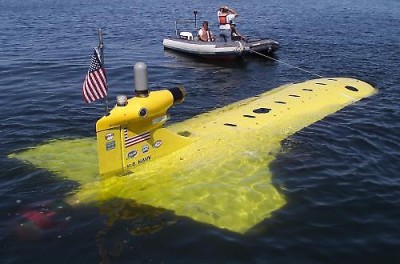
American drone for covert underwater warfare

Trident will be obsolete before the next-generation hits the water
"For half a century, big missile submarines, known as boomers, have been arguably the most decisive weapon systems in modern warfare – the queen on the strategic chessboard – because of their capacity to remain unseen until the critical moment, unleashing enormous destructive force without warning.

"Now that dominant position is under threat. A submarine can hide from a few noisily obvious ships and planes, but it is harder to hide from a swarm of small, virtually undetectable drones. The robots being developed here can potentially be made cheap and expendable, and capable of being deployed in large numbers to cover vast expanses of sea. Once fully developed, they could tilt the balance of power beneath the waves – much as airborne drones are already doing in the sky.

"It is unclear how far other countries have got with underwater drone technology; it is known that the Russian navy is working on it intensively."
I foresee an arms race where the ballistic missile submarine deploys a screen of 'drone fighters' to take out the enemies underwater surveillance drones. Good luck with that.

---

Propensity to exercise and increased lifespan are correlated but not causal
"Observational studies report a strong inverse relationship between leisure-time physical activity and all-cause mortality. Despite suggestive evidence from population-based associations, scientists have not been able to show a beneficial effect of physical activity on the risk of death in controlled intervention studies among individuals who have been healthy at baseline. On the other hand, high cardiorespiratory fitness is known to be a strong predictor of reduced mortality, even more robust than physical activity level itself.

"Here, in both animals and/or human twins, we show that the same genetic factors influence physical activity levels, cardiorespiratory fitness, and risk of death. Previous observational follow-up studies in humans suggest that increasing fitness through physical activity levels could prolong life; however, our controlled interventional study with laboratory rats bred for low and high intrinsic fitness contrast with these findings.

"Also, we find no evidence for the suggested association using pairwise analysis among monozygotic twin pairs who are discordant in their physical activity levels. Based on both our animal and human findings, we propose that genetic pleiotropy might partly explain the frequently observed associations between high baseline physical activity and later reduced mortality in humans."
What this is saying is that the same set of good genes are both encouraging higher physical activity levels and giving you a longer life. If you happen to have the good genes and for some reason you're not physically active ('monozygotic twin pairs who are discordant in their physical activity levels') you still get the long life.

This is not genetic determinism. Your genes give you a set point: a certain lifespan, body-plan, weight; your choices of diet and exercise will have a varying effect, but only around that set point - not arbitrarily.

Riedel comments, "Stunning if true. Think this will slowdown our culture’s obsession with exercise for health? Me neither."

Thursday, January 31, 2013

Michael Mosley on 'Exercise' (Horizon)

Repeated on BBC2 yesterday evening from early 2012, Horizon's examination of the benefits of exercise repaid a second viewing.

The programme featured a distinctly chubby Dr Mosley (these were the days before Intermittent Fasting and the 5:2 diet). His novel message was that three minutes of high-intensity training per week was sufficient to turn your flabby body around.

We saw Michael on his exercise bike: 20 seconds cycling to exhaustion, a rest, then repeat and repeat - one minute in total. Do it three times a week.

This one minute of high-intensity workout depletes muscles of their glycogen stores (glycogen is the precursor of glucose, which fuels our muscles). The body concludes it's under stress and improves insulin-processing performance and maybe (genes permitting) the cardiovascular system. Perhaps in as short a time as one month.

The other key idea is to keep active - walking around - on a regular basis rather than spend hours slumped in a chair in front of a TV or computer. This stops the body from sludging up (Mosley was a little more technical).

Mosley argued that gym hours surely add value - strength, cardiovascular - but you can get good results even without it.

My feeling is that the human body is complex and the research reported tracked relatively few variables. So I think the programme may have under-rated the additional benefits of working out.
---
Some thoughts on intermittent fasting, based on five months experience.

1. On a fast day expect to go to bed hungry. You have had no more than one quarter of your required calories (if you weren't cheating), what did you expect?

2. If you are going to exercise on your fast day (I usually do), have enough carbohydrates the previous day/evening. If you start exercising with glycogen-depletion, then you'll hit a wall pretty sharpish, and this undermines the benefits of exercise.

3. Don't eat too much on the non-fast days. Binge-eating, especially junk food, undermines the process.

4. The point of intermittent fasting is not primarily dieting, it's to give a shock to the body to stimulate cell-repair mode, protecting against cancer and heart disease. There has to be a shock - see 1 above.

5. If you are seriously working out you will be building muscle mass. This - on the scales - will counteract continuing loss of surplus fat. So be prepared to plateau weightwise, for a while.