Showing posts with label Scott Bakker. Show all posts

Tuesday, July 03, 2018

Thoughts of a biological neural net


This post is hard to write .. and equally hard to read and internalise.
"The passion between Darcy and Elizabeth was frozen in time, locked down by the strictures of Regency England. As they are driven away after their wedding, the final shot shows Darcy leaning across Elizabeth: finally, finally! - their lips touch."
How romantic.

I have read science-fiction stories which would narrate the scene thus:
"The larger protoplasmic bag of fluids and guts slithered towards the smaller one. The damp, tumescent borders of their ingestion orifices made contact and an exchange of mucus and pre-digestion fluids took place."
You see what I did there. But it's a reframing designed to elicit disgust - and that's not what this post is about. Try this:
"The two multicellular systems were positioned adjacently in the carriage. Both neural nets, housed in their respective skull cavities, were in a state of dynamic tension. Brainstem and limbic arousal (evolved to coordinate mating behaviour) was suppressed by higher cortical inhibition (encoding social norms). Only a small preliminary act escaped this standoff, which duly occurred."
The stance of the engineer or evolutionary biologist - abstracting from the emotional experience of being human. The fish doesn't see the water it swims in; we don't see each other the way the Martian Anthropologist (or a psychopath) would.

Yet it is the truth.

When I consider myself not as a Cartesian 'person’ but as a mobile biological neural net with a defined lifespan, I find that somehow reassuring (the truth shall set you free), no matter that it is subversive of every possible ambition, sentiment or point. But none of us (putting aside psychopathy) can consistently live our lives like that. We're hardwired not to - it would be evolutionarily self-defeating - indeed, how does it feel to you to even engage with this line of thought?

Scott Bakker, in his blog Three Pound Brain, has been arguing this it seems like forever.

Thursday, November 02, 2017

Flipping bits

I sit in front of this computer - more processing power than NASA had to land men on the moon - and wonder that I can't find some awesome use for it, write some amazing AI code.

Then I realise that all it does, all it's ever done, is just flip gargantuan numbers of bits from one to zero and back again, in some monstrous pattern.

All else is human interpretation.

---

I sit and reflect on my brain: zillions of neurons and synapses. Couldn't I be doing more with it?

Then I realise that - locked away in my skull beneath all that bone - all it's doing, all it's ever done, is cycle through an endless cascade of nerve impulses, in some monstrous pattern


All else is just interpretation.

---

I'm channelling Scott Bakker (cf. Neuropath from one year ago).

Monday, October 02, 2017

Free Will (!)


Given the existence of the laws of physics, of course there can be no such thing as free will.

It might be considered pointless to make this argument in court.

---

Let me explain.

The notion of dialogue and argument seems to require the concept of free will: you are trying to get your dialogue-partner to change their mind.

Hence the 'no such thing as free will' argument seems self-defeating: if you believe it, why are you bothering to argue with me?

It can be rescued by a kind of instrumentalism. If I say the words of the argument, they could cause your brain-state to alter so that you'll behave differently .. in a way that could be described as 'no longer believing in free will'.

Perhaps then I'll 'get off'. Or the same argument may be used to justify convicting me.

This highlights the autonomy of self-consciousness over mechanism (neurobiology). Free will is part of the architecture of the intentional level, the story we tell ourselves about ourselves and others, but it's not present at the neurological level, where it all happens.

Scott Bakker would approve - ordinary mortals not so much.

Thursday, April 20, 2017

Those bright, flickering webs

As a hopeless case, I was finally admitted to psychotherapy.

I lay on the couch, as relaxed as I ever get, and listened to the analyst.
"I see that your profession is neuroscientist. Now, I have your file here, but perhaps you could explain the problem to me in your own words?"
I sighed: repetition had become tedious in the extreme.
"In the streets, at work and at home, .. I am surrounded by systems. They're controlled by webs of neural tissue. They spin carefully-crafted, conformist and entirely-deceptive narratives .. purporting to explain to themselves and others just why they do what they do."
The analyst paused a moment to parse these rather abstract reflections,
"And when you see the people around you, your loved ones, what exactly do you see?"


"I see what my MRI scanner sees: heads filled with bright, flickering webs of neural activation. Enhanced glucose metabolism. I see protoplasmic circuitry doing what evolution has honed it to do. ... I see the laws of physics operating."
At this the analyst looked thoroughly alarmed. He stood up and walked across to his desk where he made a hushed and urgent call. I caught the term 'psychopath'.

Returning, he resumed speaking almost before he had sat down.
"You might have what we professionally call a framing issue. The answer is ..."
But I was no longer listening, I was focused instead on the intricate movements of his jaw, tongue and larynx, all controlled by that bright, flickering web I could almost see inside his skull.

Thursday, January 26, 2017

Diary: books + Clare's health

Not many posts for the next few days as we have a visitor: my 'study' reverts to its ur-status as bedroom.

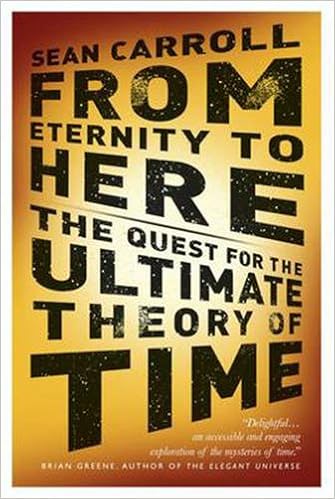
I ordered Sean Carroll's book (which should be arriving tomorrow or Saturday) ..


.. on account that one reviewer (3 stars) complained it was 'too hard'. I'll try to let you know.

---

Strange how hard it is to predict another's taste in books. I really appreciated Scott Bakker's "The Disciple of the Dog" but all that inline philosophy slowed it down way too much for Clare.

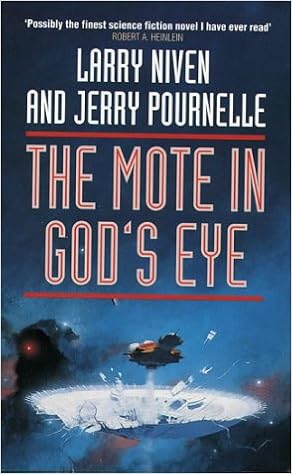
It's been replaced - amazingly - by the famous "The Mote in God's Eye" which she is lapping up as I read it to her.


We haven't even reached the gripping alien lightsail contact event yet; still in the early chapters of Niven's and Pournelle's backstory building, usually condemned as 'boring'.

---

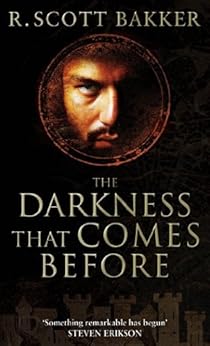
I remain a fan of Scott Bakker and have purchased (Kindle) this: (start of a mega-epic) ..


.. which seems awfully complicated. I have dipped my toe in.

---

My third ordered volume is "The Genome Factor: What the Social Genomics Revolution Reveals About Ourselves, Our History, and the Future" by Dalton Conley and Jason Fletcher.


I'm hyper-wary of the fluffy-bunny pleasantries of the Standard Social Science Model, but it seems well-regarded so I'm taking the risk. Should be out some time in late February.

---

Do you hear that hacking cough from the bedroom? Clare is much recovered today but the sub-zero windchill of our lunchtime shopping trip to Waitrose has sapped her energy .. and she has retired to bed. Still, direction of progress is positive.

---

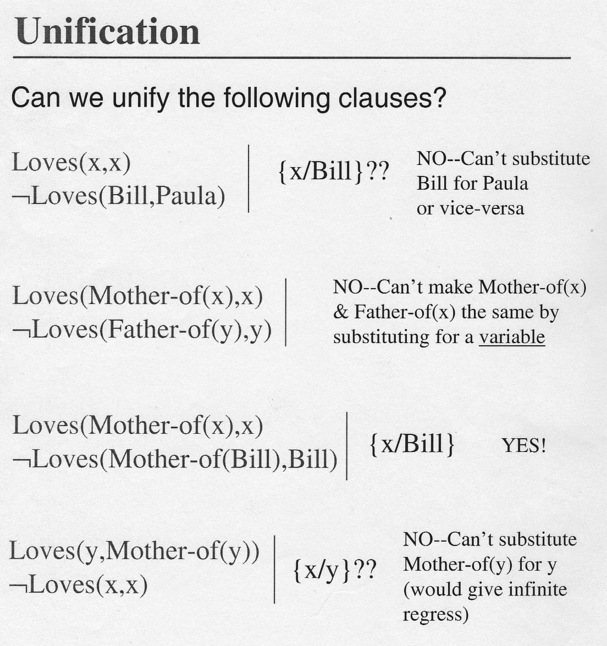
Well, enough time here. I think it's time to re-acquaint myself with J. A Robinson's exemplary treatment of unification with those substitution subtleties ... .


Monday, December 05, 2016

Why isn't Bakker super-famous?

Amazon Link

"Disciple Manning is able to recall every conversation, meeting and feeling he has ever had, making him an extremely dangerous private investigator. When a young woman disappears from a religious cult, her parents turn to Manning for help. Manning accepts, but with a chilling sense of foreboding.

"Heading into the heart of the cult, he encounters its beguiling leader, obsessed with the idea that the world is a fantastical theatre, in which we merely act out our roles, ignorant of our true existence beyond; a belief he is intent on protecting, at any cost. Manning's investigation soon leads to clashes with the cult's unsettling belief systems and leaves him fighting for survival and elusive answers. "
Scott Bakker's PI tale is another vehicle for his unsettling worldview. Intelligence, energy and conviction crackle through every inventive sentence. I turn to Bakker with relief after reciting yet another chapter of Lee Child's "Killing Floor" (read to Clare). In comparison, Lee Child is pedestrian, leaden, formulaic, clunky and cheap.

Amazon link

On Amazon, a one-star review of genius - from Deckard:
"I'm Jack Reacher," I said

"Really?" he said

"Yes," I said looking in the mirror at my brown hair, blue eyes, and rough rugged looking face.

"Jack Reacher?" he said, "The man who had an American father and French mother that married in Korea and moved around a lot so he mostly grew up in american airbases, and naturally entered into the force himself, became a major then was made redundant with severance pay and is now struggling to ingratiate himself back into society?" he said again.

"Yes," I said.

He steepled his fingers for the fourth time. I noted his hands. They were good hands. They were Textbook hands. They knew their way around a gun. But he wasn't here to shoot guns, he was here to ask me lots of questions about plot and characterisation.

"So," he said. "you know what happens now right?" He said.

"Yes," I said, "We have to have a massively wooden conversation involving as many 'saids' as possible."

"Yes," he said, "all the saids." he said, "One said after another said until there's so many saids, that this reads like an eight year old's English assignment."

"Oh," I said noticing his hair. It had a textbook parting. It was hair that had seen a lot of action, and not all of it good. This was hair that had endured all the hardships of growing up as a young black male in a predominantly white neighbourhood, the struggle for promotion through the ranks, and a difficult relationship with his mother.

I stood up, walked to the table, grabbed a cup from the pile of cups, put the cup down on the table surface, took a spoon, put it into the coffee, dropped the coffee into the cup, took the hot kettle, poured some water onto the coffee, picked up the milk jug, poured a small amount of milk into the coffee, grabbed the spoon, put it into the cup, stirred it several times, then put the spoon down, picked up the cup and walked back to the desk and sat back down in the seat.

"You want one?" I asked.

"No thanks," he said, "I don't want to die of boredom before we get to the end of this scene," he said. He looked angry. He clenched his fist. It was the kind of fist that could hit someone really hard in the face.

I had to think quick. Had to think about exactly what else I needed the readers to know through my limited first person perspective. Then it came to me. I wrote a short note on a piece of paper and passed it under the table where none of you idiots could see.

"Oh yes," he exclaimed reading it quickly, "that reminds me," he said, "tell me all about why you walked fourteen miles down a road," he said," in the rain," he said, "with no money, credit cards, ID, or pants." he said

But it was too late. The reader had thrown my book off a ferry. On fire.
---

"Killing Floor" has 2,598 reviews on Amazon.co.uk.

"Disciple of the Dog" has 4.

---

Diogenes of Sinope (fourth century BC)
"It was this determination to follow his own dictates and not adhere to the conventions of society that he was given the epithet "dog," from which the name "cynic" is derived. As to why he was called a dog, Diogenes replied, "Because I fawn upon those who give me anything, and bark at those who give me nothing, and bite the rogues."
The quote with which Bakker starts his book. His protagonist is thus named and the book titled.

---

I have now completed "A Dance With Dragons: Part 2 After The Feast (A Song of Ice and Fire, Book 5)".


Now in the (very long) queue for "The Winds of Winter".


Thursday, December 01, 2016

Change of layout here

Belatedly I've added a blogroll (to the right, scroll down) and taken the opportunity to re-arrange the sidebar. Hopefully this adds some value.

Razib Khan (Gene Expression) is setting up a new blog which won't be live for a couple of weeks.

Recall Neuropath from my post on transgressive science-fiction?


The blogroll now features Scott Bakker's blog, 'Three Pound Brain'. Always good to read a philosopher who rants. Philosophers have a very special way of writing: they take pride in marshalling a vast army of esoteric concepts to surround, envelope, besiege, frame and demarcate some concept of interest.

Scientists and mathematicians just figure out the relevant terms and get modeling.

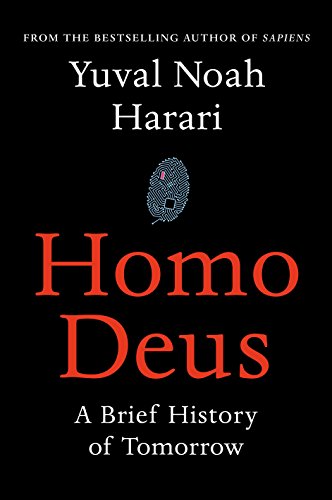
This from his inordinately lengthy review of Yuval Noah Harari’s Homo Deus.


"Science is steadily revealing the very sources intentional cognition evolved to neglect. Technology is exploiting these revelations, busily engineering emulators to pander to our desires, allowing us to shelter more and more skin from the risk and toil of natural and social reality. Designer experience is designer meaning. Thus the likely irony: the end of meaning will appear to be its greatest blooming, the consumer curled in the womb of institutional matrons, dreaming endless fantasies, living lives of spellbound delight, exploring worlds designed to indulge ancestral inclinations."

Translation: 'With AI and VR coming along apace, we'll all soon have the option of wasting our lives in virtual realities which super-stimulate our drives and emotions."

My version may be lacking Bakker's poetry, but it might get me a job at Google 😎.

Thursday, November 03, 2016

Finally, consciousness as an engineering problem!


I noted this recent research from MIT: "Making computers explain themselves:
new training technique would reveal the basis for machine-learning systems’ decisions"
"In recent years, the best-performing systems in artificial-intelligence research have come courtesy of neural networks, which look for patterns in training data that yield useful predictions or classifications. A neural net might, for instance, be trained to recognize certain objects in digital images or to infer the topics of texts.

"But neural nets are black boxes. After training, a network may be very good at classifying data, but even its creators will have no idea why. With visual data, it’s sometimes possible to automate experiments that determine which visual features a neural net is responding to. But text-processing systems tend to be more opaque.

"At the Association for Computational Linguistics’ Conference on Empirical Methods in Natural Language Processing, researchers from MIT’s Computer Science and Artificial Intelligence Laboratory (CSAIL) will present a new way to train neural networks so that they provide not only predictions and classifications but rationales for their decisions."
The article is itself pretty opaque  - we appear to be at the very beginning of this difficult road.

But ..

A neural net system C which observes another neural net system B and confabulates a symbolic, causal, intentional model explaining how B behaves. Does any of that sound familiar?

The most convincing (obviously still hand-waving) paradigm for thinking this through is due to R. Scott Bakker's Blind Brain Theory (BBT). I do advise you to read his PDF here.

Tuesday, November 01, 2016

Transgressive Science-Fiction

"The Garden of Earthly Delights"

I still recall the shell-shocked faces of the BBC Newsnight team at the Cannes Film Festival. Kirsty Wark had been too scared to go while Mark Kermode, who had attended, self-consciously praised and defended Lars von Trier's latest film. It was the transgressive "Antichrist".

In mainstream literature think Bret Easton Ellis; in painting, Hieronymus Bosch; in TV, 'Game of Thrones'.

Transgressive art is characterised by psychological and often physical violence; visceral, graphic and explicit sex; profane language; the unleashing of the id; subversion of our safe little lives.

In science-fiction there are some notable practitioners (most transgressive first):

  1. Scott Bakker (Neuropath)
  2. William Barton (When We Were Real)
  3. Richard Morgan (Takeshi Kovacs novels)
  4. Peter Watts (The Rifters Trilogy; Blindsight & Echopraxia)
  5. Dan Simmons (Hyperion Cantos - Simmons just makes the cut)

I'm currently reading 'Neuropath'. It's difficult, though wholly engrossing - if you can stomach psychopathic brain-control torture, edgy relationships, dense discussion of mind, brain and consciousness.

Amazon link

OK, let me do it this way. Look at your most significant other: his or her smile, affectionate glance, amusing quip. Now make the the skull transparent and look again with the eyes of an MRI scanner. For every quirk of personality you love so much, there's that small net of neural tissue lighting up. That's all there is and ever has been. Meaningless.

Oh, and you too.

One of the themes of this novel is how resistant people are to even engaging with this concept. They shy away - too transgressive.