Showing posts with label Lee Child. Show all posts

Sunday, September 28, 2025

Why It’s Now Impossible to Write Reacher Novels


Why It’s Now Impossible to Write Reacher Novels

Back in 1997, when Lee Child introduced Killing Floor, the first Jack Reacher novel, he was writing into a cultural moment that still retained the long shadow of the 1970s, '80s, and early '90s. These were decades marked by a prevailing sense that the state was—at best—ineffectual, and—at worst—Kafkaesque: bureaucratic, corrupt, and fundamentally incapable of enacting justice.

In that context, the lone competent avenger had a mythic resonance. Reacher, a rootless knight-errant in denim and boots, was a plausible moral actor. He could stride into town, spot the rot that the authorities couldn’t or wouldn’t touch, apply force surgically (or bluntly), and stride out again with justice, more or less, restored.

He was a plausible answer to the question: Who will act, if not the state?

Fast forward to the 2020s. The cultural ground has shifted beneath Reacher’s boots. We now live in a world thick with progressivism, in which the state is no longer viewed as the obstructive adversary of justice, but as its potential agent—if only the right people can gain control of its levers. The new moral narrative doesn’t favour vigilantes; it favours systems. Bureaucracy is no longer seen as the enemy; it's the utopian mechanism awaiting proper calibration.

And so Reacher begins to look less like a mythic avenger and more like a symptom. In today's framing, he’s a homeless ex-military loner, possibly with untreated PTSD, wandering from town to town, enacting extrajudicial violence on people he personally deems guilty. There is no chain of accountability. No oversight. He is a freelance instrument of harm. And in the eyes of the contemporary moral consensus, he is less a hero than a hazard—someone who needs state intervention, therapy, and possibly sectioning. Social workers, not sidekicks.

The result? Reacher is no longer narratively viable. The entire ethical architecture that made the early novels sing has collapsed. The later Lee Child novels lost energy not just because the formula had worn thin, but because the world had shifted in such a way that the formula no longer made sense.

Enter Andrew Child. It’s tempting to blame him—and yes, his prose is flaccid, the plots undercooked, the dialogue wooden—but the rot set in before the baton was passed. The problem isn’t just that Andrew Child is not a great writer. The deeper problem is that Reacher no longer fits the world. He’s been ideologically orphaned.

There is one faintly plausible route forward: to reframe Reacher as a historical figure. Not a roaming threat in the present day, but a creature of the late Cold War, when morally-justified violence in defence of the innocent could still carry a moral charge. We’re talking military police Reacher; internal affairs Reacher. Back when the culture still had room for men like him.

But to inhabit that slight literary niche would require writing finesse, psychological insight, and narrative ambition—qualities that, to put it politely, Andrew Child has yet to exhibit. And so the Reacher novels stumble on, like their protagonist: increasingly dislocated, oddly anachronistic, and trapped in a world that has moved on.

Monday, January 15, 2024

Four questions I asked Bard recently

[Bard's answers have been shortened for readability].

Q1. Tariq Ali said once that Ernest Mandel confided to him, very close to death, that he thought that the revolution he had fought for his entire life would now not become a reality for perhaps hundreds of years. He said that this view should not be shared with the comrades of the Fourth International because it would only demoralise them. Do you have the exact quote?

I'm unable to locate the exact quote from Tariq Ali about Ernest Mandel's pessimistic view of a future revolution. While it's possible such a conversation occurred, without a specific source or context, it's difficult to verify its authenticity.

However, there are some details to consider:

* Mandel's optimism: Ernest Mandel was known for his optimistic and unwavering belief in the inevitability of socialist revolution. This is reflected throughout his writings and interviews. A complete reversal of such a deeply held conviction towards the end of his life seems somewhat contradictory.

* Ali's perspective: Tariq Ali has been a vocal critic of certain Trotskyist tendencies, including Mandel's Fourth International. While he respected Mandel personally, there might be an element of bias, intentional or unintentional, in his recollection of a private conversation.

* Lack of supporting evidence: Despite extensive research, there appears to be no other mention of this conversation or Mandel's supposed pessimism in biographies, articles, or interviews related to either figure.

[Follow-up question]: Tariq Ali may have deleted the recollection and the quote. Perhaps it's still in an Internet Archive formed soon after Mandel's death (which was when?).

You're right, it's possible that Tariq Ali may have removed the recollection or quote about Ernest Mandel's pessimism. It's also a good suggestion to check internet archives from around the time of Mandel's death, which was on July 23, 1995. …

Comment: I distinctly recall reading this around the time of Mandel's death. It would not surprise me if Tariq came under great pressure to delete the observation based on Mandel's clear wishes. I believe Mandel drew his final bleak conclusion from the utter collapse of the Soviet bloc and its total reversion to capitalism.

---

Q2. Can the Pauli Exclusion Principle be derived from QFT?

Yes, the Pauli Exclusion Principle can be derived from Quantum Field Theory (QFT), although it's not a straightforward or simple derivation. QFT offers a deeper understanding of why this fundamental principle holds true for fermions (particles with half-integer spin).

Here's a simplified explanation:

* Particles in QFT: In QFT, particles are not localized objects but excitations of underlying fields. Each type of particle corresponds to a specific type of field. For example, the electron field describes the presence or absence of electrons at different points in space and time.

* Creation and annihilation operators: To manipulate these fields, QFT uses creation and annihilation operators. Creation operators add a particle to the field at a specific location, while annihilation operators remove one.

* Anticommutation relations: For fermionic fields, creation and annihilation operators obey anticommutation relations. These relations essentially say that you cannot have two identical fermions in the same quantum state. Trying to add a second fermion to an already occupied state results in zero, meaning the state no longer exists.

This anticommutation behavior is a consequence of the deeper mathematical and statistical properties of fermionic fields, which originate from the connection between spin and statistics, known as the spin-statistics theorem.

Comment: insofar as I understand this, I think it's accurate.

---

Q3. In what book does an author from the Jesus Seminar discuss the formation of the Resurrection narrative from the Jewish ritual of the act of atonement and its two lambs/(goats).

Unfortunately, your description doesn't pinpoint a single book from a Jesus Seminar author. Several possibilities exist, as the Seminar involved multiple scholars researching diverse themes. Here are some potential leads:

1. The Resurrection of Jesus: A Sourcebook (Jesus Seminar Guides Vol 4) by Robert W. Funk: This book features essays by various Seminar members, including one by Arthur Dewey on the Gospel of Peter, which contains a resurrection narrative with unique parallels to Jewish sacrificial rituals.

2. The Historical Jesus: Five Views That Matter by John Dominic Crossan: Crossan, a prominent Jesus Seminar member, explored Jewish roots of early Christianity in several works.

3. Beyond Jesus: The Search for the Real Rabbi by Marcus Borg: Borg, another key figure in the Jesus Seminar, emphasized Jesus' Jewish context and explored how early Christian communities adapted and reinterpreted existing traditions.

4. Who Killed Jesus? The Resurrection of Myth and Reason by Robert M. Price: While not directly affiliated with the Jesus Seminar, Price is a prominent critic of traditional interpretations of the resurrection and delves into its possible cultural and mythological roots.

Comment: In fact the right answer is "The Birth of Christianity: Discovering What Happened in the Years Immediately After the Execution of Jesus" by John Dominic Crossan. And it's the Day of Atonement, Yom Kippur.


---

Q4. Reacher Hope and Despair book?

The book you're referring to is most likely "Nothing to Lose" by Lee Child, the 12th novel in the Jack Reacher series. It features two towns with contrasting names: Hope and Despair.

Plot Summary:

Reacher is on a cross-country trek when he stumbles upon these two towns in Colorado. Hope is a small, friendly community, while Despair is a desolate, one-man town controlled by a fanatical preacher.

Reacher's curiosity is piqued by the stark contrast between the two towns, and he soon finds himself uncovering dark secrets lurking beneath the surface of Despair. The town is dominated by a powerful recycling plant that seems to be more than what it meets the eye.

As Reacher digs deeper, he becomes entangled in a web of corruption, violence, and conspiracy. He must use his formidable skills and unwavering sense of justice to protect the innocent and expose the truth about Despair.


Comment: spot on.

Wednesday, November 08, 2017

Three books

Amazon link

I have abandoned reading "The Legacy of Heorot" (Niven, Pournelle, Barnes) to Clare after three or so nights. The build-up is way too slow, the characters uninteresting and the writing too clunky.

I've taken the easy option and resorted to Lee Child's latest:

Amazon link

---

I thought "The Buried Giant" by Kazuo Ishiguro was good, despite Abigail Nussbaum's emotional review.

Amazon link

If I may be permitted spoilers, the novel is about the aftermath of a Dark Ages genocide in an imagined post-Arthurian, Briton-Saxon co-mingled England. Peace between the races has been artificially maintained by an ageing dragon, whose misty breath fills the land, inducing forgetfulness.

Axl and Beatrice, an old Briton couple, leave their hobbit-like village residence to visit their dimly remembered son. Through various adventures the amnesiac-fog is finally lifted and memories begin to return. Can the peace survive the recall of earlier wrongs? Can Axl's and Beatrice's relationship survive the recall of ancient infidelity and revenge?

Ishiguro is pessimistic.

I felt the book - highly stylized in manner and dialogue - was well-done. As to whether, Guardian-style, it was really telling us anything we didn't already know: well, not so much.

Saturday, July 22, 2017

Diary: what I'm reading

Books (on the Kindle) I'm currently reading:

Amazon link

An economist who can write well and who knows that markets require a plethora of institutions to make them work. Harder globally than nationally.

Unfailing interesting, and passes the 'ring of truth' test.

---

Amazon link

Razib Khan spoke warmly of this book, although warning it was heavy going. Really??

Martin Jay documents that intellectual commune of mostly German-Jewish left-intellectuals trying to figure out why the proletariat stubbornly refused to deliver the promised utopia-bringing revolution.

Like most people with a Marxist background, I tangentially knew about the Frankfurt School - especially via Marcuse - but never got around to actually engaging with Critical Theory.

---


Amazon link

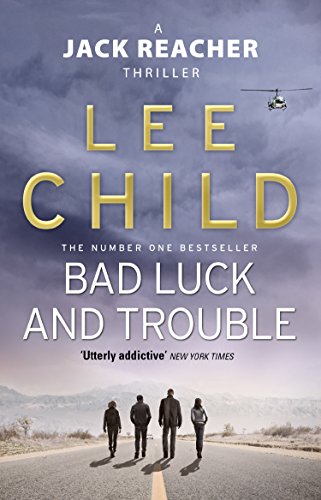
Flagged critically as one of the better Jack Reacher thrillers, this seemed ideal to read to Clare after dinner.

As well as having a Jack Reacher haircut I share his interest in the blues.


I was sufficiently motivated to consider the best electric blues rendition of "Born under a Bad Sign" and listened carefully to Cream's famous version. But John Bonamassa is my favourite.

---

"Supermind" is on order!

Monday, December 05, 2016

Why isn't Bakker super-famous?

Amazon Link

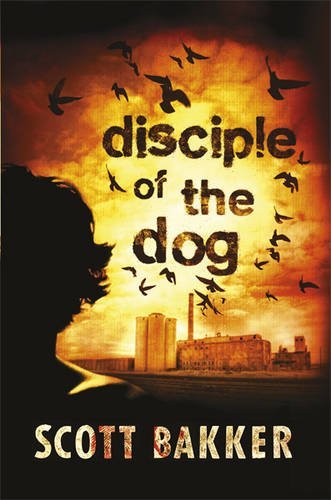
"Disciple Manning is able to recall every conversation, meeting and feeling he has ever had, making him an extremely dangerous private investigator. When a young woman disappears from a religious cult, her parents turn to Manning for help. Manning accepts, but with a chilling sense of foreboding.

"Heading into the heart of the cult, he encounters its beguiling leader, obsessed with the idea that the world is a fantastical theatre, in which we merely act out our roles, ignorant of our true existence beyond; a belief he is intent on protecting, at any cost. Manning's investigation soon leads to clashes with the cult's unsettling belief systems and leaves him fighting for survival and elusive answers. "
Scott Bakker's PI tale is another vehicle for his unsettling worldview. Intelligence, energy and conviction crackle through every inventive sentence. I turn to Bakker with relief after reciting yet another chapter of Lee Child's "Killing Floor" (read to Clare). In comparison, Lee Child is pedestrian, leaden, formulaic, clunky and cheap.

Amazon link

On Amazon, a one-star review of genius - from Deckard:
"I'm Jack Reacher," I said

"Really?" he said

"Yes," I said looking in the mirror at my brown hair, blue eyes, and rough rugged looking face.

"Jack Reacher?" he said, "The man who had an American father and French mother that married in Korea and moved around a lot so he mostly grew up in american airbases, and naturally entered into the force himself, became a major then was made redundant with severance pay and is now struggling to ingratiate himself back into society?" he said again.

"Yes," I said.

He steepled his fingers for the fourth time. I noted his hands. They were good hands. They were Textbook hands. They knew their way around a gun. But he wasn't here to shoot guns, he was here to ask me lots of questions about plot and characterisation.

"So," he said. "you know what happens now right?" He said.

"Yes," I said, "We have to have a massively wooden conversation involving as many 'saids' as possible."

"Yes," he said, "all the saids." he said, "One said after another said until there's so many saids, that this reads like an eight year old's English assignment."

"Oh," I said noticing his hair. It had a textbook parting. It was hair that had seen a lot of action, and not all of it good. This was hair that had endured all the hardships of growing up as a young black male in a predominantly white neighbourhood, the struggle for promotion through the ranks, and a difficult relationship with his mother.

I stood up, walked to the table, grabbed a cup from the pile of cups, put the cup down on the table surface, took a spoon, put it into the coffee, dropped the coffee into the cup, took the hot kettle, poured some water onto the coffee, picked up the milk jug, poured a small amount of milk into the coffee, grabbed the spoon, put it into the cup, stirred it several times, then put the spoon down, picked up the cup and walked back to the desk and sat back down in the seat.

"You want one?" I asked.

"No thanks," he said, "I don't want to die of boredom before we get to the end of this scene," he said. He looked angry. He clenched his fist. It was the kind of fist that could hit someone really hard in the face.

I had to think quick. Had to think about exactly what else I needed the readers to know through my limited first person perspective. Then it came to me. I wrote a short note on a piece of paper and passed it under the table where none of you idiots could see.

"Oh yes," he exclaimed reading it quickly, "that reminds me," he said, "tell me all about why you walked fourteen miles down a road," he said," in the rain," he said, "with no money, credit cards, ID, or pants." he said

But it was too late. The reader had thrown my book off a ferry. On fire.
---

"Killing Floor" has 2,598 reviews on Amazon.co.uk.

"Disciple of the Dog" has 4.

---

Diogenes of Sinope (fourth century BC)
"It was this determination to follow his own dictates and not adhere to the conventions of society that he was given the epithet "dog," from which the name "cynic" is derived. As to why he was called a dog, Diogenes replied, "Because I fawn upon those who give me anything, and bark at those who give me nothing, and bite the rogues."
The quote with which Bakker starts his book. His protagonist is thus named and the book titled.

---

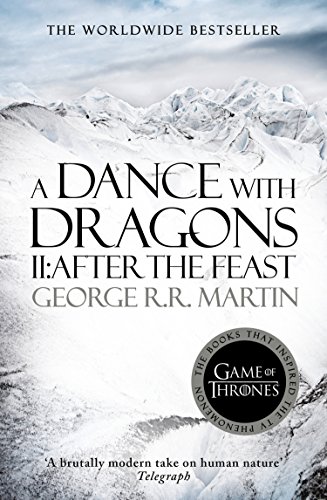
I have now completed "A Dance With Dragons: Part 2 After The Feast (A Song of Ice and Fire, Book 5)".


Now in the (very long) queue for "The Winds of Winter".


Tuesday, November 22, 2016

Diary: exercise bike + many-worlds (MWI) + Game of Thrones + Lee Child

Breakfast: a bowl of mixed nuts, sliced banana, a small satsuma, dunked with tablespoons of natural yoghurt. No cereal today due to a 1kg weight excess (71 kg this morning).

This morning: my replacement exercise bike arrived from Germany. Spent an hour putting it together - you seldom get a second chance to assemble an exercise bike but it does go faster. Shredded the large cardboard box for recycling while bagging up the polystyrene blocks.

The bike works.

Lunch: a tin of mulligatawny soup followed by Clare's home-made pizza topping on naan bread (very nice!). I finish up with an apple and a square of that 90% cocoa chocolate which, perhaps because of its bitterness, is rather attractive.

Afternoon: I hoover polystyrene & cardboard litter from this morning's assembly.

I try to continue my reading of "The Emergent Multiverse" - I had not fallen off a cliff on chapter 3, where David Wallace does the math, but I can't concentrate on the later probability discussion today.


I read 'West Hunter' instead, and discover a promising SF book I haven't read. I order: "Rainbow's End" by Vernor Vinge.


I also dip into the current-final volume of ASOIAF: "A Dance With Dragons: Part 2 After The Feast".


Dinner is predicted to be Minced Beef En Croûte and peas. We are still avoiding 'greens' and at Waitrose tomorrow we'll be shopping for substitutes. Our list so far: squash, sweet potato, vegetable samosas, mushroom ravioli, baked beans (small, low sugar) and anything similar which comes to mind as we scan the shelves.

No trips out today, except down the drive to put the recycling out. Like yesterday, it's been raining all day and the clouds loom thick and dark.

This evening I'll continue reading to Clare. It's Lee Child's "Killing Floor" (originally recommended by my brother) and we're still in the county jail, mixing it with the gangs. Gritty.


---

No-one thinks that EM drive works.

A shame.