Showing posts with label Paul Kincaid. Show all posts

Saturday, April 20, 2024

What I'm Reading


From OpenArt

Absolution Gap” by Alastair Reynolds: This science fiction epic throws us into a future where humanity has colonised countless planets. Reynolds crafts a vast and intricate space opera, delving into themes of technological advancement, engineered religions and an existential fight for survival against the Inhibitors. 

Who Killed Jesus?” by John Dominic Crossan: Shifting gears completely, Crossan's book takes a historical and critical look at the life and death of Jesus of Nazareth. He dissects the various Gospel accounts, contrasting 'prophecy historicised' and 'history remembered' in the context of the political and social climate of first-century Galilee and Judea. This work would certainly be controversial amongst those with traditional religious convictions. In his conclusion, Crossan explains how reason and faith - correctly understood - cannot and should not be taken to contradict each other: historical and sacralised readings (parable expressed as history) each have their own validity.

Fools, Frauds and Firebrands” by Roger Scruton: Renowned philosopher Roger Scruton takes aim at various intellectual movements and ideologues in this collection of essays. Scruton, a champion of conservatism, critiques figures like Jean-Paul Sartre, Michel Foucault and Slavoj Žižek,  arguing against their views on reason, morality, and society. This is a battle which will be fought forever.

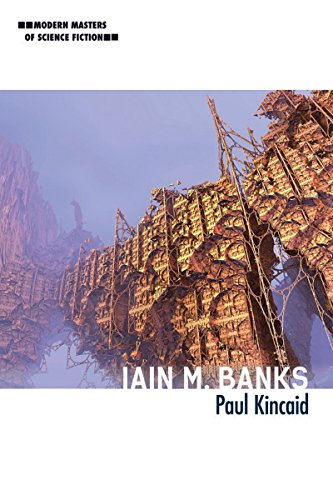
The Culture series of Iain M. Banks” by Simone Caroti: This analysis of Iain M. Banks' justly-famous science fiction series delves into the utopian society of "The Culture." Caroti explores the series' themes of post-scarcity economics, artificial intelligence, and how people spend their time within this highly advanced civilization. An interesting point of comparison might be with Reynolds' "Absolution Gap" mentioned above – how do these two fictional universes grapple with similar questions about humanity's future? Caroti's book is not so well-written, but better in content, than Paul Kincaid’s rather moralising take on the same subject (Iain M. Banks: Modern Masters of Science Fiction).

Despite their vast differences in subject matter, all these books grapple with big questions about humanity, society, and our place in the universe. Scruton and Crossan, though likely from somewhat opposing viewpoints, both engage in critical examinations of established (and orthodox) narratives. The science fiction books explore different facets of humanity's potential future, with Reynolds presenting a more dystopian outlook compared to the utopian Culture envisioned by Banks.

Saturday, March 17, 2018

A Culture fit for dodos

In yesterday's post, "Paul Kincaid on Iain M. Banks", we discussed Paul Kincaid's take on the Culture, Iain Banks's attempt to define a utopian civilisation. Kincaid argued that this attempt was a failure, that the covert unpleasantness of the Culture expressed contradictions within Iain Banks's own high-minded liberalism.

Paul Kincaid was absolutely right. Social liberalism, the celebration of Enlightenment values, is an edifice founded upon ungrounded abstractions: 'individualism', 'freedom from oppression', 'human rights'. While such slogans are and were undoubtedly intoxicating in the struggle against authoritarian (and in particular pre-capitalist) formations, in content they are dramatically disconnected both from the historical specificities of the capitalism they served to inaugurate and from the evolutionary-ecology of the human animal itself.

Can we do better?

Consider an ecosystem of multiple species, many in a predator-prey relationship. Let's be specific and consider the pigeon. Here's a species whose evolutionary-physicality exactly captures its ecological constraints. Its senses are acute because it needs to forage, to avoid predators and to mate. It enjoys tasty food and is disgusted by poisons because any inferior affect would lead to loss of fitness - it might die before reproducing and those suboptimal genes would fail to propagate.

The pigeon tells us that what it really wants is unbounded food, plenty of mating opportunities, a safe nest and no predators. Should we listen to it?

The end of utopia

Occasionally animals find themselves on islands with no natural predators and plenty of resources: a truly benign environment. No doubt they would consider that they had found utopia. Yet a Malthusian-powered evolutionary descent soon follows. Their descendants lose sensual acuity, mobility and intelligence - all energy-wasters in utopia. The end result (starting out as a pigeon) is the dodo.

At the level of the individual creature's wish-list, utopia does not end well.

If the species could speak to us collectively (!) then it would tell us a different story. It would ask for a testing, but not too-testing environment. One where there were problems that the truly competent animal could overcome, thereby proving themselves and securing fame, fortune and mates. There would, sadly, be unfortunate creatures with greater than average genetic load, creatures which would be culled by natural selection. But the species, in its descendant cohort, would maintain itself in pristine condition.

You see the problem. All of this applies to humans too at every level: genetic, phenotypic and psychological. No-one even wants the all-mod-cons beach holiday their whole life. But by our very smartness, our technological competence, our innovative economies, we're on track to remove all those threats which make life a challenge. We'll start by being bored .. and then devolve into complacent human dodos.

I don't think Iain Banks wanted that conclusion, but he didn't know how to avoid it either. And evasion is the enemy of great literature.

---

You say we'll correct mutational load by genetic engineering. But we end up with an 'enhanced' species-genotype uncorrelated with its undemanding ecology. Hard to see how such a mismatch leads to psychological tranquility: bored in paradise.

The dodo was never bored: it positively evolved to become complacent and easily-pleased.

It's worth reminding ourselves that all of our much-prized human attributes are an evolutionary response to the challenges of our previous environments. We value high intelligence, for example, because it enables us to manage our complex societies (the abstractions underlying science, technology, politics, processes, finance, ...) while human language was the key to adaptive social coordination and cohesion on those dangerous savannas.

If we simplify our interaction with our environment by off-loading complexities (as the Culture does with its AIs, its Minds) then there is no very good reason for us being more cognitively or physically capable than a mollusc.

Again I ask the shade of Iain Banks: what ecological problems in the desired-future are humans to be bioengineered to cope with?

Friday, March 16, 2018

Paul Kincaid on Iain M. Banks

Amazon link

I bought this on the strength of Abigail Nussbaum's positive review. Russell Letson also has a review, which includes this:
"Kincaid outlines how the Culture was devised as a delib­erate counter to earlier (particularly American) space-adventure conventions that Banks saw as militarist and imperialist and infected with “gran­diose superhero thinking that has no place in the communal, socialistic approach that Banks takes in his fiction.”

He also argues for a break in that group of books – that the Culture sequence was essentially finished before the last three books (Matter, Surface Detail, and The Hydrogen Sonata, 2008-2012) were written – that the project was complete and that the later books represent a kind of retreading of old ground.

The job of the first set of Culture novels would seem to be to deconstruct not only the political notions behind traditional space opera, but also notions of utopia – to push at the contradictions in the Culture’s own view of itself. Excession, for example,
'is about presenting the Culture with barriers it is reluctant to cross…. We begin to get a picture of the Culture as a deeply conservative society, too attached to its comforts and plenty to be easy with the idea of risk or change…. we see that it is far less a utopia, far less perfect, than it likes to present itself.'
Like the Culture itself, Banks’s thinking about attempts to square the circle of power, freedom, and ethical behavior in an imperfect world results in unresolved contradictions."

I've read all of Iain Banks's science-fiction (I abandoned Feersum Endjinn) but I do find the novels curiously unmemorable. Partially this is to do with their complex structure, the large cast of characters with indecipherable names, and detailed and baroque settings which can overwhelm the storyline. Sometimes it's hard to see the wood for the trees.

The first great service Paul Kincaid offers in this impressive piece of literary criticism is to confirm these complexities and to summarise the novels for the floundering reader. More than this, Kincaid dives deep into each book's thematic unconscious, distilling what he believes to be motivating the author.

He does a pretty good job. Kincaid sees Banks as eternally wrestling with his ideal society. If utopia is post-scarcity communism where oppression is definitionally absent, then how do people spend their time? If the Culture is about freedom, how does it deal with cultures which don't share the Culture's value system?

Perhaps in Banks's earliest formulations, these seemed distant and rather easy problems to solve. Yet the more he engaged, the more problematic the Culture became. In the end, utopia seems smug, boring, shallow, selfish, cowardly - even imperialistic.

Banks was a smart guy but he was also a proud bien-pensant liberal, a world-view which is curiously unreflective of the true roots of its value-system. In that spirit, Banks never quite resolved the contradictions at the heart of his own philosophy.

This is a mature, comprehensive and above all interesting take on all of Iain Banks's work and it's recommended.

---

NextA Culture fit for dodos