Showing posts with label Open University. Show all posts

Thursday, June 19, 2025

Operators, measurements and probabilities


Amazon link
---

When I was learning quantum theory at the OU, I was confused for a long time about observables, operators and measurements. I could see the trees: Hermitian operator, eigenvectors, orthonormal basis, eigenvalues, quantum state - expressed in terms of the operator basis with amplitudes projected onto each eigenvector, the application of the operator to the system quantum state, the application of the Born Rule. 

Possible measurement values with their probabilities.

That's a lot of trees - but where was the wood?

When I was at school, in the sixth form, I wanted to study mathematical physics at university. Maths by itself was too abstract and purposeless for me; physics too sloppy and hand-wavy. In the end I drifted to philosophy and politics, showing how useless Warwick University was in engaging my youthful intellectual passions.

The OU course also mixed minimal maths with less-than-compelling intuitions (and a fair share of conceptual confusions resulting from inadequate maths - Hilbert Space was a space too far, it seemed).

This is not a criticism of the OU: all undergraduate physics is like that: sloppy and hand-wavy, remember?

So it takes a mathematician to do it right: thank you Michel Talagrand (above). Despite the QFT of the title, it's aimed at undergraduates and does QM first. Properly.

The following is not from the book, but it paraphrases (via Gemini) the section I am currently reading there.


Quantum Mechanics: Observables, Operators, and Probabilities

In quantum mechanics, observables—measurable properties of a system—are represented by Hermitian operators. Here's a mini-tutorial on how we connect these operators to the possible measurement outcomes and their probabilities:

1. Hermitian Operators and Eigenvalues

Every observable is associated with a Hermitian operator (let's call it Â). Hermitian operators have a crucial property: their eigenvalues are always real numbers, and their eigenvectors form a complete, orthonormal basis for the system's Hilbert space (assume its dimension is n).

The eigenvalue equation is fundamental: Â|i⟩ = λi|i⟩

Where:

  •  is the Hermitian operator.
  • |i⟩ is the i-th eigenvector of Â (i ranging from 1 to n).
  • λi is the corresponding eigenvalue for that eigenvector.

The eigenvalues λi represent the possible outcomes of a measurement of the observable represented by Â.

2. Representing Quantum States

The quantum state of the system, represented by a state vector |α⟩, can be expressed as a linear combination of the eigenvectors of Â:

|α⟩ = Σi ci|i⟩     where ci are complex coefficients (i from 1 to n).

3. Applying the Operator and Finding Probabilities

To understand the probabilities of measurement outcomes, consider applying the operator Â to the state ∣α⟩ mathematically - we get:

Â|α⟩ = Â(Σi ci|i⟩) = Σi ciÂ|i⟩ = Σi ciλi|i⟩

The probability P of measuring the eigenvalue λi is given by the squared magnitude of the corresponding coefficient ci:

P(λi) = |ci|2

Where ci = ⟨i|α⟩ is the projection of the state |α⟩ onto the eigenvector |i⟩ - its amplitude in that direction.

Remember that the state |α⟩ must be normalized, meaning:

Σi |ci|2 = 1

This ensures that the probabilities of all possible outcomes sum to 1.

4. Measurement and 'State Collapse' (Copenhagen)

During a measurement, the system "collapses" into one of the eigenvectors |i⟩. The measured value is the corresponding eigenvalue λi. The state after the measurement is the eigenstate corresponding to the measured eigenvalue. (This is the Copenhagen interpretation).

5. Expected Value

The expected value (average) of the observable represented by the operator Â in the state |α⟩ is:

⟨Â⟩ = ⟨ α|Â|α⟩ = Σi |ci|2 λi    (the weighted average of possible values).

In essence, this is how we connect the mathematical representation of observables (Hermitian operators) to the probabilistic outcomes we observe in quantum measurements.


Question: So another way to say it? We have an operator Â. We form a basis for the Hilbert space from the eigenvectors of Â. Each eigenvector now corresponds to (is tagged by) a possible measurement (eigen)value.

If we now project the abstract quantum state ψ onto each of these basis eigenvectors, the projected amplitude gives us - via Born's rule - the probability of observing that particular (eigen)value?

---

Gemini: 

Indeed, if we take a Hermitian operator Â representing a physical observable:

  1. Eigenbasis Formation: We can find the set of its eigenvectors {∣ai​​⟩} which form a complete orthonormal basis for the Hilbert space of the system. Each eigenvector ∣ai​⟩ is associated with a specific real eigenvalue ai​, representing a possible outcome of measuring the observable A.

  2. Projection and Amplitude: When we project the abstract quantum state ∣ψ⟩ onto one of these basis eigenvectors ∣ai​⟩, we then obtain the complex amplitude ⟨ai​​∣ψ⟩. This amplitude encodes the "overlap" of the state with that particular eigenstate.

  3. Born's Rule and Probability: According to Born's rule, the probability of observing the eigenvalue ai​ when the observable A is measured on the system in state ∣ψ⟩ is given by the squared magnitude of this projection amplitude:

    P(ai​​)=∣⟨ai​∣ψ⟩∣2

So, in essence, the eigenvectors of the operator provide the "labels" (the eigenvalues) for the possible measurement outcomes. The projection of the quantum state onto each of these "labeled" basis vectors gives us the amplitude, which then dictates the probability of observing that specific outcome.


So Why Do Eigenvalues Correspond to Measurement Outcomes?

In quantum mechanics, we are told that the possible outcomes of a measurement correspond to the eigenvalues of a Hermitian operator acting on a Hilbert space. But why? What is the deeper reason that a purely mathematical spectrum of an abstract operator should dictate the real outcomes we see on measuring devices in spacetime?

1. The Short Answer

Because quantum theory is built that way. According to its postulates:

  • States are represented by vectors |ψ⟩ in a Hilbert space H.
  • Observables are Hermitian operators  on H.
  • The possible outcomes of measuring  are its eigenvalues λi.
  • The probability of measuring λi is |⟨i|ψ⟩|², where |i⟩ is the corresponding eigenvector.

This structure is postulated — but it is not arbitrary.

2. Symmetries Determine Observables

In physics, observables arise from symmetry principles. Time translation symmetry gives rise to the Hamiltonian Ĥ. Spatial translations give us the momentum operator p̂. Rotations yield angular momentum operators L̂. These symmetries act via unitary transformations on the Hilbert space, and their infinitesimal generators are Hermitian operators.

So the operator structure of quantum theory is not just decoration — it is forced upon us by the demand for symmetry and conservation.

3. Measurement Projects onto Eigenstates

A measuring device interacts with a quantum system. That interaction can be modeled as coupling to a "pointer" system, followed by decoherence. The mathematics of projection captures this: measurement extracts the component of the quantum state aligned with a particular eigenvector of the observable.

This is why eigenvectors are special: they correspond to stable, repeatable outcomes. If a system is in an eigenstate, repeated measurements of the same observable yield the same result.

4. Eigenvalues Are Measurement Invariants

When an operator  acts on its eigenstate |a⟩, it simply returns a multiple of that state:

Â|a⟩ = a|a⟩

This means that a measurement corresponding to  does not disturb the system — it remains in the same state. The number "a" is the only value consistent with both the structure of the operator and the stability of the measurement process. So eigenvalues become the only meaningful "answers" the system can give.

5. Representation Theory: Bridging Hilbert Space and Spacetime

The real bridge between abstract Hilbert space and physical spacetime lies in representation theory. In relativistic quantum field theory, the states of a system form representations of the Poincaré group (the group of spacetime symmetries). The observables — energy, momentum, spin, charge — arise as generators of these symmetries.

The Casimir operators of the symmetry group — such as mass and spin — label the irreducible representations. Their eigenvalues classify particles and define measurable quantities. In this way, the algebraic structure of operators in Hilbert space becomes the language of physical reality.

Conclusion

The identification of eigenvalues with measurement outcomes is not an accident. It emerges from the confluence of:

  • symmetry principles,
  • linear operator theory,
  • the mathematical structure of Hilbert space,
  • and the decohering nature of measurement interactions.

An eigenvalue is what survives the entanglement of quantum structure with classical observation. It is the fixed point where mathematics and measurement meet.

Saturday, December 04, 2021

Prof Jo Phoenix and the Open University

Following the report in The Times today about Professor Jo Phoenix's forced resignation from the OU, I have sent the letter below to the Vice Chancellor, Tim Blackman by email.

---

Dear Vice Chancellor,

As an OU graduate, I have financially supported the university for many years, being particularly grateful for its teaching expertise in STEM subjects.

But after reading about the hounding of Jo Phoenix in today's Times I have decided to terminate my DD to you.

This is not the kind of university culture I can identify with.

Yours sincerely,

Dr Nigel Seel.

---

I am genuinely disgusted. The OU pioneered high-quality university-level teaching for a generation of predominantly working-class people who were ignored by hidebound traditional universities. The quality of their science, mathematics and computer science courses was uniformly high - really impressive.

This latest capitulation to the anti-science lobby within the university itself just crosses a line for me. We've lost another university.

Sad.

Tuesday, March 22, 2016

The science of volcanic prediction

I'm refreshing and improving my knowledge of Bayesian Statistics, working through this OU text available at Amazon.


In the first section I came across this:


which I guess makes those unfortunate scientists candidates for a Darwin Award.

Thursday, February 11, 2016

Enduring Love


So our first argument this morning was about that BBC programme we watched last night, World War Three. The programme simulated a British 'War Room' dealing with a Ukraine-style Russian incursion into the Baltic States of Estonia and Latvia - which happen to be NATO members. It did not end well.

To crudely stereotype our positions, Clare was happy to surrender to the nuke-wielding Russians on the basis we couldn't win; I was all for going thermonuclear. "Men, you love war," was her pointed comment.

After I had cooled down a little we had our second argument. On Desert Island Discs, a BBC radio show, Bill Gates had this to say:
"My wife Melinda and I love Willie Nelson. So as a surprise gift for her, I had him show up the night before we got married. We were on a beach in Hawaii and he kind of walked down the beach with his guitar and I said, 'Well here he is, let's have this guy sing some songs for us.'"
I thought this was a window on Mr Gates' soul. It was incredibly patronising to the famous singer; Willie Nelson is not the hired help. Why couldn't Clare see that?

My inner aggression came to a boil at lunchtime when I was entering Passport details into a holiday company's website (we're off to Portugal in the summer). I pressed "continue" and a javascript box popped up saying "It is necessary to complete all the fields," without flagging any fields in error.  It also mentioned that the form had to be completed within 30 minutes or it would time-out and all the information entered (there was plenty) would be wiped.

For the life of me, I couldn't see any box I hadn't completed. I tried and tried and could not advance to the next screen - I was furious. (Clare finally found the one box I had missed - 'Where was the Passport issued?').

I changed and set off for the gym where my performance was the best for weeks. I really hit those machines! I returned a calmer person, ready for the LIGO press conference.

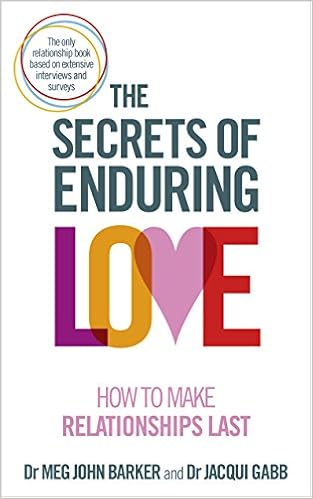
When I bought Enduring Love, Clare snorted about people who think the answer to everything is read the manual. In fact 'Enduring Love' is the name of an Open University research project enrolling 5,000 respondents. I was expecting data, statistical analysis, IQ and personality correlates and some well-founded conclusions.

I was so wrong. It's a soggy self-help book. The volunteers have been mined for case-history anecdotes. So if you want to know that it's better to keep the burned marmite toast for yourself, and serve the perfect one to your partner, (p. 29), I can't recommend this book highly enough.

Coming back to reality, I have found that a couple of good arguments and a recognition that your partner can sometimes solve a problem which has eluded you is often the recipe for kicking the can farther down the road, relationship-wise.

Call me romantic.

Tuesday, November 03, 2015

Who died on Law Hill?

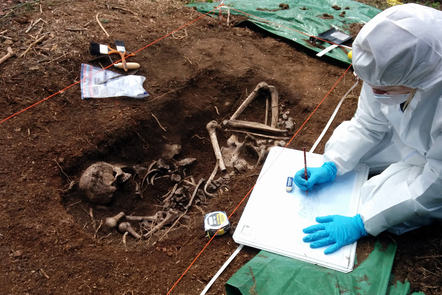
Dundee University, in collaboration with the OU, is launching a free online course (6 weeks; 4 hours per week) on 'forensic anthropology': Identifying the Dead.


"In the shadow of Dundee’s Law Hill, a grim discovery demands the attention of forensic experts. Unidentified human remains have been found and the police need to identify the victim to move forward with their investigation.
  • After a meticulous recovery of the remains, it will be your job to:
  • document and attempt to explain any evidence of trauma;
  • identify the victim through biological profiling;
  • and undertake a facial reconstruction.
"Experts from the University of Dundee’s award-winning Centre for Anatomy and Human Identification (CAHId) will guide you through the process of human identification. They will introduce you to the fields of human identification; forensic anthropology and archaeology; craniofacial identification; and the study of the human body.

"Week-by-week, the case will unfold, providing you with more information about the victim. You will be presented with theoretical material and hands-on learning opportunities, to evaluate the case information and use what you have learned, to piece together clues to the victim’s identity."
Clare and myself have signed up. The start date hasn't been announced yet but there will be more here later.

---

Identifying the Dead is just one course from FutureLearn. There are so many! I was naturally interested as to how they make their money, what's the business model?

The CEO, Simon Nelson, suggests it's through charging for certificates and exams .. but it seems early days yet.

Saturday, February 09, 2013

The ghost in the machine

About half way through my OU quantum mechanics course I realised I had no idea what was going on. I could perfectly well follow the maths: the problem was that I didn't understand how the entities I was learning about connected to 'reality'. The subject might as well have been magick or theology.

I know I was not the only mystified one.

The trouble is that you need to be well-acquainted with the basic framework of QM before you can get its relationship to physical reality straight (it never ceases to be incomprehensible).

So, safe in the knowledge that it makes no sense, here is my current understanding of the basic mechanisms of quantum mechanics.

The quantum state (aka the wavefunction or state vector) is what we study in QM; we are not to suppose that this objectively exists out there in spacetime: mathematically, it lives somewhere else, in Hilbert space.

When we propose to make an observation of a quantum system (for example, the energy level of an electron in an atom) we choose the quantum operator corresponding to the property of interest (energy, momentum, position, etc). Call the operator A and the quantum state ψ.

To capture the notion of a measurement we form A(ψ) which we may also write as a sum (superposition) of A's eigenvectors (eigenfunctions), each multiplied by its specific coefficient (the projection of ψ onto the specific eigenvector/eigenfunction and the corresponding eigenvalue).

The eigenvalues are the values of possible observations, and the modulus of their expansion coefficients gives the probability of observing that value (Born's Rule).

What does it mean to apply an operator to a quantum state?

Suppose the operator is the Hamiltonian for the infinite square well potential, H. Initially the electron had some prior quantum state - maybe it was a free particle. Applying Schrodinger's equation for the infinite square well case to the quantum state psi is equivalent to putting the electron into the box. So applying the operator defines a constraint upon psi which effectively sets up the experimental situation. 

However, once we have registered the observation of a specific eigenvalue - say of position - the state vector changes again to the corresponding eigenvector (in this spatial example, a 'spike' eigenfunction centred at that position, which would rapidly spread out...).

So here, in all its incomprehensibility and weirdness, is the reason why quantum mechanics is so hard to grasp, and why no-one really understands what's going on .. even though it all works so brilliantly in practice.

Tuesday, December 25, 2012

The Calculus of Variations

I had to drop out of my maths MSc course with the Open University back in 2010 - yet another busy-busy client contract. I do have all the material, though and will do the course on my own account starting next week. No doubt you'll be hearing more here soon.

I had the material out this afternoon for review so Alex and Clare were at least subliminally aware of my plans. Towards the end of the afternoon they both decided to go for a walk on our local part of the Mendips, to take the air.

Top of the hill, they were discussing my folly when they were overtaken by a hobbity sort of guy - big beard, bush hat, short and dumpy, hairy feet .. well, you know. He hears the word OU and strikes up a conversation. Alex mentions I'm doing M820 and he immediately recognises the Calculus of Variations. Turns out the hobbity guy has almost finished his OU maths MSc, finishing this year with the formidable Functional Analysis module.

Only in Wells, huh?

Pictured below, the author with SF books from Adrian (thanks!) and backed by a van Gogh church, a present to Alex from the Musee d'Orsay (via us).

Tuesday, May 17, 2011

A Visual Guide to Special Relativity

When you first study Special Relativity you meet the strange phenomena of time dilation, length contraction and the 'twins paradox'. While it's true that the equations of the Lorentz transformation give the right answer, they may fail to provide insight into what's really going on.

The true meaning of special relativity is visual and geometric. R. S. Zimmer wrote a wonderful book called "Getting the picture in special relativity" but it is sadly out of print. However, he also wrote a shortened version for the Open University course "Space, Time and Cosmology" (Block 2) and this covers the main ideas in a beautifully clear way.

Download his ten page article here.

Friday, May 22, 2009

Something for the Bank Holiday weekend


At this time we're living at Penton Corner, on the outskirts of Andover... Next year we will move to Wells, Somerset.

It must have been 6.15 p.m. when Clare popped her head round the door and said "Come and look at this ...".

"Another rabbit?" I said with resignation as I eased myself out of the chair, but she shook her head. I guess I should have realised she wasn't using her 'look-what-the-cat-brought-in' voice.

The ground-floor toilet ceiling had that curious dimple with which I'm wearisomely familiar, a kind of six millimetre three dimensional Gaussian with a small drop of water dangling from the bottom. Other ominous patches were visible in the surrounding plaster. Yes, we were in plumbing hell again.

I bounced upstairs, Clare following with a torch, to a rendezvous with the boiler, which is caged in a network of unlabelled copper pipes, gauges and valves which ongoingly taunt me with their vast incomprehensibility.

Squashed between the cylinder and the wall, as accessible as the fan belt in a sixties mini, was a cone-shaped cutaway section of pipe. What looked like overflow water was gurgling and chuckling as it spattered down, stray drops running down the outside of the pipe and onto the sodden floor beneath.

To a first approximation, and speaking strictly as a layperson, prima facie evidence of a leak.

Nothing for it but to invoke our maintenance contract with British Gas. Clare got on with the job while I tried to deal with matters in my hopelessly impractical way, lodging a fan heater at an awkward angle to dry out the flooring, and shoving some kitchen roll in to catch further run-off.

Someone is apparently coming tomorrow afternoon.

And to that point, the day had been going adequately well. I spent a small fortune at the opticians on varifocal plus reading glasses, complete with differentially-hued photo-reactive lenses. Brown for general and grey for reading - matches the frames although this seems to have been by accident.

Then this afternoon: two solid hours of reviewing orbital angular momentum and spin, taking copious notes and trying to figure out whether the act of applying quantum operators corresponding to observables to state vectors ever maps, as such, into any procedure performed in an actual experiment.

As I understand it, the utility of the operator lies in defining eigenfunctions and eigenvalues which, so to speak, establish the set of possible observables when an experiment is 'subsequently' carried out. The operator then bows out, its job being done.

Experiments are all about computing the evolution of the state vector and then reading off amplitudes (leading to probabilities) in the basis of the chosen observable at the space-time locations of interest.

What a puzzle quantum mechanics is, and how much easier than plumbing.
_____

Update 9 p.m. The cat just caught a rabbit which, by dint of frantic chasing around, we have managed to let escape into the back garden. The cat is under house-arrest for twenty minutes. Clare is looking increasingly frazzled ...