Showing posts with label Nuclear bomb. Show all posts

Friday, January 12, 2018

British military strategy will converge to Russia's

In The Times today Edward Lucas writes about the dire state of British defence spending ("We can’t afford to rule the waves any more").
"Britain faces a £20 billion budget gap between what we want and what we can pay for. Worse, we do not know what our armed forces are for.

For decades, we tried to match America across the military spectrum in quality, if not in quantity. Anything our ally wants to do we aim to help with, from special forces to nuclear weapons.

That approach may be good for morale in Downing Street, where politicians enjoy looking like a superpower or at least strutting in the shadow of one. But it does not lead to sensible decisions. Our armed forces are expected to do everything but increasingly fail to do it properly. ..."

" .. we have broadly two options. One is to stay global and retain the ability to fight expeditionary wars, albeit mostly alongside the Americans and against weaker, poorer countries. We will devote the Royal Navy to protecting the two new aircraft carriers. We may maintain our token deployment in Estonia (where our force lacks air defences, naval backup or logistical support). But we will no longer be able to fight land wars against Russia. If things go wrong, we will hope, along with the rest of Europe, that the Americans can deter a military attack or, failing that, that they turn up in time to prevent defeat. ..."

"The opposite choice is to shed our global ambitions and concentrate on properly defending ourselves and our allies from Russia. That will mean a smaller but more heavily equipped army, most likely based in Poland (otherwise our troops will arrive too late for any likely conflict). It requires scrapping our amphibious warfare capability, which cannot operate against an advanced threat like Russia. The Royal Marines will be repurposed and probably slimmed down. The navy’s main task will be dealing with Russian submarines, meaning that the aircraft carriers will be white elephants. They can be lent to the Americans (who will be grateful, and have the fleet to protect them). Or they can fill some glorified trade-promotion and disaster-relief role.

The east European allies will be thrilled. So will non-Nato Finland and Sweden. None of these countries relishes being dependent on France. None views with equanimity a Europe in which Germany might eventually become the military as well as the economic hegemon. Moreover, the Trump administration has cast a grave shadow over the Atlantic alliance, and the Americans yearn in private for us to do one job properly rather than lots of them badly. ...

"My preference is for the second option. The Continent is our neighbour whether we like it or not, so we had better be involved as much as possible. Defending our own shores (not least against Russia’s nosy, quiet, modern submarines) is the top priority. Better ties with European allies could help."
Lucas concludes that there is not a chance in hell that the British Government will take his advice.

---

The problem we face is that, as with medical care, outfitting a first-world high-tech military is getting exponentially more expensive. The British economy simply can't afford it.

Does it matter? Well yes. As the Americans demonstrated in the Gulf, a state-of-the-art military can obliterate any adversary with anything much less.

Those states with leading-edge high-tech militaries include the US, Russia, China and - at a pinch - the UK and France, (the five permanent members of the UN Security Council).

---

We are not the first state to be torn between the desire for a first-class military and the reality of a second-class economy.
"The Soviet Union was famously described as "Upper Volta with rockets", a catchphrase that was updated by the geographically precise to become "Burkina Faso with rockets". It was a powerfully succinct description. The United States was rich and space-age powerful; the Soviet Union was poor and space-age powerful."
The Russians may have invested in their military in recent years, but their GDP is still only about the size of California. How do the Russians deal with this problem? They use a lot of people in the ranks (we can't do that) .. and their doctrine says 'go nuclear' pretty early.


The Russians perceive themselves to be encircled. They have inimical states to their west (NATO) .. and (hush!) they have a populous and competent rising-superpower on their depopulated eastern frontier.

I'd be worried too.

We Brits don't apparently have proximate enemies of any real capability right now, so our middle-tech military serves for anti-terrorism and police actions. But let's get real. If ever a first-class power were to move against us, on the current doctrine we'd be toast.

The really smart move in the upcoming defence review would be to follow the Russians. Work up a rich portfolio of multi-role nuclear options: to be deployed early and deployed often.

---

A lifetime ago, when I was in the International Marxist Group, I asked a senior comrade whether we really did support CND (The Campaign for Nuclear Disarmament) at all those demos.

"Hell no," he replied, "When we take power, we'll need those nukes - it's the only way we'll ever stop the Americans!"

Thursday, June 02, 2016

The aircraft carrier in total war


Interesting discussion about that exciting new weapon, the US navy railgun. A lot of feedback in the comments, mostly skeptical, about new 'wunderwaffe'.

I think it boils down to this: against a third-world opponent, nothing works like a carrier group for overwhelming global force projection; conversely, if you're fighting a first-world state with up-to-date weaponry, your carrier group is toast.

First-world state-on-state warfighting doctrine doesn't seem to have kept up with drone & missile technologies. Drones and missiles are orders of magnitude cheaper than the platforms (aircraft, tanks, ships) they target.

Offensive modes involving pre-positioning and saturation-attacks seem impossible to reliably defend against. And if all else fails, comment 13 observes:
"when articles talk about a naval war between China and USA in 2050 using some sexy new weapon, they never seem to cover that old weapon - nuclear ICBMs."
Five missiles in an area-spread with megaton warheads - no carrier group is going to look too clever after that.

---

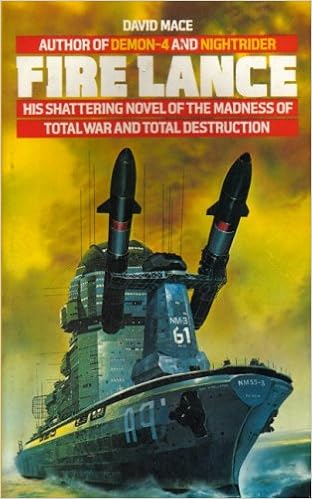
My favourite fictional account: "Firelance" by David Mace (although the Vindicator is a cruise missile platform, not a carrier).


Thursday, March 31, 2016

Nuke 'em!

From Wikipedia:
"Gregory M. Cochran (born 1953) is a physicist and adjunct professor of anthropology at the University of Utah, known for hypotheses in evolutionary medicine and genetic anthropology. He argues that cultural innovation resulted in new and constantly shifting selection pressures for genetic change, thereby accelerating human evolution. He is co-author of the book 'The 10,000 Year Explosion'."
In a typically curmudgeonly post, Cochran imagines a robust response to jihadists, over at West Hunter.
"Now and then I contemplate the possible outcomes if the United States got really, really angry, say at jihadists, if they went too far and struck a nerve. Crazed fury. Jihadists seem to think that enraging the western powers is strategically sensible, but they might be wrong. I’m not talking about little things like the invasion of Iraq or Afghanistan: no, I mean really angry. You should picture Uncle Sam turning green and bursting out of his Uncle Sam suit ... .

"There’s the old reliable, nuclear weapons. There wouldn’t be a lot left of the Arab world, especially when you consider little tactical enhancers like blowing up the Aswan Dam, or nuking a nuclear reactor. You could simply drop enough medium-life-time radioactive dust to make a region uninhabitable for months, or years, or decades, which could make the Haj pretty difficult.

"Even semi-conventional war could become lot more intense: we haven’t done fire raids lately, but we still can (B52s can carry a huge payload). It’s hard to make laser weapons work for most purposes (atmospheric transmission) – but it’s easy to make ones that blind. We’re working on smart bullets: right now you have to fire thousands per hit, but that’s going to change.

"Nerve gas? effective.

"Germ warfare? Amazing things are now possible: we could probably tailor agents to hit particular ethnic groups (there is always leakage: I’m not saying that we wouldn’t get our hair mussed.) . They could kill – swiftly, or agonizingly slowly, They might trigger Creutzfeldt–Jakob disease: not just for cannibals, anymore. You might see agents that cause insanity, or sterility, or damn-foolishness (hmmmmm).

"Once CRISPR goes to war, you would see agents that cause germ-line genetic changes – nasty changes with built-in genetic drive that spread to the whole population."
I suppose we should add this to the debate about what to do about the new Caliphate. Peter Turchin has a series of articles on the same issue, applying his mathematical-history theory of 'cliodynamics'.

Perhaps understandably, Turchin is less keen on “ethnocide”.

As Turchin points out in the relevant article, world - and European - history is chock-full of examples of the kind of stuff Prof. Cochran playfully advocates. But the West doesn't seem to do that anymore, mostly because elite opinion has been captured by empathic compassion.  This almost-Buddhist ideology (bien-pensant liberalism to its enemies) is a natural fit to the rather weak government model of capitalist democracies, where it's important to keep all interest groups onside to ameliorate civil strife and get re-elected.

Government policy trundles along the vector sum of pressure group lobbying; the masses grudgingly acquiesce in the frequent stupidities which follow.

Until they don't.

Sunday, October 12, 2014

Ebola nuclear strike: a really poor idea

Sierra Leone topography (Wikipedia)
It might have occurred to you that rapid sterilization of the current Ebola outbreak could paradoxically be the most humane course of action in the long run. So we read statements like this *:
"Under the circumstances, we must assume the worst-case scenario,” Weurfuqd’naowe concluded at the close of his press conference.  “The evidence we have indicates that this is a new and extremely contagious strain of filoviridae Ebola, posing a health threat worse than any previously-known epidemic.  If the virus succeeds in migrating out of Guinea, it could very well sweep the planet more rapidly than any medical intervention would be possible.”

“We will monitor conditions in Guinea’s urban centers closely over the next twenty-four to thirty-six hours.  If the disease spreads as rapidly as we fear, it will be imperative that the outbreak be contained and exterminated at any cost.  Regretfully, it is the recommendation of the World Health Organization that members of the United Nations must consider the use of a nuclear weapon, if necessary, in hopes of stopping the lethal virus before it spreads across the world.”
Here are some reasons why this is a poor idea.
  1. The last thing anyone wants is kilotons of wind-borne radioactive fall-out dusting Central Africa. This might suggest using high-altitude radiation-enhanced weapons (aka neutron bombs). Unfortunately, while gamma rays are good at killing people, viruses are remarkably tough. So in practice we would need to ensure detonation of the thermonuclear fireball pretty close to ground level. Unfortunate.

  2. Sierra Leone is big - see the map above. So are Guinea and Liberia. There are big cities where the epidemic concentrates, but also networks of far-flung villages where infection ebbs and flows. Nuclear bombs are not good area-denial weapons: the fireball radius goes only as the cube root of the weapon yield. To sterilize a country the size of any of the three affected would require hundreds of high-mega-tonnage systems, with no guarantee of complete success.

  3. Not all Ebola-carriers would be vapourised in any conceivable strike. Inevitably refugees would flee into neighbouring countries: Senegal, Mali, Ivory Coast, there to become the seeds of a subsequent round of infection. There is a limit to the number of African countries which can be nuked. And in the aftermath of the sterilization event, do-gooders from a hundred countries would flock in for 'disaster relief'. Can you imagine a more effective method of then spreading Ebola around the globe?
And radiation-induced viral mutation; we so don't want to go there. No, nuking the epidemic is a poor response and I would advise policy makers not to go down that route.

---

* Check the date, by the way, on that report.