Showing posts with label Gnomon. Show all posts

Friday, January 26, 2018

"The Circle" - Dave Eggers

Didn't read "The Circle" first time out (2013). I was put off by the reviews.

Big mistake.

Having just completed this excellent and page-turning satire, I returned to those very reviews. Some were autistic (fatally flawed - he gets details of the technology wrong); some were literary-snobbish (his writing is flawed, the characters are flat and unconvincing); and some were patronising (politically flawed, could never happen, nothing to see here - move on).
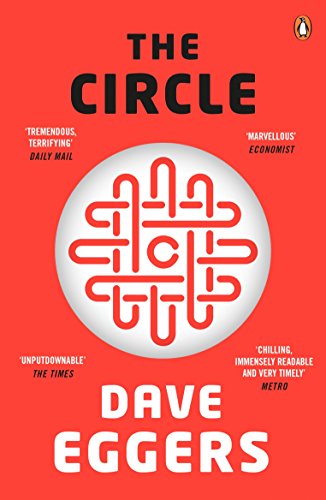
Amazon link

But some people called it right, Steven Axelrod being my outstanding favourite.

Here's how he starts:
"Reading Dave Eggers’ new novel The Circle an image slipped into my mind, one not contained in the book but which I’m sure its protagonist would appreciate: a big church wedding with full Catholic ceremony – the priest in his vestments, bathed in the densely colored sunlight from the rose window, holding a massive Bible before a crowd of hundreds of friends and family as the sacred catechism rolls up the nave and echoes from the flying buttresses of the medieval ceiling. “Do you take this woman …” and the man answers “I do.”

Then he turns to the bride. “Do you, Emily Johnson, take this man, Brad Halpern, to be your lawfully wedded husband, to have and to hold …”

When he’s done, she looks up distracted.

“What?”

She’s been texting.

The only problem Mae Holland, the heroine of The Circle would have with this scenario is that Emily hadn’t “gone clear” – she had no portable camera attached to herself which could document every moment of the ceremony to her 239,456 followers.

She wasn’t “zinging” them all (a kind of instant tweet), acknowledging their “smiles” and good wishes as they came in. What was wrong with Emily? Why wasn’t she sharing this beautiful moment? Who made her dress? Where did Brad get his tuxedo? Does the church do charity work?

Couldn’t she link to the designer and the haberdashery and the Catholic aid organization? Think how her Conversion Rate (that’s the number of purchases you stimulate with your comments and zings and links) could be sky-rocketing! Not to mention her Retail Raw – that’s “the total gross purchase price of recommended products” people have purchased because of you. What a waste!

Doesn’t Emily understand that sharing is caring and secrets are lies and most of all – privacy is theft?"
Mae Holland is a 2013 portrait of a type we've become more familiar with, the ingenue social-justice warrior, insistent upon giving us all the benefits of her inexperience.

In Axelrod's words,
"One of the most audacious aspects of Eggers’ book is that the writing sticks rigorously with Mae Holland’s point of view. The narration is as close as “close third person” can get. Why not tell it in first person then? But that’s the whole point: that pesky “first person” is precisely what the Circle is trying to eradicate.

Because Mae doesn’t understand what’s happening to her and her world, the reader is forced to make the arguments that she can’t. The novel becomes interactive in a way that no computer program could ever be. You’re literally shouting at the page. When Mae talks about basic principles with Eamon Bailey, one of the three Wise Men who founded the company, she swallows his specious arguments whole.

All secrets are bad because anything private is suspect – why would we hide something we weren’t ashamed of? Mae doesn’t have the presence of mind or the education to point out that most of the great strides forward in human history – including the basic technical work that created the Circle itself – was done in silence and solitude.

Human beings need isolation and quiet and uninterrupted thought. Physical health and sanity depend on it. The idea that we only hide what we’re ashamed of is simply false. But Mae doesn’t get it. She loves being part of something bigger than herself, having her tastes and opinions influencing the world, seeing her face in the mirror of a million hard drives."
"The Circle" is not a prediction of a Google-Facebook future: real life is way too conflicted for that. Instead it conjures up a certain kind of utopian vision, one where everyone is nice, everyone loves and affirms everyone else all the time, everything works and there is no unpleasantness of any kind.

[There's always an implicit, passive-aggressive 'or else' hanging in the air].

This is the left-liberal dream, an SJW paradise: the final triumph of the superego.

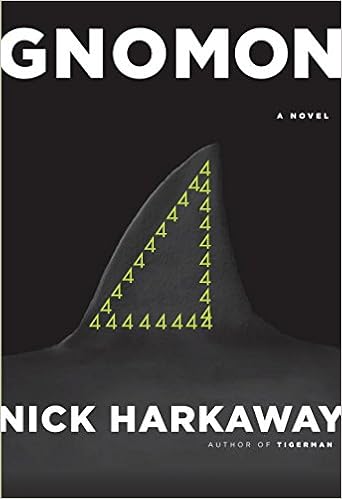
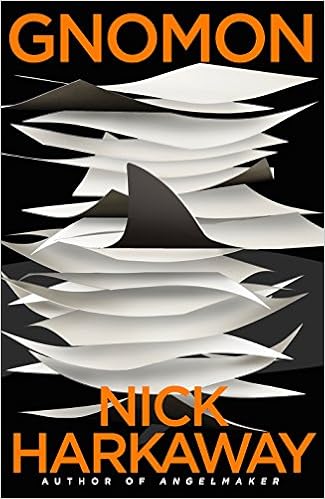
And yet such a cultish community of doves is totally open to manipulation by those less scrupulous. The transparent shark swirls in the sociopathic CEO's aquarium.
"The world of doves is not evolutionarily stable. Power corrupts, and those constrained to become doves are transformed rapidly into victims."
.. as I observed in my review of "Gnomon".

---

So now two juxtaposed discussions of novels critiquing the socially-liberal dream. What gives?

Well, Amazon noticed my interest in "Gnomon" and promptly recommended "The Circle".

Yes, I'm living the dream.

---

Some of the reviews pointed out that in the novel, due to The Circle's technology, crime is reduced and welfare is actually improved. Seems silly to deny it.

Eggers' authorial-viewpoint characters try to locate what is actually bad about The Circle. It's harder than one might imagine. Isn't total surveillance much like vaccination? Necessarily total for the greater good?

The best they can do is to highlight the increasing levels of compulsion to sign into The Circle's total environment. But is the only alternative to The Circle's cult some kind of (ineffectual) off-grid survivalism?

We'll have to improve on that. I can do no better than effective checks and balances.

Sunday, January 21, 2018

"Gnomon": the ethics of benign total surveillance

Amazon link

In the previous post I described the setting for Nick Harkaway's new novel, "Gnomon". He has some interesting ideas about the architecture of an AI total surveillance system for London, and the authentication required to protect said system's integrity.

But that's a techy-take on the novel; let's listen in to The Guardian review:
"In post-Brexit Britain of the late 21st century, ambient electronic surveillance is total, for the good of the people. An omniscient AI called the Witness knows and sees all, ensuring the success of the System as a whole: a society of permanent direct democracy, in which everyone votes on everything all the time. Everyone is fitter, happier, more productive. What’s not to like?

Regrettably, of course, some sub-optimal citizens will occasionally be obliged to undergo involuntary interrogations by the Witness police, who use mind-reading technology. But this is rare and benign – until one woman, a refusenik called Diana Hunter who somehow lives off-grid, dies during her police interview. That’s not supposed to happen. Enter Witness inspector Mielikki Neith, a true believer in the panopticon utopia. She plays back the recording of the interrogation, to experience Hunter’s own feelings and to try to understand what happened.

What Neith finds inside the dead woman’s head, however, is not supposed to be there. She finds the vivid experiences of a host of other people. There is a Greek finance wizard who can somehow foresee the movements of the stock market and is stalked in his head by a shark. There is an old Ethiopian painter living in London, whose daughter produces a bestselling video game. There is a fourth-century alchemist searching for a mythical chamber that exists outside time, to resurrect her dead son, fathered by St Augustine. Meanwhile, it begins to look as though someone doesn’t want Inspector Neith to conclude her investigation successfully. ...

Of all the characters, though, the most interesting is actually the least human, and the one after whom the novel is named. Gnomon lives in a future where people can spread their minds across many bodies, thus handily averting death. He is what humans have become, a collective consciousness of tens of thousands of souls, so he finds it darkly difficult to understand being a human with only one body: “It seems too irresponsible to put all of oneself in one place, and so macabre to insist on being inside it as it breaks.”

More importantly, Gnomon has decided, like a starman Hamlet, that something is rotten in the state of the universe. “I don’t like it and I’m going to kill it,” he decides – and, as it turns out, he has a point. He is angry and funny, and a really interesting effort at portraying a consciousness that at some level is irreducibly alien. As the novel itself rather too insistently hopes, it is Gnomon’s voice you remember most clearly after the end."
---

This is a novel where, Inception-like,  it's unclear for long periods what ontological status characters and entities have. There is, just to take one example, something important called 'Firespine' which occupies its own occluded and allegorical role in every character's disparate world. The reader is invited to deduce what this multifaceted entity really represents, why it's important and where it might fit in the plot. And that's true of pretty much everything.

The book is interesting and smart and erudite and complex and I, for one, kept reading with growing engagement. The Guardian reviewer, by contrast, only did so because he was being paid.
"Had I not been professionally obliged to finish it, I doubt I would have trudged further than a fifth of the way through the novel, because ars longa vita brevis and all that."
The big, big issue for Harkaway is that of liberal ideology itself. Does it blueprint a desired end-state, our modern, western version of 'soviet man'? And are we entitled, SJW-like, to use a certain amount of hand-wringing coercion to get us there?

Many liberals toy with this idea. Iain M. Banks had Special Circumstances to do the dirty work that high-minded liberals didn't want to think about - it's a common trope.

Harkaway eventually comes off the fence, but not in a very profound way. His style of writing is very assimilative, very magpie-like, hoovering up cultural references. One reads with Wikipedia to hand. An author needs to balance such cultural cosmopolitanism with an equal depth of grand synthesis. Why exactly is it wrong to enforce political correctness? Why does God permit evil?

The answer surely lies in a naturalistic human psychology which - in its full evolutionary competence - is too complex to squeeze into the narrow mould of PC. The world of doves is not evolutionarily stable. Power corrupts, and those constrained to become doves are transformed rapidly into victims.

That is a critique of liberalism, by the way, which Harkaway senses but never quite grasps.

Nevertheless, the book is really quite gripping, it's a tour-de-force of ideas and seems to hover - even for the author - at the outer limits of human comprehension.

---

Many 'new AI problems' are really 'old human problems'. The US Constitution is both enduring and well-regarded because it has such a world-weary and jaundiced view of human nature. The Founders knew us, and knew that all institutions and individuals were corruptible (which really means inclined to work in their own interests (family and friends), not that of the broader polity - the principal-agent problem).

Their solution was 'checks and balances'. Nick Harroway's 'System/Witness' has utterly inadequate checks and balances, which is why it's unstable .. and why it fails.

"Gnomon": the System and the Witness

Amazon link


There are in excess of half a million CCTV cameras in London today. Most are old-fashioned, low-resolution, not networked and operated under disjoint authorities.

Project into the middle-future: many more cameras with microphones and speakers, online and linked to one central authority. Realtime oversight by an AI system - no people involved so no privacy issues - (right, Google?).

This is not just a sensor system, although it has input from the ubiquitous Internet of Things. This AI comes with apps: it can talk to people, warn them, nudge them.

So the AI needs social policies. Naturally they should be prosocial, intolerant of  negative -isms. Something like the BBC or The Guardian made flesh.
"Mielikki Neith is an enthusiastic proponent of both the System and the Witness.

The first is a government of the people, by the people, without intervention or representation beyond what is absolutely necessary: a democracy in the most literal sense, an ongoing plebiscite-society.

The second is the institution for which Britain perhaps above all other nations has always searched, the perfect police force.

Over five hundred million cameras, microphones and other sensors taking information from everywhere, not one instant of it accessed initially by any human being. Instead, the impartial, self-teaching algorithms of the Witness review and classify it and do nothing unless public safety requires it. The Witness is not prurient.

The machine cannot be bribed to hand over images of actresses in their baths to tabloid journalists. It cannot be hacked, cracked, disabled or distorted. It sees, it understands, and very occasionally it acts, but otherwise it is resolutely invisible.

In the gaps where the cameras cannot scan or where the human animal is yet too wild and strange, there are intervention. The majority of the Inspectors' cases concern acts of carefully considered violence, international organised crime and instances of domestic or international terrorism. Some few crimes of passion still occur, but hardly require deep scrutiny, and most are headed off early and preemptively when tremors of dysfunction give them away.

The Witness does not ignore a rising tide, a pattern of behaviour. It does not take refuge behind the lace curtain of non-interference in personal business. No one now shall live in fear of those they also love. Everyone is equally seen. That's how the System works and what it means."
A system like that is going to need state-of-the-art user authentication to access its internals.
"Even so, the protections around it were ferocious, and Annie insisted - in a rare moment of straightforward technical lecturing -that I know them off by heart.

`Authentication on steroids,' Annie said. `Username and password, that's standard. We start there, then we add a dongle.'

`Excuse me,' I asked, 'a what?'

`A physical key. Don't ask why it's called that, no one knows. A physical object that proves your right to access a given resource. These days it's usually your phone. In our case it's a little doodad you wear around your wrist.'  ...

`Yes,' Annie said. 'If you're a total lunatic, you can have the chip encased in plastic and implanted in your arm so that you can Obi-Wan your way around the office. I don't recommend it.'  ...

I slipped the dongle around my wrist, next to the bracelet. ...

All right. Something you know and something you have. Two factors. Okay? But we need more than that. The dongle itself has a biometric scanner. Most people use fingerprints or retinal scan, even aural topology scan, but there are issues with those. Once they're compromised, that's it - you have a finite number. And they lend themselves to rather ugly forms of violence.

We're trialling microbial cloud analysis. The sensor in the dongle is actually patterned after canine nasal cells, which always sounds a little bit weird.'

Yes. To these silicon children, biology is outré.

'Anyway: everyone has a distinct collection of biomass on and around the skin. Recognition is about ninety-six per cent accurate, so not perfect, but it's incredibly hard to fake.

'For full-access login, we have predictive neural modelling and response.'

`What's that?'

Colson shook his head. 'It's the absolute creepiest thing in the world.'

`The machine asks you a string of random questions,' Annie said 'and measures your answers against its analysis of your personality. It's not predicting your answer, it's determining whether it's the sort of answer you'd give. Over time, it also notices if you're changing in significant ways. That's why Colson hates it.'

`It's fucking intrusive,' Colson growled. 'In theory, it could decide you're emotionally unstable and tell your boss. If you vary too much from your previous behaviour, it might lock you out of your own files.

'There's potential for abuse, Annie, and you know it. The alcohol-anklet people could use it to say you're backsliding. And those probation future-crime fuckers, they'd love it: if your connectome gets too much like the one you had when you were a sinner, off to jail you go!

'And sooner or later, someone's going to say it can detect defections and whistleblowers before they can decide what they're going to do themselves. Maybe you see something, I don't know, you're an oil exec and you see the results of a spill. The system might lock you out for insufficient faith in the corporate ethos. Loyalty-based access.'

Annie glanced at me. 'Colson believes the world is on the brink of a collapse into pre-liberal government. The erasure of the twentieth century.'

It is,' Colson said firmly.

`Be that as it may -'

'Loyalty-based access. It's the automation of the merger of a religion of the state with corporate power in the form of information.'

`We'll code it out.'

'Someone'll code it back in.'

`They won't be able to.'

`They'll try.'

`That's why we haven't sold it,' Annie said, a little exasperated, and then to me once more:

'Five requirements. It's like putting ingredients in a cauldron for a magic spell. A significant object, your name, a secret word, your body. Then eventually, connectome: your soul.'

Turns out the last of these is the hardest to hack.

---

In the next post I'll say something about the novel itself.

Friday, January 19, 2018

A winter wonderland

Having been terrorised, terrorised a few nights ago by 70 mph winds (in the morning the bird bath had blown away .. ending up under the car .. imagine!) - this morning saw us whitened by hail.

The back garden

The front drive

Surely we must blame climate change.

We were up at 7.30 am because the local furniture shop, Haskins, had given us a window (8am - 1pm) for the delivery of our new sideboard. Clare was so looking forward to it.

I think it would have been about half past ten when the two burly delivery men drew up in their large van. I didn't envy their porterage of such a heavy piece of furniture up our steep drive (this was thankfully just before the hail storm hit).

We had speculated whether delivery people these days stay for coffee and biscuits, or just do the job and depart on some insane schedule. But that's just Amazon. We tried the experiment and treated the men to Waitrose-sourced coffee bags and shortbreads. They were very grateful and one of them was even somewhat conversational.

---

Clare is delighted with the new sideboard

The cutlery, plates and sundries have now migrated: I find it confusing. Apparently it takes two days to rewire the brain. At least that's what Nick Harkaway claims in the excellent and deeply weird "Gnomon" (of which more shortly).

Amazon link - Quis custodiet ipsos custodes?

I haven't quite finished his novel but I'm meditating on authors who are: off-the-scale Intuitive, who fail to find an editor to complement their insane research-depth and hyper-associative writing, who seem to have uncritically internalised hyper-liberalism, who are plainly very, very smart but still don't delve beneath the linguistic category of 'totalitarian surveillance'.

Mr Harkaway is by turns intriguing and infuriating.

But ultimately quite thought-provoking, this AI-powered panopticon of total automation. There's more to it than who gets to decide the boundary conditions and classification rules.

Here's the Kirkus review (no spoilers).