Showing posts with label Economist. Show all posts

Wednesday, October 05, 2016

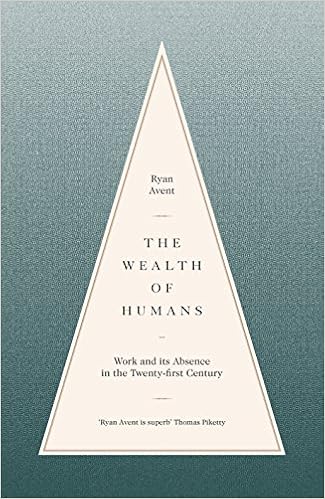
"The Wealth of Humans: Work and its Absence in the Twenty-first Century"

Amazon link

Economist writer Ryan Avent begins by noting that in the mid-nineteenth to early twentieth centuries, industrial progress was breathtaking. Machine-power – primarily steam but later oil, petrol and electrical – displaced human and animal labour within the economy, dramatically increasing productivity. By contrast, the late twentieth century seemed a period of placid advance leading to the stagnation many diagnose in our own troubled times. Yet we stand in the path of the forthcoming AI-powered digital revolution, one which will substitute for workers’ brainpower as mechanisation previously did for their muscles.

Massive increases in productivity promise that old Marxist dream, abundance, where the mass of people (not just a pampered elite) are free to follow their dreams. But can capitalism deliver? If workers are being displaced from employment in their millions, they won’t be able to afford all those wonderful new goods, while collapse in demand prevents firms from investing in that exciting new technology.

With affordable, competent robotics plus business software systems of ever-increasing sophistication and scope, there is a hollowing out of the labour force. At the low-skilled, menial end there is still a place for hands-on care staff, warehouse sweepers and drivers; at the high end engineers and designers with advanced degrees develop, configure and maintain advanced automation systems. But that hollow in the middle just keeps getting bigger.

The resulting abundance of labour tends to decrease pay, increase unemployment and most notably undermine the organising and political power of ‘the labour movement’. It is of little surprise that it is the 1% who appropriated the productivity gains of recent years - an elite defined by superior cognitive abilities and/or networked access to inherited wealth.

In response, some workers have been driven into the arms of the ‘gig economy’ – setting up artisanal outlets, becoming freelance journalists, Uber driving – but this sector is not called the ‘precariat’ for nothing. Other labour-intensive occupations (medical staff, hairdressers, funeral directors) have lobbied for increasing regulation and licensing, trying to create ‘guild walls’ which constrain supply and increase market power. But even these feeble efforts are contested by the real powers in the land.

The success stories of modern capitalism, high-tech companies and the great finance houses which dominate the new global economy are often surprisingly localised. They base themselves in San Francisco, New York, Boston, London and a few other world cities. The elites work together, often live in the same small districts, and hang-out one with another. The modern firm is defined by its social capital, leveraging the high human capital of its members to form a culture highly-contextual to that company. If you’re not part of this in-crowd, life in the slower lanes can be bleak.

Meanwhile the other 85% of the world’s population is either playing catch-up (China, and to a lesser extent India) or remains mired in poverty, corruption and war (sub-Saharan Africa being a case in point). The author finds this hard to understand – “Sadly, social scientists lack a satisfying explanation for how it occurs”. In fact some social scientists, such as Garett Jones at George Mason University and Gregory Cochran at Utah find it all too easy to understand, but the well-substantiated insights of “Hive Mind” and West Hunter’s “Our Dumb World” don’t find an echo here.

And that’s a shame, because the author’s proposal for ‘fixing’ the third world is disastrous: open borders with the first. Mass immigration from low social-capital countries will, he argues, both improve the life chances of immigrants (certainly!) and allow them to absorb the culture and institutional norms of the advanced capitalist countries (sadly, not a chance).

The thought, no doubt is that they would in their masses then return bearing their newly-acquired social capital - and liberal democracy plus advanced technologies would finally bloom south of the Sahara!  The author seemingly fails to notice that versions of this experiment have already been tried. It’s startling to read such fantasies. Modern macroeconomics with its wilful clone-human assumption of ubiquitous cognitive uniformity has much to answer for.

The author next turns his attention to secular stagnation. The concentration of massive wealth in the 1% (where it cannot be consumed, only saved) combined with income stagnation amongst the over-abundant, overleveraged labour force (which has drastically reduced demand), has led to a massive glut of savings with nowhere to go. There are other drivers of global over-saving: China; an ageing population which needs to hoard its money in retirement; nimbyism by the already-privileged which endlessly frustrates infrastructure investment for new housing and transport links; and the new ‘dematerialised’ corporations with their highly-skilled, relatively small workforces not requiring much capital equipment by historic standards.

Somehow global demand has to be increased. The author walks us around the usual suggestions.
  1. Government spending on public works: (but governments are already overleveraged).

  2. A really effective increase in the minimum wage: but this would exacerbate unemployment, restrict economic growth (many fast-food restaurants would be forced to close, for example) and increase the rate of automation displacing more workers. Benefits would fall unevenly.

  3. A basic income: but paying people to loaf around has proved politically problematic, raising moral hackles amongst those who still have work to go to and whose taxes subsidise the idle. In addition, the level of basic income which would genuinely support a modest but acceptable lifestyle seems beyond present day economic development. Probably something like this will have to be the answer in the end, but the politics and economics are difficult.
Looking ahead, the author sees no clear path forward.  The priority must be continued development of the productive forces in the economy: more education and R&D, more globalisation and more automation. However, without redistribution of wealth and, more profoundly, without some sense of what society is to offer the increasing fraction of its members with no discernible economic role, this journey will be interrupted by increasing political, and perhaps violent, factionalism. In any event, the rich do not take kindly to having a large part of their fortunes confiscated and donated to the masses, even if that is perhaps in their own long term interests and would address some of the externalities through which they acquired their enormous wealth in the first place.

In conclusion, this is an interesting book covering a wide range of issues. It’s well-researched and brings standard and robust macroeconomic ideas to the task of understanding where the world is, and where it could be going. Its arguments are perhaps not as original or creative as the author imagines. I can even imagine it being rebadged as a Marxist treatise with some small changes in terminology – this has often been the fate of Economist articles.

For those hoping to get some general insights into what the future holds, the last part of the book will prove the most disappointing. In a nutshell, he hopes for the best, fears the worst and expects humanity will muddle through.

Trigger warning: the book is written in the same superior, self-satisfied and patronising style as The Economist itself. This may offend some readers.

Tuesday, March 04, 2014

"The Son Also Rises" - Gregory Clark

Here is how The Economist reviewed Gregory Clark's "The Son Also Rises: Surnames and the History of Social Mobility."
"Periods of great inequality are good for social theorising. Last year Charles Murray, a libertarian columnist and pundit, warned in “Coming Apart: The State of White America, 1960-2010” that mating among people of similar means is increasing the divide between a motivated elite and a listless underclass. In “Twilight of the Elites: America after Meritocracy”, another commentator, Christopher Hayes, showed how the elite are using their resources to circumvent the meritocracy and establish a permanent upper class. Now the fray is joined by Gregory Clark, a Scottish-born economic historian at the University of California, Davis. In “The Son Also Rises” he argues that social mobility is low everywhere and always will be, and there is nothing society can do about it.

"Mr Clark has waded into these waters before. His 2009 book, “A Farewell to Alms”, reckoned that Britain’s Industrial Revolution was attributable to faster breeding among the rich, which raised the population’s underlying competence. Critics pounced, crying that the book was thinly sourced. Perhaps for this reason, he has armed his new book with reams of data. Most of the text is given over to methodical presentation of research, with the uniting theme that optimistic assessments of mobility are badly wrong.

"Conventional research has it that society is highly fluid: the effect of inheritance is almost nil in some Nordic societies, and family explains no more than 25% of an adult child’s status in America, which has always been less mobile. But Mr Clark points out that these studies track change over just two or three generations and are therefore biased by quirks of fate: the working-class lottery-winner or the scion who chooses social work over high finance. Longer projects average out this randomness and paint a darker picture.

Mr Clark draws upon research that uses surnames to track status over centuries. The academics he follows have mined sources as varied as the Domesday Book, the Royal Society’s records, even membership of the American Medical Association, in order to find surnames that are over-represented in elite positions. Researchers then track how long it takes those monied surnames to lose their wealth-predicting power.

"With surprising consistency across countries and eras, mobility is found to be painfully slow. Birth has predicted more than 50% of one’s income or education status, Mr Clark reckons. Erasing the legacy of past prosperity takes 10-15 generations rather than the three or four implied by sunnier estimates. So the shadow of 18th-century wealth still darkens income distributions today.

"That is the most unexpected finding. Efforts to democratise education and eliminate discrimination over the past century appear to have had no discernible effect on mobility, leading Mr Clark to conclude that mobility is strongly linked to underlying social competence—an “inescapable inherited” trait. Only the intermarriage of people who are more prosperous and educated with those less fortunate will dilute the genetic resources of well-off families, slowly pushing them back towards the average and preventing the rise of a permanent overclass.

"Oddly, Mr Clark judges the world to be “a much fairer place than we intuit.” He explains this by stating that the rich acquire their wealth because they are clever and work hard, and not because the system is rigged. The world is less corrupt and nepotistic than people might think.

"This conclusion gives the book a cheery tone, but there are also plenty of nasty conclusions to be drawn. One inescapable judgment is, as Mr Clark says, that “a completely meritocratic society would most likely also be one with limited social mobility.” He does not say that American blacks are poor because they are black. His work implies, however, that poor blacks remain so because they are descended from people with low social competence; discrimination is irrelevant, except to the extent that it limits intermarriage with other groups. “The Son Also Rises” may not be a racist book, but it certainly traffics in genetic determinism.

"That is a weakness. Mr Clark is too quick to write off the promise of recent social changes. The oldest Americans born after the passage of the Civil Rights Act are barely 50. Impressive work on the effect of good teaching or well-targeted poverty assistance suggest such programmes make a difference. Yet Mr Clark follows his logic to an unexpectedly egalitarian end. Redistribution is sensible, he argues, not in order to boost mobility but because mobility is intractably low. The cream will rise regardless, and so paying extraordinary salaries to capable workers is unnecessary. If high rates of mobility are used to excuse or justify inequality, he suggests, then the reality of low mobility implies something quite different: that great inequality serves little purpose and redistributing income from the rich to the poor might raise overall welfare at little economic cost. This makes for uncomfortable reading for those of all ideological persuasions."
Clark is largely content to examine the data he and his team researched in the context of his mathematical model of social mobility (a first-order Markov social-mobility diffusion process) without imposing any personal agenda. His public-policy thoughts are restricted to a chapter at the end where, as The Economist notes, he expresses an ethical preference for Nordic-type societies.

It's useful at this point to note the correlation at the state level between individual willingness to countenance large transfer payments and the degree of ethnic cohesion within that state - Clark doesn't and as a consequence fails to note that this pleasant outcome is unlikely to come to pass in the United States.

A small aside: reviewers who wish to exhibit their impeccably PC credentials include words such as "nasty", "genetic determinism" and "racist" in their reviews. These terms, devoid of scientific meaning, invariably demonstrate high-minded distaste replacing possibly-dangerous rational thought.

Clark's book is an easy read if you know some statistics* and are interested in the history of diverse populations from Chile to China via the US, UK, Scandinavia, the Middle-East, India and Japan. His probabilistic social-mobility model is simple yet makes powerful counter-intuitive predictions. These are backed up by the voluminous data-sets he's managed to analyse. You also get advice on who to marry.

The world still divides between those social scientists who think that genetics (i.e. inherited differences between people and populations) are irrelevant as everyone is born identical for social-outcome purposes, and those who are tracking the latest research in population genetics and DNA analysis as they shed new light on sociological, economic and political issues. The latter camp is slowly gaining respectability as more hard data becomes available and Clark's book is a breath of fresh air in this developing paradigm.
---
* Correlation coefficient, regression to the mean, normal distribution, standard deviation, variance, time series.

Friday, January 17, 2014

Disappearing accountants

The Economist this week has a feature on the changing nature of work. Just as machines displaced agricultural workers in the fields and craft-artisans in their homes, so a new generation of smart computer systems are displacing middle-class intellectual workers.
"Even after computers beat grandmasters at chess (once thought highly unlikely), nobody thought they could take on people at free-form games played in natural language. Then Watson, a pattern-recognising supercomputer developed by IBM, bested the best human competitors in America’s popular and syntactically tricksy general-knowledge quiz show “Jeopardy!” Versions of Watson are being marketed to firms across a range of industries to help with all sorts of pattern-recognition problems. Its acumen will grow, and its costs fall, as firms learn to harness its abilities.

"The machines are not just cleverer, they also have access to far more data. The combination of big data and smart machines will take over some occupations wholesale; in others it will allow firms to do more with fewer workers. Text-mining programs will displace professional jobs in legal services. Biopsies will be analysed more efficiently by image-processing software than lab technicians. Accountants may follow travel agents and tellers into the unemployment line as tax software improves. Machines are already turning basic sports results and financial data into good-enough news stories."
How likely is your job to be taken over by automation? The Economist article includes this chart.

Lose your job to a machine?

In previous rounds of automation, displaced workers were able to get an education and populate middle-class jobs (as clerks, and later as the famous 'computer programmers') which were pleasanter and better-paid than their previous jobs which automation had killed. But as the computers get smarter, perhaps a lot of people can't compete anymore - they're just not that smart or conscientious. And personal trainers, in general, are not fantastically remunerated.

The process of intellectual displacement is interesting. The machine systems are not, again in general, particularly good social actors (which explains the chart above). They can, however, automate large parts of the informational, computational and process-rich components of a middle-class job. A few highly skilled practitioners - expert accountants, if you like - can use these highly-capable tools to solve problems which used to be tackled by small armies of lesser-skilled accountants. Productivity has risen but those displaced 'average accountants' appear to have nowhere else to go. A life of benefits and endless video games beckons.

Oh, did I say automation hasn't produced good social actors? We progress one step at a time.


The elite of the Roman Empire didn't do a lot of work, manual or otherwise. They managed the great affairs of state, and slaves or lesser mortals did everything else. It raises a question of whether we should embrace or fear ubiquitous automation. The pessimists amongst us will recall 'bread and circuses'.

Saturday, March 02, 2013

The commie robots are coming!

The Economist Blog has a post, Real Robot Talk, which asks what we do when the approaching army of cheap, smart robots makes it not cost-effective to employ the left-hand side of the bell curve.

Suggestions include legislating (in a Luddite manner) to ban such technology, or just accepting that masses of people will never find a productive job .. and simply pay them an entitlement wage - humans as pets.

Of course, as AI programs like IBM's Watson suggest, it's only a matter of time until the right-hand side of the bell curve faces a similar prospect. What on earth are we all going to do then?

I even remember having these discussions in the 1970s as a young marxist, when Ernest Mandel wrote that a society with 100% automation could not be capitalist: no work so no one got paid and there was no demand. Communism via automation not revolution.