Tuesday, May 31, 2016

Pheasant eats old cheese biscuits

Your bonus picture today.

The pheasant lives across the road. The crumbled biscuits are rejects from our cheese biscuit box, fallen past their damp-and-limp threshold.


The dispiriting little secret here is that immediately after this picture, the pheasant pushed off. The crumbs don't impress him much. I pleaded with Clare for some tasty oils/fat to sharpen the appeal, but my entreaties have fallen on deaf ears.

---

Update: this morning its friend (offspring, mate?):


Bike crime in our city

The city of Wells is not a notorious crime hot-spot, but bad stuff still happens.

Clare and Alex had a little bike ride out on Sunday. While they were in Morrison's, near the Glastonbury roundabout, someone tried to steal Clare's bike, not noticing the chain. Frustrated, they then took a knife to the back tyre.


I retrieved Clare and her bike in the car.

This morning, the bike was ferried to the Bike Shop in town. The bike guy told us that over the last week, three bikes have been stolen from Halfords and the other day someone came into his very shop and walked out with one of his bikes.

I know this isn't Syria, but still ..

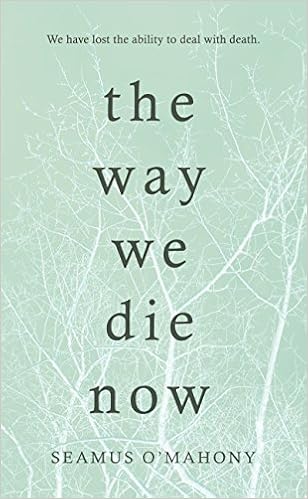
"The Way We Die Now" - Seamus O'Mahony

I too have had the illusion. That as my parents transitioned to death, I would sit with them and have 'the conversation'. The one where a life is summed up, wisdom imparted and the profound significance of death debated.

In both cases the syringe-driver displaced my naive expectations.

People do not have the ideal, the philosopher's death. They fade, suffer, their bodies fail and it's messy and sometimes horrible. And so to Irish consultant Seamus O'Mahony's anthropological stories of dying.


Here are some excerpts from The Times's review:
"As a doctor, O’Mahony says, “there is little reward, professionally or emotionally, for doctors who tell patients the truth” about the end of a patient’s life and what to expect. “Nearly all families, and many patients, prefer the Lie.” Most of what he reads on the subject bears little resemblance to the reality. This is his corrective."

...

"The worst kind of death you could have “without exception”, he says, is an acute death on a busy, understaffed general ward. Another cause of a “bad” death is family interference. O’Mahony describes the situation with an elderly woman with dementia and pneumonia who is brought to hospital by her family. He tries to persuade the family that at her age and in her condition, she should not be admitted to intensive care, where she will have to have highly invasive procedures: a breathing tube and mechanical ventilation.

"They aren’t convinced and so she is admitted. “Her death was farcical and undignified,” he says and he doesn’t try to veil his anger: “Although I had made it clear to the family that we would not attempt cardio-pulmonary resuscitation, when the poor woman finally died, two of the daughters attempted their own cack-handed version of cardiac massage and mouth-to-mouth resuscitation.”
O’Mahony is not a fan of assisted dying - in thirty years he claims never to have encountered a case where this would have been appropriate, and he is sceptical about advance directives - you just don't know what your wishes will be when the time comes.

On the other hand, he's extremely opposed (as are we all) to medical intervention without end, noting that doctors themselves frequently choose the least medical treatment when diagnosed as terminal.

CPR is a particular dread.

Friday, May 27, 2016

A tourist map of physics

This interesting cube-diagram is from Jess Riedels' blog.


The idea of this diagram is that the fundamental theories of physics can be placed in three dimensions as to how they treat gravity, the speed of light and Planck's constant h-bar, ℏ.

Gravity

G is Newton's gravitational constant as in his law F = Gm1m2/r2. When we dial G to zero we're in domains where we ignore the effects of gravity. Most of quantum theory is here, as is special relativity and classical mechanics.

The speed of light

Strictly speaking the important thing about our universe is not the weirdness of the speed of light, it's that in the large the universe's structure is Minkowski spacetime, not our intuitive 3D Euclidean space + time. This is a difference in metric, as well-explained here.

If you dial the speed of light to infinity (so 1/c goes to zero) then the space + time metric tends to that of common sense.

Planck's Constant

This is the weird one. Quantum phenomena such as superposition and entanglement emerge mathematically from the non-zero value of ℏ, most clearly seen in the uncertainty principle.

However, the emergence of classical physics from quantum mechanics as you reduce ℏ to zero isn't too clear. The state space of quantum mechanics is an abstract structure, a complex high-dimensional vector space called Hilbert space, which is not directly mappable to spacetime.

---

You might say that seven out of the eight nodes on this cube are well-established - the central mystery of contemporary fundamental physics is the eighth, quantum gravity.

Thursday, May 26, 2016

Lytes Cary Manor

Phew, what a scorcher! It was 16 degrees when we set out to Lytes Cary Manor (NT) and a shocking 19 when we returned home. Clare fled indoors from her zero gravity seat on our front driveway, clutching her cup of tea and complaining of the heat.

It's going to be a long summer.

Your author and his wife fronting Lytes Carey Manor

Lytes Cary Manor

An advanced case of topiary

Nigel in the Bijou Garden

Clare: "Enough already!"

Our picnic consisted of two egg rolls, a Viennese Whirl and a piece of fruit each plus hot drinks from a thermos.

Tuesday, May 24, 2016

A song of showers and tepid sunshine

We came to Game of Thrones soooo late.

Daenerys Targaryen

Tyrion Lannister

Ned and Catelyn at the Keep

Wookey Hole ('Winterfell') in the late spring sunshine.

Monday, May 23, 2016

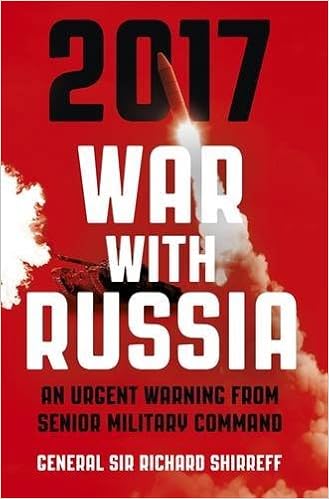
2017 War With Russia: An urgent warning from senior military command

Amazon link

Like David Cameron, I was once in my school's Combined Cadet Force. I have read books on military affairs and profess an interest. I wonder how General Sir Richard Shirreff would rate my abilities to come up with an effective British Army battle plan from my armchair?

I guess the literary world had a similar expectation as regards the bluff man-of-action's first novel. And they have not been disappointed: our troops are battle-hardened, hawk-faced, athletic-looking types who get up at 4 am to run ten miles before hitting their offices; the Russian President is pale with bloodless face, oval eyes cold and menacing, and with a voice 'slightly high-pitched and nasal'.

The American President, one year from time of writing, is a curious Clinton-Trump hybrid, the female CEO. Here is how one of the minor characters, aide Bear sees her:
"Standing up with all the others as she entered, Bear felt an almost physical sense of the power she gave off. The graver this crisis became, the more assured became her leadership.

"I know how lonely command in war can be, he thought. But, dammit, she’s just thriving on it. What was the saying? Cometh the hour, cometh the man? This time it was firmly cometh the woman ... and what a woman.

"With the President seated, MacWhite, the tall, lean former Special Forces general, who looked as if he’d be more at home riding the range somewhere out West than inside the Washington beltway, led the President through the agenda."
Enough: put aside the hyper-stereotyped characters, the pedestrian plotting and the over-acronymed prose. We are not reading the new Tom Clancy; we want to know what's wrong with our defence posture.

In this novelised scenario, the Russians, suffering from empire-withdrawal-syndrome and a realisation that their new borders have left large populations of co-ethnics in the Ukraine, the Baltic States and East Poland, decide to restore their kinfolk to the embrace of Mother Russia.

An invasion of East Ukraine delivers a land-route to the Crimea, followed by an assault on NATO member-states Estonia, Latvia and Lithuania. NATO is paralysed by the inability of its 28 members to agree on anything, the bureaucratic pacifism of the Germans and the openly pro-Russian sympathies of Hungary and Greece. In any event, it has no real military capacity anyway - years of underfunding and neglect have totally hollowed it out.

It's almost game-over, but the Russians make mistakes. They destroy British and German ships anchored in a Latvian port and kill forward-based American soldiers in the battle.

The rest of the story recounts events as America mans up ('that new president'), the Europeans find a new unity and the NATO military come up with a cunning plan. And thankfully, the romantic storyline is kept to a minimum and there is no sex.

Does the plot work as presented? Not a chance: unacceptable risks of nuclear armageddon, way too much reliance on cyber-stuff (which would almost certainly go wrong) while the Russians are portrayed as far too unimaginative.

I suspect that General Shirreff doesn't care much about this criticism either. He really isn't here to write a crafted thriller. His true point is that Europe has essentially blundered into disarmed pacifism and this has to be fixed - so what of that argument?

I don't doubt for a second the detailed picture he paints of European political-elite pacifism, Russia-accommodationism and generalised Euro-incompetence. His picture of the Russian leadership looked a bit too paranoid, emotional and cold-war-ish .. but a little reading around the subject seemed to support his view of the dangerous instability of President Putin's worldview and style of leadership. His view of Russian war aims - not to 'take Europe' but to expand Russia to its 'natural frontiers' - seemed highly plausible too.

Should we risk the nuclear destruction of Western Europe and perhaps American cities to stop this? The novel says 'yes' but in real life the political class would say no. And unless we believe that the current borders in Europe are inviolable until the heat-death of the universe, then it's unlikely that we'll risk armaggeddon for adjustments which, in the end, many will think not without some natural foundation. If the Russians play their cards right.

The critical learning experience is on page 285. Kydd, the new Chief of Defence Staff, is briefing the post-Cameron Prime Minister, Oliver Little, on the relationship between strong conventional forces and the strategic nuclear deterrent:
"But surely, even if we're outmatched conventionally, we've still got Trident?"

"OK, Prime Minister,' sighed Kydd, let me take you through this from first principles. You ask what the Russians will do and I'll repeat. They'll do what they've done at the end of every snap exercise they've called recently. Launch an Iskander tactical nuke as what they call a de-escalatory measure to stop us dead in our tracks and stop us counter-attacking?"

"Hardly sounds to me like de-escalation. Surely them firing a nuke will lead to all-out nuclear war?" asked Little.

"That's precisely the point, Prime Minister. It's counter-intuitive . . . the President knows that there's no way you are going to risk the destruction of human life in the UK by launching a Trident at Russia in response to his tactical nuke when, by so doing, you can almost guarantee a retaliatory strike from an intercontinental ballistic missile in return."

"So, how should we respond? We just have to take it on the chin?"

"Sadly, with the state of our Armed Forces as they are today .. Yes. That would be my advice. Plenty of people told the last government that to be effective, deterrence needs to be matched at every level, conventional and nuclear. As I've just explained, you can't weaken conventional forces and expect Trident alone to protect you. Conversely, if we did have strong conventional forces, but no Trident, they could easily defeat us by threatening to nuke us and we would have no way of deterring them."
This argument is exactly right, but contra the book, NATO is not going into a hot war with Russia over the latter's border accommodations. The trouble is, in the present state of disarray, NATO couldn't get into a hot war with any prepared state over anything; not a good place to be when negotiating with potential adversaries such as Russia and China.

Absent a clear and present danger, none of these Cassandra-like warnings are going to make the slightest difference. So expect more dangerous brinkmanship in the years to come.

--

The Iskander ballistic missile can carry a nuclear warhead up to 50 kilotons. Warheads with one third of that yield were dropped on two Japanese cities in 1945.

Friday, May 20, 2016

A visit to Newquay

We had visited Newquay in Cornwall back in 2012; I remember taking my wife, Clare, my sister-in-law and her husband to the Roman Catholic Church there for Mass one Saturday evening. The roads were convoluted - thank God for the sat nav! - and afterwards, the route back to our cottage took us past Sainsbury's.

Now I'm back here again.

It's a warm evening, the sunset fading behind me as I stare at the lit-up spaceport. The Government had resolved to build this facility back in 2016, with Virgin Galactic's space tourism as the 'anchor tenant'. That dream was long gone; what I would be seeing tonight would be the first UK 'heavy lift' launch for the new orbital laser platform.

Our contribution to future interstellar missions.

Thousands of us, mostly young, lithe men and women, crowd together here this evening. We didn't need to be here, but there is something tactile, sensual, about our presence in this moment.

Turning around, I see the ranks of synth trucks parked on the layby.

The loudspeakers speak the countdown, redundant as the main boosters ignite. A wall of ambient sound compresses my very body as the vast machine lifts on its plume of smoke and fire.


I watch it dwindle into the sky, its plume beginning to tip for orbital insertion.

It's time to go.

I peel the induction cap off my scalp, pull up my duvet and in a creaky whisper, ask the care home AI to turn off the lights.

Thursday, May 19, 2016

Army ready?

"The famous run is a 2.4km (1.5 mile) track in which you must complete the full distance within the given time. The time you have to complete the run will vary depending on the position within The Army that you have applied for.

"Before starting your timed run, you will warm up as a squad with the other people in the selection process. This consists of a slow jog and walk over a distance of 800 metres.  You will then immediately begin your test.

"The required times for the various regiments within The Army are as follows:

"Parachute Regiment - Run Time 09.40"
OK, so we're not going there.
"Royal Signals, Army Air Corps, Royal Logistic Corps, Royal Electrical & Mechanical Engineers, Adjutant Generals Corps, Army Medical Services, Royal Army Veterinary Corps, Intelligence Corps, and Corps of Army Music – Run Time 14.00"
In my school CCF I was in the Signals, so let's take 14 minutes as my target. If you run a km in five minutes (12 km/hour) you will run 2.4 km in 12 minutes. Way to go.

I don't usually use the treadmill in the gym. Too many historical problems with my knees after years of pavement jogging. But this morning I did five hard minutes on the cross-trainer, then did five minutes at a fast-but-comfortable pace on the treadmill.

Distance run in five minutes? 0.88 km.

Time for 2.4 km at this pace = (2.4/0.88) * 5 = 13 minutes 38 seconds.

I'm army-ready.

---

Is the British Army ready? This morning, Amazon delivered General Sir Richard Shirreff's new book, "2017 War With Russia: An urgent warning from senior military command", ordered on the back of my recent reading of Mark Urban's tale of military unpreparedness, "The Edge".


From the blurb:
"Written by the recently retired Deputy Supreme Allied Commander Europe and endorsed by senior military figures, this book shows how war with Russia could erupt with the bloodiest and most appalling consequences if the necessary steps are not taken urgently.

"President Putin said: 'We have all the reasons to believe that the policy of containment of Russia which was happening in the 18th, 19th and 20th century is still going on...' And 'If you press the spring, it will release at some point. Something you should remember.'

"Like any 'strongman', the Russian president's reputation for strength is everything. Lose momentum, fail to give the people what they want and he fails. The President has already demonstrated that he has no intention of failing. He has already started a lethal dynamic which, unless checked right now, could see him invade the Baltic states.

"Russia's invasion and seizure of Georgia in 2008 was our 'Rhineland moment'. We ignored the warning signs - as we did back in the 1930s - and we made it 'business as usual'.

"Crimea in 2014 was the President's 'Sudetenland moment' and again he got away with it. Since 2014 Russia has invaded Ukraine. The Baltics could be next.

"Our political leaders assume that nuclear deterrence will save us. General Sir Richard Shirreff shows us why this will not wash."
I see the Amazon comments are already being filled up with 'warmonger!' sentiments. And naturally one would like to discount books like this in advance, on grounds of special pleading and bureaucratic rent-seeking.

But the job of the armed forces is to defend the country against credible threats. If a senior guy believes it's incapable of doing that, he has a duty to speak out and give chapter and verse.

So I'm going to read this one carefully.

Wednesday, May 18, 2016

The economics of small repairs

Our upstairs bathroom fan died a couple of weeks ago.

We did the right things. We asked our neighbour to recommend an electrician and she supplied two names. We phoned: the first never showed up; the second never called back.

You sometime see ads for self-employed tradespeople: 'No job too small'. Perhaps not so much these days. The ads point to a problem - for an electrician, replacing an awkward-to-get-at fan over a shower is a lot of work for not much cash. With houses being built, there are better opportunities.

We finally went to the local electrical shop in Wells:
"Do you install fans?"

"Yes, I'll get our electrician to give you a call."
The shop exists to sell components and that's the main profit-generating business. Installation (which undoubtedly also contributes to the bottom line) is a necessary add-on. An interesting example where vertical integration allows a market opportunity to be addressed.

The electrician called us back and is due next Wednesday.