"... That discouraged me from ever trying to write a novel. I'm no good at characterisation, I'm no good at dialogue, I don't have an ear for the way people talk. I don't know that I'm that interested in people."And not just you, Mr Parris ... .
Sunday, October 04, 2015
Matthew Parris on not being a novelist
From The Times (Byline section), Saturday October 3rd 2025.

Friday, October 02, 2015
A Walk in the Woods
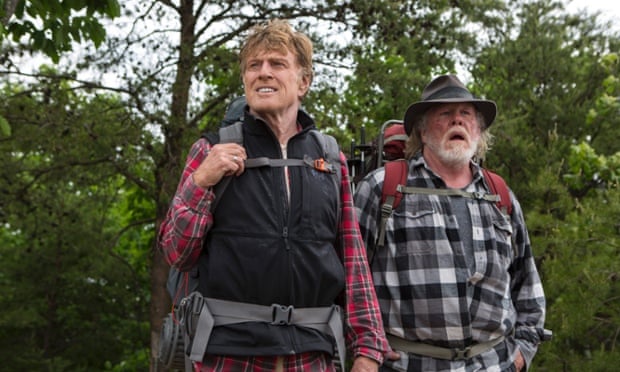 |
| Robert Redford as Bill Bryson .. plus friend |
"In A Walk in the Woods, directed by Ken Kwapis and based on the popular memoir by Bill Bryson, Redford and a pal leap into the uncertainty of old age while hiking the Appalachian Trail.The film managed to keep my eyes on the screen and off my watch mostly, but never seemed to deliver beyond bland. I have higher hopes for The Martian which we plan to watch next week; Steve Sailer has a review which damns with faint praise.
Redford plays Bryson, who decides well into his career as a travel writer to walk the 1,000 miles from Maine to Georgia – a journey men half his age regularly can’t complete. Fearing for his life, his wife (played by Emma Thompson) forces him take a buddy. The only man he can recruit is a boyhood friend, Katz (Nick Nolte), who he hasn’t spoken to since the pair fell out during a similar trek years back.
Plenty of silly little incidents ensue along the way, with lots of jokes about advancing years. Most of these episodes are far too low-stakes to carry a movie and the bigger picture, about two men past their prime trying to figure out what to do in their dotage, is handled far too simply to have real impact. The result is something that is just fine. It’s pleasant enough to watch, but by no means riveting or revolutionary.
However, the footage of the two of them trudging about is fantastic, all majestic vistas and cute small towns of rural America. For his part, Redford manages to be as charming and winning as he was nearly a half-century back – which goes a long way with such slight stuff. Nolte performs well, but his voice, which sounds like it was taped next to a paper shredder in a tornado, makes for a challenging listen."
Earlier in the day we took a stroll through the nearby Priddy Mineries - what you might call a walk beside the woods - where we topped up on vitamin D on perhaps this last day of summer.
Finally to this evening where we caught up with the Channel 4 series "Hunted": kitsch, but always interesting. With two decades as a telecoms consultant behind me, I'm thinking about the techniques used (or simulated) and wondering what other technologies (drones?) the hunters would use IRL. Clare, as befits her rebel heart, is always on the side of the fugitives ...
Wednesday, September 30, 2015
The Age of Em
A certain amount of excitement in the George Mason University sector of the Internet on Robin Hanson's upcoming book, "The Age of Em: Work, Love and Life when Robots Rule the Earth", due out in April 2016.

According to the Amazon blurb:
The article continues:
In any event, how likely is any of this stuff? On your behalf I ploughed through this c. 100 page report:
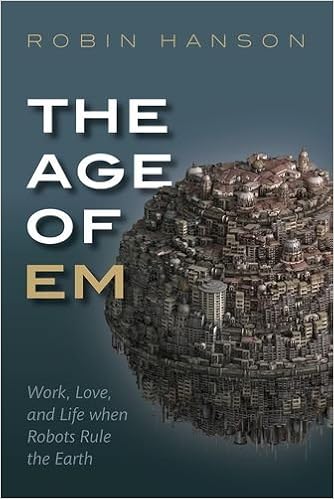
According to the Amazon blurb:
"Robots may one day rule the world, but what is a robot-ruled Earth like?Professor Hanson has recently written a preview article of unrestrained optimism entitled "The "Em" Economy: Imagine a future dominated by brain emulation robots" where he explains:
Many think the first truly smart robots will be brain emulations or "ems". Scan a human brain, then run a model with the same connections on a fast computer, and you have a robot brain, but recognizably human.
Train an em to do some job and copy it a million times: an army of workers is at your disposal. When they can be made cheaply, within perhaps a century, ems will displace humans in most jobs. In this new economic era, the world economy may double in size every few weeks.
Some say we can't know the future, especially following such a disruptive new technology, but Professor Robin Hanson sets out to prove them wrong. Applying decades of expertise in physics, computer science, and economics, he uses standard theories to paint a detailed picture of a world dominated by ems.
While human lives don't change greatly in the em era, em lives are as different from ours as our lives are from those of our farmer and forager ancestors. Ems make us question common assumptions of moral progress, because they reject many of the values we hold dear.
Read about em mind speeds, body sizes, job training and career paths, energy use and cooling infrastructure, virtual reality, aging and retirement, death and immortality, security, wealth inequality, religion, teleportation, identity, cities, politics, law, war, status, friendship and love.
This book shows you just how strange your descendants may be, though ems are no stranger than we would appear to our ancestors. To most ems, it seems good to be an em."
"If brain-emulation-based robots, built via a computational reproduction of human brain connections, come to dominate the world economy, that economy will grow far faster than today. Driven by abundance of labour resulting in higher returns to capital and lower commuting costs, most of this activity will be concentrated in a few dense cities."I'm sure those 'humans' will be delighted to be expelled from the workforce - at every level of skill.
For several years now, I have opportunistically applied standard theories from economics, physics, computer engineering, and many other fields to study the new ways of life that would appear in an em era. I have found, for example, that once the cost to rent an em is substantially less than human subsistence wages, ems quickly dominate the economy. Humans are mostly forced to retire, but live comfortably off of em-economy investments.
The article continues:
" ... sometime in the next century we’ll see a sudden transition. In less than a decade the world economy would will start doubling every month or faster, and ways of life will change dramatically.Nowhere in the piece does Professor Hanson acknowledge that the "ems" might have some issues working as slaves for the human overlords. I guess there might be one or two other ethical questions too, along the way.
There’s a decent chance that such a new era will result from the arrival of robots as smart as humans. In particular, such robots might be created as “brain emulations,” i.e., from taking a particular human brain, scanning it to record its particular cell features and connections, and then building a computer model that processes signals according to those same features and connections.
A good enough emulation, or “em” as I call it, has close to the same overall input-output signal behavior as its original human. An em thinks and feels like a human. One might talk with it, and convince it to do useful jobs. It can be happy or sad, eager or tired, fearful or hopeful, proud or shamed, creative or derivative, compassionate or cold. An em can learn, and have friends, lovers, bosses, and colleagues."
In any event, how likely is any of this stuff? On your behalf I ploughed through this c. 100 page report:
"Whole Brain Emulation - A Roadmap"from Anders Sandberg and Nick Bostrom of the Future of Humanity Institute at Oxford University, published in 2008 (there's a shorter paper here). They concluded (p. 81) that:
"It appears feasible within the foreseeable future to store the full connectivity or even multistate compartment models of all neurons in the brain within the working memory of a large computing system.I suggest that breath-holding is inadvisable .. but I'll probably still read Hanson's book.
Achieving the performance needed for real‐time emulation appears to be a more serious computational problem. However, the uncertainties in this estimate are also larger since it depends on the currently unknown number of required states, the computational complexity of updating them (which may be amenable to drastic improvements if algorithmic shortcuts can be found), the presumed limitation of computer hardware improvements to a Moore’s law growth rate, and the interplay between improving processors and improving parallelism.
A rough conclusion would nevertheless be that if electrophysiological models are enough, full human brain emulations should be possible before mid‐century. Animal models of simple mammals would be possible one to two decades before this."
Tuesday, September 29, 2015
Jeremy Corbyn's Conference Speech
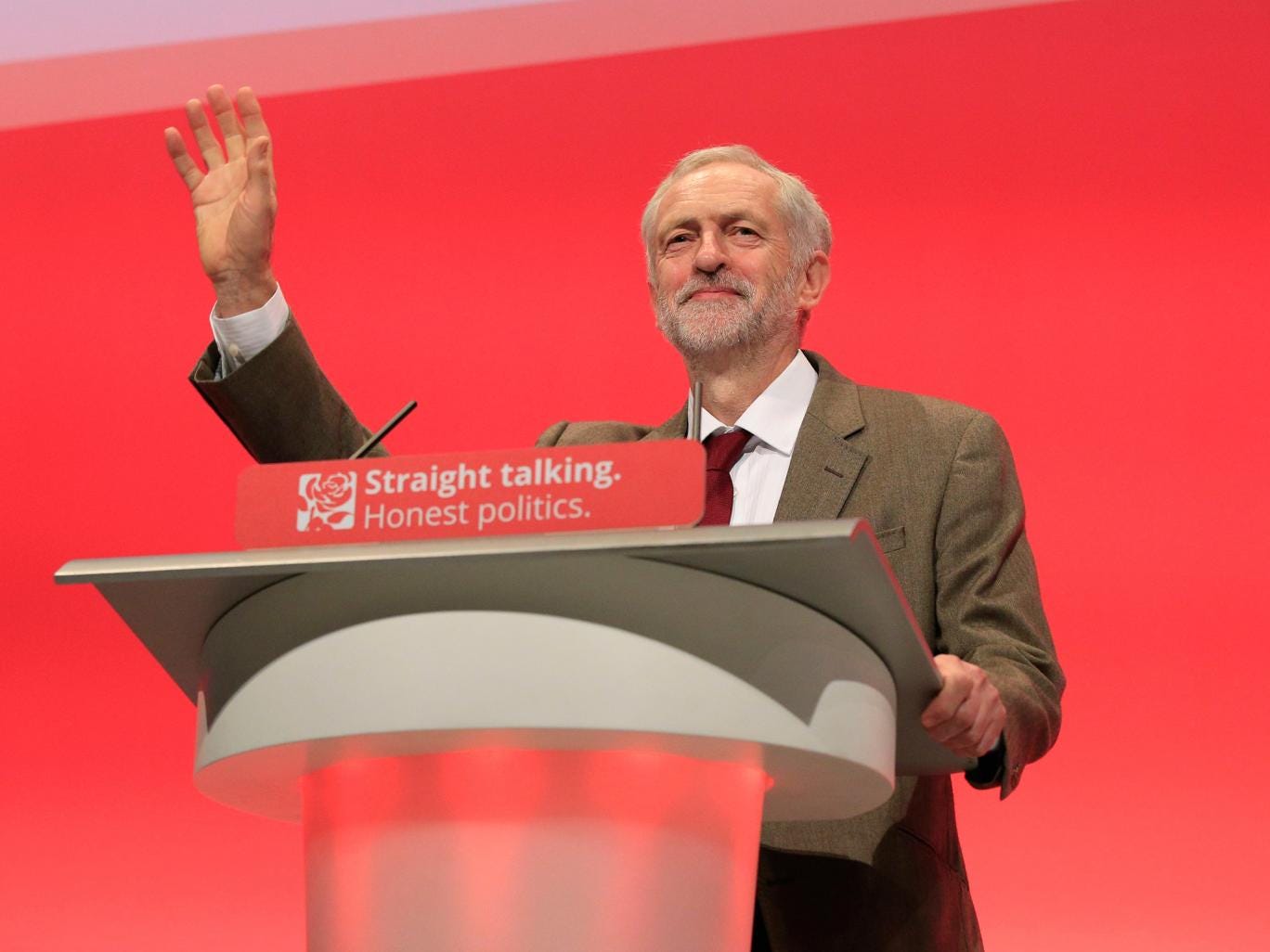
I listened to the entirety of Jeremy Corbyn's Labour Party Conference speech so that I could summarise it for you here. It wasn't at all jejune - quite inspiring in fact.
Here's a super-condensed version of what he said.
We're a rich country, there's lots of spare money lying around. We will take it away from the selfish rich (e.g. Hedge Funds) and use it to improve the lot of poor and oppressed people. The state will build enough council houses, organise egalitarian education under local council control and put resources into an NHS purified from private sector involvement. In all cases, people will be put before profit.Corbyn speaks with genuine moral outrage and clearly hates the evil Tories, blamed for all the (entirely avoidable) evils of the age.
I think this message will resonate with young people.
Monday, September 28, 2015
At the Zoo
We were at Bristol Zoo today. It's been decades since I've been able to get Clare to even contemplate such a visit given her memories of large savanna animals cooped up in tiny concrete cages. In fact given limited space, Bristol has carefully chosen animals to fit with its trim but ecologically-valid enclosures. The lion below, a lazy creature, nevertheless has plenty of room behind it.
It is a feature of my more mature years that the first thing I did was walk carefully around the enclosure, looking in detail for any weak points in the wire. Perhaps I've seen too many dinosaur movies.


As the autumn term has now started, there were few kids of school-age to be seen as we walked around. This ecological space has been colonised by middle-class young mothers with strollers, who lounged in the sun on the grass with their toddlers or consumed lattes at the fancy restaurant. As a flock wheels at sunset, they all vanished in the early afternoon as school-out time approached.
The zoo is at the edge of Clifton in Bristol, the smartest and most up-market 'village' in town. As you can get annual membership of the zoo for a relatively small fee, it seems the ideal hang-out on a sunny day.
As is so often the case, the people are even more interesting than the other animals.
It is a feature of my more mature years that the first thing I did was walk carefully around the enclosure, looking in detail for any weak points in the wire. Perhaps I've seen too many dinosaur movies.


As the autumn term has now started, there were few kids of school-age to be seen as we walked around. This ecological space has been colonised by middle-class young mothers with strollers, who lounged in the sun on the grass with their toddlers or consumed lattes at the fancy restaurant. As a flock wheels at sunset, they all vanished in the early afternoon as school-out time approached.
The zoo is at the edge of Clifton in Bristol, the smartest and most up-market 'village' in town. As you can get annual membership of the zoo for a relatively small fee, it seems the ideal hang-out on a sunny day.
As is so often the case, the people are even more interesting than the other animals.
Sunday, September 27, 2015
Obligatory cat pictures
 |
| Shadow tucked up for the day |
 |
| As Adrian observed: "Life's tough ..." |
 |
| The autumnal front garden |
There are a few words, which no matter how often looked up, their meaning is never retained. I have now resolved to use the word jejune as often as possible. And picaresque.
Friday, September 25, 2015
45 years (film)
 |
Geoff and Kate Mercer |
"Kate Mercer (Charlotte Rampling) and her husband Geoff (Tom Courtenay) had to cancel the party for their 40th anniversary at short notice when Geoff underwent bypass surgery. The comfortably off, left-wing, childless, provincial couple now have a week to go before a replacement party to celebrate their 45th anniversary. Theoretically, this week should just involve planning, dress purchasing and a bit of social fretting.
This is not to be: shattering news arrives for Geoff from the Swiss authorities, explaining that the perfectly-preserved body of his ex-girlfriend, Katya, has been found, 50 years after she slipped into an Alpine crevasse. From the moment the news is received Kate can 'smell Katya's perfume in the room' and her perspective on their marriage changes forever."
"Completely miserable!" - Clare Youell.
"No guns or spacecraft!" - Nigel Seel.
Geoff Mercer is a miserable, passive-aggressive, petit-bourgeois pseudo-intellectual fixated on his dead g/f fifty years in the past; Kate Mercer is prim and over-controlled. Their sterile marriage unravels over five days.
What a joy to watch this film, so appreciated by the critics!
We have The Martian to look forwards to next week.

Wednesday, September 23, 2015
The little people - the Draka solution

Did I mention that the Draka are a master race who have conquered half the world and subjugated everyone else as slave-serfs with the utmost cruelty?
Naturally the Draka have some plans for their always-dangerous subjects ... (from "The Domination": Book 3, The Stone Dogs, p. 632).
She paused. "Just out of curiosity, what's planned fo' the serfs along these lines?"Naturally a wench-serf will be the surrogate mother.
He relaxed. "Oh, much less. That was debated at the highest levels of authority, an' they decided to do very little beyond selectin' within the normal human range. Same sort of cleanup on things like hereditary diseases. Average the height about 50 millimeters lower than ours.
"No IQs below 90, which'll bring the average up to 110. No improvements or increase in lifespan so they'll be closer to the original norm than the Race. Some selection within the personality spectrum: toward gentle, emotional, nonaggressive types. About what you'd expect."
He laughed.
"An' a chromosome change, so that they're not interfertile with us any mo'; the boys can run rampant among the wenches as always without messin' up our plans."
"Yes," she said again, interest drifting elsewhere. "When can we do it?"
"Tomorrow would be fine, Tetrarch. The process of modifyin' the ova is mostly automatic. Viral an' enzymic, actually . . . Tomorrow at 1000 hours?"
Monday, September 21, 2015
Corbyn Watch
All those people crowing that Jeremy Corbyn has opportunistically changed his position on Trident, Europe, military interventionism, singing the National Anthem and so on know nothing about left-wing politics.
It's obvious that with the hostility of the PLP it would be insane tactics to insist on such things right now.
There's a party conference coming along, bound to be dominated by the activists and the unions. A little bit downstream we'll be watching the deselection of right wing and centrist MPs. Corbyn (and his more machine-oriented allies) will leverage the new activist base to transform the PLP: a project of at least a couple of years.
What's the rush? They've been waiting centuries.
---
S. M. Stirling's second Draka book, "Under the Yoke", has been giving me nightmares!
---
It turns out that men are more systematising than women while women are more empathising than men ... you won't be surprised to hear. Intriguingly, these two scales turn out to be almost orthogonal.
Additionally, both men and women studying hard science subjects are more systematising than those studying the humanities. Finally, those who score highly on the Autistic Spectrum Quotient scale (probably this means Asperger's Syndrome) are on the far end of the systematising distribution while also exhibiting deficits in empathising (empathising kind of equals agreeableness in the FFM).

All is explained in this interesting paper (PDF).
It's obvious that with the hostility of the PLP it would be insane tactics to insist on such things right now.
There's a party conference coming along, bound to be dominated by the activists and the unions. A little bit downstream we'll be watching the deselection of right wing and centrist MPs. Corbyn (and his more machine-oriented allies) will leverage the new activist base to transform the PLP: a project of at least a couple of years.
What's the rush? They've been waiting centuries.
---
S. M. Stirling's second Draka book, "Under the Yoke", has been giving me nightmares!
---
It turns out that men are more systematising than women while women are more empathising than men ... you won't be surprised to hear. Intriguingly, these two scales turn out to be almost orthogonal.
Additionally, both men and women studying hard science subjects are more systematising than those studying the humanities. Finally, those who score highly on the Autistic Spectrum Quotient scale (probably this means Asperger's Syndrome) are on the far end of the systematising distribution while also exhibiting deficits in empathising (empathising kind of equals agreeableness in the FFM).

All is explained in this interesting paper (PDF).
Friday, September 18, 2015
The Evolution of Personality Differences
Evolutionary psychologist Daniel Nettle wrote an important paper ten years ago, "The Evolution of Personality Variation in Humans and Other Animals" which has not dated. The paper addressed two issues:
I summarise Professor Nettle's views on the evolutionary validity of the five factors below (his second question). The Myers-Briggs Type Theory dimensions are shown in brackets. I have edited-out the original inline references for readability - refer to the original paper (PDF) for the full text.
1. Extraversion-Introversion (E-I)

Nettle agrees that his ideas are speculative and are intended to propose hypotheses for future research. In fact it has proved hard to directly identify genotype correlates to psychological traits. Genes code for brain structure and process-regulation in a highly-indirect way. The missing level of analysis is in the variant brain architectures and operating modes (such as neurotransmitter levels) which underlie individual personality traits and differences - these seem to be largely under genetic control.
Thankfully, there's a lot of research into these areas at the moment.
- Why is there variation in human personalities?
- What is the evolutionary basis of the 'five factor model' dimensions?
"Heritable variation is ubiquitous in natural populations. ... Why does variation persist? The ultimate source of variation is of course mutation. The level of variation found in a population at any point in time reflects the balance between mutation introducing new variants and selection removing them. For a trait influenced by a single gene, selection does not have to be very strong to keep the level of standing variation close to zero, because mutations arise relatively infrequently. However, the rate of appearance of mutations affecting a trait rises directly with the number of genes involved in building it, and selection does not remove them instantaneously. Thus, for a trait affected by many genes, even if selection is strong, there will be a significant amount of standing genetic variation. ...We may observe that every form of human society from hunter-gatherer through pastoral, agricultural and mercantile-capitalist has required a division of labour where different personality types are optimal. Not everyone can be the big chief or be a compliant follower, not everyone can focus on competence in tool-making, not everyone can be a specialist in interpersonal diplomacy.
Varying the level of investment in a quantitative trait is rarely simply advantageous or simply disadvantageous. There are many components to overall fitness, and increasing investment in one trait is usually done at the expense of others. For example, growing large, though possibly beneficial in intraspecific competition, raises metabolic costs and also lengthens the time spent growing and thus delays the onset of reproduction. ...
The extreme case of variable optima is what is known as negative frequency-dependent selection. This describes the situation in which the relative fitness of a trait is high as long as it is rare in the local population but declines as it becomes widespread. It has long been recognized that negative frequency dependence can in theory lead to the maintenance of polymorphism. ...
Variation is a normal and ubiquitous result of the fluctuating nature of selection, coupled with the large numbers of genes that can affect behavior. Frequency-dependent selection, oft discussed as a maintainer of variation, is in fact just a subcase of the more general phenomenon of fluctuating selection. ...
Behavioral alternatives can be considered as trade-offs, with a particular trait producing not unalloyed advantage but a mixture of costs and benefits such that the optimal value for fitness may depend on very specific local circumstances. With these generalizations in mind, I now turn to the consideration of personality variation in humans."
I summarise Professor Nettle's views on the evolutionary validity of the five factors below (his second question). The Myers-Briggs Type Theory dimensions are shown in brackets. I have edited-out the original inline references for readability - refer to the original paper (PDF) for the full text.
1. Extraversion-Introversion (E-I)
"Extraversion is strongly and positively related to number of sexual partners which, for men in particular, can increase fitness. High scorers are also more likely to engage in extra-pair copulations or to terminate a relationship for another. This may lead to their securing mates of higher quality than those secured by individuals who are more constant in their choice of partners. The benefits of extraversion are not limited to mating, as extraverts,or those high on the closely correlated trait of sensation seeking, initiate more social behavior and have more social support than others. Moreover, they are more physically active and undertake more exploration of their environment.2. Neuroticism-Emotional Stability (Turbulent-Assertive as defined here)
However, in pursuing high sexual diversity, and high levels of exploration and activity in general, extraverts also expose themselves to risk. Those who are hospitalized due to accident or illness are higher in extraversion than those who are not, and those who suffer traumatic injury have been found to be high in sensation seeking. High extraversion or sensation seeking scorers also have elevated probabilities of migrating, becoming involved in criminal or antisocial behavior, and being arrested. All of these are sources of risk, risk that in the ancestral environment might have meant social ostracism or death.Moreover, because of their turnover of relationships, extraverts have an elevated probability of exposing their offspring to stepparenting, which is a known risk factor for child well-being."
"The neuroticism personality axis is associated with variation in the activity levels of negative emotion systems such as fear, sadness, anxiety, and guilt. The negative effects of neuroticism are well-known in the psychological literature. High neuroticism is a strong predictor of psychiatric disorder in general, particularly depression and anxiety. Neuroticism is also associated with impaired physical health, presumably through chronic activation of stress mechanisms. Neuroticism is a predictor of relationship failure and social isolation. A much more challenging issue, then, is finding any compensatory benefit to neuroticism.3. Openness-Concreteness (N-S)
However, given the normal distribution observed in the human population, and the persistence of lineages demonstrably high in the trait, such a benefit seems likely. Studies in nonhuman animals, such as guppies, suggest that vigilance and wariness are both highly beneficial in avoiding predation and highly costly because they are quickly lost when predation pressure is absent. In ancestral environments, a level of neuroticism may have been necessary for avoidance of acute dangers. Anxiety, of which neuroticism can be considered a trait measure, enhances detection of threatening stimuli by speeding up the reaction to them, interpreting ambiguous stimuli as negative, and locking attention onto them.
Because actual physical threats are generally attenuated in contemporary situations, the safety benefits of neuroticism may be hard to detect empirically. However, certain groups who take extreme risks, such as alpinists and Mount Everest climbers, have been found to be unusually low in neuroticism. Given the high mortality involved in such endeavors (around 300 people have died in attempting Everest), this finding suggests that neuroticism can be protective."
"The trait of openness to experience again seems, at first blush, to be an unalloyed good. Openness is positively related to artistic creativity. According to Miller’s cultural courtship model, creative production in artistic domains serves to attract mates, and there is evidence that women find creativity attractive, especially during the most fertile phase of the menstrual cycle, and that poets and visual artists have higher numbers of sexual partners than controls. The core of openness seems to be a divergent cognitive style that seeks novelty and complexity and makes associations or mappings between apparently disparate domains. Though such a cognitive style might appear purely beneficial, it is conceptually very similar to components of schizotypy, or proneness to psychosis. ...4. Conscientiousness-Spontaneity (J-P)
Thus, openness and its covariates are associated with damaging psychotic and delusional phenomena as well as high function. Openness itself has been found to be associated with depression, as has a high score on the Unusual Experiences scale. Thus, the unusual thinking style characteristic of openness can lead to nonveridical ideas about the world, from supernatural or paranormal belief systems to the frank break with reality that is psychosis."
"The remaining two personality domains, conscientiousness and agreeableness, are often thought of as being unalloyed in their benefits, because they are generally negatively related to measures of delinquency and antisocial behavior. However, it is important not to conflate social desirability with positive effects on fitness. Natural selection favors traits that increase reproductive success, including many cases in which this success comes at the expense of other individuals. It is likely that fitness can be enhanced by a capacity to demand a free ride, break rules, and cheat on others under certain circumstances.5. Agreeableness-Tough-Mindedness (F-T)
Conscientiousness involves orderliness and self-control in the pursuit of goals. A by-product of conscientiousness is that immediate gratification is often delayed in favor of a longer term plan. This leads, for example, to a positive association of conscientiousness with life expectancy, which works through adoption of healthy behaviors and avoidance of unhygienic risks. Very high levels of traits related to conscientiousness - moral principle, perfectionism, and self-control - are found in patients with eating disorders and with obsessive-compulsive personality disorder.
Though some obsessional individuals can be very high achievers in the modern context, it is not evident that their fitness would always have been maximal in a variable and unpredictable ancestral environment. Their extreme self control not only may be damaging, as their routines become pathological, but may lead to the missing of spontaneous opportunities to enhance reproductive success. Highly conscientious individuals have fewer short-term mating episodes and will forgo opportunities to take an immediate return that may be to their advantage. Adaptations that orient the organism toward working for long-term payoffs will tend to have the effect of reducing the opportunistic taking of immediate ones."
"Agreeableness, with its correlates of empathy and trust, is also generally seen as beneficial by personality psychologists, and its absence is associated with antisocial personality disorder. Agreeableness is strongly correlated with Baron-Cohen’s empathizing scale, which is in turn argued to measure theory of mind abilities and the awareness of others’ mental states.Professor Nettle leaves us with this useful summary picture.
Several evolutionary psychologists have argued plausibly that as a highly social species, humans have been under strong selection to attend to and track the mental states of others. Others have noted that we seem to be unique among mammals in the extent of our cooperation with unrelated conspecifics. Inasmuch as agreeableness facilitates these interactions, it would be highly advantageous. Agreeable individuals have harmonious interpersonal interactions and avoid violence and interpersonal hostility. They are much valued as friends and coalition partners. ...
Although this may be true, a vast literature in theoretical biology has been devoted to demonstrating that unconditional trust of others is almost never an adaptive strategy. Across a wide variety of conditions, unconditional trusters are invariably outcompeted by defectors or by those whose trust is conditional or selective. ...
Though it is an uncomfortable truth to recognize, it is unlikely that fitness is unconditionally maximized by investing energy in positive attention to others. Instead, though an empathic cognitive style may be useful in the whirl of social life, it may have costs in terms of exploitation or inattention to personal fitness gains.
Moreover, sociopaths, who are low in agreeableness, may at least sometimes do very well in terms of fitness, especially when they are rare in a population. The balance of advantages between being agreeable and looking after personal interests will obviously vary enormously according to context. For example, in a small isolated group with a limited number of people to interact with and a need for common actions, high agreeableness may be selected for. Larger, looser social formations, or situations in which the environment allows solitary foraging, may select agreeableness downward."

Nettle agrees that his ideas are speculative and are intended to propose hypotheses for future research. In fact it has proved hard to directly identify genotype correlates to psychological traits. Genes code for brain structure and process-regulation in a highly-indirect way. The missing level of analysis is in the variant brain architectures and operating modes (such as neurotransmitter levels) which underlie individual personality traits and differences - these seem to be largely under genetic control.
Thankfully, there's a lot of research into these areas at the moment.
Subscribe to:
Posts (Atom)