Thursday, November 19, 2015

Zena Skinner's Christmas Cake recipe

Zena Skinner is (apparently) a legendary TV cook from c. 40 years ago. Her rich and luscious Christmas Cake recipe was mentioned on BBC's Points West this evening - a few stalwart families have handed down the typewritten recipe over the years and still swear by it.


Zena's Christmas Cake comes in round and square versions of various sizes and is richer in fruit than customary today. Here is the link to her cookbook (PDF) - refer to pages numbered 60-64 (physical pages 62-66 if you want to print them) for the Christmas Cake recipe.

The cookbook is also (via resellers) available on Amazon.

The cake should have been made in October, to give it time to mature, so there's hardly any time to waste.

Clare is on the case - and here is her Zena Skinner Christmas cake straight out of the oven.

A Zena Skinner Christmas Cake

Tuesday, November 17, 2015

Abdominal aortic aneurysm screening

As promised in my post of Oct 26th, I today attended to have my abdominal aorta scanned.


Invited to lie on the couch, pull up my tee-shirt and stare at the ceiling, I imagined that the nurse would be rubbing that cold jelly over my entire abdomen. In fact it's deployed in a north-south line tracking the aorta, incrementally lubricating the ultrasound probe. It's very quick and the nurse stares fixedly at the screen (which the patient can't see) the whole time, as in this picture.


When it was over, I has handed some kitchen roll and invited to 'clean-up'. As I was doing so, the nurse informed me that 'I had a very small aorta, 1.8 cm diameter'.

I was simultaneously gratified and slightly diminished.

---

Thus pronounced healthy, I was bid depart with the promise that my aorta would never be imaged again (in the UK it's a one-shot screening programme for those turning 65).

Monday, November 16, 2015

"How to Create a Mind" - Ray Kurzweil

As an active AI researcher in the 1980s I knew about Ray Kurzweil. He was into the nuts and bolts of speech-recognition systems with a sideline in AI-fantasising ('The Singularity'). I was much more interested in the formal theory of intelligent systems (modal logics with automata-theoretic models).

As I mentioned a few posts ago, classical AI is out and Deep Learning is the new thing. The world has rolled around to Kurzweil's front door and he has a plum new job with Google. Belatedly time to learn from the master?


Initially I was a fan of "How to Create a Mind: The Secret of Human Thought Revealed" (which purports to be the blueprint for Kurzweil's work at Google). Early chapters give a good account of important brain structures (neocortex, hypothalamus, amygdala, etc); it's rather Reader's Digest, but written from a functionalist and computational point of view. He also gives a good elementary account of sparse coding, hidden markov models and genetic algorithms applied to the architecture of a number of real-world successful systems (mostly his own) .. but even, to an extent, that of IBM's Watson.

And then it all went so horribly wrong.

First off there's the vanity. Name-dropping, lot's of it, all with faux-humility. There's Famous Professor X (private communication), Famous Professor Y (who invited me in to discuss his work); there's damning with faint praise (Z's system isn't built the way I would have done it, it required hundreds of people working intensely for many years, with only modest results - but I give due credit for what it can do); there's a pervading essence of insecure self-regard, self-centredness and a need to control others.

All my instincts tell me this guy is a smart, huckstering salesman - a less-intense Steve Jobs.

Google, what were you thinking of?

The latter half of the book meanders into oversimplified philosophy (and there's an oxymoron for you). There's Kurzweil on consciousness, free-will and qualia. It's not so much that what he says is wrong - it's just unoriginal, unperceptive, bland, boring and padded.

Let me leave you with Professor McGinn, from Wikipedia:
"In a critical review of the book, philosopher Colin McGinn refers to "the hype so blatantly brandished in its title" and asks: "He is clearly a man of many parts—but is ultimate theoretician of the mind one of them?" McGinn calls Kurzweil's claim that pattern recognition is the key to mental phenomena "obviously false" and concludes that the book is "interesting in places, fairly readable, moderately informative, but wildly overstated".
I would add that despite the author's irritating self-presumption of omniscience, the book is littered with mistakes and misunderstandings (his grasp of physics is particularly wobbly).

Sunday, November 15, 2015

Two, three, many banlieues *

One of my favourite William Gibson quotes: 'The future is already here — it's just not very evenly distributed.'

And so to the Future of Europe.

In the Sunday Times today, Niall Ferguson writes an opinion piece:
"I am not going to repeat what you have already read or heard. I am not going to say that what happened in Paris on Friday night was unprecedented horror, for it was not. I am not going to say that the world stands with France, for it is a hollow phrase. Nor am I going to applaud François Hollande’s pledge of “pitiless” vengeance, for I do not believe it. I am, instead, going to tell you that this is exactly how civilisations fall.

Here is how Edward Gibbon described the Goths’ sack of Rome in August 410AD: “. . . In the hour of savage licence, when every passion was inflamed, and every restraint was removed . . . a cruel slaughter was made of the Romans; and . . . the streets of the city were filled with dead bodies . . . Whenever the Barbarians were provoked by opposition, they extended the promiscuous massacre to the feeble, the innocent, and the helpless. . .”

Now, does that not describe the scenes we witnessed in Paris on Friday night?"
Ferguson then quotes extensively from Bryan Ward-Perkins' excellent book, 'The Fall of Rome'. (which I recently wrote about here).
"The end of the Roman west, he writes in The Fall of Rome (2005), “witnessed horrors and dislocation of a kind I sincerely hope never to have to live through; and it destroyed a complex civilisation, throwing the inhabitants of the West back to a standard of living typical of prehistoric times”.

In five decades the population of Rome itself fell by three-quarters. Archaeological evidence from the late fifth century — inferior housing, more primitive pottery, fewer coins, smaller cattle — shows that the benign influence of Rome diminished rapidly in the rest of western Europe. “The end of civilisation”, in Ward-Perkins’s phrase, came within a single generation."
Ferguson sees the parallels:
"Uncannily similar processes are destroying the European Union today, though few of us want to recognise them for what they are. Like the Roman Empire in the early fifth century, Europe has allowed its defences to crumble. As its wealth has grown, so its military prowess has shrunk, along with its self-belief. It has grown decadent in its shopping malls and sports stadiums. At the same time it has opened its gates to outsiders who have coveted its wealth without renouncing their ancestral faith.

The distant shock to this weakened edifice has been the Syrian civil war, though it has been a catalyst as much as a direct cause for the great Völkerwanderung of 2015. As before, they have come from all over the imperial periphery — from North Africa, from the Levant, from south Asia — but this time they have come in their millions, not in mere tens of thousands.

To be sure, most have come hoping only for a better life. Things in their own countries have become just good enough economically for them to afford to leave and just bad enough politically for them to risk leaving. But they cannot stream northwards and westwards without some of that political malaise coming with them. As Gibbon saw, convinced monotheists pose a grave threat to a secular empire.

It is doubtless true to say that the overwhelming majority of Muslims in Europe are not violent. But it is also true that the majority hold views not easily reconciled with the principles of our liberal democracies, including our novel notions about sexual equality and tolerance not merely of religious diversity but of nearly all sexual proclivities. And it is thus remarkably easy for a violent minority to acquire their weapons and prepare their assaults on civilisation within these avowedly peace-loving communities."
And his conclusions?
“Romans before the fall”, wrote Ward-Perkins, “were as certain as we are today that their world would continue for ever substantially unchanged. They were wrong. We would be wise not to repeat their complacency.”

Poor, poor Paris. Killed by complacency."
Ward-Perkins observed that the Roman Empire in the West could have collapsed four or five times in the preceding centuries. Simultaneous massed incursions at different edges of the empire would have defeated the Roman legions which were only about ten percent better than tooled-up barbarians (the Romans had better training, discipline and logistics).

The advanced capitalism of Western Europe is not going to be militarily smashed by Islamic fundamentalists. If it were absolutely necessary, if we were to put aside moral scruples and worries about collateral damage, the 'terrorists' could be annihilated any time we chose. But in any foreseeable circumstances, no popular sentiment or credible politician is going to sanction that.

No, we already know what a future Europe with millions of middle-eastern Muslim immigrants looks like. That future is already here, just currently unevenly distributed.

To see it, you only have to look in the banlieue suburbs of Paris and Brussels.

Such a great idea, to replicate those banlieues across Germany and the rest of the EU. **

---

* Younger readers may not recognise the allusion to Ernesto "Che" Guevara's famous 'Create Two, Three, Many Vietnams!' (1966).

** Bonus question. What real-world experiences would it take to alter the open-border, uncontrolled-immigration fantasies of The Economist and economists such as Bryan Caplan? Writers and thinkers who take care never to reside anywhere near the resulting ghettos.

Saturday, November 14, 2015

Massacre in Paris


I can add nothing in factual terms over newspaper reports and a hundred rolling news channels (although channel surfing late last night I found France 24 best for actualités, and Fox News to consistently exaggerate - when they were not making stuff up).

What I would like to write about is implications. These events will tilt the balance of power from the liberal elite towards the securocrats. And what will the security establishment want?


I expect them to get much of what they ask for.

On the other stuff it's a harder call. Troops on the ground in Syria (as one pundit suggested)?

I'm not sure that this event, egregious though it is, is enough to reconstitute French/EU foreign policy in the Middle-East, such as it is.

Tom Wolfe (1971) - on intimidation and shake-downs

Steve Hsu points to this Tom Wolfe piece from 1971: ' Mau-Mauing the Flak Catchers'*.
"... Wolfe's book is set at the Office of Economic Opportunity in San Francisco which was in charge of administering many of the anti-poverty programs of the time. Wolfe presents the office as corrupt, continually gamed by hustlers diverting cash into their own pockets. The essay centers on the irony of these failed programs fortifying not the diets but the resentment and contempt of the Black, Chicano, Filipino, Chinese, Indian, and Samoan communities of San Francisco.

"Wolfe describes hapless bureaucrats (the eponymous Flak Catchers) whose function was reduced to taking abuse, or "mau-mauing" (in reference to the intimidation tactics employed in Kenya's anti-colonial Mau Mau Uprising) from intimidating young Blacks and Samoans, who are seen as reveling in the newfound vulnerability of "the Man".

The flak-catchers smile pathetically, allowing their tormentors to indulge themselves in abuse; the process is seen as a farcical but useful expedient, condescending toward the resentment of these communities. He described one mau-mauer who would show up at the offices and hand over ice-picks, switch-blades and straight-razors that he said were taken from gangs, in exchange for payments from the program. As a result, much of the money of these programs was not reaching its intended recipients, rendering the programs largely ineffective."
Tom Wolfe is, of course, a great writer (although this piece is too long). He seems devoid of political correctness, and his writing is energetic, and great at painting a scene. What I wondered was how on earth he managed to get all this detail (names, places, events, back stories - all fly-on-the-wall stuff).

Did he sit in the 'Office of Economic Opportunity' interview room cataloguing the horrors? Did he wander the ghettos watching pimps and dealers up close and personal?

Tom Wolfe is an effete, middle-class white man who, one imagines, wouldn't last two minutes in a tough 'hood.

Tom Wolfe: author and 'ghetto expert'

I'm often reminded how economics, despite its many flaws, is still the best of that sorry bunch of subjects, the social sciences. In the anti-poverty programmes one sees the essence of public choice theory applied to special interests.

---

* The Tom Wolfe piece is here - shame about the intrusive ad at the bottom of the page. And the poor formatting. It reads much better on a tablet.


Friday, November 13, 2015

Priddy Mineries; SJWs and SF; AI deep learning

Clare has had a vision these last days of a walk in the autumnal woods surrounded by the glowing colours of the falling leaves. In the last of the year's sun, we would stroll in a kaleidoscope of natural beauty.

And then there is the inevitable collision with the English climate.

In a short weather window, after a stroll in Stockhill Wood

A rain-soaked Priddy Mineries
I've been quite impressed by Ian McDonald's work so have just ordered 'Luna: New Moon' ; apparently a sequel is scheduled for publication next year and yet another volume in 2017. I particularly enjoyed his 'Brasyl', set in an alternate reality of the Latin-American country:
"A story that begins in the favelas, the slums of Rio, and quickly expands to take in drugs, corruption, and a frightening new technology that allows access to all the multiple worlds that have slipped into existence in other planes every time we make a decision."
Good review here.

I remember McDonald being a target of 'social justice warriors' for his temerity in placing his densely-imagined novels in developing countries (India is another favourite of his). This from Abigail Nussbaum's review of his earlier 'River of Gods'.
"It's a positive, vibrant, and persuasive description, but also one that gives rise to a feeling of unease when one recalls that McDonald is, after all, a white man from Belfast. What right does he have to write about India, much less to pretend to have captured its essence, much much less to imagine its future? When Nic Clarke of Eve's Alexandria reviewed River of Gods, a commenter disdainfully replied that the novel sounded to her like yet another cliché-ridden attempt by a Western writer to fetishize a nation that has become synonymous with exoticism.

"This was not long after the genre blogosphere became embroiled in what's become known as The Great Cultural Appropriation Debate of Doom, an offshoot of a WisCon panel discussing the depiction of cultures by authors foreign to them, and specifically non-white cultures by white authors, and the combination of these two discussions got me seriously reconsidering River of Gods and my, at that point, uncomplicated affection for it.

"McDonald's India feels like a real place, but I have no idea whether he's truly captured the country's spirit and described its driving conflicts with fidelity. He may very well have fictionalized a truth more complicated and nuanced than he was interested in depicting. What's kept me feeling positively towards River of Gods in spite of this realization is the fact that, as I noted above, his India is so strong and independent, so clearly its own entity directing its own fate. River of Gods may be a novel about India told by an outsider, but within the novel India is writing its own story."
I am nonetheless a fan of Abigail's generally insightful reviews. Here is Ian McDonald's background.
"Ian McDonald was born in 1960, in Manchester, to a Scottish father and Irish mother. He moved to Belfast when he was five and has lived there ever since." (Wikipedia).
Deep-Learning has swept all before it in AI, with Facebook, Google and Microsoft competing to hire the smartest researchers. I watched a good introductory video (below) yesterday (~ 40 minutes) by Andrew Ng, who heads up things at Baidu. Delved a bit into backpropagation which is intricate but comprehensible with a little application - figuring it out has been on my 'to-do' list for years.

Despite all the successes, this hierarchical neural-net approach is still modelling perception (something which apparently occupies 60% of most animals' brains). The higher-level stuff - meaning, comprehension, conversation, intentionality still seems a mystery both in paradigm and performance. Much as I would like an AI personal assistant who 'really understands me' and 'how to fix things in the world', it really isn't going to happen anytime soon (unfortunately).


I remember nostalgically when I used to travel Europe and the world as a technical consultant for Nortel. I had scarcely a care in the world as my rather large employer could be relied upon to sort out problems with transport, hotels, illness or any of the other mischances of travel in foreign cultures. If you're rich, you can buy a concierge service which provides a similar level of wraparound care. It will take Google or similar to democratise this for the masses - once they get the AI sorted out.

Like I said, don't hold your breath.

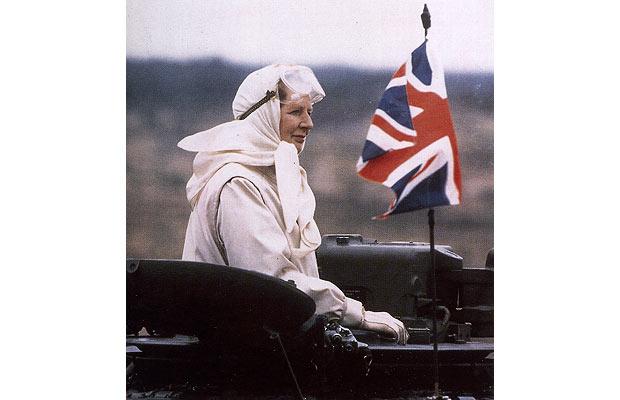
Arma feminamque cano

Marginal Revolution gave an enthusiastic account of  the Margaret Thatcher biography,Vol 2, by Charles Moore, quoting a "rave review from Bruce Anderson".

Mr Anderson's review contains this paragraph:
"Our author is distilling a vast amount of intellectually complex material into a compelling narrative. This is a double exploration: the relationship of a fascinating and complex personality with embattled events. Mr Moore would be entitled to paraphrase Virgil: “Arma feminamque cano“."
Anderson, expecting a cultured readership, does not provide a translation. And Google isn't that helpful. So what did Virgil really write in the Aeneid? Here's the Wikipedia article:
"Virgil begins his poem with a statement of his theme (Arma virumque cano ..., "I sing of arms and of a man ...")"
So Charles Moore: "I sing of arms and of a woman ..."


And then there's this blog ...

Thursday, November 12, 2015

Ten Years After

The author - 21st November 2005
Just thought I would share this with you - ten years and nothing changes. It's good to see the enormous respect in which I was held by my family - truly the paterfamilias.

Tuesday, November 10, 2015

Wolves amongst the stars


About a month ago I read Liu Cixin's epic 'The Three-Body Problem' as described in this post. In volume two of the trilogy, 'The Dark Forest', the Trisolaran invasion fleet has been launched from the nearby Centaurus system and is 400 years out from Earth. Trisolaran technology appears invincible and worse, the Trisolarans can listen to everything happening on Earth and have a fifth column of human supporters for their genocidal mission.

Earth turns to the Wallfacers - and Luo Ji  in particular. Here's a rather lengthy extract where Luo Ji is explaining some unpalatable truths to his burly police bodyguard, Shi Qiang.
They crossed the highway to where the embankment blocked out the lights of the residential area. Groping about in the dark that surrounded them, Luo Ji and Shi Qiang sat down on the sandy ground.

"Let's begin," Luo Ji's voice sounded in the dark.

"Give me the easy version. At my level, I'm not going to understand anything complicated."

"Everyone can understand, Da Shi. The truth is simple. It's the kind of thing that, once you hear it, you'll wonder why you didn't come up with it yourself. Do you know about mathematical axioms?"

"I took geometry in high school. 'Only one straight line can be drawn between two points.' That kind of thing."

"Right. So now we're going to set out two axioms for cosmic civilization.

"First, survival is the primary need of civilization. Second, civilization continually grows and expands, but the total matter in the universe remains constant."

“And then?"

"That's it."

"What can you derive from those little things?"

"The same way you can figure out an entire case from a bullet or a drop of blood, cosmic sociology is able to describe a complete picture of galactic and cosmic civilization from those two axioms. That's what science is like, Da Shi. The cornerstone of every discipline is quite simple."

 "So let's see you derive something."

...

"... The universe is big, but life is bigger! That's what the second axiom means. The amount of matter in the universe remains constant, but life grows exponentially. Exponentials are the devils of mathematics. If there's a microscopic bacterium in the ocean that divides once every half hour, its descendants will fill the entire ocean in the space of a few days, so long as there are sufficient nutrients. Don't let humanity and Trisolaris give you a false impression. These two civilizations are tiny, but they are only in their infancy. Once a civilization passes a certain technological threshold, the expansion of life through the universe is frightening. For instance, take humanity's present navigation speed. In a million years, Earth civilization could fill the galaxy. And a million years is a short time measured against the universe."

"So you're saying that, taking the long view, the entire universe might have that kind of... what are they calling it, a 'dead hand'?"

"No need for the long view. Right now the entire universe has been dealt that dead hand. Like Hines said, civilization may have started in the universe billions of years ago. Looking at the signs, the universe might be packed full already. Who knows how much empty space there is in the Milky Way or the universe, or how many resources are left?"

"But that's not right, is it? The universe looks empty. We haven't seen any other alien life apart from Trisolaris, right?"

"That's what we'll talk about next. Give me a cigarette."

Luo Ji groped about in the dark for a while before taking the cigarette from Shi Qiang's hand. When Luo Ji next spoke, Shi Qiang realized he had moved to a spot three or four meters away.

"We need to increase the distance to make it feel more like outer space," Luo Ji said.

Then he lit the cigarette by twisting its filter, and Shi Qiang lit one of his own. In the dark, two tiny red planets stood in distant opposition.

"Okay. To illustrate the problem, we now need to establish the most elementary model of cosmic civilization. These two balls of flame represent two civilized planets. The universe is made up of only these two planets, and apart from them there's nothing else. Erase all of our surroundings. Can you locate that feeling?"

"Yeah. That's an easy feeling to find in a dark place like this."

"Let's call these two civilized worlds your civilization and my civilization. They're separated by a great distance, say, a hundred light-years. You can detect that I exist, but you don't know any details. However, I'm completely ignorant of your presence."

"Right."

"Now we need to define two concepts, 'benevolence' and 'malice' between civilizations. These words themselves aren't very rigorous in a scientific context, so we've got to restrict their meaning. `Benevolence' means not taking the initiative to attack and eradicate other civilizations. 'Malice' is the opposite."

"That's a low bar for benevolence."

"Next, consider your options for dealing with me. Please remember that the axioms of cosmic civilization should be kept in mind throughout the process, as well as the distance scale and the environment of space."

"I could choose to communicate with you."

"If you do that, you should be aware of the price you'll pay: You'll have exposed your existence to me."

"Right. In the universe, that's no small thing."

"There are different degrees of exposure. The strongest form of exposure is when I know your precise interstellar coordinates. Next is when I know your general direction, and the weakest is when I only know of your existence. But even the weakest form of exposure makes it possible for me to search for you, because since you've detected my existence, I know that I'll be able to find you. It's only a matter of time from the standpoint of technological development."

"But my boy, I could still take the risk to talk to you. If you're malicious, then it's my bad luck. But if you're benevolent, then we could have further exchanges and ultimately be united into a benevolent civilization."

"Okay, Da Shi. Now we've come to the crux of it. Let's return to the axioms of cosmic civilization: Even if I'm a benevolent civilization, can I determine at the start of our communication whether or not you are also benevolent?"

"Of course not. That would violate the first axiom."

"So once I've received your message, what should I do?"

"Naturally, you ought to determine whether I'm benevolent or malicious. Malicious, and you eradicate me. Benevolent, and we can continue communicating."

The flame on Luo Ji's side rose up and moved back and forth. Evidently he had gotten up and was pacing.

"That's fine on Earth, but not out in the universe. So next we'll introduce an important new concept: the chain of suspicion."

"That's an odd term."

"The term is all I had at first. It wasn't explained to me. But, later, I was able to infer its meaning from the words themselves."

"Who didn't explain it?"

"... I'll tell you later. Let's continue. If you think I'm benevolent, that's not a reason to feel safe, because according to the first axiom, a benevolent civilization can't predict that any other civilization is benevolent. You don't know whether I think you're benevolent or malicious. Next, even if you know that I think you're benevolent, and I also know that you think I'm benevolent, I don't know what you think about what I think about what you're thinking about me. It's convoluted, isn't it? This is just the third level, but the logic goes on indefinitely."

"I get what you mean."

"That's the chain of suspicion. It's something that you don't see on Earth. Humanity's shared species, cultural similarities, interconnected ecosystem, and close distances means that, in this environment, the chain of suspicion will only extend a level or two before it's resolved through communication. But in space, the chain of suspicion can be very long. ...."

Shi Qiang took a drag on his cigarette, and his contemplative face emerged from the darkness for a moment.

"... In actual cosmic civilization, the biological differences between different groups might be as high as the kingdom level, and cultural differences are even further beyond our imagining. Add to this the vast distances between them, and you have chains of suspicion that are practically indestructible."

"That means that the outcome is the same, regardless of whether we're benevolent civilizations or malicious civilizations?"

"That's right. That's the most important aspect of the chain of suspicion. It's unrelated to the civilization's own morality and social structure. It's enough to think of every civilization as the points at the end of a chain. Regardless of whether civilizations are internally benevolent or malicious, when they enter the web formed by chains of suspicion, they're all identical."

"But if you're much weaker than I am, you're not a threat to me. So I could always communicate with you, right?"

"That won't work, either. Here we need to introduce a second important concept: the technological explosion. I didn't get a full explanation for this, either, but it was far easier to infer than the chain of suspicion. Human civilization has five thousand years of history, and life on Earth might be as much as a few billion years old. But modern technology was developed over the course of three hundred years. On the scale of the universe, that's not development. It's an explosion! The potential for technological leaps is the explosive buried within every civilization, and if it's lit by some internal or external factor, it goes off with a bang. On Earth it took three hundred years, but there's no reason why humanity should be the fastest of all cosmic civilizations. Maybe there are others whose technological explosions were even more sudden.

"I'm weaker than you, but once I've received your message and know of your existence, the chain of suspicion is established between us. If at any time I experience a technological explosion that suddenly puts me far ahead of you, then I'm stronger than you. On the scale of the universe, several hundred years is the snap of a finger. And it might be that my knowledge of your existence and the information I received from our communication was the perfect spark to set off that explosion. That means that even though I'm just a newborn or growing civilization, I'm still a big danger to you."

Shi Qiang watched Luo Ji's flame in the darkness as he thought for a few seconds, then looked at his own cigarette.

"So I have to keep quiet."

"Do you think that will work?"

They smoked. The balls of flame brightened and their faces emerged from the darkness like the gods of this simple universe, deep in thought. Shi Qiang said,

"No, it won't. If you're stronger than me, then since I was able to find you, one day you'll be able to find me. And then there will be a chain of suspicion between us. If you're weaker than me, you could experience a technological explosion at any time, and that would take us back to the first case. To sum up: one, letting you know I exist, and two, letting you continue to exist, are both dangerous to me and violate the first axiom."

"Da Shi, you've really got a clear mind."

"My brain can keep up with yours so far, but we're only getting started."

Luo Ji was silent in the dark for a long time. His face emerged in the weak light of the ball of flame two or three times before he said,

"Da Shi, this isn't a start. Our reasoning has already reached a conclusion."

"Conclusion? We haven't figured anything out! Where's the picture of cosmic civilization you promised?"

"If neither communication nor silence will work once you learn of my existence, you're left with just one option."

In the long silence that followed, the two flames went out. There was no wind, and the dark silence turned thick as asphalt, connecting sky and desert into a murky whole. At last Shi Qiang uttered one word in the darkness: "F***!"

"Extrapolate that option out to the billions upon billions of stars and hundreds of millions of civilizations, and there's your picture,"

Luo Ji said, nodding in the darkness.

"That's... that's really dark."

"The real universe is just that black."

Luo Ji waved a hand, feeling the darkness as if stroking velvet.

"The universe is a dark forest. Every civilization is an armed hunter stalking through the trees like a ghost, gently pushing aside branches that block the path and trying to tread without sound. Even breathing is done with care. The hunter has to be careful, because everywhere in the forest are stealthy hunters like him. If he finds other life—another hunter, an angel or a demon, a delicate infant or a tottering old man, a fairy or a demigod—there's only one thing he can do: open fire and eliminate them. In this forest, hell is other people; an eternal threat that any life that exposes its own existence will be swiftly wiped out. This is the picture of cosmic civilization. It's the explanation for the Fermi Paradox."

Shi Qiang lit another cigarette, if only to have a bit of light.

"But in this dark forest, there's a stupid child called humanity, who has built a bonfire and is standing beside it shouting, 'Here I am! Here I am!"' Luo Ji said.

"Has anyone heard it?"

"That's guaranteed. But those shouts alone can't be used to determine the child's location. Humanity has not yet transmitted information about the exact position of Earth and the Solar System into the universe. From the information that has been sent out, all that can be learned is the distance between Earth and Trisolaris, and their general heading in the Milky Way. The precise location of the two worlds is still a mystery. Since we're located in the wilderness of the periphery of the galaxy, we're a little safer."

"So what's the deal with the spell?"

...
Liu Cixin's science fiction is old-school and high-concept, inspired equally by Isaac Asimov's psychohistory and China's ancient history. This second volume grapples with the problem: how can you deal with an extermination force of overwhelming military superiority, almost perfect data intelligence but one which is hundreds of years away, past any planning horizon politicians, the military and the people are accustomed to?

As ever, his solutions are ingenious .. and implicit in the excerpt above.

In volume three, Death's End (April 2016), his ambitions seem to be set even higher.