Showing posts with label Julian Barnes. Show all posts

Thursday, January 09, 2025

I’m getting tired of Grief Memoirs


---

I recently read ‘Levels of Life’ (2013) by Julian Barnes, a literary homage and grief-stricken memoir dedicated to his wife, Pat Kavanagh, a literary agent who died in 2008.

I am in two minds about Barnes (as I am as regards his peer group of Ian McEwan and Martin Amis). They come from the same upper-middle-class milieu, cleave to the same bien-pensant views, held as superior to the ‘philistinism’ of those less intellectually- and culturally-endowed.

And yet their tragedy is that they have so very little to say, condemned as they are by history and circumstance to be subject to no significant oppression, no injustice or hardship of any real kind.

Their work is all style and no substance. Elegant and well-turned for sure, but instantly forgettable. And when it is not, it takes the form of failed experimental literature: unreadable writing-games for the sake of crude novelty.

And so Julian Barnes’s thoughts turn to that most powerful, destabilising emotion: the unbearable grief of losing a loved one. And this most difficult literary challenge is somehow beyond him. The very self-regard and self-righteousness which propels him in his elite literary trajectory now colours his own account of trauma with the sins of vanity and self-indulgence, self-pity and the taking of spiteful revenge.

‘Levels of Life’ starts with the two short stories of nineteenth century balloonists. This introduction, an over-elaborate and frankly tedious metaphor for later grief, is a kind of bait-and-switch. The manoeuvre is sabotaged by the tedium of the bait itself, which hardly encourages the reader to continue to the actual point of the book: the switch from soldierly and thespian balloonists to Pat Kavanagh and the effects of her death on the author.

Parts of this third part are worth reading - Barnes, after all, is not without talent - and the best bits are where he is the snarkiest about his friends and literary acquaintances. But his introspective account of how grief feels is only Wikipedia-interesting, and is often, one feels, coloured by a certain self-absorption.

Following the death of a loved one, grief lasts a long time and you never really get over it.

Beyond that, we’re in seriously diminishing marginal returns from this literary genre. No more!

Friday, February 12, 2016

The Ant and the Grasshopper

Aesop's fable:


The Ant and the Grasshopper
"The fable concerns a grasshopper (in the original, a cicada) that has spent the summer singing while the ant (or ants in some versions) worked to store up food for winter. When that season arrives, the grasshopper finds itself dying of hunger and begs the ant for food. However, the ant rebukes its idleness and tells it to dance the winter away now."
I met some ants in the land of the grasshoppers. The latter were exuberant and showy, artistic and theatrical. By comparison, the ants were low-key and drab, even boring.

I asked an ant why his kinfolk gave the grasshoppers such a hard time:
"You say that when winter comes, the grasshoppers will starve while you have all worked hard and conscientiously, and put stores aside for the bad times. But here, in grasshopper land, there is no winter.

"You are parochial, judging solely by your own standards which don't happen to apply here. You judge the grasshopper to be a very poor ant who needs to try harder, but don't you see? Here, you ants are very poor grasshoppers."
The ant had no idea what I was talking about, but was very sure that I had condemned myself out of my very own mouth as an enemy of the people.

---

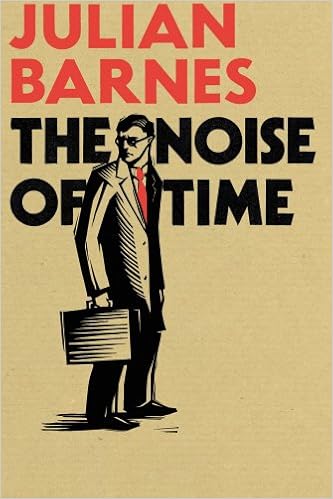
I have just read Julian Barnes' latest novel, "The Noise of Time" which recounts the savage lifelong treatment of Dmitri Shostakovich in Stalinist Russia.

It's not hard to identify with the protagonist, a shy intellectual who spends his life in chronic anxiety, intermixed with episodes of extreme terror. Not at all without cause. The author is empathically non-judgemental - we who have not been tested - but there is always the illusion of the introvert, that statements and actions made with self-consciously ironic intent will be understood that way, at least by those around us capable of such understanding. Barnes reminds us: not so.


But the elaborated fable above is not solely about that.

Thursday, January 28, 2016

Notebook


A year ago I promised myself that I would continue chipping away at decoherence. During the last couple of days I reviewed "Demystifying decoherence and the master equation of quantum Brownian motion" by John King Gamble and John F. Lindner .. and I finally get the drift. My February resolution is to take up pen and paper and work through the details seriously rather than just superficially reading around it.

This is how Gamble and Lindner introduce their paper:
"The details of decoherence theory are sufficiently complicated to discourage students and physicists from other fields to pursue a basic understanding of decoherence. The available literature is aimed at an advanced audience and contains significant gaps for most physicists.

"In this paper we attempt to rectify this situation by making the underlying concepts associated with decoherence accessible to a more general audience. We begin in Sec. II by introducing the concept of a state operator, an object of central importance to quantum decoherence theory, through a simple example first developed by Bernstein. We consider a rudimentary universe consisting of quantum particles and an “environment” randomized by a roulette wheel, and show that this randomization leads to diagonalization of the state operator and the emergence of classical behavior."
Now that I have immersed myself in outer products, projection operators, density matrices and expected values, the wood is finally emerging from the trees.

---

My other resolution for February is to revisit "The Vital Question: Why is life the way it is?" by Nick Lane. Universally acclaimed as groundbreaking and brilliant (which it is), this book is not an easy read and has defied concise summarization.


Nick Lane explains how the first cell might have got going from inorganic precursors. This involves a detailed review of the most elementary mechanisms of cellular operation: membrane metabolism, protein synthesis, bioenergetics and cell-replication. In computer terms, it's like microprocessor analysis at the sub-gate level.

I am determined to internalise it sufficiently to write a proper review.

---


Clare and myself walked to Wookey Hole this morning under bright sunshine and a pure blue sky, accompanied by a chilly wind. On arrival at an empty Wookey Hole Inn we asked for hot chocolate. In my case this is always more in hope than expectation: the drink almost invariably arrives lukewarm.

And so it was to be. The young woman who made the drinks was interesting: Barbie looks - very slim; tight trousers with tucked-in top; an over-made-up, rather pinched face. She made an art form of failing to meet my eye, studiously talking in a peremptory fashion to points adjacent to my head. I said to Clare afterwards, "I doubt she'll last."

---

The Amazon elves have done their work and a big parcel arrived this morning. After the Xylitol chewing gum, perhaps the smallest entity in the box was this.


Julian Barnes' new novel recounts how Shostakovich survived Stalin (review). The book is for Clare, who studied the composer during her OU arts unit.


By far the heaviest constituent was the package of six large jars of sauerkraut you see above. I had watched one of those cute medical programmes featuring that doctor who is a twin and who has that beard and who tries stuff out .. and sauerkraut is apparently a superfood for your gut biome. Well, we here just love our gut biomes and so I decided they needed a treat.

I am waiting for Clare's smile of delight once she gets in from the garden and has had a chance to absorb (sic) this addition to our already rather over-stuffed pantry. A side-dish of sauerkraut, anybody?

---

This Zika virus never used to be so bad; it might have mutated. I was all doom and gloom over Ebola and yet, thankfully, the epidemic burned itself out before it hit Europe. Let's hope we get lucky again.

Saturday, March 09, 2013

Off the leash ...

While Clare was watching Cook and Compton frustrating the New Zealand bowlers (with a 12 hour time delay) I ventured out alone to Wells High Street.

The library is now automated. I remembered to put Julian Barnes' "The Sense of an Ending" into the large post-box front of the robot librarian and its inner smartness checked the book as 'returned'. I found another Barnes ("Arthur and George") as I'm now an official fan, and added Mr Amis's "Lucky Jim", something by Paul Auster plus a Jo Nesbo in large print for the cricket fan. Literary taste has come so late to me!

Then on to the Co-Op where my id was allowed full rein.

1. Three tubs of terrine for the cat. Terrine is a kind of junk-food paste with God-knows-what inside it. The animal is perfectly prepared to reject beautiful chicken, fresh salmon and even cheddar cheese to fall upon terrine. You'd have to say he's almost human.

2. What would you say to 3 Aeros, 4 Turkish Delights, 5 Crunchie bars, 4 Wispas and assorted Cadbury bars. These are empty calories which kick-in a damaging insulin spike. Why did I buy them and carefully hide them in the fridge?

3. Shortbread biscuits and the cricket fan's favourite, Caramel Thins. See 2 above. Hidden in the pantry. What was I thinking of?

So plenty of ammunition for those who think I should never be let out alone.

Monday, March 04, 2013

Flaubert’s Parrot, Julian Barnes (1984)

A review of "Flaubert’s Parrot", Julian Barnes (1984) - as recommended to me (via the Canadian public library system) by Adrian.

Here is what Wikipedia has to say about it, - slightly edited: I think their review is a little superficial.

“The novel follows Geoffrey Braithwaite, a widowed, retired English doctor and amateur Flaubert-scholar as he visits France and  Flaubert landmarks in the vicinity of Rouen. While visiting various sites related to Flaubert, Geoffrey encounters two incidents of museums claiming to display the stuffed parrot which sat atop Flaubert's writing desk for a brief period while he wrote “Un coeur simple”. While trying to determine which is authentic, Geoffrey ultimately learns that either/neither could be genuine and Flaubert's parrot could be any one of fifty ("Une cinquantaine de perroquets!", p. 187) that had been held in the collection of the municipal museum.

Although the main focus of the narrative is tracking down the parrot, many chapters deal in Geoffrey's reflections, such as on Flaubert's love life and how it was affected by trains, and animal imagery in Flaubert's works and the animals with which he himself was identified (usually a bear, but also a dog, sheep, camel, and parrot).

One of the central themes of the novel is subjectivism. The novel provides three sequential chronologies of Flaubert's life: the first is optimistic (citing his successes, conquests, etc.), the second is negative (citing the deaths of his friends/lovers, his failures, illnesses etc.) while the third compiles quotations written by Flaubert in his journal at various points in his life. The attempts to find the real Flaubert mirror the attempt to find his parrot – an exercise in apparent futility.”

Prerequisites to reading this novel: (i) Read “Madame Bovary”; (ii) Check out Flaubert’s bio at Wikipedia; (iii) know some French.

Julian Barnes is deeply familiar with Gustave Flaubert’s life and works, but their meaning and significance is hardly uncontested. Flaubert seems to me to emerge as a more sedentary DSK (Dominique Strauss-Kahn) – sexually predatory and manipulative: key differences – Flaubert was actively bisexual .. and a literary genius. He treated his women badly: there is an excellent imagined take on Flaubert (chapter 11) from his long-time associate/mistress Louise Colet - illustrious in her lifetime but now somewhat forgotten - which seems compelling.

Barnes comes at his subject from every angle: a mock examination paper (chapter 14), a pastiche of Flaubert’s own pastiche of contemporary received-wisdom (chapter 12), a skewering of dry-as-a-stick critics who observing the trees of Flaubert’s output, completely fail to understand the wood (all over). One can only marvel at Barnes’ erudition, playfulness and sheer intelligence.

Strangely the character of Geoffrey Braithwaite jars a little. Plainly a representation of the author in his views and researches, the intended parallels with Charles Bovary are hardly lost on the reader. The meditation on grief and infidelity (chapter 13) is extraordinarily insightful and moving, but Mrs Braithwaite – Ellen – isn’t quite Madame Bovery. The Geoffrey Braithwaite back-story seems to me a little forced – I didn’t really understand what it added to the Gustave Flaubert tour-de-force of the rest of the novel.

I now know quite a bit about Gustave Flaubert, his life, times and associates. He comes across as rather infuriating.

Monday, February 25, 2013

"The Sense of an Ending" by Julian Barnes

I have never really engaged with Julian Barnes, to my own loss. "The Sense of an Ending" is short enough to read in a day, but impossible then to put aside in your thoughts. Barnes' protagonist, Tony Webster, is a kind of everyman to those of us who were students at the end of the sixties - and are now in our early sixties.

Here's a better summary than I could possibly write.

(This review from Geoff Mak at Forbes: http://www.forbes.com/sites/booked/2012/03/29/booked-review-julian-barnes-the-sense-of-an-ending/ ).

"By now, The Sense of an Ending by Julian Barnes has gained itself a reputation for being the novel you must read twice. I read it twice, and so did the director of last year’s (2011) Man Booker Prize, which Barnes’ novel won to no surprise.

The book’s plot reads like that of a thriller paperback: full of vengeful ex-girlfriends, youth suicide and illicit sex – though it’s Barnes’ masochistically lyrical insights on loss and memory that drives this novel’s recruiting fan base to keep flipping back the pages.

The book centers on Tony Webster, an Englishman in his sixties, who is unexpectedly bequeathed the diary of Adrian, his childhood friend who had committed suicide forty years earlier. The will is from the late mother of his collegiate ex-girlfriend Veronica. Last he heard from her, she had ditched Tony for Adrian, and was presumably still Adrian’s girlfriend around the time his body was found behind a locked door, bled to death in a bathtub.

Why does Veronica’s mother have Adrian’s diary? And why did she want Tony, of all people, to have it? Tony suddenly finds himself mining his memory to find answers surrounding Adrian’s enigmatic suicide. His search lyrically reveals the weakness of memory as corroboration. These moments, rather than the book’s muscular plot, are where Barnes’ prose is strongest.

“I don’t envy Adrian his death, but I envy him the clarity of his life,” Tony muses in old age. “When you are in your twenties…you can remember your short life in its entirety. Later, the memory becomes a thing of shreds and patches.”

With the patina of hindsight, Tony’s recollection of Adrian reveal memory to be a fractious, fictitious thing, rather than the empirical recount of history in his schoolboy textbooks. What purpose does memory serve outside of corroboration? How does it mold and twist fiction with fact?

In addressing these questions, Barnes’ voice is potently enigmatic when objective details are purposely left out. He spares on physical details as if to shy away from the hard facts that memory can’t provide. The only physical detail we get about any of Tony’s lovers is the way they wear their hair. Dialogue and gossip instead form the basis of what Tony remembers, which makes nearly every conversation doubly interpreted. As Tony says later in life, “All my ‘conclusions’ are reversible.”

Here’s a particularly troublesome scene: in college, Tony asks Veronica why they didn’t have sex until after they broke up. She responds, “I don’t have to answer your questions anymore.”

We can either imagine this the way Tony interprets it: spoken by a curt girl from Britain’s fashionable classes, who dismisses her inferior boyfriend as nothing more than a stepping stone to his smarter, elite friend Adrian.

Or, we can imagine it spoken by an awkward girl with glasses—a misfit in her family, too self-conscious to dance in public—who’s been far too humiliated by the boy to whom she lost her virginity to come up with a clever response. Read the book a second time, and the latter interpretation becomes painfully apparent.

Akin to the nature of memory itself, Barnes’ prose renders these scenes as mere impressions rather than snapshots of a biography. Collectively, those impressions mesh to form something quite far from an objective lens. Nearly every paragraph in this book has multiple interpretations.

Once all the questions are answered, the reader is left in the same state that Tony is in the book’s final pages—floored at life’s essential mysteries, and frustrated that they cannot be relived.

Fortunately for us, we can just read the book again."

---

Perhaps I will. I especially agree with the reviewer about Veronica, who is disparaged by all the other characters as mysterious and impossible, perverse and controlling, on-the-make, a fruitcake.

Yet we sense a greater absence: her story is never told and her life of introverted desperation is something wholly left to the reader to discern. Veronica has been betrayed by everyone.