Showing posts with label John Fowles. Show all posts

Monday, June 15, 2026

"What Remains" - by Adam Carlton (and AI assistants)


What Remains

Charles first saw Sophie Damer in the spring of 1792, at a gathering above a bookseller's shop off Holborn. The room smelled of damp wool and cheap writing materials, crowded with people recently excited by events in France - and keen to see the production moved to London. 

Sons of landowners denounced class privilege between sips of claret; silk-clad daughters of landowners argued against pernicious inheritance.

A fine young barrister near the fireplace was explaining that monarchy would soon disappear from Europe.

"Like witchcraft," he declared, looking round for approval.

Sophie Damer, standing by a window with a pamphlet held open by a thumb, did not look up.

"Witchcraft survived for three centuries after the judges stopped believing in it," she observed quietly.

The room laughed. The barrister turned back to his drink. Charles, who had laughed louder than most, watched the way she folded the pamphlet, slow and deliberate, as if she were alone.

They met repeatedly during the months that followed, moving through that small circle of London radicalism where the like-minded attended the same dinners, the same lectures, the same committees.

One evening, walking back from a meeting in Kensington, dusk was settling over the gardens.

"You are less radical than you pretend, Charles," she said, her heels clicking on the gravel.

"That is disappointing to hear."

"You enjoy the shape of the argument. Not the conclusion."

"The logic is cleaner."

"And safer."

"Undoubtedly."

She let out a short, sharp laugh, a sound he had not heard from her before.

"I do not think people belong to one another," she said after a long silence. They had reached a turn in the path where the trees blocked lamplight from the road.

"That sounds lonely," he said.

"It sounds free."

"And if one wishes to belong?"

She stopped and looked at him, her face pale in the half-light.

"Then one should, perhaps, acquire a dog."

Charles smiled, reaching out to touch her sleeve.

"I am serious."

"So am I," she said.

Then she stepped into him and kissed him: no awkwardness, no conventional hesitation; she crossed their separation as one steps across a threshold into a familiar room.

Later, they sat on a wooden bench beneath the oaks. Her shoulder rested against his, a steady, unyielding pressure. Charles watched the first stars cutting through the dark branches, his mind chaotic with possibilities.

"Have you read Condorcet's latest essay on the progress of the mind?" she asked.

Charles let out a breath that was nearly a laugh.

She looked at him, her brow furrowed.

"I was not joking."

"No," he said, looking down at his boots. "I can see that."

The pattern remained. Sophie liked intimacy, its physical proximity. Once, during a crowded dinner in Bloomsbury, she reached beneath the linen tablecloth and gripped his hand, her fingers soft and pliable, while continuing an entirely separate conversation about the grain laws with the clergyman beside her. Charles stared at his plate, unable to follow a word.

Yet whenever he spoke of a house, or a summer together, or permanence, she simply looked past him.

One rainy evening in her room, after the other guests had gone and the fire had died down to grey ash, he asked her directly.

Sophie kept her eyes on the grate. After a silence so long the rain on the glass became the only sound in the room, she said:

"I enjoy being with you, Charles."

"That is not what I asked."

"No."

"Then answer the question."

She turned her head. Her eyes were wide, clear, and entirely composed.

"Why?"

"Because it matters."

"Does it?"

"To me."

A slight shift occurred in her face, less a softening than a sudden fatigue.

"I think you have never understood," she said.

The relationship ended the following spring.

---

Within three years he had entered the army. The Revolution had reversed under Napoleon, and Europe become a theatre of transport lines and artillery.

One afternoon in Spain, his battalion was withdrawing down a cart track under sporadic fire. The heat was incinerating; the men's faces were caked in dust and sweat.

Private Henshaw went down without a sound. He collapsed behind the retreating line, his musket clattering against the stones, and lay still.

Charles's adjutant didn't stop.

"We must keep moving, sir. The French are bringing up their light guns on the ridge."

Charles looked back. Henshaw was twenty-two, a carpenter's son from Devon with a stutter and a bad tooth. He was trying to crawl, his fingernails digging into the dry earth.

"He's finished, sir," the adjutant muttered. "We cannot stop the column for one man."

A shell landed eighty yards to their left, coughing up black dirt.

"We are stopping," Charles said.

The adjutant stared at him.

"Sir, that's absurd."

"Probably."

"We may lose the trailing company."

Charles looked at the dust rising from the ridge where the French horses were moving.

"Then let us be absurd."

---

That night, in the lee of a ruined stone barn, Henshaw lay by a small fire of olive wood while the surgeon prepared to work on his leg. The boy was white to the lips.

"You should have left me by the track, sir," Henshaw whispered.

Charles sat on an ammunition crate, watching the sparks rise into the black sky.

"Why?"

"It would have made more sense."

The surgeon spat into the dirt.

"So would half the things men do."

Henshaw closed his eyes.

"So why did you come back for me?"

Charles looked at the fire for a while, then shook his head.

"I have no idea."

---

He met Molly Trevelyan in 1804, during a wet fortnight in Bath.

At their second meeting, she informed him that the local magistrate was a coward.

"You have never spoken to him," Charles remarked.

"I have seen the way he looks at his groom," she said, adjusting her bonnet.

"That is a rapid judgement."

"No. It is a slow one. I merely have a quick tongue."

Charles laughed, the sound oddly strange in his own ears.

"You enjoy being right?"

"I prefer it to the alternative. And if I am wrong, I shall apologise. Eventually. Perhaps. One must preserve some dignity. But I am not wrong."

She was often difficult, prone to sudden impatience when a carriage was late or a servant was clumsy. But she spent her evenings mending linen for the parish poorhouse, her fingers moving with a furious energy that left her knuckles red.

They married in the autumn of 1805.

Eight years later, Charles returned unexpectedly from the Peninsula. The coach dropped him at the gate after midnight. The house was entirely dark.

He had just stepped onto the stone flags of the hall when he heard a rustle on the stairs. Molly stood there, holding a pewter candlestick. Her hair was down, hanging in streaked braids over her nightdress.

For a moment she simply looked at him across the flame.

"You look dreadful," she said, her voice shaking slightly.

"I have crossed half of Europe."

"It appears to have won."

She came down the remaining steps, set the candle on the table, and reached up to touch his cheek. Her thumb found a scar near his temple he had never mentioned in his letters.

"I was afraid you would die in that wretched country!"

"I know."

"You might at least have written more often. A paragraph would have sufficed."

"I was busy being shot at, Molly."

"That is no excuse for poor correspondence."

---

Molly died in the damp winter of 1846.

In the spring of 1848, Charles was sitting near the window at his club in St James's when Lascelles looked up from the morning papers.

"The magistrates took an elderly woman near Kennington Common. The name was Damer. Sophie Damer."

Charles stopped his spoon in its tracks.

"Good God."

"You knew her?"

"Fifty years ago."

"She's still at it. Speeches. Petitions. Agitation. The French are in the right. Again."

---

That evening Charles unlocked his mahogany dispatch box.

Molly's letters lay where they always had, tied in bundles with faded black ribbon. He had kept them all. Yet beneath the bottom bundle lay a thin yellowed pamphlet dating from the 1790s. Between its pages he discovered a dried sprig of rosemary.

He held the pamphlet to the lamp, trying for a moment to remember Sophie's voice. He could reconstruct entire conversations. He could remember the shape of her face beneath those trees in Kensington. Yet the voice itself had vanished without trace.

He laid the pamphlet back among the letters.

Another memory appeared.

A winter night many years before. Rain tapping at the windows. Molly's cold feet finding his calves beneath the blankets. Her laughter when he swore. Then her chin settling against his shoulder as she drifted back to sleep.

For a long time Charles sat without moving. Then he locked the dispatch box and blew out the lamp.


Monday, March 09, 2026

John Fowles and the Problem of “Whole Sight”


John Fowles and the Problem of “Whole Sight”

I have just finished reading the two volumes of John Fowles's Journals. They cover the bulk of his adult life and are a remarkably frank and unfiltered commentary on his life - a window into his consciousness really. You feel you are 'in the room' with him from his being a gauche young man, unsure of his destiny, through to the jaded man in his sixties who feels that his creative life is behind him, and that his life has rather turned to ashes.

One of the most intriguing ideas in his work is what he called “whole sight”. The phrase appears explicitly in The Aristos, and implicitly throughout novels such as The Magus and Daniel Martin. Fowles meant by it a kind of intellectual and moral discipline: the effort to see reality without comforting illusions, ideological simplifications, or sentimental narratives. The mature individual, in his view, strives to perceive the full complexity of the world - human motives, social forces, moral ambiguity - rather than retreat into myths that make life easier to bear.

In Fowles’s fiction this idea becomes almost a rite of passage. Nicholas Urfe in The Magus is subjected to Conchis’s elaborate psychological theatre precisely to shatter the tidy stories he tells himself about love, freedom and identity. In Daniel Martin, the older and more reflective protagonist attempts to reconstruct his life through a more comprehensive awareness of its past and present, England and America, intellect and emotion. For Fowles the artist’s task, as much as the individual’s, is to pursue this difficult honesty of perception. The aim is not moral purity but perceptual maturity.

At first glance the concept sounds impressive: few of us articulate our own guiding philosophy in such an explicit and foundational way. Yet when one examines it more critically, something curious emerges. 

“Whole sight” is essentially a philosophy of perception, not of action. It asks us to understand reality as clearly as possible, but it is strangely silent about what should follow from such understanding.

Other intellectual traditions do not stop at this point. Economists such as Mancur Olson, for example, devote their energies to understanding how real societies function: how institutions evolve, how incentives shape behaviour, how organised interests distort collective outcomes.

Their work seeks clarity about the mechanisms of power and cooperation, but always with an implicit practical question lurking nearby: what should we do about it? Insight leads naturally to institutional design, reform, or strategy.

Fowles’s philosophy rarely takes that next step. Whole sight resembles the stance of an intelligent observer standing on a hillside, surveying the tangled landscape of human life. One sees the contradictions of politics, the illusions of romance, the hypocrisies of culture - and one refuses to be deceived by them. But once the observer has arrived at this vantage point, the philosophy offers no clear programme for living or acting within the world thus perceived.

This quietism becomes particularly striking when we turn from the novels to Fowles’s own life, as revealed in his journals. The theory of whole sight suggests a person who gradually attains a wider and more objective understanding of himself and his circumstances. Yet the life story that emerges is rather different.

The young Fowles was driven by a powerful internal tension. He was a public-school boy (although of provincial family origins) who graduated from Oxford, well-connected to the literary elite. Yet without wealth, and lacking patronage from the true core British elite, he found himself navigating the shifting class structure of post-war England, intellectually ambitious, culturally restless, and uncertain where he himself belonged.

That frustrated energy fuels the great novels of the 1960s and 1970s. The Magus, The French Lieutenant’s Woman, and finally Daniel Martin explore freedom, identity and the search for authenticity with extraordinary imaginative force.

After this remarkable burst of creativity, however, the trajectory changes. Having achieved literary fame and financial security, Fowles settles into a quieter life in Lyme Regis. His later work will never again reach the scale or vitality of the earlier novels. The journals increasingly record walks and his great love of nature, local matters, literary correspondence, and reflections that often circle familiar themes without discovering new territory.

In retrospect, the arc of his life seems less like a steady progress toward whole sight and more like the story of a rebel who eventually becomes - to his own surprise - becalmed. The existential struggle that once generated his fiction gradually subsides. The world that had once been a field of psychological and philosophical experimentation becomes a landscape observed from a comfortable though alienated distance.

Seen in this light, “whole sight” appears less as the central engine of Fowles’s life than as one component within it: an intellectual ideal formulated by a writer whose deepest creative energy came not at all from serene perception but from tension, uncertainty, and rebellion.


Monday, November 25, 2024

A short interview with John Fowles (via ChatGPT)


A watercolour of Clare in Lyme Regis: June 2006

The English author John Fowles (1926-2005) wrote “The Magus” (1965); “The French Lieutenant's Woman” (1969) - a Victorian-era romance with a postmodern twist that was set in Lyme Regis, Dorset, where Fowles lived for much of his life; “The Ebony Tower” (1974); “Daniel Martin” (1977); “Mantissa” (1982); and “A Maggot” (1985).

His biography: “John Fowles - A Life in Two Worlds” and his journals also aid in the reconstruction of John Fowles’s views and character.

I would add that my own favourite John Fowles novel is “Daniel Martin” which is a semi-autobiographical account of his Hollywood screenwriting years following the success of his earlier novels.

John Fowles was of the same generation as my father (1925-2009).


Me. It is said that it is difficult to be the wife of a (male) writer of literary fiction. You said somewhere that a writer is someone who doesn’t like their given reality very much, preferring the realities dreamt up within their own head. Many male writers’ thoughts naturally tend towards women and romantic/erotic encounters. You also said that, like many of your peers, you always fell in love with your female characters. Very Thomas Hardy!

And there was poor Elizabeth, your wife, doomed to hours of boredom downstairs while you were happily ensconced in your study writing thousands of words fantasising about your own ideal women, fantasies which she had to believe represented your ‘improvements’ upon her, while also stripping her of her privacy. Any comments?

---

John Fowles: Indeed, Elizabeth bore a complex burden, one that I’ve often wrestled with myself—though perhaps not enough. Writers, especially those in the throes of constructing imagined worlds and complex characters, have a rather discomfiting tendency to neglect those closest to them, especially their partners. In her case, Elizabeth's sacrifice was the quiet tolerance of being not only the wife of a man often lost in fantasy but also someone whose love and life were continually mined, unwittingly and often unwillingly, for literary material.

I once said that writing is "an attempt to reach a reality I am denied in real life.” That statement acknowledges a painful truth: writing, especially for a male writer, can be an act of escapism—a selfish indulgence into the inner worlds of fantasy, love, and erotic idealizations. Elizabeth must have seen the life we shared as something like an exhibition hall where her own privacy, her own essence, was open to my ever-hungry gaze and, by extension, the world’s.

Yes, I fell in love with many of my characters, but it was a love entwined with my own limitations—a symptom of the yearning for some idealized, unattainable aspect of femininity. It was romantic, yes, but also escapist, immature, and, in some ways, quite selfish. I was aware that there was a cruelty to this process: Elizabeth could sense that in many ways she had to compete not with flesh-and-blood women, but with figments of my own imagination. And in this way, being the wife of a male writer is rather akin to loving a man who holds a mistress in his mind, and she is all the more unattainable and alluring for being his own creation.

You mention Hardy, and I do feel that kinship; his characters, like mine, were often born of a frustrated desire to reimagine or transcend his reality. He sought out, in his female characters, not only muses but ideals to save him from his everyday limitations. But the irony, of course, is that the more you pursue that imaginative escape, the more entangled you become in the harsh realities and pains of those who live alongside you. 

Perhaps, in the end, what writers owe their partners is more than mere apology; they owe them a confrontation with reality—a willingness to relinquish the allure of imagined love and to confront the actual, flesh-and-blood work of loving another person. For me, this insight came possibly too late.

---

Me. The recently deceased English writer, Martin Amis, characterised you as an author who many thought of as highbrow, but who was in reality merely middlebrow. How would you respond to that, both as a style of criticism and as regards its accuracy or otherwise?

---

John Fowles: Ah, Amis—a writer of immense talent, though never one to shy away from the sharp barb. In his view, “middlebrow” implied a lack of true literary courage, perhaps a failure to push the boundaries of style, thought, or intellect. To him, my novels might have seemed to skirt the edge of the avant-garde but, in their structure and themes, remained too accessible, too “populist” to stand beside the more experimental works of his preferred literary pantheon. 

But to be labelled “middlebrow” is more a comment on reception than on the intentions of the author. The distinction between high and middlebrow is largely arbitrary, rooted in a hierarchical model of taste that I find unnecessarily dismissive. I did not set out to write books that would please a particular class of reader or another. Rather, I sought to explore, often at length, human freedom, existential ambiguity, and the ways in which we are caught between destiny and self-determination. 

The 'middlebrow' critique could be accurate in that I did not pursue complexity for complexity’s sake. Instead, I preferred psychological richness over linguistic experiment, felt an affinity for Victorian detail and the immersive quality of storytelling. Perhaps this made my work more digestible, but it was a deliberate choice. To make philosophical themes accessible without diluting them was always a goal, and it does not—at least in my estimation—diminish the ambition of my work.

I also believe there’s an intellectual laziness in these hierarchical labels, which reduce a book’s essence to some vague metric of “difficulty” or “literary sophistication”. Amis, for all his brilliance, could be rather enamoured of self-conscious cleverness. I was interested in ideas not for show, but for their impact on my characters' lives, and through them, on my readers. In "The Magus", "The French Lieutenant’s Woman", and "Daniel Martin", I wanted to construct complex emotional landscapes where the readers could see themselves reflected, not merely a conceptual hall of mirrors.

In the end, I stand by the choices I made. If that relegates me to “middlebrow” in some circles, so be it. But let it also be acknowledged that literary merit resides as much in authenticity and psychological insight as in structural novelty.

---

Me. In Myers-Briggs terms, I have always thought of you as an INTP. There is the restless curiosity about everything, the evidence in your writing of a very rational mind, unencumbered by popular shibboleths. You disdained conventional elite society in London, preferring an arid systematising ‘career’ at Lyme Regis Museum. Finally I would note your great interest in the psychoanalytic theories of Freud and Jung.

---

John Fowles: An INTP, you say? There’s something rather satisfying in that description, and I imagine the young, solitary boy in me would have felt a touch vindicated, as well. I certainly felt that restlessness, that compulsion to pry open the familiar to peer at what lies beneath. My curiosity was not just intellectual—it was ontological, driven by a desire to challenge the very nature of reality, to peel back the layers that most accept without question. I wanted to know 'why' things were, what hidden mechanisms drove human behavior, and to unearth those subtle, sometimes uncomfortable truths that define our existence. An INTP label does ring true in this sense: rational, indeed, but also subversive, a trait that led me to feel alienated from the cliques and hierarchy of London’s literary society.

My 'career' in the Lyme Regis Museum, with its bones, fossils, and local histories, was something of an intentional retreat into a simpler, even meditative world. It was less about disdain for the elites—though I had my reservations about the performative intellectualism of the metropolis—and more about the solace I found in removing myself from the competitive and judgmental currents of that world. I have always preferred the authenticity of my own pursuits to being pulled into the expectations of others.

As for my interest in Freud and Jung, it was not only that their theories fascinated me; it was that they gave structure and language to the deep, often irrational forces that shape us. Jung’s notion of archetypes, for instance, was an idea that could play out in "The Magus" and "Daniel Martin", where the characters are propelled by unconscious forces and personal mythologies. I gravitated toward these ideas because they offered a framework within which I could better understand myself and my characters, placing our individual struggles within a broader human narrative. 

The INTP label, if nothing else, captures the desire for intellectual freedom and the impulse to remain unbound by conventions or norms. I am, in a sense, the perennial outsider, always examining and observing rather than immersing myself. But in that distance, I find clarity—a vantage point from which the contradictions and complexities of life can reveal themselves fully.

Wednesday, July 19, 2023

What I'm re-reading

An occasional review of my books on the go.

Amazon link

Dan Simmons rates the novels of John Fowles highly, perhaps not surprisingly as they are writers of a similar style, and has stated that he regularly returns to "Daniel Martin". A product of the mature Fowles, this elegiac novel is superior to "The Collector", "The Magus" and - IMHO - even "The French Lieutenant's Woman".

Amazon link

David Wallace says in his intro that this is accessible to anyone with a graduate level understanding of quantum mechanics. Well, that includes me but, of course, it's heavy going. The deep mystery is the relationship between the spacetime we appear to inhabit and the configuration space (high/infinite dimensional Hilbert space) which quantum-theoretic entities inhabit. I read on and wait for enlightenment.

Amazon link

Another deeply poignant work: the theory of endless recurrence from a Catholic point of view (space here perhaps for a little homage to the recently deceased Milan Kundera, a prominent member of my revered author list). Currently being read to Clare and we've just started part three: Fiat Voluntas Tua.

Tuesday, February 09, 2021

What am I reading?


Amazon link

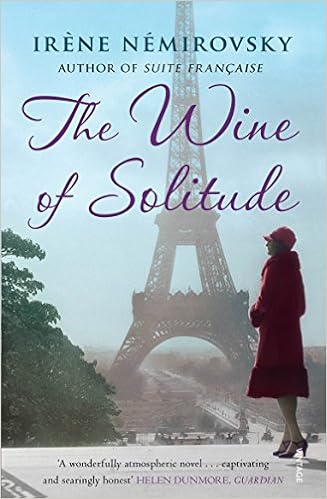
Irène Némirovsky's autobiographical novel, in which she lacerates her father as a cheap, low-class trader unworthy of her feckless, faithless mother (for whom she reserves her true hatred). Unhappy families make good novelists, it appears.


Amazon link

John Fowles: Marxist-Leninist after a fashion, introverted recluse, highly intelligent novelist, in love with la France profonde. His thoughts on his life and writings. My kind of guy.


Amazon link

I have a lot of time for the late, lamented Tom Wolfe ('Radical Chic'). A style to aspire to: laconic, knowing and laced with irony. Also unafraid. But this book is so relentless, so high-octane and unrelentingly in-your-face that I found it un-unputdownable. And dated. The Ken Kesey Wikipedia article is way more digestible.


Amazon link

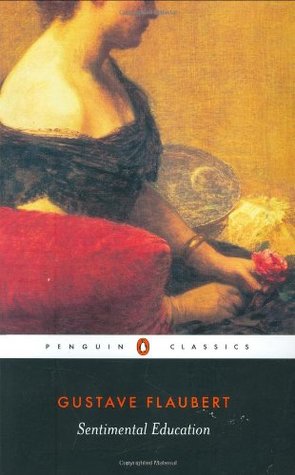
On the advice of John Fowles, who venerated Flaubert as a stylist (he's not the only one, cf. Julian Barnes). I also have 'Three Tales' on the list plus a re-read of 'Madame Bovery' (1857) which I engaged with before only for plot. Time to appreciate it in its entirety.

---

Amazon link

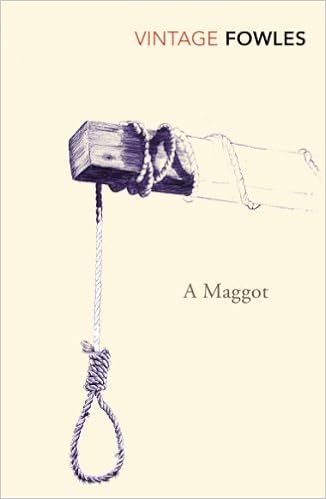
Was ever a title so badly chosen, in the sense of putting people off? No matter that, as mentioned in the Wikipedia article, its title is taken from the archaic sense of the word that means "whim", "quirk", "obsession".

Although it's not apparent until the end, the novel is the author's homage to Ann Lee, the founder of the communitarian Shaker movement. Fowles combines the style of his hero, Daniel Defoe, with science-fictional elements to imagine a future civilization styled on Shaker principles sending an agent back in time to facilitate the birth of Ann Lee. The SF elements are never explained as such: the author is content to refract them through his characters, who are half-rationalist and half-mired in a magic scarcely struck from the law books.

The life and times are beautifully realised, it's a real labour of love by Mr Fowles. And surely amenable to a TV treatment (and don't forget 'The Magus').

---

Thursday, December 10, 2020

Memoirs are not stories

Amazon link

Since putting a book of SF/thriller short stories together a year ago I have been running a reset. Doing some hard thinking about writing, and carefully reading people like Irène Némirovsky (Suite Française, All Our Worldly Goods) and John Fowles (The Magus, The Collector). Authors who write character-driven fiction.

Fay Weldon once wrote indignantly that authors do not write about their own lives or those of people they know, they make characters up from their imaginations. But she was being disingenuous: how many classics are revealed to be thinly-disguised autobiography, with 'just the names changed'?

Where she is right is that memoirs are not stories. Memoirs are life in all its plotlessness, banality and broader inconsequentiality. Stories are how we would like reality to be: clear characters, an arc to a conclusion. In stories there is closure and satisfaction; in our memories of life - not so much.

I have some new stories in preparation.

Monday, November 23, 2020

“The Magus” - John Fowles: a Jungian odyssey


Amazon link

---

I think I always had the wrong idea about John Fowles, that he was some kind of middle-brow airport writer. Wasn’t “The French Lieutenant’s Woman” just a version of “The English Patient”?

It pains me to expose my ignorance thus. “The Magus” is wonderful. Its protagonist is me when I was Nicholas’s age: in my mid-twenties, smart, insensitive, needy for girls, utterly self-centred, operationally, if not psychologically, selfish.

And Alison was the girl I was unknowingly looking for, while being all-too-ready to diss her and drive her away. Hyper-logical Nicholas, as one reviewer describes him, understands neither himself nor others. He's a slave to his own dominant drives for knowledge and power, the latter being an overriding desire for autonomy of the self. In short he's a quintessential INTP.

Here is Michelle’s synopsis:

“Nicholas Urfe is a not-very-good schoolteacher with romantic ideas of himself as a solitary heart and poet. (Really, he’s kind of a womanizing bastard.) He accepts a teaching job on a breathtaking but isolated Greek Island and meets Maurice Conchis, an eccentric, wealthy man who interacts with few outsiders. Conchis tells Nicholas stories of the past, weaving reality and fiction while claiming powers verging on the supernatural. When Conchis reveals a beautiful young woman staying with him – claiming she is a ghost – Nicholas’s infatuation draws him into Conchis’s mysteries and deceits.”

Fowles was deeply drawn to Jung (there’s a Freudian analysis of Nicholas at the end, woundingly accurate) and I read the ‘GodGame’ as an extended type-developmental schedule in which Nicholas is forced deeper inside himself, past his dominant Introverted Thinking function to seek his shadow: Extraverted Feeling. Only then can he actually engage with his own feelings and lay a foundation for genuine, reciprocal, kindly relationships. Think Ursula Le Guin's Earthsea.

And Fowles tells us - obliquely - that in the end this is what happens.

---

The book is not kind to the sensibilities of the Woke. Nicholas is an unpleasant, fairly insufferable human being (as was I, and many of us in our twenties). It’s an old fallacy to beat up on the author for portraying human rather than ideal characters.

This is a large, complex novel which speaks to NTs, and NFs - who will be offended, and will bore to shreds those of a Sensing disposition.

I have been thinking about it for days now, and have added more from Fowles to my stack as well as his inspiration, “The Lost Estate (Le Grand Meaulnes)” by Henri Alain-Fournier (Author), Adam Gopnik (translator).

Fowles died in 2005.