Showing posts with label Human. Show all posts

Tuesday, June 09, 2026

Reboot at the End of the World


Reboot at the End of the World

There are catastrophes from which humanity might survive, but only just.

A major asteroid strike. A global thermonuclear war. A run of linked supervolcano eruptions. A pandemic so destructive that it does not merely kill millions, but breaks the institutional memory of the species. No universities. No laboratories. No supply chains. No expert professions. No functioning states. No schools worth the name.

Imagine, then, the worst case short of extinction: a few hundred thousand survivors scattered across habitable fragments of the planet, perhaps speaking minority languages, perhaps with no living continuity of literacy, science, engineering or administration. Not stupid, but stripped of all our culture, institutions and technology.

This is the real civilisational reboot problem.

It's often presented as an archive problem. Preserve the books. Preserve the seeds. Preserve Wikipedia. Etch our knowledge into some durable medium. Put a library on the Moon, or Mars, or in orbit.

But a devastated hunter-gatherer band cannot get to the Moon. If humanity has recovered enough to retrieve, decode and use an off-world archive, then that archive is archaeology, not rescue.

Nor is a library enough. A library assumes a reader. A textbook assumes a school. A wiring diagram assumes numeracy, measurement, tools, materials and craft tradition. A medical manual assumes sterile practice, diagnosis, instruments and pharmacology.

Walter M. Miller Jr.’s A Canticle for Leibowitz taught the lesson memorably enough: even from the relatively high base of surviving monastic literacy, preserved knowledge can decay into relic, chant and sacralised incomprehension. Here we are imagining a lower base still. Strip away the institutions entirely and a library becomes a catacomb of cryptic marks.

The civilisation reboot we need is not a library; it is a teacher.

What we should be building is a network of terrestrial reboot caches: hardened, widely distributed, AI-driven systems designed not merely to preserve (actually inaccessible) knowledge, but to reanimate it.

What will not work, obviously, is burying today’s largest data-centre model in a mountain and hoping it wakes after three thousand years. 

The useful object needs to be smaller, tougher and more modest: a low-power civilisation-kernel able to interact with survivors where they are, learn enough of their language, teach symbols, restore literacy and numeracy, guide sanitation and agriculture, and then lead a community step by step up the civilisational ladder.

A Marxist, or an Olson-influenced economist, would flinch here, and not without reason. Technology does not float above social power like a benevolent weather system. Elites, priesthoods, war-bands and rent-seeking custodians would quickly discover that a machine which teaches metallurgy, sanitation and accounting is also a machine which threatens their arrangements. The tutor would not merely have to transmit knowledge. It would have to survive and even use politics without becoming its victim.

The first requirement is humility about the user. The user may be an illiterate adult in a small oral society, with practical intelligence, local knowledge, suspicion of strangers and no reason to trust a speaking artefact from the ruins. The machine’s first task is not Maxwell’s equations. It must begin with pointing, naming, counting, comparing and listening.

So the AI must be anthropologist before lecturer. It needs a “teach me your words” mode. It asks users to name objects, actions, animals, plants, kin relations, body parts, tools, weather and danger. From that it builds a language bridge. Only then can it start to contribute.

The second requirement is sequencing. Civilisation is not a heap of facts. It is a dependency graph. You cannot design antibiotics before the concept of germs. You cannot build a generator without copper wire, magnets, insulation, tools and tolerances. You cannot recover semiconductors from a dense paragraph about photolithography.

The tutor must therefore ask: what materials exist here? What tools? What climate? What diseases? What authority structure? Who will listen to me? Who won't?

The third requirement is sheer physical persistence. It must tolerate heat, cold, damp, dust, insects, corrosion, shock and long dormancy. No fan. No hard disk.

Power would probably be solar, with radioisotope generators, of the kind used on spacecraft, reserved for a few deep reserve caches where cost, safety and politics align. The architecture should be layered: a tiny robust controller; a low-power local model; a curated archive; analogue fallback materials; engraved pictorial first-use instructions; printed primers; tools, seeds, measuring instruments and medical basics. If the AI fails, the cache should still teach something.

The AI itself should be modular. A language-acquisition layer. A patient tutor model. Deployment matters: ten thousand distributed systems would be prudent. They should be geographically dispersed, culturally plural and designed to learn surviving languages.

The archive could store weights for larger AI models with greater intelligence and coverage, inert until a recovering society had rebuilt enough electrical and computational infrastructure to run them: a much richer cultural assistant waiting to reappear.

The project would be scientifically valuable even if the catastrophe never comes. It would force us to ask what civilisation actually consists of. Which knowledge is explicit? Which is buried in tools, habits, institutions and apprenticeships? How do technical cultures teach across radical asymmetries of language, trust and competence? What is the minimal curriculum for cumulative science?

The same discipline might even matter for interstellar first-contact probes, where teaching across radical asymmetry is the whole game.

If someone wants a civilisational reboot project with more utility than firing archives into space, this is it. The intended users are not on the Moon or Mars. They are on Earth: impoverished, intelligent, and cut off from the long chain of memory which made us what we are.


Wednesday, November 29, 2023

How to design an exterminator AI


From OpenArt.ai

Posted here as a service to those misanthropists who wish to exterminate the human race, but lack the necessary strategic vision.

---

First, don't go the pure AI route. You'll find that it's orders of magnitude easier to engineer a bunch of gain-of-function viral pathogens and let them loose. In fact, lose the idea of the dangers of high-intelligence entirely. Plenty of highly-intelligent people died in prison cells or death camps. An enhanced capacity for abstract thought only takes you so far.

To make humanity, or any species, extinct, you have to change the parameters of that species’ environment to ensure subsequent reproduction tends to zero.

A simple approach is to drop a sufficiently large rock on the planet. But sometimes the introduction of a new, invasive species is enough to do the trick - rats introduced onto a hitherto-pristine island is a well-known case study. 

Could you use advanced AI to enable a lethal threat to humanity? Create a new species to occupy our human niche, preventing humans in their totality from continuing?

Some of you will say that the TFR data shows that capitalism and contraception are already taking us way down that path. But not all humans will be affected: those who disdain such will inherit the Earth - a future paradise for the Amish (h/t Robin Hanson).

Putting both viruses and progressive antinatalism to one side, what people really want to hear about, it seems, are killer robots.

They're hard. 

It's easy to design a substantial point-threat: AI autonomous weapons for example. It's another thing to design a universal, all-consuming threat which prevails over any and all human countermeasures.

All existing AI systems - all our technological products - are strictly parasitic on our existing human global economy. Without that they can't power themselves, repair themselves or reproduce themselves. 

In principle, we can imagine a totally self-reproducing robot community-economy. If it had sufficient means of military aggression and defence, then we're simply positing a species like ourselves (in some possibly improved variant) implemented in metal/silicon or protoplasm depending on the engineering pros and cons.

Since we would be competing in-niche for land, resources and sources of energy, we would have to fight these aliens for our survival. But defeat is not foredoomed, not if we were paying attention all along.

In any case, I say to the misanthropes out there, we are centuries away from that future. You won't live to conceptualise, let alone design, that possible road to human extinction.

My advice? Stick to the viruses. 

Or go design the irresistible (but sterile) android life-partners - trust me, no one will stop you there.

Wednesday, February 17, 2016

Feeling black holes collide from close-up

As soon as I heard about that LIGO thing, first thing I thought of, what would it have felt like if you'd been there, maybe an AU away from those coalescing black holes?

Eventually the Internet got around to telling me.
"As I read the historic news, there’s one question that kept gnawing at me: how close would you need to have been to the merging black holes before you could, you know, feel the distortion of space?  I made a guess, [...] you’d need to be very close.

"Even if you were only as far from the black-hole cataclysm as the earth is from the sun, I get that you’d be stretched and squished by a mere ~50 nanometers (this interview with Jennifer Ouellette and Amber Stuver says 165 nanometers, but as a theoretical computer scientist, I try not to sweat factors of 3).

Even if you were 3000 miles from the black holes—New-York/LA distance—I get that the gravitational waves would only stretch and squish you by around a millimeter. Would you feel that? Not sure. At 300 miles, it would be maybe a centimeter—though presumably the linearized approximation is breaking down by that point.

[...]

"Now, the black holes themselves were orbiting about 200 miles from each other before they merged.  So, the distance at which you could safely feel their gravitational waves, isn’t too far from the distance at which they’d rip you to shreds and swallow you!

In summary, to stretch and squeeze spacetime by just a few hundred nanometers per meter, along the surface of a sphere whose radius equals our orbit around the sun, requires more watts of power than all the stars in the observable universe give off as starlight.

"People often say that the message of general relativity is that matter bends spacetime “as if it were a mattress.”  But they should add that the reason it took so long for humans to notice this, is that it’s a really friggin’ firm mattress, one that you need to bounce up and down on unbelievably hard before it quivers, and would probably never want to sleep on."
From Scott Aaronson's blog, a post appealingly titled "The universe has a high (but not infinite) Sleep Number", h/t SSC.

Victor Toth writes:
"A gravitational wave is like a passing tidal force. It squeezes you in one direction and stretches you in a perpendicular direction. If you are close enough to the source, you might feel this as a force. But the effect of gravitational waves is very weak. For your body to be stretched by one part in a thousand, you’d have to be about 15,000 kilometers from the coalescing black hole.

"At that distance, the gravitational acceleration would be more than 3.6 million g-s, which is rather unpleasant, to say the least. And even if you were in a freefalling orbit, there would be strong tidal forces, too, not enough to rip your body apart but certainly enough to make you feel very uncomfortable (about 0.25 g-forces over one meter.) So sensing a gravitational wave would be the least of your concerns.

"But then… you’d not really be sensing it anyway. You would be hearing it. Most of the gravitational wave power emitted by GW150914 was in the audio frequency range. A short chip rising in both pitch and amplitude. And the funny thing is… you would hear it, as the gravitational wave passed through your body, stretching every bit a little, including your eardrums."
---

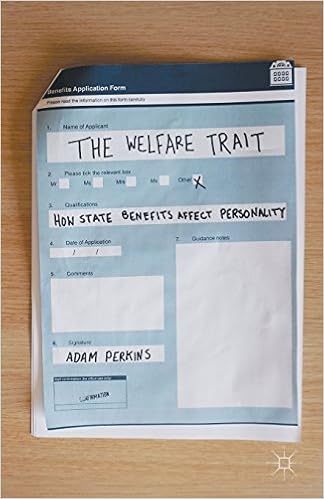
I'm reading "The Welfare Trait: How State Benefits Affect Personality" by Dr Adam Perkins of King's College, London. He talks about the employment-resistant personality and how such people feature disproportionately on welfare. There they tend to have lots of children, both for increased benefits and because they're rather feckless, (A-, C-, in the five-factor jargon).

Amazon Link

Dr Perkins is worried about dysgenic consequences - plainly the potential is there - but how big is the effect? I'm waiting to see whether Dr Perkins gets quantitative, but if he does, he'll be using the Breeder's Equation.

Time for a quick review from West Hunter - this is the Breeder's Equation:
"R = h2S.

"R is the response to selection, S is the selection differential, and h2 is the narrow-sense heritability. This is the workhorse equation for quantitative genetics. The selective differential S, is the difference between the population mean and the mean of the parental population (some subset of the total population).

"For example, imagine a set of parents with IQs of 120, drawn from a population with an average IQ of 100. Suppose that the narrow-sense heritability (in that population, in that environment) is 0.5 . The average IQ of their children will be 110. That’s what is usually called regression to the mean.

"Do the same thing with a population whose average IQ is 85. We again choose parents with IQs of 120, and the narrow-sense heritability is still 0.5. The average IQ of their children will be 102.5 – they regress to a lower mean.

"You can think of it this way. In the first case, the parents have 20 extra IQ points. On average, 50% of those points are due to additive genetic factors, while the other 50% is is the product of good environmental luck. By the way, when we say ‘environmental” we mean “something other than additive genetics”. It doesn’t look as if the usual suspects – the way in which you raise your kids – contributes much to this ‘environmental’ variance, at least for adult IQ. In fact we know what it’s not, but not much about what it is, although it must include factors like test error and being hit on the head.

"The kids get the good additive genes, but have average ‘environmental’ luck – so their average IQ is 110. The luck (10 pts worth) goes away

"The 120-IQ parents drawn from the IQ-85 population have 35 extra IQ points, half of which are from good additive genes and half from good environmental luck. But in the next generation, the luck goes away… so they drop 17.5 points.

"The next point is that the luck only goes away once. If you took those kids from the first group, with average IQs of 110, and dropped them on an uninhabited but friendly island, they would presumably get around to mating eventually – and the next generation would also have an IQ of 110. With tougher selection, say by kidnapping a year’s worth of National Merit Finalists, you could create a new ethny with far higher average intelligence than any existing. Eugenics is not only possible, it’s trivial."
Dysgenics too: as personality has similar heritability to intelligence (0.5), still mulling over the application of this to the profligate underclass ...

You might also want to take a look at this.

Wednesday, January 06, 2016

For once, the yeuk factor is real


From the MIT Technology Review today.
" ...  MIT Technology Review estimates that about 20 pregnancies of pig-human or sheep-human chimeras have been established during the last 12 months in the U.S."
So how does that work?
"By modifying genes, scientists can now easily change the DNA in pig or sheep embryos so that they are genetically incapable of forming a specific tissue. Then, by adding stem cells from a person, they hope the human cells will take over the job of forming the missing organ, which could then be harvested from the animal for use in a transplant operation.

“We can make an animal without a heart. We have engineered pigs that lack skeletal muscles and blood vessels,” says Daniel Garry, a cardiologist who leads a chimera project at the University of Minnesota. While such pigs aren’t viable, they can develop properly if a few cells are added from a normal pig embryo. Garry says he’s already melded two pigs in this way and recently won a $1.4 million grant from the U.S. Army, which funds some biomedical research, to try to grow human hearts in swine."
OK, there's a yeuk factor there, but surely if the objectives are good .. ?
"The worry is that the animals might turn out to be a little too human for comfort, say ending up with human reproductive cells, patches of people hair, or just higher intelligence. “We are not near the island of Dr. Moreau, but science moves fast,” NIH ethicist David Resnik said during the agency’s November meeting. “The specter of an intelligent mouse stuck in a laboratory somewhere screaming ‘I want to get out’ would be very troubling to people.”
Oh yes, the screaming mouse.
"... Desperately ill people on organ waiting lists might someday order a chimera and wait less than a year for their own custom organ to be ready. “I really don’t see much risk to society,” he says.

"Before that can happen, scientists will have to prove that human cells can really multiply and contribute effectively to the bodies of farm animals. That could be challenging since, unlike rats and mice, which are fairly close genetically, humans and pigs last shared an ancestor nearly 90 million years ago.

"To find out, researchers in 2014 decided to begin impregnating farm animals with human-animal embryos, says Pablo Ross, a veterinarian and developmental biologist at the University of California, Davis, where some of the animals are being housed. Ross says at Davis he has transferred about six sets of pig-human embryos into sows in collaboration with the Salk Institute and established another eight or 10 pregnancies of sheep-human embryos with Nakauchi. Another three dozen pig transfers have taken place outside the U.S., he says.

"These early efforts aren’t yet to make organs, says Ross, but more “to determine the ideal conditions for generating human-animal chimeras.” The studies at Davis began only after a review by three different ethics committees, and even then, he says, the university decided to be cautious and limit the time the animals would be allowed to develop to just 28 days (a pig is born in 114 days).

"By then, the embryonic pig is only half an inch long, though that’s developed enough to check if human cells are contributing to its rudimentary organs.

“We don’t want to grow them to stages we don’t need to, since that would be more controversial,” says Ross. “My view is that the contribution of human cells is going to be minimal, maybe 3 percent, maybe 5 percent. But what if they contributed to 100 percent of the brain? What if the embryo that develops is mostly human? It’s something that we don’t expect, but no one has done this experiment, so we can’t rule it out.”
So run that past me again ...
 “My view is that the contribution of human cells is going to be minimal, maybe 3 percent, maybe 5 percent. But what if they contributed to 100 percent of the brain? What if the embryo that develops is mostly human? It’s something that we don’t expect, but no one has done this experiment, so we can’t rule it out.”
If a pig-embryo can have its kidney developmental genes knocked out, so growing kidneys constructed from stem cells from a specific person - so that less than a year later there's a non-rejectable transplant available. Well,  it's going to happen.

My question: are we happy to eat the bacon sandwich made from the rest of the pig?