Showing posts with label Gustave Flaubert. Show all posts

Tuesday, February 09, 2021

What am I reading?


Amazon link

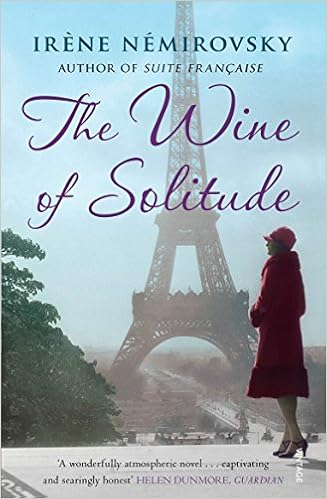
Irène Némirovsky's autobiographical novel, in which she lacerates her father as a cheap, low-class trader unworthy of her feckless, faithless mother (for whom she reserves her true hatred). Unhappy families make good novelists, it appears.


Amazon link

John Fowles: Marxist-Leninist after a fashion, introverted recluse, highly intelligent novelist, in love with la France profonde. His thoughts on his life and writings. My kind of guy.


Amazon link

I have a lot of time for the late, lamented Tom Wolfe ('Radical Chic'). A style to aspire to: laconic, knowing and laced with irony. Also unafraid. But this book is so relentless, so high-octane and unrelentingly in-your-face that I found it un-unputdownable. And dated. The Ken Kesey Wikipedia article is way more digestible.
 

Amazon link

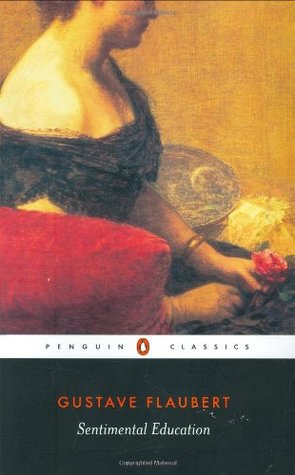
On the advice of John Fowles, who venerated Flaubert as a stylist (he's not the only one, cf. Julian Barnes). I also have 'Three Tales' on the list plus a re-read of 'Madame Bovery' (1857) which I engaged with before only for plot. Time to appreciate it in its entirety.

---
Amazon link

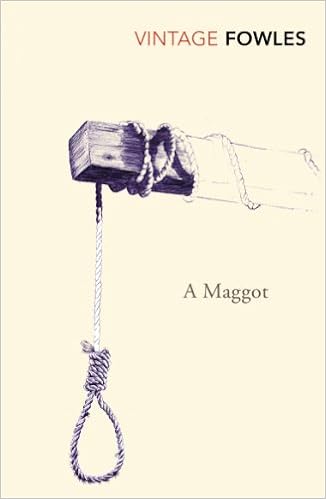
Was ever a title so badly chosen, in the sense of putting people off? No matter that, as mentioned in the Wikipedia article, its title is taken from the archaic sense of the word that means "whim", "quirk", "obsession".

Although it's not apparent until the end, the novel is the author's homage to Ann Lee, the founder of the communitarian Shaker movement. Fowles combines the style of his hero, Daniel Defoe, with science-fictional elements to imagine a future civilization styled on Shaker principles sending an agent back in time to facilitate the birth of Ann Lee. The SF elements are never explained as such: the author is content to refract them through his characters, who are half-rationalist and half-mired in a magic scarcely struck from the law books.

The life and times are beautifully realised, it's a real labour of love by Mr Fowles. And surely amenable to a TV treatment (and don't forget 'The Magus').

---

Monday, March 04, 2013

Flaubert’s Parrot, Julian Barnes (1984)

A review of "Flaubert’s Parrot", Julian Barnes (1984) - as recommended to me (via the Canadian public library system) by Adrian.

Here is what Wikipedia has to say about it, - slightly edited: I think their review is a little superficial.

“The novel follows Geoffrey Braithwaite, a widowed, retired English doctor and amateur Flaubert-scholar as he visits France and  Flaubert landmarks in the vicinity of Rouen. While visiting various sites related to Flaubert, Geoffrey encounters two incidents of museums claiming to display the stuffed parrot which sat atop Flaubert's writing desk for a brief period while he wrote “Un coeur simple”. While trying to determine which is authentic, Geoffrey ultimately learns that either/neither could be genuine and Flaubert's parrot could be any one of fifty ("Une cinquantaine de perroquets!", p. 187) that had been held in the collection of the municipal museum.

Although the main focus of the narrative is tracking down the parrot, many chapters deal in Geoffrey's reflections, such as on Flaubert's love life and how it was affected by trains, and animal imagery in Flaubert's works and the animals with which he himself was identified (usually a bear, but also a dog, sheep, camel, and parrot).

One of the central themes of the novel is subjectivism. The novel provides three sequential chronologies of Flaubert's life: the first is optimistic (citing his successes, conquests, etc.), the second is negative (citing the deaths of his friends/lovers, his failures, illnesses etc.) while the third compiles quotations written by Flaubert in his journal at various points in his life. The attempts to find the real Flaubert mirror the attempt to find his parrot – an exercise in apparent futility.”

Prerequisites to reading this novel: (i) Read “Madame Bovary”; (ii) Check out Flaubert’s bio at Wikipedia; (iii) know some French.

Julian Barnes is deeply familiar with Gustave Flaubert’s life and works, but their meaning and significance is hardly uncontested. Flaubert seems to me to emerge as a more sedentary DSK (Dominique Strauss-Kahn) – sexually predatory and manipulative: key differences – Flaubert was actively bisexual .. and a literary genius. He treated his women badly: there is an excellent imagined take on Flaubert (chapter 11) from his long-time associate/mistress Louise Colet - illustrious in her lifetime but now somewhat forgotten - which seems compelling.

Barnes comes at his subject from every angle: a mock examination paper (chapter 14), a pastiche of Flaubert’s own pastiche of contemporary received-wisdom (chapter 12), a skewering of dry-as-a-stick critics who observing the trees of Flaubert’s output, completely fail to understand the wood (all over). One can only marvel at Barnes’ erudition, playfulness and sheer intelligence.

Strangely the character of Geoffrey Braithwaite jars a little. Plainly a representation of the author in his views and researches, the intended parallels with Charles Bovary are hardly lost on the reader. The meditation on grief and infidelity (chapter 13) is extraordinarily insightful and moving, but Mrs Braithwaite – Ellen – isn’t quite Madame Bovery. The Geoffrey Braithwaite back-story seems to me a little forced – I didn’t really understand what it added to the Gustave Flaubert tour-de-force of the rest of the novel.

I now know quite a bit about Gustave Flaubert, his life, times and associates. He comes across as rather infuriating.