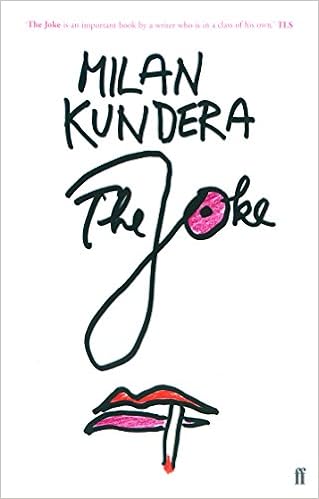
Milan Kundera defined it best: kitsch is emotional manipulation masquerading as art; the comforting echo of feelings we already know. In 'The Unbearable Lightness of Being', he dissects its mechanics with precision.
“Kitsch causes two tears to flow in quick succession,” he writes. The first tear: “How nice to see children running on the grass!” The second tear: “How nice it is to be moved, together with all mankind, by children running on the grass!”
Kitsch merely indulges our emotions, flatters us into self-congratulatory sentimentality, affirming our collective decency without requiring us to question or confront anything uncomfortable.
Kitsch is the wallpaper of the Overton Window, to thoroughly abuse a metaphor. No wonder governments of all persuasions adore it. Kitsch is their ultimate propaganda weapon, a velvet glove for the iron fist - peddling conventional unity and moral certainties while smothering critical thought under a disapproving, moralising blanket of sugar.

Kitsch is both relational and absolute, in the way that mathematics is both hard and easy. What is kitsch to the worldly adult might be a revelation to a younger person, or one less culturally attuned. Art that merely panders to a sophisticated viewer - repackaging familiar emotions with no hint of challenge - can still serve as a framing portal for someone seeing it with fresh eyes.
A banal love song may bore a seasoned listener, but for a teenager wrestling with their first heartbreak, it might feel like truth spoken from the mountaintop. Kitsch, then, is not the absence of impact - it’s the absence of growth.
Like the dimension which spans from prim to romantic to erotic to pornographic, kitsch inhabits a continuum. Artists differ in their positioning as well as in their attitude to their art. Worst are those jaded, cynical performers who know only too well what they are recycling.
The better an artist is, the more authenticity you may discern: once their act becomes over-familiar they grow dissatisfied and look into their own selves to find something new to say.
They may succeed, and - if so - they may additionally rediscover an audience. Many artists, like David Bowie and Robert Plant, go in and out of fashion: but never (at least in their own eyes) are they in the business of kitsch. They never try to emulate their own Tribute Bands.
But being original is not often the same as being popular.
So where does this leave Taylor Swift and her epic tours? For the discerning adult, they certainly seem kitsch: expertly produced spectacles, their emotional punch choreographed to the millisecond.
Her lyrics play it safe, her melodies stick to the tried and true, and her narratives revolve around themes we’ve all seen before - relationships, self-discovery, and empowerment, endlessly rinsed and repeated.
There’s no risk here, it appears, no challenge to the audience’s intellectual or emotional horizons. For adults, Swift’s tours can sometimes seem the pop equivalent of fast food: tasty, satisfying - and utterly conventional.
For her primary audience - young, mostly female, and navigating life’s emotional minefields for the first time - these performances are something altogether different. They are maps for uncharted territories, offering structure to feelings too raw to articulate. To a teenage girl experiencing heartbreak or self-doubt, Swift’s songs don’t pander at all; they resonate. Her art provides emotional scaffolding where none previously existed, and that scaffolding matters. It’s not kitsch for them; it’s an initiation.
I am about as far as it is possible to be from familiarity with Taylor Swift’s body of work. Yet it seems to me that underneath the machinelike-juggernaut there is an existential self-doubt, an awareness that what she does is time-limited, not least by her own maturation. If she kept with the teenage angst regardless, then that would indeed be the hallmark of kitsch.
Instead I think she will continue to try new things, taking the very real risks of falling out of fashion. And that is the mark of a performer who eschews kitsch.
Kitsch is art’s terminal state - the point at which creativity ossifies into convention, when the daring and disruptive becomes safe and sentimental. True art, by contrast, jolts and destabilizes. It drags us into the unfamiliar and forces us to confront what we’d rather ignore. But that kind of innovation is rarely appreciated at the time.
True art’s fate is to degenerate into kitsch: in the extreme, kitsch isn’t just the opposite of art; it’s where art goes to die. Its tombstone reads: “Beloved by all, challenging to none.”