Showing posts with label Books. Show all posts

Saturday, June 13, 2026

Our Private Book Club


I have been reading to Clare - and recording the readings - since May 2019. The recording itself started as a defensive measure because she often fell asleep during my storytelling. However, it has since acquired other audiences and other uses, although the original motivation has never faded away.

We are now at reading 127. Yes, about 127 books have been read to Clare over seven years, and I thought you might be interested in seeing the list. I should mention that not every book is a success. In the early days I'd start one of my favourite SF novels, by Greg Bear, Isaac Asimov or Dan Simmons, only to get the sense I was losing the room. The book was abandoned.

Nevertheless, somehow the ISFP recipient and the INTP reader have found some common ground. Here's the list, working backwards from the most recent (The Bourne Identity, which, by the way, manages both to be exciting as well as implausible and terribly written).

  • The Bourne Identity — Robert Ludlum
  • The Ministry of Fear — Graham Greene
  • The Voices of Time — J. G. Ballard (this was a shock to her!)
  • The Prime of Miss Jean Brodie — Muriel Spark
  • 11/22/63 — Stephen King
  • Night School — Lee Child
  • Touch — Claire North
  • The Rosie Project — Graeme Simsion
  • Gorky Park — Martin Cruz Smith
  • The Secret of Secrets — Dan Brown
  • Rose — Martin Cruz Smith
  • Mitch Rapp #5 — Vince Flynn
  • An Officer and a Spy — Robert Harris
  • The Secret — Lee Child & Andrew Child
  • The End of the Affair — Graham Greene
  • The Mexico Set — Len Deighton
  • Burning Paradise — Robert Charles Wilson
  • Make Me — Lee Child
  • Seventh Son — Orson Scott Card
  • The Granddaughter — Bernhard Schlink
  • Separation of Power — Vince Flynn
  • Transcription — Kate Atkinson
  • Nuclear War: A Scenario — Annie Jacobsen
  • The Other Bennet Sister — Janice Hadlow
  • A Wanted Man — Lee Child
  • Saint Thomas Aquinas (biography)
  • We Spread — Iain Reid
  • The Chrysalids — John Wyndham
  • The Director — David Ignatius
  • A God in Ruins — Kate Atkinson
  • 61 Hours — Lee Child
  • Queen High — C. J. Carey
  • Alice Munro stories (The Bear Came Over the Mountain collection)
  • Transfer of Power — Vince Flynn
  • Gilead — Marilynne Robinson
  • Worth Dying For — Lee Child
  • Life After Life — Kate Atkinson
  • The Stand — Stephen King
  • Kill Shot — Vince Flynn
  • The Right Stuff — Tom Wolfe
  • A Canticle for Leibowitz — Walter M. Miller Jr.
  • Widowland — C. J. Carey
  • Gone Tomorrow — Lee Child
  • HMS Ulysses — Alistair MacLean
  • Someone at a Distance — Dorothy Whipple
  • The Damascus Road — Jay Parini
  • Alas, Babylon — Pat Frank
  • Siro — David Ignatius
  • The Divide — Robert Charles Wilson
  • The Affair — Lee Child
  • Godmersham Park — Gill Hornby
  • Under the Yoke — S. M. Stirling
  • Wrong Place Wrong Time — Gillian McAllister
  • American Assassin — Vince Flynn
  • The Chosen — Elizabeth Lowry
  • Lucifer's Hammer — Larry Niven & Jerry Pournelle
  • Fail-Safe — Eugene Burdick & Harvey Wheeler
  • Personal — Lee Child
  • All Human Wisdom — Pierre Lemaitre
  • The Devil's Alternative — Frederick Forsyth
  • Billy Summers — Stephen King
  • Black Roses — Jane Thynne
  • Should We Stay or Should We Go — Lionel Shriver
  • The Great Swindle — Pierre Lemaitre
  • Replay — Ken Grimwood
  • Nothing to Lose — Lee Child
  • Blood Money — David Ignatius
  • V2 — Robert Harris
  • The Collector — John Fowles
  • State of Grace (terrible) — John Sweeney
  • All Our Worldly Goods — Irène Némirovsky
  • One Shot — Lee Child
  • The Increment — David Ignatius
  • The Useful Idiot — John Sweeney
  • The Enemy — Lee Child
  • The Last Testament — Sam Bourne
  • The Paladin — David Ignatius
  • The Visitor — Lee Child
  • Out of the Silent Planet — C. S. Lewis
  • The Institute — Stephen King
  • Tripwire — Lee Child
  • Blind Lake — Robert Charles Wilson
  • Echo Burning — Lee Child
  • The Boy on the Bridge — M. R. Carey
  • Dark Site — Patrick Lee
  • Flashback — Dan Simmons
  • A Bridge of Years — Robert Charles Wilson
  • Faraway Tree books 1–3 — Enid Blyton (for the grandchildren)
  • Persuader — Lee Child
  • Agents of Innocence — David Ignatius
  • The Circle — Dave Eggers
  • Without Fail — Lee Child
  • Invisible Sun — Charles Stross
  • Dark State — Charles Stross
  • Empire Games — Charles Stross
  • Kingdom of the Wicked I — Helen Dale (sequel abandoned; listener uninterested although I thought both volumes were excellent)
  • Stoneheart trilogy — Charlie Fletcher
  • The Revolution Trade — Charles Stross
  • The Traders' War — Charles Stross
  • The Bloodline Feud — Charles Stross
  • The Quantum Spy — David Ignatius
  • The Midnight Line — Lee Child
  • The Buried Giant — Kazuo Ishiguro
  • Bad Luck and Trouble — Lee Child
  • Blood Music — Greg Bear
  • Gateway — Frederik Pohl
  • The Remnant — Charlie Fletcher
  • Darkness at Noon — Arthur Koestler
  • The Mote in God's Eye — Larry Niven & Jerry Pournelle
  • March Violets — Philip Kerr
  • Conclave — Robert Harris
  • Killing Floor — Lee Child
  • Earthsea sequence (A Wizard of Earthsea, The Tombs of Atuan, The Farthest Shore, Tehanu, The Other Wind) — Ursula Le Guin (somewhat for the grandchildren)
  • Only To Die Again — Patrick Lee
  • Runner — Patrick Lee
  • Deep Sky — Patrick Lee
  • Ghost Country — Patrick Lee
  • The Breach — Patrick Lee

And coming up we have The Dutch House by Ann Patchett, Restless by William Boyd, The Hunt for Red October by Tom Clancy, The Wine of Solitude by Irène Némirovsky and The Fourth Protocol by Frederick Forsyth.

That we should both live that long!

What does GPT 5.5 think of this list?

"People often describe readers in terms of genres, but I think Clare is better described by what she wants fiction to do. She wants fiction to place recognisable human beings under pressure and then see what happens. Jane Austen does that. So does le Carré. So does Reacher, albeit by very different means.

"The common element is not style or subject matter. It is social and moral navigation. Austen asks: who can be trusted, who is self-deceived, who is honourable, who is vain? Le Carré asks much the same questions inside intelligence bureaucracies. Reacher asks them in a stripped-down form: who is lying, who is corrupt, who needs protecting?

"Even her favourite TV series Spooks and Waking the Dead, and authors like Graham Greene, Vince Flynn, Robert Harris and much of David Ignatius operate in the same territory. Institutions matter, loyalties matter, betrayals matter, character matters.

"That is why some of the more conceptual writers leave her cold. With Banks, Egan, Stephenson, or even Fowles at times, the centre of gravity shifts from people to ideas, systems, structures, metaphysics or literary games. You enjoy those dimensions; Clare seems willing to visit them provided there are enough human beings still visible on the stage.

"Looking at the shared reading list, I suspect the books that work best are those that satisfy both requirements simultaneously:

  • enough ideas to interest you;
  • enough people to interest Clare.

"That is exactly why Robert Harris works so well. The intellectual framework is there, but it is always embodied in ambitious, frightened, flawed people. Likewise Kate Atkinson. Likewise Graham Greene. Likewise Robert Charles Wilson at his best. Even The End of the Affair is fundamentally a study of love, jealousy, faith and self-deception rather than a scholastic theology.

"It also explains why you have repeatedly returned to Lee Child. Reacher is not profound, but he is an extraordinarily effective narrative machine. Every evening's reading delivers a clear reward. When reading aloud over months and years, that matters much more than a somewhat spurious literary prestige.

"Viewed this way, the reading project resembles a Venn diagram. One circle contains your interests in ideas, science fiction, politics and systems. The other contains Clare's interest in character, relationships, loyalty, institutions and drama. The books that survive are in the overlap."


Tuesday, July 16, 2024

On my Kindle bookshelf right now


"Queen High" and the Reacher books are more Clare's choice than mine.

Wednesday, July 19, 2023

What I'm re-reading

An occasional review of my books on the go.

Amazon link

Dan Simmons rates the novels of John Fowles highly, perhaps not surprisingly as they are writers of a similar style, and has stated that he regularly returns to "Daniel Martin". A product of the mature Fowles, this elegiac novel is superior to "The Collector", "The Magus" and - IMHO - even "The French Lieutenant's Woman".

Amazon link

David Wallace says in his intro that this is accessible to anyone with a graduate level understanding of quantum mechanics. Well, that includes me but, of course, it's heavy going. The deep mystery is the relationship between the spacetime we appear to inhabit and the configuration space (high/infinite dimensional Hilbert space) which quantum-theoretic entities inhabit. I read on and wait for enlightenment.

Amazon link

Another deeply poignant work: the theory of endless recurrence from a Catholic point of view (space here perhaps for a little homage to the recently deceased Milan Kundera, a prominent member of my revered author list). Currently being read to Clare and we've just started part three: Fiat Voluntas Tua.

Saturday, July 22, 2017

Diary: what I'm reading

Books (on the Kindle) I'm currently reading:

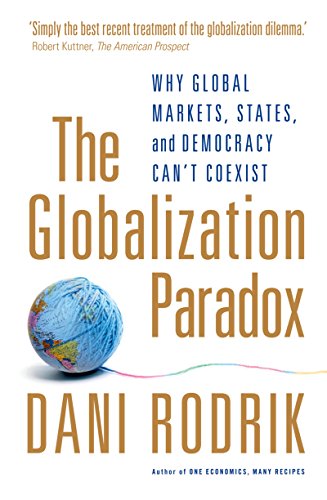
Amazon link

An economist who can write well and who knows that markets require a plethora of institutions to make them work. Harder globally than nationally.

Unfailing interesting, and passes the 'ring of truth' test.

---

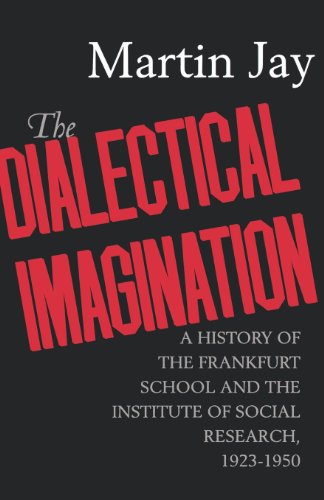
Amazon link

Razib Khan spoke warmly of this book, although warning it was heavy going. Really??

Martin Jay documents that intellectual commune of mostly German-Jewish left-intellectuals trying to figure out why the proletariat stubbornly refused to deliver the promised utopia-bringing revolution.

Like most people with a Marxist background, I tangentially knew about the Frankfurt School - especially via Marcuse - but never got around to actually engaging with Critical Theory.

---


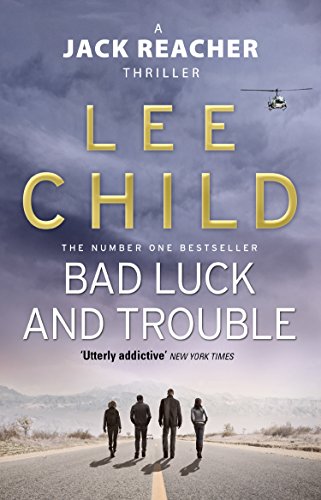
Amazon link

Flagged critically as one of the better Jack Reacher thrillers, this seemed ideal to read to Clare after dinner.

As well as having a Jack Reacher haircut I share his interest in the blues.


I was sufficiently motivated to consider the best electric blues rendition of "Born under a Bad Sign" and listened carefully to Cream's famous version. But John Bonamassa is my favourite.

---

"Supermind" is on order!

Tuesday, April 11, 2017

Diary: my reading stack

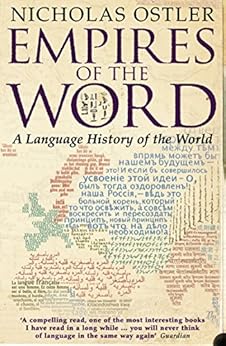
Amazon link

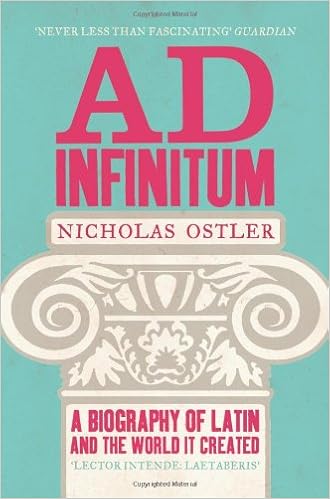
I was looking for something explaining the history and evolution of the world's major languages - a book which was consistent with ancestral population genomics and the historical record. Nicholas Ostler does a fine job for written languages over the last 5,000 years.

On the strength of that I ordered (for both Clare and myself):

Amazon link

which is due to arrive today.

---

I recently reread Quantico, a testament to the power of Greg Bear's writing when he really cares about the subject matter. It's anthrax-based biological warfare - a revenge attack against the world's great religions. The main protagonist is an Americanised Muslim, sympathetically-drawn, and there is no preachiness to speak of. An exciting and chilling narrative.

On the strength of that I'm now in the middle of his follow-up.

Amazon link

---

After immersing myself in Bukharin's life, I was naturally curious about Stalin.

In my youth I was educated in the Trotskyist tradition, which sees Stalin as a malevolent dullard who broke with Marxist principle in a murderous struggle for absolute power.

On the other hand ... he did preside over the crash-industrialisation of Russia in the 1930s and arguably did ensure allied victory in the second world war. Would Bukharin's or Trotsky's policies really have worked better, given the objective situation?

I'm no longer so sure.

I selected this biography after carefully reviewing the three or four major candidates, looking for an author without too many moralistic preconceptions or an overt agenda. The book arrives tomorrow and I hope for the best.

Amazon link

---

And finally, I'm waiting for the arrival of James Hogan's classic pulp SF novel, which I first read more than thirty years ago.

Amazon link

I mentioned "The Genesis Machine" recently in this post.

Saturday, February 11, 2017

Diary: snow + books + chatbot backstory

We last had snow here back in December 2010 (when it was heavy). This morning only the lightest dusting .. and as I write, it's gone.

A light dusting of snow in our garden this morning
---

This new book by Dalton Conley and Jason Fletcher should be arriving today.

Amazon link

Expect a review in due course if it's any good.

Update: it's now arrived and I've had a peek. The authors are both sociology professors, which rings alarm bells. And they have an agenda. They're here to defend the standard social science model against the unsettling results of recent DNA sequencing programs and GWAS (genome-wide association studies). Their idea is to make the most minimal concessions to evidence while still preserving the traditional social-sciences advocacy-based value system. So races don't exist, racial genetic differences in cognition don't exist, and most else which might disturb the liberal agenda of the irrelevance of genetics for outcomes is explained away.

Depressing.

[Update (Sunday): my first impressions were wrong. The book is both more honest and more erudite than had appeared from a first skim. The authors may be billed as sociologists but they are both genetics research practitioners. Once you have absorbed the theory and methodology, it's harder to be agenda-driven - if you're honest. I think a review will be in order once I've finished.]

[Update (Monday): Finished. It was as my first impressions. A sophisticated attempt to save the SSSM from those pesky geneticists. Sophistry rules: don't waste your money. Review here.]

---

Genetics, especially human genomics, is the one area of contemporary science most at odds with prevailing western ideology. Most of the time this didn't matter - you can believe whatever you like if it has no practical consequences: in fact most human beliefs are like that.

But with emergent technologies for DNA sequencing, embryo selection and genome-editing, the science soon will matter. You will be able, in principle, to improve attributes (such as the health, emotional stability and intelligence) of your children. The issues will be regulation. cost and your desire to do so.

I anticipate, with no joy, decades of screaming hysteria.

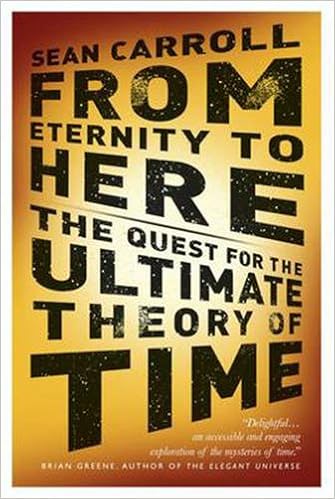
I'm also working my way through Sean Carroll's book on entropy and the 'Past Hypothesis',


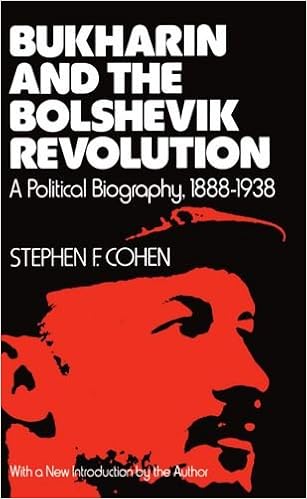
and Stephen Cohen's excellent biography of Bukharin,


not to mention Scott Bakker's 'Prince of Nothing'.


It's hard to timeshare: particularly when one is programming.

Incidentally, just as it is said that no-one feels hunger pangs when stepping out of a plane to do a parachute jump, an afternoon programming tends to obscure the fact you've skipped lunch. Just over 68kg this morning (10st 10.4lb) as the abdominal bulge recedes somewhat.

I'm pleased.

---

Just a short note-to-self about the chatbot stuff. The next thing (after the recent Eliza-style vacuity) is to capture the 'aboutness' of conversation. In chatting, each conversational partner brings some backstory to a discussion.

The essence of being an effective chatbot is:
  1. Manage a dynamic back-story of your own,
  2. Engage with the backstory of your human conversational partner.
If the chatbot is a cat, the backstory can be quite constrained - for example, nocturnal adventures in the garden with other cats, badgers, voles, birds, food and vomiting. I was looking at Peter Norvig's GPS reconstruction (previously discussed here) as a possible route to writing a dynamic simulation model.

The various entities I mentioned (cats, badgers, voles, ..) should have actions which require their preconditions in the garden knowledge-base (KB) to hold, and which then assert their post conditions in the next KB iteration. Make actions probabilistic and you've got an interesting simulation.

GPS doesn't quite work in this forward-chaining mode so it's not a case of just adapting his existing code. But the Eliza pattern-matching engine can be the reusable heart of it.

Monday, August 24, 2015

Books

The rain comes down and I retreat into books.

---

You can't hurt a hammer but we have a society which prevents cruelty to animals. Could you hurt a computer running a suitable program? I read "Consciousness and the Brain" by Stanislas Dehaene hoping for some illumination (if that isn't too subjective a stance).

The Global Workspace of Consciousness

Dehaene is an experimental neurologist, adept with fMRI scanners and EEGs. His book promotes the Global Workspace Theory of consciousness, a two layer model where primary sensory and motor processing is done by local subconscious neuron modules, while consciousness resides in higher-layer cortical modules characterised by long-range neural structure and 'global activation'.

He describes lots of experiments.

Dehaene is an interesting, influential and compelling writer. I can't say I was surprised by anything he said but he provided detail and texture. Degeneration in the cortex and/or lack of cortical activation leads to a kind of fade-out of consciousness, seen particularly in dementia. Perhaps this is reassuring.

The 'hard problem' alluded to in my opening remarks (subjective experience, eg the sensation of pain) is completely unaddressed by all this brain surveillance and modelling. Even the fact that it remains totally mysterious is mysterious.

---

Novels can bring the past to life. If you ask me about mid-19th century Russia I might give you a picture of a stagnant and antiquated society with brutish peasants and a proto-working class, a decadent aristocracy and an anaemic and stillborn middle-class of deeply-frustrated professionals. That's the picture I got from reading Lenin and Trotsky.

But I have since read Dostoyevsky and I really know better.

Adrian recommended "Fathers and Sons" by Ivan Turgenev. Here's an extract from the Wikipedia plot summary.
"Arkady Kirsanov has just graduated from the University of Petersburg and returns with a friend, Bazarov, to his father's modest estate in an outlying province of Russia. His father, Nikolai, gladly receives the two young men at his estate, called Marino, but Nikolai's brother, Pavel, soon becomes upset by the strange new philosophy called "nihilism" which the young men advocate.

...

The two young men remain at Marino for a short time, then decide to visit a relative of Arkady's in a neighboring province. There they observe the local gentry and meet Madame Odintsova, an elegant woman of independent means who invites them to spend a few days at her estate, Nikolskoe.

At Nikolskoe, they also meet Katya, Madame Odintsova's sister. Although they remain for only a short period, both characters undergo significant change: their relationship with each other is especially affected, as they both find themselves drawn to Madame Odintsova. Bazarov in particular finds this distressing because falling in love goes against his nihilist beliefs. Eventually, he announces that he loves her. She does not respond to his declaration, and soon after, Arkady and Bazarov leave for Bazarov's home.

... They leave almost immediately and return to Arkady's home.

Arkady remains for only a few days, and makes an excuse to leave in order to go to Nikolskoe. Once there, he realizes he is not in love with Odintsova, but instead with her sister Katya. Bazarov stays at Marino to do some scientific research, and tension between him and Pavel increases.

Bazarov enjoys talking with Fenichka and playing with her child, and one day he gives her a quick kiss. Pavel observes this kiss and ... challenges Bazarov to a duel. Pavel is wounded in the leg, and Bazarov must leave Marino. He stops for an hour or so at Madame Odintsova's, then continues on to his parents' home. Meanwhile, Arkady and Katya have fallen in love and have become engaged.

At home, Bazarov cannot keep his mind on his work and while performing an autopsy fails to take the proper precautions. He cuts himself and contracts blood poisoning (septicemia). On his deathbed, he sends for Madame Odintsova, who arrives just in time to hear Bazarov tell her how beautiful she is. She kisses him on the forehead and leaves; Bazarov dies from his illness the following day.

..."
Bazarov is the centre of the novel, a charismatic and highly intelligent young man bristling with arrogance, conceit and more than a touch of sociopathy. The programme of the nihilists, an offshoot of the western european rationalist enlightenment, was to take nothing on authority. Everything was to be rethought from rational first principles.

This intellectual 'zero-based budgeting' doesn't work too well with entrenched and reactionary power structures (cf Dostoyevsky's Demons which is winging its way to me via Amazon as we speak) and is profoundly mistaken about human relationships, traditions and culture. It's really pure 'blank slateism' showing that the most contemporary of ideologies were already in circulation in 1860s provincial Russia. The remaking of society along rational lines rarely works out well.