Thursday, December 19, 2013

In which our house is finally fixed ..

The scaffolders came yesterday to remove same, followed by the roofers from S&S Hancock (who have project managed) to clean up and make good.

It's good to get our house back. The rendering is in cement and will need to be painted at some point.

New roof tile; new cladding

Wells has its traditional Christmas scenes - I particularly like the owl (if you can drag your attention from Wells Cathedral).

The owl to the left

I wonder what the elves and reindeer from Amazon will bring today?

'Soldier, Ask Not' by Gordon R. Dickson

From the Wikipedia entry.
"Soldier, Ask Not is part of Dickson's Childe Cycle series, in which mankind has reached the stars and divided into specialized splinter groups. It takes place at roughly the same time as Dorsai! and a few characters appear in both books. Themes from the rest of the cycle are echoed here, particularly the actions of a key person, like Paul Formain, Cletus Grahame and Donal Graeme in the other novels, who can drastically affect history due to his ability to analyze and influence the behavior of others. Unlike the other protagonists, however, Tam Olyn is no hero."
In my naive youth I first read this second novel in the Dorsai trilogy immediately after 'Tactics of Mistake'. I was expecting new military exploits from the ultra-smart and super-efficient Dorsai mercenaries. Boy, was I disappointed!

The story is told in first-person, Tam Olyn's point of view, and what a nasty piece of work he is: arrogant, selfish and manipulative. He takes a strong dislike to The Friendlies, Calvinist inhabitants of two poor worlds who hire themselves out as cannon fodder, and determines to destroy them. In my ignorance I figured we were seeing way too much of faith-ridden bigots (actually Olyn's view) and not nearly enough Dorsai. (This would be rectified in the third volume, Dorsai!, of course).

But what did I know?

The brilliance of 'Soldier Ask Not' is its careful portrayal of a man warped by his upbringing who causes great damage. But there are people around Olyn who can 'nudge' him in the subtlest of ways, bring him to his own personal crisis and show him the possibilities of redemption. If 'Tactics of Mistake' is centred on military doctrines, then 'Solder, Ask Not' uses the paradigm of Jungian psychotherapy. The author's brilliance is in making the character-evolution of Tam Olyn completely compelling.

The other preoccupation of the book is its penetrating analysis of the power, attractiveness and danger of faith. In the best case wholly admirable in giving form to duty and self-sacrifice, faith can also be a motor for atrocity. Since the book was written, we've become all-too-familiar with the latter case; in 'Soldier, Ask Not' we are immersed in both sides to our greater insight (and that of the main protagonist).

I mentioned in a previous post the importance of dialectics in understanding the Childe Cycle. Dickson's model of a full-spectrum Earth culture fracturing into superior but partial 'splinter cultures' under the impact of interstellar travel (thesis-antithesis) and seeking a resolution in a higher unity (synthesis) is one example. Another is the battle for Olyn's soul: his malevolent and evil initial persona creating forces which react against his destructive actions (thesis-antithesis) which could lead finally to a transformative resolution (synthesis).

Tuesday, December 17, 2013

Dialectics and the Dorsai

Somewhere Marx wrote that the king believes his subjects bow to him because he's king; in fact it's the other way round - it's because people bow to him that they become subjects and he becomes king.

This simple example is to Marxism as the double-slit experiment is to the essence of quantum mechanics.

Most people - ordinary folk, politicians and academics - look at a society as a nested set of institutions: parliament, government, the legal system, the armed forces, the health system and so on. If you think this way you can never be a revolutionary.

The Marxist looks at these 'structures' and sees only recurrent patterns of human behaviour. If one day people were to behave differently, all those 'structures' would vanish like early morning haze: the king would be revealed as just another bloke with a back-story. Think about it.

The Marxist holds just such a vision of an alternate organising pattern for society, one which will manifest in the overcoming of this one. And so to the famous Hegelian dialectic: thesis, antithesis, synthesis.

As the terms suggest, for Hegel the thesis is a founding idea; the antithesis a rebuttal which seeks out the contradictions in the original; and then through a process of dialogue and struggle emerges the synthesis - something genuinely new, deeper and more profound.

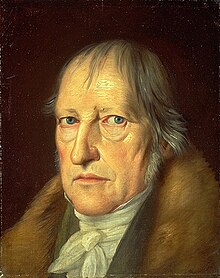
Georg Wilhelm Friedrich Hegel

Marx thought that Hegel had this upside down as regards history. For Marx the thesis was that set of social processes we call capitalism; the antithesis was the revolutionary response invoked by the failures ('contradictions') of capitalism - such things as the revolutionary party, workers' councils (soviets), the general strike; the synthesis - emerging through the mass, self-organised revolution - was a new kind of society, post-capitalist and in transition  to communism.

Marx, Lenin and Trotsky all stressed the term 'dialectic materialism' as a synonym for Marxism; their opponents accused them of mysticism. Yet without seeing the 'structures' of the present as merely contingent shadows of conventional behaviour, there is no possibility of envisioning or bringing about a genuinely new kind of society. To reject dialectics was to reject the revolution, and to accept that the king was the king because he was king - end of story.

Why do I tell you all this? Because it's going to feed into my review of Gordon R. Dickson's second Dorsai volume, 'Soldier, Ask Not'. The author isn't a Marxist, far from it, yet he has a similar overarching concept of human history and destiny. Dickson's driving force is rather mystical - a Jungian concept of the collective unconscious - but dialectical the vision certainly is.

More here.

Oh, and Marxism? E. O. Wilson had it right.

Monday, December 16, 2013

'Mass in B minor' - J. S. Bach

Bach wrote the first version of this as a job application in 1733 (from Wikipedia).
"On February 1, 1733 Augustus II, Elector of Saxony, died. Five months of mourning followed, during which all public music-making was suspended. Bach used the opportunity to work on the composition of a Missa, a portion of the liturgy sung in Latin and common to both the Lutheran and Roman Catholic rites. His aim was to dedicate the work to the new sovereign Augustus III, a Catholic, with the hope of obtaining the title "Electoral Saxon Court Composer".

Upon its completion, Bach visited Augustus III and presented him with a copy of the Missa, together with a petition to be given a court title, dated July 27, 1733; in the accompanying inscription on the wrapper of the mass he complains that he had "innocently suffered one injury or another" in Leipzig. The petition did not meet with immediate success, but Bach eventually got his title; he was made court composer to Augustus III in 1736."
The full work was completed just before Bach died.
"In the last years of his life, Bach expanded the Missa into a complete setting of the Latin Ordinary. It is not known what prompted this creative effort. Wolfgang Osthoff and other scholars have suggested that Bach intended the completed Mass in B minor for performance at the dedication of the new Hofkirche in Dresden, which was begun in 1738 and was nearing completion by the late 1740s. However, the building was not completed until 1751, and Bach's death in July, 1750 prevented his Mass from being submitted for use at the dedication. Instead, Johann Adolph Hasse's Mass in D minor was performed, a work with many similarities to Bach's Mass (the Credo movements in both works feature chant over a walking bass line, for example).

Other explanations are less event-specific, involving Bach's interest in "encyclopedic" projects (like the Art of Fugue) that display a wide range of styles, and Bach's desire to preserve some of his best vocal music in a format with wider potential future use than the church cantatas they originated in."
The Beaumont Singers and Orchestra were excellent last night: my favourite parts of the work are the quieter sections, where the violins and counterpoint base are in dialogue with the soloists.

The poster

The Orchestra with Singers


Here is the Mass in B minor, starting with the Kyrie Eleison - the Capella Amsterdam recorded at the Jacobi church, Utrech.

Thursday, December 12, 2013

"Tactics of Mistake" - Gordon R. Dickson

Just reread this military-SF classic, the first volume of the justly-famous Dorsai trilogy. And this time I read a little more analytically.

The novel tells the story of Cletus Grahame,  initially a tactics officer with the "Allied" forces, later the leader of the Dorsai mercenaries in a great conflict between the colony worlds and the Alliance-Coalition forces of an imperialist Earth. See the plot summary here.

The story weaves a number of strands:

  • the personal conflict between Grahame and Coalition leader deCastries;
  • the claustrophobic atmosphere of political and military culture within which most of the action plays out - in this it is rather like Frank Herbert's Dune;
  • Cletus's romantic entanglement with headstrong and idealistic Melissa Khan - a classic ENTJ-ENFJ engagement; 
  • the unique take on military tactics and strategy which Grahame deploys to outwit his opponents again and again;
  • the mystical underpinning of the Exotics, with their Buddhist-like sense of destiny.

With a critical eye,  it seems impossible that Grahame's informed military guesses would turn out so consistently accurate,  while the plot depends upon them so doing. Yet the author has not conjured Cletus's doctrines from thin air - his Dorsai troops execute as classic special forces.

The novel's brilliance lies in the pacy, balanced writing together with interesting and plausible characters, the reader's inability to second-guess Grahame's brilliance plus a natural sympathy with the essential rightness of his cause.

Sunday, December 08, 2013

The ghost of cricket future

It was in 2015, after the first powered exo-skeletons were permitted, that fast bowling began to regularly exceed 200 mph.

Batsmen increasingly resembled medieval knights in their kevlar-titanium armour, but their own powered augmentation meant they could run between the wickets even faster than before.

Soon, test match cricket became too fast for unaided human vision to follow and Sky resorted to broadcasting in ultra slo-mo.

A crisis, however, ensued when both bowling and running exceeded Mach one and stadiums had to be evacuated due to the dangerous shock waves. There was a proposal to move the 2020 test to the vacuum of the Moon, but this was rejected as making sledging too difficult ..

Friday, December 06, 2013

Christmas Cards

Well, that's the Christmas cards sent. I still remember the ancient injunction to "post early for Christmas" and God knows we're keeping Amazon busy enough. And then, to be honest,  it's a bit of a chore isn't it? Best to get it over with.

I can't avoid a feeling though that I'm a bit early. It is only the sixth today. Perhaps the recipients will scratch their heads, look at the date and murmur "What an idiot!"

Yeah,  I guess that could happen ...

Thursday, December 05, 2013

"Singularity Sky" - Charles Stross

Charles Stross is comically left-wing in his private writing (his blog). His novels, however, are imaginative, sophisticated deconstructions of received wisdom on both left and right .. and so to 'Singularity Sky'.

 I had a notion that this was going to be a black hole story - some orbital plot. But that's just my physics prejudice: the singularity here is that of AI and information transcendence - specifically what happens when post-singularity culture meets a rather nasty stalinist police state head-on.

 Leon Trotsky makes a lightly-disguised appearance as the domestic revolutionary leader but the heroes (Martin and Rachel) are Culture-like representatives of future-modernity. As in "Halting State", love soon blooms - I'm beginning to see a pattern here.

Wednesday, December 04, 2013

"Parasite Positive" - Scott Westerfeld

So here's a review of "Parasite Positive" by Scott Westerfeld excerpted from here:
The book follows nineteen year old Cal, as he is on the tail of Sarah, the last of his girlfriends he has infected with the parasite (while not a full blown vampire he is a carrier). Once he has caught her, he can go after his progenitor, Morgan, the girl he lost his virginity to and caught it from.

You see, Cal now works for the Night Watch, and it’s their job to keep New York safe from rabid vampires and stop the spread of the disease.

Only this is much, much bigger that just that; something even worse than an out-break of blood suckers is lurking beneath the New York streets, and secrets centuries old are about to come to the surface, and Cal is going to be right in the middle of it.

I really liked Cal as a character and his developing relationship (and cluelessness) with Lacy a trainee reporter he meets in his search for Morgan, and while this is Cal’s show in regards starring roles, the rest of the supporting cast do an admirable job in keeping the plot moving and dialogue zippy and entertaining

We also get to learn more about parasites than I could ever hope to want to know. Each chapter is intermingled with sections where Cal explains about various parasites, and their particular foibles and reasons for existence. These sections are not just there to make your skin crawl – and they most certainly will do that! – but Cal is using them to illustrate the reasons for the existence of Vampires, and why they are the good guys.

All, in all an excellent read, your skin will crawl and your blood will race, and the next time your cat looks oddly at you, you may just shudder a little!

Scott is a natural SF-thriller writer and this is perfectly pitched for the male adolescent audience (what we call 'young adult'). So having admitted that I enjoyed the book and that the pages turned perfectly adequately, let me make a couple of criticisms.

1. The setting, Manhattan, (and frequently underground Manhattan) is rather claustrophobic - even a writer of Westerfeld's talent struggles to keep yet another case of the hero being chased through dank and dark tunnels fresh and interesting.

2. More importantly, the central premise of the novel is hard to take seriously. Without too many spoilers, we are led to believe that vampirism has something to do with defending humanity against nameless horrors from the deep, barely remembered in ancient legends. The thing is, those evil things just aren't scary enough. Anything a souped-up vampire could do, a tooled up special-forces team could easily surpass. Technology trumps raw evolution.

However, if you can manage to suspend your disbelief, the story is well told and fun.

NB: there is a 'sequel' but reviews suggest that it adds little value.

Our roof problem escalates

As mentioned here, we are in the process of having the front (gable-end) roof fixed. Today it turns out that fifty years ago the original builders used the wrong kind of sand to mix the cladding: it has turned into flimsy tat, incapable of holding even its own weight. It will all have to be replaced - a day or two's work has turned into over a week.

We were going to repaint the house at some point so our cognitive frame for this new paradigm is that it's early additional investment rather than a project spiralling into the heart of darkness.

We thought it was straightforward ...

Until the cladding started to fall off.

This Confucian refugee from Alice in Wonderland spooked us ...

And then this cat appeared, overlooking our back garden ...