Thursday, November 16, 2017

I am conflicted about AI-based law enforcement ...

From The Times today (Gang war fear after Romanian sex trafficker Sorin Serbu is killed):

Sorin Serbu - Romanian gangster
"The murder of a powerful Romanian gangster threatens to prompt an underworld war to control a lucrative sex trafficking market.

Sorin Serbu was beaten to death by masked men carrying baseball bats two weeks after he is said to have been involved in a fight with a rival Romanian gangster.

Serbu, 36, was left in a pool of blood outside the Global Bar in Ilford, east London, in the early hours of Sunday after a music gig. Police have confirmed that they are looking for five attackers. He was taken to an east London hospital but died of his injuries. The incident was reported to police by ambulance workers at 2.48am.

The gangster had a history of running drugs and prostitutes into Europe and made millions of euros while based in Italy, according to The Sun, which quoted a Romanian justice source saying: “There may be more bloodshed before this is over. Serbu tried to muscle in and imported around 100 prostitutes. The arrival of competition like that was always going to rock the boat.”

The vice trade in Ilford and neighbouring Redbridge has long been dominated by Romanian and Albanian gangsters. The problem has become so serious that Romanian police officers have been brought in on secondment to help tackle the gangs.

Locals have grown increasingly irate over the street trade and kerb crawling, with complaints about sex in gardens and used condoms strewn along a main road. Officers have seized vans belonging to the gangs and found mattresses in the back.

It is thought that Serbu, from Braila, eastern Romania, had relocated from Rome, his last base for drug and sex trafficking, after coming under pressure from Italian police."

Ilford used to be a relatively respectable area of east London. Not so much now.

Locally-ubiquitous CCTV and AI-based facial-recognition and incident-monitoring would surely help the authorities in dealing with this blight. What could possibly go wrong?

And then I read this (from Marginal Revolution):
"René Carmille  was a punch card computer expert and comptroller general of the French Army, who later would head up the Demographics Department of the French National Statistics Service. As quickly as IBM worked with the Nazis to enable them to use their punch card computer systems to update census data to find and round up Jewish citizens, Rene and his team of double-agents worked just as fast to manipulate their data to undermine their efforts.

The IEEE newspaper, The Institute, describes Carmille as being an early ethical hacker: “Over the course of two years, Carmille and his group purposely delayed the process by mishandling the punch cards. He also hacked his own machines, reprogramming them so that they’d never punch information from Column 11 [which indicated religion] onto any census card.” His work to identify and build in this exploit saved thousands of Jews from being rounded up and deported to death camps.

Rene was arrested in Lyon in 1944. He was interrogated for two days by Klaus Barbie, a cruel and brutal SS and Gestapo officer called “the Butcher of Lyon,” but he still did not break under torture. Rene was caught by the Nazis and sent to the Dachau concentration camp, where he died in 1945."
I remember how the Nazis demanded that Jewish authorities in the ghettos of occupied Europe should render administrative assistance in documenting their Jewish inhabitants. The more efficient the Jewish leadership, the more Jews got deported to the depth camps.

Administrative chaos saved lives, lots of them. The Greeks and Romans understood the dilemma.

Q. "How do I get into Marxism?"

Marx is newly fashionable again, but it's a daunting task to take on the four volumes of Capital. And in most fields you don't retrace the founder's tortuous strugglings. In physics, students don't read Newton's or Einstein's original works: they read textbooks.

Marx wrote about what he knew, which was the inner dynamics of capitalism as a mode of production. A good start is "Understanding Capital" by Duncan K. Foley (search "understanding capital foley pdf").

Amazon link


Foley concentrates on the economics, is very clear and writes in a modern paradigm cross-referencing contemporary ideas in economics. The book is thematically-organised across Marx's economic work and is short (170 pages).

Amazon link

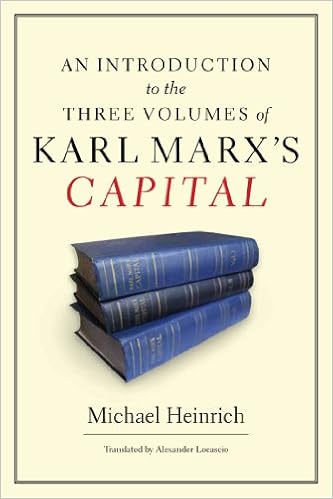
As a complement, there's Michael Heinrich's "An Introduction to the Three Volumes of Karl Marx's Capital" - this link is to the online PDF or search "marx capital heinrich pdf". It's similarly short (224 pages), well-written and conceptually clear. Heinrich is more focused on the actual contents of each volume. He also writes about topics Marx intended to address but never got around to, including the theory of crises, the state and communism itself.

Marx wrote very little about post-capitalist social organisation. Without data this would have been no more than speculation. It was down to Lenin, Trotsky, Stalin, Mao and many others to theorise later developments - in ways I would argue were profoundly mistaken.

Wednesday, November 15, 2017

Rural life

Clare buys faggots this morning at Wells Market

Until you have tasted them, you have no idea how delicious this west-country delicacy actually is.

---

My copy of "The Jewish War" arrived today (by Flavius Josephus).

Amazon link

I'm already much educated simply by reading the historical introduction. I feel that my entire life has now been revealed as an attempt to catch up with Helen Dale - (cf. her exciting bio).

Tuesday, November 14, 2017

Morbid phenomena of the most varied kind

There's a curious sense of a world marking time. Politics in America, the UK and Europe sounds more than usually confected. Bogus 'outrage' over "Russian intervention in elections", theatrical tub-thumping over North Korea, tedious shadow-boxing over Brexit.

It's all shallow - elite protagonists going through the motions.

Here's an extract from that excellent essay which is Chapter 11 of Michael Heinrich's "An Introduction to the Three Volumes of Karl Marx's Capital":  State and Capital (p. 208).

PDF link

"A decisive shortcoming of the conception of the bourgeois state as an instrument in the hands of the capitalist class is that it presupposes a “ruling” class that is both unified and capable of acting, as well as a clearly defined class interest that simply needs an instrument for its implementation.

Neither assumption is self-evident. The “economic ruling class” in capitalism consists of capitalists with widely varying, even opposing interests. There is a common interest in the maintenance of the capitalist mode of production, but if the system is not threatened by a revolutionary movement, then this interest is far too general to serve as a guideline for “normal” state action. The interests that determine the state’s activity are not just sitting around waiting to be implemented, as is assumed by the instrumentalist conception. Rather, these interests must first be constituted.

All of the state’s measures are contested, whether the issue is the concrete organization of the legal system, the securing of the material conditions of accumulation, or the type and extent of welfare state benefits.

As a rule, every measure brings disadvantages for some capitalists (sometimes even for all capitalists) and advantages for others (or fewer disadvantages than for the rest). Advantages expected - but not certain - over the long term are pitted against immediate disadvantages.

The issue of what the general capitalist interest consists in, which challenges the state should react to and how - all that has to constantly be ascertained. State policies presuppose a constant ascertainment of the general interest and the measures for its implementation."
We're witnessing the terminal decay of the neoliberal ideological project amid the rising resentment of significant strata of society who are 'just not happy with the way things are going' - who yearn for vague, inchoate change.

I see genuine confusion within the elite as to optimal policy going forwards.

This seems very Gramsci:

Amazon link

“The crisis consists precisely in the fact that the old is dying and the new cannot be born; in this interregnum morbid phenomena of the most varied kind come to pass.”
It's hard to see a way out without some kind of multi-year social and economic crisis.

"Why the Culture Wins" - Joseph Heath

A Culture Orbital
"Many years ago, a friend of mine who knows about these sorts of things handed me a book and said “Here, you have to read this.” It was a copy of Iain M. Banks’s Use of Weapons.

I glanced over the jacket copy. “What’s the Culture?” I asked.

“Well,” she said, “it’s kind of hard to explain.” She settled in for what looked to be a long conversation."
Thus starts this appreciation of Iain M. Banks by Joseph Heath, Professor in the Department of Philosophy at the University of Toronto. It's a long and interesting essay which for me flags The Culture as the literary expression of the culmination of neoliberalism (hedonistic individualism), not of the utopian-communism which Banks claimed for it.

Heath writes:
"This is in fact why Horza, the protagonist of Consider Phlebas, dislikes the Culture. The book is set during the Idiran-Culture war, and is unusual among the Culture novels in that its protagonist is fighting on the side of the Idirans, and therefore provides an outsider’s perspective on the Culture. The Idirans are presented as the archetype of an old-fashioned functional culture – their political structure is that of a religiously integrated, hierarchical, authoritarian empire.

The war between the Idirans and the Culture is peculiarly asymmetrical, since the Culture is not an empire, or even a “polity” in any traditional sense of the term, it is simply a culture. It has no capital city, or even any “territory” in the conventional sense.

(“During the war’s first phase, the Culture spent most of its time falling back from the rapidly expanding Idiran sphere, completing its war-production change-over and building up its fleet of warships… The Culture was able to use almost the entire galaxy to hide in. Its whole existence was mobile in essence; even Orbitals could be shifted, or simply abandoned, populations moved. The Idirans were religiously committed to taking and holding all they could; to maintaining frontiers, to securing planets and moons; above all, to keeping Idir safe, at any price.”)

Horza is not an Idiran, but rather one of the last surviving members of a doppelganger species. The question throughout the novel – and the question put to him, rather forcefully, by the Culture agent Perosteck Balveda – is why he is fighting on the Idiran side, given that they are, rather self-evidently, religious fanatics, with an exclusive and zealous conviction in the superiority of their own species.

(“It was clear to [the Idirans] from the start that their jihad to ‘calm, integrate and instruct’ these other species and bring them under the direct eye of their God had to continue and expand, or be meaningless.”)

The Culture, by contrast, is all about peaceful coexistence, tolerance and equality. So why would a member of an otherwise uninvolved third species choose the Idiran side?

The difference, for Horza, is that the Idirans, for all their flaws, have a certain depth, or seriousness, that is conspicuously lacking in the Culture. Their actions have meaning. To put it in philosophical terms, their lives are structured by what Charles Taylor refers to as “strong evaluation.”

(Indeed, the inability of the Culture to take the war that it is fighting seriously serves as one of the most consistent sources of entertainment in all the Culture novels, as reflected in ship names, which are generally tongue-in-cheek such as: What are the Civilian Applications? or the Thug-class Value Judgement, the Torturer-class Xenophobe, the Abominator-class Falling Outside the Normal Moral Constraints, etc.)

Consider Weber’s famous diagnosis of modernity, as producing “specialists without spirit, sensualists without heart.” In the Culture, the role of the specialist has been taken over by the AIs, leaving for humanity nothing but the role of “sensualists without heart.”

Thus the chief attraction of the Culture is the promise of non-stop partying and unlimited sex and drugs. (Genetic and surgical modification provide Culture members with the ability to make almost unlimited changes to their bodies, which typically include enhanced genitalia that allow them to experience intense, extended, and repeated orgasms, as well as the installation of specialized glands that produce a range of psychoactive chemicals, to dull pain, to produce euphoria, to remain awake, or to produce almost any other feeling that might seem desirable.)

One can see then why Horza might dislike the Culture. On the surface, his complaint is that they surrendered their humanity to machines. But what he really wants is a culture that can serve as a source of deeper meaning, which is the one thing that the Culture conspicuously fails to provide – on the contrary, it turns everything into a joke.

The Culture may be irresistible, but for essentially stupid reasons. (“Horza tried not to appear as scornful as he felt. Here we go again, he thought. He tried to count the number of times he’d had to listen to people – usually from third- or low fourth-level societies, usually fairly human-basic, and more often than not male – talking in hushed, enviously admiring tones about how It’s More Fun in the Culture… I suppose we’ll hear about those wonderful drug glands next, Horza thought.”)."

...

"There are a variety of developments that are associated with modernity. One of them involves a move away from ascribed toward achieved sources of identity. The idea is rather simple: in traditional societies, people were defined largely by the circumstances that they were born into, or their ascribed characteristics – who your family was, what “station” in life you were born to, what gender you were, etc. There were a strict set of roles that prescribed how each person in each set of circumstances was to act, and life consisted largely of acting out the prescribed role.

A modern society, by contrast, favours “choice” over “circumstances,” and indeed, considers it the height of injustice that people should be constrained or limited by their circumstances. Thus there is a move toward achieved sources of identity – what school you went to, what career you have chosen, who you decided to marry, and the lifestyle you adopt. “Getting to know someone,” in our society, involves asking them about the choices they have made in life, not the circumstances they were born into.

There are, of course, advantages and disadvantages to both arrangements. The advantages of choice, for people living in an achievement-oriented society, are too obvious to be worth enumerating. But there are disadvantages. Under the old system of ascribed statuses, people did not suffer from “identity crises,” and they did not need to spend the better part of their 20’s “finding themselves.”

When everything is chosen, however, then the basis upon which one can make a choice becomes eroded. There are no more fixed points, from which different options can be evaluated. This generates the crisis of meaning that Taylor associates with the decline of strong evaluation.

Human beings have spent much of their lives lamenting “the curse of Adam,” and yet work provides most people with their primary sense of meaning and achievement in life. So what happens when work disappears, turning everything into a hobby?

A hobby is fun. Many people spend a great deal of time trying to escape work, so they can spend more time on their hobbies. But while they may be fun, hobbies are also at some level always frivolous. They cannot give meaning to a life, precisely because they are optional. You could just stop doing it, and nothing would change, it would make no difference, which is to say, it wouldn’t matter.

Now consider the choices that people have in the Culture. You can be male or female, or anything in between (indeed, many Culture citizens alternate, and it’s considered slightly outré to be strongly gender-identified). You can live as long as you like. You can acquire any appearance, or any set of skills. You can alter your physiology or brain chemistry at will, learn anything you like.

Given all these options, how do you choose? More fundamentally, who are you? What is it that creates your identity, or that makes you distinctive? If we reflect upon our own lives, the significant choices we have made were all in important ways informed by the constraints we are subject to, the hand that we were dealt: our natural talents, our gender, the country that we were born in. Once the constraints are gone, what basis is there for choosing one path over another?"
The life of a robin in the garden, or a cat in front of the fire, is not bereft of meaning just because neither will ever master calculus.

Humanity has spent millennia .. continues to spend the millennia .. in transforming its environment to remove the obligation to labour for survival. Yet all our instincts, our motivations, are to do with our abilities to deal with existential challenges, to survive, succeed, find a mate, reproduce and have grandchildren.

Absent such challenges such drives, emotions and goals flail on air: great achievements are no longer existentially-motivated but merely discretionary. All actions reduce to the playing of games.

Perhaps we become no more than pets of the Culture Minds. Perhaps we'll alter our genomes so we'll enjoy that. Perhaps our future technology-womb won't be brittle.

So many 'perhaps's.

---

We do actually know what happens, biologically-speaking, when you take a species and move it into an utterly benign environment: step forward the Dodo.

Things they don't tell you about exercise

From Dr Mark Porter today in The Times (emphasis added):
"The real risk [of cardiac arrest] occurs when you push yourself, as can happen in a competitive setting (the squash court) or, as I discovered at the weekend, when hiking up and down the Jurassic Coast with two physically fit daughters.

Older people with “hardened”, furred-up arteries are likely to develop chest pain (angina) if they over-exert, giving them a warning sign that they need to slow down. In advanced cases this can occur on the flat after walking a couple of hundred yards, but with minor narrowings the pain may be evident only 10 to 15 minutes into a cycle ride. If you try to push through the pain, the starved heart muscle beyond the narrowing can trigger a cardiac arrest. Sensible people stop.

More of a concern are silent “soft plaques” that coat the lining of the coronary arteries of otherwise outwardly healthy middle-aged and elderly people. These are like poached eggs covered in a thin crust, and the shearing action caused by the twisting motion the heart adopts when it is beating at very high rates can cause them to rupture, with catastrophic consequences.

The fatty pool (the yolk of the egg) is released into the narrow coronary artery, triggering a clotting reaction that can block blood flow, causing chest pain and starving the muscular heart wall (a heart attack or myocardial infarction). And if you are my age it is often not a matter of if you have some of these plaques, but how many.

This is the rationale behind wearing a pulse-rate monitor and capping your heart rate during exercise as you get older (see the formula below). This is one reason why I am sceptical of the trend for high-intensity workouts that require you to max out on a bike or treadmill in short blasts rather than go for a steady ride or jog for 20 minutes. In my opinion this type of interval training is highly effective but, for the over-50s, best limited to lifelong athletes."
Peta Bee continues:
"while couch potatoes face impending doom in the form of a raised risk of heart disease and diabetes, the aspirationally athletic are encountering their own set of health issues — injuries that threaten to cause long-term harm if left untreated.

Hardcore workouts and high-intensity interval training sessions have contributed to a shift in our perception of what is required to get fit. A survey of more than 4,000 people from across the UK, commissioned by Bupa health clinics, reveals that more than a quarter of gym-goers assume that they have had a good session only if they feel pain during or after it.

Pushing through the pain barrier is taking its toll, with 4.5 million or 43 per cent of people in training for a fitness challenge getting injured in the process; 60 per cent of those who encountered a strain or pulled a muscle or worse never sought treatment and 22 per cent carried on regardless.

...

Lifting weights

Common problem: Haemorrhoids

Prevention

A trend for lifting heavy weights has resulted in an unexpected rise in haemorrhoids, or piles, among gym users. “Weight training is a common cause as people often hold their breath while lifting weights, which forces the air in your lungs downward, putting pressure on your internal organs and the veins in your rectum,” says Dr Amyn Haji, a consultant colorectal surgeon at the Whiteley Clinic in London. “As a result, the veins near your anus become swollen and are forced outside the body, which can cause uncomfortable and sometimes painful haemorrhoids.”

Treatment

In some cases haemorrhoids disappear within a few days. “However, I’d recommend seeing a qualified personal trainer to help you perfect your breathing technique while weight training,” Haji says. “To prevent it from worsening, avoid weight lifting if you have already developed the condition, drink plenty of fluids and buy some over-the-counter medicines — there’s a variety of creams, lotions and gels available to treat the problem.”
I had to stop weight training at the beginning of August as I was experiencing pain in my elbow joints (both arms) and in my forearm tendons. You know it's bad when you have problems lifting a mug of coffee, or using the loppers in the garden (yesterday).

Happier days. I started home weight-training in September 2016 - (link)

It's now November 2017, and the last three months have resulted in essentially no improvement, despite my having ceased lifting. I self-diagnosed as RSI and expect a long period of slow recovery. I was lifting at ridiculous levels for someone with no real history: squats at 28 kg, biceps curls at 23 kg. Idiotic at age 66.

Sunday, November 12, 2017

A high-tech capitalist Imperium in 31 AD

Amazon link

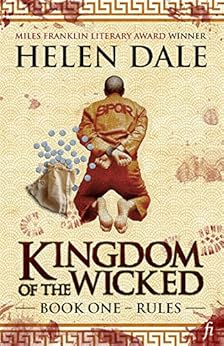
I should say 784 ab urbe condita: it seems unlikely that Christianity is going to end up on top when the Roman army is driving around Jerusalem in armoured cars, toting assault rifles. And where a certain Yeshua Ben Yusuf will be on trial for terrorism.

Helen Dale explains her thinking:
"What struck me at once was the attack on the moneychangers in the Jerusalem Temple. All four Gospels record it, and their combined accounts do not reflect well on the perpetrator’s character.

Jesus went in armed (with a whip) and trashed the place, stampeding animals, destroying property and assaulting people. He also did it during or just before Passover, when the Temple precinct would have been packed to capacity with tourists, pilgrims, and religious officials.

I live in Edinburgh, a city that has many large festivals - religious and secular. The thought of what would happen if someone behaved similarly in Princes Street during Hogmanay filled my mind’s eye. This was not a small incident.

It seemed obvious to me that Jesus was executed because he started a riot. Everything else - the Messianic claims, giving Pilate attitude at trial, verbal jousting with Jewish religious leaders - was by the by.

Our system would send someone down for a decent stretch if they did something similar; the Romans were not alone in developing concepts of ‘breach of the peace’, ‘assault’ or ‘malicious mischief’. Those things exist at common law, too. ..."
Jesus was far from 'meek and mild'.
"Finally, instead of bringing Jesus forward in time and placing him in modernity, I thought to leave him where he was and instead put modernity into the past. What, I wondered, would have happened had Jesus emerged in a Roman Empire that had gone through an industrial revolution?

"Other things being equal, what would modern science and technology do to a society with very different values from our own? Would they react with the same incomprehension that we do when confronted by religious terrorism? ..."

"My industrial revolution has its origins when Archimedes survives the Siege of Syracuse in 212 BC and is treated to a Roman version of ‘Operation Paperclip’ (the American retrieval of scientists from defeated Nazi Germany). As a consequence he (or his students) develop calculus and a variety of practical military technologies. In keeping with Roman militarism, the first place the new technologies manifest themselves is in warfare. They then propagate...."
Of course, new technologies can be introduced under slavery, although without the dynamism which capitalist competition alone provides.
"Chattel slavery undermines incentives to develop labour-saving devices because human labour power never loses its comparative advantage. People can just go out and buy another slave to do that labour-intensive job. Among other things, the industrial revolution in Britain depended on the presence (relative to other countries) of high wages, thus making the development of labour-saving devices worthwhile.  ...

"Slavery—and its near relative, serfdom—have been pervasive in even sophisticated human societies, and campaigns for abolition few and far between. We forget that our view that slavery and slavers are obnoxious is of recent vintage. In days gone by, people who made fortunes in the slave trade were held in the highest esteem and sat on our great councils of state.

This truism is reflected in history: The Society for Effecting the Abolition of the Slave Trade met for the first time in 1787. It had just twelve members—nine Quakers and three Anglicans. And yet, in 1807, Parliament passed An Act for the Abolition of the Slave Trade.

The Quaker role in abolition was so vast it is difficult to overestimate. And in the context of both Christianity specifically and human religion more generally, the Religious Society of Friends is theologically distinct. Who in antiquity could perform the Quakers’ role?

In the end, I lit upon the Stoics, and came to admire many aspects of their philosophy when researching Kingdom of the Wicked. ... "
In the novel, slavery has recently been abolished. And now we turn to Jesus's trial itself.
"I have, however, gestured towards three characteristics of Roman law that set it apart from common law. First is the capacity of judges to investigate matters on their own motion. This explains why Pilate is able to source evidence independent of counsel, something considered most improper at common law.

Next is the importance Cornelius [the prosecutor] attaches to obtaining a confession, and the lack of procedural safeguards for the accused. To a Roman lawyer, a confession is the ‘Queen of Proofs’, while his common-law counterpart always suspects that confessions come about thanks to the judicious application of lengths of rubber hose.

Finally, there is the absence of a rule against hearsay, something that is peculiar to the common law."
I've just started the book: it's well-written and taut. We're centred around the Roman administration (central characters Pilate, his family and hangers-on) and the Sanhedrin (major figure the high priest, Joseph Caiaphas).

The Romans are pious yet decadent, hedonistic and sexually uninhibited. The Jews (indistinguishable at the time from their fellow Arab tribes) are socially conservative and sexually repressed, disgusted at the loose ways of their autocratic rulers, the eponymous Kingdom of the Wicked.

Judaea is a hotbed of unrest. Terrorist groups vye with each other in atrocities. There are roadside bombs. And riots.

---

Could capitalism have taken root in Imperial Rome? Marx reminds us that capitalism was never pre-planned as a new mode of production. It took root and expanded where and when it could, and only afterwards was it understood for what it was.

The preconditions for capitalism to emerge seem to be a money economy (which the Romans had) and a strong guild-artisan sector capable of commodity production. At a certain point guild-restrictions on employment of labour are lifted, and the owners of capital begin to accumulate and expand their wealth and power.

They do however need to acquire free labourers, those who have no choice but to work in the nascent factories. In this they compete with landowners who own slaves or control a tied peasantry. The expulsion of landless labourers from agriculture everywhere propelled industrial revolutions.

It is not clear that the proto-bourgeoisie (which barely existed in Roman times) had, at any point, the political or economic clout to seriously contend with the land-owning classes. But it's a complex analysis.

---

My brother notes: "Am surprised that you didn’t include some backstory on [author] Helen Demidenko/Darville/Dale. Her biography is as interesting and extraordinarily as her fiction by all accounts!"

---

Here is the review of "Kingdom of the Wicked Book Two: Order".

Saturday, November 11, 2017

"Why Are Handsome Men Such Jerks?"


Jordan Ellenberg writes:
"You may have noticed that, among the men in your dating pool, the handsome ones tend not to be nice, and the nice ones tend not to be handsome.

"Is that because having a symmetrical face makes you cruel? Does it mean that being nice to people makes you ugly? Well, it could be. But it doesn’t have to be. ...

"The handsomest men in your triangle, over on the far right [the green line], run the gamut of personalities, from kindest to (almost) cruelest. On average, they are about as nice as the average person in the whole population, which, let’s face it, is not that nice. ..

The ugly guys you like, though—they make up a tiny corner of the triangle [the red line], and they are pretty darn nice. They have to be, or they wouldn’t be visible to you at all.

The negative correlation between looks and personality in your dating pool is absolutely real. But the relation isn’t causal. "
You can see that the "niceness" distribution of the "uglies" is totally bunched up at nice while the "niceness" distribution of the "handsomes" is not dissimilar to the overall population norm.

It follows that the average of the most handsome people [centre of green line] is going to be meaner than the average of the ugly ones [centre of red line].

Niceness suddenly negatively correlates with handsomeness, whereas in the overall population - by hypothesis - there is no correlation at all.

Notice you could equally ask, "Why are the nicest ones so ugly?" - and then the green and red lines are interchanged and horizontal.

This is called Berkson's paradox and is a general feature of populations where a selection is made jointly on two weakly-correlated or uncorrelated variables. The selection process itself can induce correlations where none existed previously, or even reverse previous correlations.

The effect is particularly pernicious in academic admissions (and also medical trials).

---

[h/t: Razib Khan].

Friday, November 10, 2017

Into the gun shop

Where does this quote come from?
"The right to buy weapons is the right to be free"
The author at Tincknell Country Store this morning

---

This is one of my favourite A. E. van Vogt books - classic pulp SF:

Amazon link

---

Pretty much any week there will be angst about the prevalence of gun-atrocities in America. If you google "Game theory gun control" the results don't fail to be atavistic and tribal .. yet there is something useful game theory can tell us via the obvious payoff matrix.

Basically if a population is not armed at all (the European dove-dove situation) the result is optimal - but unstable.

If everyone who wants to be is armed (the American hawk-hawk situation), that's stable but very sub-optimal.

The mixed-situation (hawk-dove) is non-equilibrium, spiralling to (hawk-hawk); the doves always lose against hawks.

What keeps the European (dove-dove) situation in place is draconian enforcement against personal gun-possession by the state. But as commentator Tom Foale observes,
"The UK and Australia have banned all but a few guns and have draconian gun ownership requirements. The limited availability of guns and ammo means that criminals wanting a gun are often limited to modified starter pistols and making their own ammo - they are more likely to blow their own hands off. Being caught with one illegally means a long prison sentence. Enforcement keeps the overall equilibrium stable, although there are still a few shootings.

"The problem for the USA is that to shift from its current equilibrium (everyone can own a gun and very high homicide rates) to the better equilibrium (strict controls and low homicide rates) means making individuals feel less safe for quite a while, while the guns are removed. Unilateral disarmament is not a game-winning strategy for either a country or an individual if the risks (or the perceived risks) are high, so individuals will be reluctant to give up their guns. ...

"So I'm afraid that game theory says that the US is stuck with its current mess, unless something changes the game being played. That could be the establishment of large new 'gun-free' enclaves, where all guns (including law enforcement) are left at the entrances. This would require fences and border guards to enforce the rules, just like a small country. However, being as safe as the UK or Australia would make these enclaves very attractive, so I would expect more of these to be established over time.

"The cost of border security, distributed across all of the enclave's citizens, would drop as the enclave got bigger (by the ratio of the area enclosed, which grows in proportion to radius squared, to the circumference which grows in proportion to the radius), so it pays the citizens to encourage growth by inviting in the right sort of people. This might just lead to a scenario where general disarmament is possible."
Lurking behind these general remarks are specific American conditions. In many of the vast rural areas, law enforcement is thin on the ground and reaction times much delayed. Homeowners under threat are reliant on their own means of defence .. and are very reluctant to be disarmed.

In addition, American society is notably low on Asabiyyah - which raises the potential threat level - as compared to more homogeneous societies such as Canada, the Scandinavian countries and Switzerland, all of which have high levels of gun ownership but low homicide levels.

So there are some good reasons why the hawk-hawk equilibrium can't easily be unwound in the States.

Wednesday, November 08, 2017

The Bolshevik centennial


Today is pretty much the Russian Revolution centennial. Michael Roberts has a post, "The Russian revolution: some economic notes" which shows the power of central planning for extensional growth, but not for high-productivity development:
"The success of the Soviet extensive growth model in the 1950s and 1960s was undeniable. But a phase of economic stagnation began in the 1970s.  The attempt to move to a new regime of intensive accumulation, to one based on high productivity growth failed."
He finishes his post with:
".. for a compelling arguments on the feasibility of a planned economy delivering the needs of people, see Cottrell and Cockshott’s paper, Socialist planning after the collapse of the Soviet Union.
I read the paper (hope springs eternal!) only to find yet another technocratic solution to the dilemmas of central planning using high-powered computers and linear programming.

The Soviets never used these techniques because optimal allocation of resources was incompatible with bureaucratic self-interest. Each factory tried to understate its own capabilities while securing the largest possible inventory of stocks, 'just in case'.

Gaming The Plan was a matter of survival.

If you start from the (evolutionary: kin-selection, reciprocal-altruism*) fact that people in general look out for their own interests, and those of their families and friends, and will not self-sacrifice for the abstract interests of the Party or the Universal Proletariat, then you'll get a better handle on why central planning never seems to quite get things right.

---

* But see Ultrasociety and "Culture-gene coevolution, large-scale cooperation and the shaping of human social psychology". Things have moved on since the early work of Hamilton and Trivers.