Showing posts with label GWAS. Show all posts

Sunday, October 28, 2018

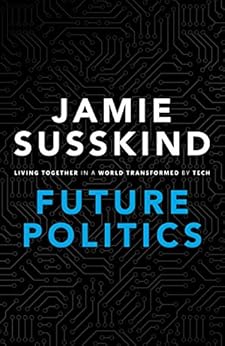
Our future of total surveillance (Jamie Susskind)

Amazon link

Susskind's book was reviewed in The Sunday Times today (here).  It's about a dystopian future of AI super-surveillance sourced from sinister tech companies like Google (I am not being ironic).


I was struck by this quote:
".. the children decide to go on a demo. They heard about it from their friends; artificial-intelligence systems had prevented them receiving online information. Their phones warn them about rain and traffic, but there is none. A drone records their progress. Then, on their internet-enabled glasses, they see pictures of people being interrogated in stress positions; each has the face of one of them. They turn back."
Actually, demonstrators within authoritarian regimes face far stronger disincentives than those described above. Demonstrations still happen because when people get mad enough they'll brave prospects of torture. Or perhaps they lack imagination or think it won't happen to them. All of the above probably.

---

There have been a few lone-actor atrocities in the US over the last few days. The so-called 'MAGA bomber', Cesar Sayoc, was found particularly rapidly after fingerprints and DNA were apparently found on suspect devices. Easy to cross-check as Sayoc had a criminal record.

Wikipedia tells us, "According to the US Bureau of Justice Statistics, 2,220,300 adults were incarcerated in US federal and state prisons, and county jails in 2013 – about 0.91% of adults (1 in 110) in the U.S. resident population."

That's a great dataset for machine learning applied to GWAS. Genome to facial appearance is a quick win: you can almost always get a scene-of-crime DNA sample, and all criminals are on Facebook, aren't they?

---

I read the review carefully but I'm not convinced there's much new in Susskind's book ..
"His writing is clear and precise; he is a lawyer, he is making a case. Irritatingly, he puts in too many (one would be too many) cheeky-chappy asides such as, “At last, someone has found a use for spinach.” But, on the whole, he steers a course to the future that is as convincing as it is shocking. We can fix this, is his message, but there is also the nagging sense that we probably won’t."
We won't until we do. I'll give the book a miss.

---

Related post: Über-surveillance.

Monday, October 22, 2018

The evolutionary genetics of homosexuality (GWAS)


Tom Whipple, science editor at The Times, has this piece today.
Sexuality genes linked to sex appeal

The genes that make some people gay could also help straight people to have more sex, according to a study that may help to explain the evolutionary paradox of homosexuality.

Although there is no “gay gene”, scientists have long known that there is a strong genetic component to homosexuality. This leads to a conundrum: given that gay people have fewer children, the genes linked to homosexuality might be expected to be less likely to survive.

A leading theory of why this does not happen has now received its clearest validation. US scientists scoured the genomes of 400,000 people and compared their DNA to surveys about their sex lives. They identified a whole suite of genetic variants associated with people having had a same-sex partner.

They also looked at the sex lives of those who had those genes but who had never slept with someone of the same sex — and found an intriguing result.

According to the results, presented by an international team of researchers to the Human Behaviour and Evolution Society, straight people with the gay genetic variants had more sexual partners and were seen as more attractive. This fits with the “gay genes hypothesis”: that the genes that make some people gay persist in the population because they have reproductively beneficial effects in others.
It's been clear for a while (see lead author Brendan Zietsch's paper from 2008) that female relatives of gay men (such as their sisters) tended to have more children than the female relatives of men with fewer gay characteristics, and that heterosexual men with more alleles for feminised traits were also more reproductively successful. This has been called the Johnny Depp effect. The novelty here is the size of the sample, 400,000, and the use of genomic data.

Whipple did not give a reference and it took me a little while to track down the actual paper, from here.

HUMAN BEHAVIOR AND EVOLUTION SOCIETY
30th Annual Meeting
July 4th – July 7th, 2018

The evolutionary genetics of homosexuality

Brendan Zietsch, Andrea Ganna, Karin Verweij, Felix Day, Michel Nivard, Robert Maier, Robbee Wedow, Abdel Abdellaoui, Benjamin Neale, John Perry

Homosexual behaviour in humans is genetically influenced and is associated with having fewer offspring. This presents a Darwinian paradox: why have genes that predispose to homosexual behaviour been maintained in the population despite apparent selection against them?

Here we show that genes associated with homosexual behaviour are, in heterosexuals, associated with greater mating success. In in a genotyped sample of more than 400,000 individuals from the UK and USA, we for the first time found genome wide-significant association of specific variants with ever having had a same-sex partner, and hundreds of additional variants were significantly associated in aggregate.

Among men and women who had never had a same-sex partner, these same aggregate genetic effects were significantly associated with having more lifetime sexual partners and, in an independent sample, with being judged more physically attractive. Our results suggest that genes that predispose to homosexual behaviour may have been evolutionarily maintained in the population because they confer a mating advantage to heterosexual carriers.
The paper is gated of course, and I haven't been able to find an open-access version. But you get the idea. I suspect we're well down the road to putting Gregory Cochran's 'gay germ' theory to rest.

Wednesday, May 13, 2015

The genetics of marriage

Marriage is about procreation, as the Catholic Church carefully explains. We all have a eugenic interest in our children so it would not be too surprising that married couples might show some interesting genetic correlations. We already know about assortative mating for intelligence, but could there be more?

A recent study, 'Genomic Assortative Mating in Marriages in the United States' discusses
"genome-wide genotype data from the Framingham Heart Study (FHS; number of married couples = 989) and Health Retirement Survey (HRS; number of married couples = 3,474), this study investigates genomic assortative mating in human marriages."
The paper was published six months ago; their main result:
"Overall, our data suggest a degree of genomic assortative mating at the allelic level in married couples who were born in the first half of the 20th century in the United States. Apparently, this degree of genetic assortment averaged over the human genome is much smaller than the 0.20 Pearson had conjectured based on the observed correlations in height and arm span between husband and wife. As alluded earlier, certain genetic variants such as those underlying height are likely to be heavily assorted; however, the level of overall assortment in the genome seems much less.

However, a genomic correlation of 0.015–0.02 with married couples, estimated for the “positive” assorting SNPs in HRS, can represent an important genomic assortment for at least two reasons. A married-couple correlation may be compared with genetic relatedness among biological relatives. A genomic correlation of 0.015–0.02 is close to the average genomic correlation (0.0312) among second cousins (or the genomic correlation [0.0312] of an individual with his grandfather’s grandfather). While an individual passively and unselectively inherits half of his or her genes from each of the two parents, married individuals consciously or unconsciously assort on genes that play a strategic role in their reproductive marriages."
A genomic correlation  of 0.03125 = 1/32. According to Richard Dawkins,
"For relationships as distant as third cousin, 2 x (1/2)8 = 1/128, we are getting down near the baseline probability that a particular gene possessed by [an individual] will be shared by any random individual taken from the population."
Dawkins is referring to an ethnically-homogeneous population, as in the phrase 'old English stock'. The GWAS research above proposes that, on average, husbands and wives are more closely related by a factor of four than random members of the population. Assortative mating indeed.

Expect much more on this down the line.

Friday, March 06, 2015

"The Evolution of Reciprocal Altruism" - Robert L. Trivers

Way too many people still waste everyone's time by falsely averring that the existence of altruism is a challenge and a puzzle to evolutionists. I re-read Robert Trivers classic paper: "The Evolution of Reciprocal Altruism" and share with you the following observations.

  1. This is a model of how to write a paradigm-changing paper. It's an easy read, conceptually clear and comprehensive. You owe it to yourself to click on the link and give it a try.

  2. In a sense, it's a statement of the blindingly obvious, particularly when Trivers discusses human altruism and the psychological mechanisms underlying it (friendship, dislike, gratitude, moralistic aggression, sympathy). It is, however, a testament to the systematic confusion and obfuscation of prior intellectual elites that Trivers had to restate and reframe the obvious to clear away an edifice of tendentious, muddle-headed thinking. On second thoughts, you may delete the word 'prior' above: an evolutionist's work is truly never done.

  3. Trivers suggested that the arms race between altruists and cheaters (doves vs. hawks if you like) is so complex, with strategies and counter-strategies and counter-counter-strategies, that it may have been a major driver for human-level intelligence. I'm not sure this intriguing idea has really been explored to date.

Trivers' first case study- 'Altruistic Behaviour in Cleaning Symbioses' - carefully removes issues of kin-selection and inclusive fitness by considering between-species altruism. He then considers the puzzling case of bird alarm calls (which seem to put the calling bird in special danger) and shows that a bird warning non-kin still has a selective advantage over the cheating non-warner. Finally we get to the human condition, where his apparently commonplace observations are subtly situated within a carefully-argued evolutionary framework.

Going forwards, there has to be scope for a genetic level of analysis based on GWAS research. Is altruism normally distributed (many genes of small effect)? Is there evidence of multi-modal distributions based on distinct evolutionarily stable strategies (crudely, sociopaths vs. the prosocial)?

For evidence that people's natural instincts and inclinations do not naturally align with Darwinian thinking, review these comments at West Hunter.