Showing posts with label Irène Némirovsky. Show all posts

Tuesday, February 09, 2021

What am I reading?


Amazon link

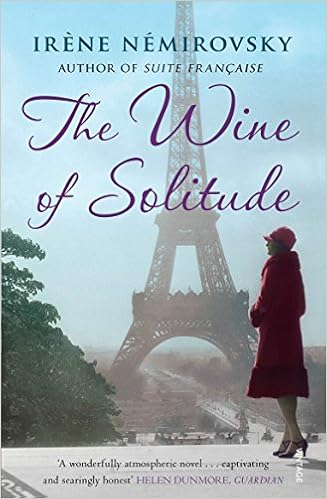
Irène Némirovsky's autobiographical novel, in which she lacerates her father as a cheap, low-class trader unworthy of her feckless, faithless mother (for whom she reserves her true hatred). Unhappy families make good novelists, it appears.


Amazon link

John Fowles: Marxist-Leninist after a fashion, introverted recluse, highly intelligent novelist, in love with la France profonde. His thoughts on his life and writings. My kind of guy.

Amazon link

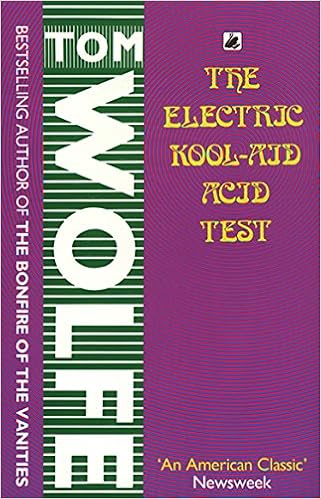
I have a lot of time for the late, lamented Tom Wolfe ('Radical Chic'). A style to aspire to: laconic, knowing and laced with irony. Also unafraid. But this book is so relentless, so high-octane and unrelentingly in-your-face that I found it un-unputdownable. And dated. The Ken Kesey Wikipedia article is way more digestible.
 

Amazon link

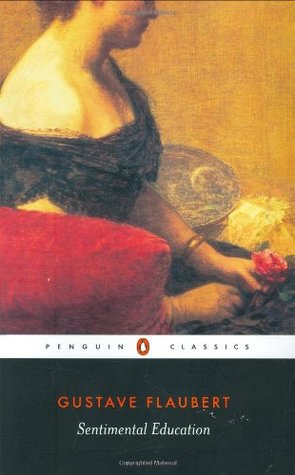
On the advice of John Fowles, who venerated Flaubert as a stylist (he's not the only one, cf. Julian Barnes). I also have 'Three Tales' on the list plus a re-read of 'Madame Bovery' (1857) which I engaged with before only for plot. Time to appreciate it in its entirety.

---
Amazon link

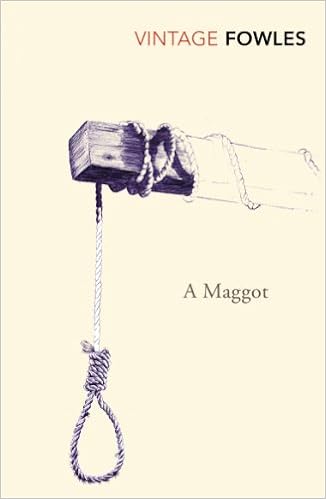
Was ever a title so badly chosen, in the sense of putting people off? No matter that, as mentioned in the Wikipedia article, its title is taken from the archaic sense of the word that means "whim", "quirk", "obsession".

Although it's not apparent until the end, the novel is the author's homage to Ann Lee, the founder of the communitarian Shaker movement. Fowles combines the style of his hero, Daniel Defoe, with science-fictional elements to imagine a future civilization styled on Shaker principles sending an agent back in time to facilitate the birth of Ann Lee. The SF elements are never explained as such: the author is content to refract them through his characters, who are half-rationalist and half-mired in a magic scarcely struck from the law books.

The life and times are beautifully realised, it's a real labour of love by Mr Fowles. And surely amenable to a TV treatment (and don't forget 'The Magus').

---

Friday, January 01, 2021

Lessons from Irène Némirovsky

 I’ve been reading Irène Némirovsky’s biography and some of her  novels: All Our Worldly Goods, Suite Française, The Wine of Solitude. Her technique is to sketch in detail the back story of her main characters in their social milieux - invariably based on friends or business acquaintances - and then confront them with the crises and angst of her own situation.

She was a Jewish émigré in inter-war France with truly dreadful parents; her raging, resentful energy brought forth masterpieces.

Her approach is useful. My own efforts tend to prioritise plot over character, to overplay ideas and underplay setting, producing hack work (this is not uncommon). I will try to do better in future stories - my new year resolution is to get to know my characters better.

Meanwhile I am going to inflict one more old-style flash-fiction vignette on you, distilled from a 14,000 word unpublished story which I self-characterised thus:

        “This has to be one of the worst stories I have ever written. So bad that I was deterred even from posting it on Booksie. The writing is flat, bland, dreary and sterile. The characters are stereotypes lacking interest even to the author. The plot is muddled, contrived and rapidly runs out of steam while never looking even remotely either convincing or even interesting.”
Still, even in such a desert there are small sections which may amuse, I promise you no more than that: “The Demo” in 600 words.

Thursday, December 10, 2020

Memoirs are not stories

Amazon link

Since putting a book of SF/thriller short stories together a year ago I have been running a reset. Doing some hard thinking about writing, and carefully reading people like Irène Némirovsky (Suite Française, All Our Worldly Goods) and John Fowles (The Magus, The Collector). Authors who write character-driven fiction.

Fay Weldon once wrote indignantly that authors do not write about their own lives or those of people they know, they make characters up from their imaginations. But she was being disingenuous: how many classics are revealed to be thinly-disguised autobiography, with 'just the names changed'?

Where she is right is that memoirs are not stories. Memoirs are life in all its plotlessness, banality and broader inconsequentiality. Stories are how we would like reality to be: clear characters, an arc to a conclusion. In stories there is closure and satisfaction; in our memories of life - not so much.

I have some new stories in preparation.