Wednesday, May 30, 2018

The ties that bind

Antiquity

In antiquity the social ties which bound society were personal, expressed through patronage.
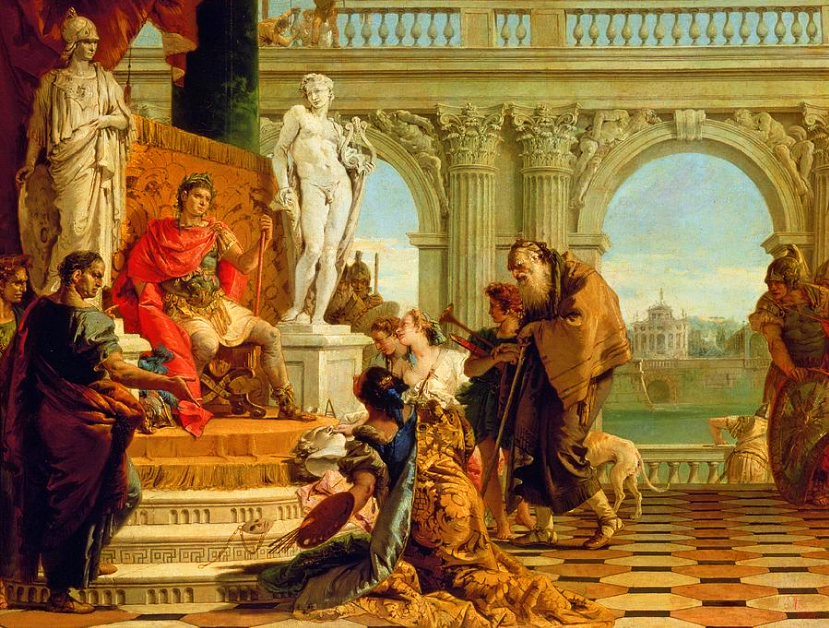

Commodity items like slaves were atomised and disposable, not part of society.

Feudalism

Feudalism, a non-slave mode of production, was 'a way of structuring society around relationships derived from the holding of land in exchange for service or labour' (Wikipedia).


Reciprocal - and personal - obligations were expressed vertically thus:
"A vassal would swear allegiance and pay homage to his lord in a commendation ceremony. The commendation ceremony was designed to create a lasting bond between a vassal and his lord. Fealty and homage are a key element of feudalism. The ceremony consisted of swearing the Oath of Fealty and the act of homage."
Capitalism

Capitalism, by contrast, needed contractual relationships between free labourers and capitalists as negotiated in the market, and fought against feudalism under the abstract principles of the Rights of Man.
Amazon link

Capitalism is a less organic form of society. As Marx hyperbolically observed in The Communist Manifesto,
"The bourgeoisie, wherever it has got the upper hand, has put an end to all feudal, patriarchal, idyllic relations. It has pitilessly torn asunder the motley feudal ties that bound man to his “natural superiors”, and has left remaining no other nexus between man and man than naked self-interest, than callous “cash payment”.

It has drowned the most heavenly ecstasies of religious fervour, of chivalrous enthusiasm, of philistine sentimentalism, in the icy water of egotistical calculation. It has resolved personal worth into exchange value, and in place of the numberless indefeasible chartered freedoms, has set up that single, unconscionable freedom — Free Trade. In one word, for exploitation, veiled by religious and political illusions, it has substituted naked, shameless, direct, brutal exploitation.

The bourgeoisie has stripped of its halo every occupation hitherto honoured and looked up to with reverent awe. It has converted the physician, the lawyer, the priest, the poet, the man of science, into its paid wage labourers."
Capitalism finds organic communities an obstacle to its own ultra-flexible development. The obduracy of the National Union of Mineworkers was sustained by the extraordinary social cohesion of the pit villages. Yet, as Marx noted, human communities are naturally conservative: capitalism propelled human progress precisely through its hostility to the natural human longing for a warm, supportive, harmonious and stable communitarianism.

Once established, capitalist economies sheltered under nation states and were happy to promote a nationalistic patriotism as the foundation of social stability. But post the sixties, globalisation moved into prominance. Economies now straddled the planet, peoples moved in their millions as migrant labour and sometimes just as migrants. Nationalism as an ideology jarred in this new reality. The narrative became 'multiculturalism' - an imagined, global, borderless and thoroughly-superficial 'community' of free and thoroughly-equal citizens.

All those first and second world war types, spouting their loyalty to King and Country, seemed so very anachronistic now.

---

How useful is this new neoliberal ideology, branded by its enemies as political correctness?

For running a multiethnic, multicultural economic empire it's essential. But when push comes to shove, the shallowness (indeed fraudulence) of its social glue comes to the fore. If neoliberalism celebrates a transient and transactional individualism against communitarian values deemed non-inclusive and reactionary, it's always going to struggle to marshal mass support when confronting a non-compliant adversary.

Why don't we like Russia? Because they're hard on gays??? Saudi Arabia was never so demonised.

---

The ideology of a triumphant capitalism endlessly trumpeted by the Mainstream Media has little to offer the masses outside the bubble .. and ordinary folk, feeling that in their bones, turn elsewhere. The revolutionary bourgeoisie of the eighteenth and nineteenth centuries were the populists of their age, but populism is very suspect today.

The Marxist left believed that just as Marxism had unveiled the mystifications and obfuscations of bourgeois ideology, its vision of socialist freedom, of society working for the many, not the few (to borrow a phrase) would seize the masses, that essential engine of social progress. We know how that worked out.

I have an unappealing prognosis: with economic prospects unpromising, social cohesion unravelling and no easy answers, expect more populism and more crazy politics.

---

As I write, we enter another Italian political and economic crisis.


Monday, May 28, 2018

The end of RTFM


It's a really old joke.
"Customer Support: "Ridge Hall computer assistant; may I help you?"

Caller: "Yes, well, I'm having trouble with WordPerfect."

CS: "What sort of trouble?"

C: "Well, I was just typing along, and all of a sudden the words went away."

CS: "Went away?"

C: "They disappeared."

CS: "Hmm. So what does your screen look like now?"

C: "Nothing."

CS: "Nothing?"

C: "It's blank; it won't accept anything when I type."

CS: "Are you still in WordPerfect, or did you get out?"

C: "How do I tell?"

CS: "Can you see the C: prompt on the screen?"

C: "What's a sea-prompt?"

CS: "Never mind. Can you move the cursor around on the screen?"

C: "There isn't any cursor, I told you, it won't accept anything I type."

CS: "Does your monitor have a power indicator?"

C: "What's a monitor?"

CS: "It's the thing with the screen on it that looks like a TV. Does it have a little light that tells you when it's on?"

C: "I don't know."

CS: "Well, then look on the back of the monitor and find where the power cord goes into it. Can you see that?"

C: "Yes, I think so."

CS: "Great. Follow the cord to the plug, and tell me if it's plugged into the wall."

C: ".......Yes, it is."

CS: "When you were behind the monitor, did you notice that there were two cables plugged into the back of it, not just one?"

C: "No."

CS: "Well, there are. I need you to look back there again and find the other cable."

C: ".......Okay, here it is."

CS: "Follow it for me, and tell me if it's plugged securely into the back of your computer."

"I can't reach."

CS: "Uh huh. Well, can you see if it is?"

C: "No."

CS: "Even if you maybe put your knee on something and lean way over?"

C: "Oh, it's not because I don't have the right angle - it's because it's dark."

CS: "Dark?"

C: "Yes - the office light is off, and the only light I have is coming in from the window."

CS: "Well, turn on the office light then."

C: "I can't."

CS: "No? Why not?"

C: "Because there's a power outage."

CS: "A power... A power outage? Ah, Okay, we've got it licked now. Do you still have the boxes and manuals and packing stuff your computer came in?"

C: "Well, yes, I keep them in the closet."

CS: "Good. Go get them, and unplug your system and pack it up just like it was when you got it. Then take it back to the store you bought it from."

C: "Really? Is it that bad?"

CS: "Yes, I'm afraid it is."

C: "Well, all right then, I suppose. What do I tell them?"

CS: "Tell them you're too stupid to own a computer."
---

Do you remember manuals? When I got a new device my first step was always to read the manual. Hundreds of pages, it felt like! I struggled to absorb all that information. I was convinced that smartphones would never catch on, way too complex for most people.

It's been a while now since I've read a manual on any new piece of kit. Sometimes there's a small pamphlet with some wordless pictures - not often. How did we come to lose the manual?

It was a Darwinian process. An architecture + protocol swept to fixation: swiping, pressing, tapping and recognising three stacked horizontal lines. A device supporting a sufficiently smart interface permits even a dummy to use it.

So finally: no more tech support crying in anguish: "OMG RTFM!".

A Bank Holiday Monday at Brean Down

Looking south towards Burnham from Brean Down

Clare stepping up to the challenge

The peninsular track to the fort, looking towards Steep Holm

I was wearing a yellow tee-shirt which attracted flying black beetles by the thousand at the top of the steps.

Saturday, May 26, 2018

Lynmouth Tales: 2 - A deckchair protocol

Deckchairs for hire on the bank to the left

It was a warm afternoon with a chill wind at Lynmouth. Deckchairs on the sunny bank of the Lyn promised a pleasant hour. The sign said: 'Deckchair tickets - £1.50 per day'.

We unloaded two from the half-empty rack and settled down to join the six or so other people sunning themselves out of the breeze. After a few minutes, a rather portly, suntanned man in his fifties wearing red shorts and sporting a leather bag approached.

"As it's three o'clock, there's a discount. That'll be a pound each."

We thanked him profusely.

---

"How many desk chairs do you think there are here?"

"About a dozen"

"So in theory, that's a revenue of £18 a day. What's the minimum wage?"

"About £8 per hour."

OK, so the total revenue from this site - taking his sign at face value - is just over two hours pay. But of course, we know it doesn't work like that. People don't stay and the moment they up and leave, someone else comes along and he charges them for 'all day' as well."

"At 3 pm the pretence of 'all day' is wearing pretty thin, so we got our discount."

"And if someone comes back with their ticket and all the deckchairs are occupied, then they'll just ask for a refund, which of course he'll give them. How often does that happen, d'you think?"

(Snorts). "They'd have to find him first. Bet he only comes along every couple of hours. We won't see him again until it's time to pack these things away."

"So he knows his sign is bogus and we all know it's bogus but any more complex timed reservation scheme would be more trouble than it's worth. You know what this reminds me of? Statistical multiplexing like the original shared Ethernet."

I looked, but she was already asleep.

---

After an hour we got up to return to our car. As we approached the steps we spotted another couple coming down. Clare approached and pressed our tickets into their hands.

"They're good for all day. Please have them. We're leaving now."

As we crossed the bridge towards our car, I saw them settling into two vacant deckchairs. Turning to Clare I said,

"You do understand you've just wrecked his whole business model?"

Thursday, May 24, 2018

Lynmouth Tales: 1 - The TV at Breakfast

As usual, we're almost the last to breakfast in the unnatural calm of a morning pub bar. There's a quiet hubbub of conversation as we locate a spare table and settle to check out the menu.

As we work through our meal, a middle-aged man suddenly stands to address us all. "Does anyone want the TV on?" he asks, his manner faux-apologetic.

It's a tone which suggests that he is speaking for all of us - that he's the agency of our collective exasperation at the muted sounds of BBC Breakfast quietly burbling from the corner.

Naturally no-one says anything.

Triumphantly the TV is turned off. As the man returns to his place, a cathedral-like hush descends over the breakfast room. All conversation ceases, the slightest word can now be overheard by all.

In a classier establishment we'd have breakfasted to Radio 3 - with greater immunity, no doubt.

---

This morning we were the last to come down and ended up on the table next to him. This was the table which everyone else had left vacant, the table which was too close to its neighbours. Its occupancy was the straw that broke this man's back.

He smiled at us - a fixed smile! - which was extended vaguely to the whole room.

"Does anyone want the TV on?"

He got up, mumbling quietly to himself about the irritations of background chat, and made his way to the corner of the room to turn the offending device off.

As he returned, Clare and myself started a (perhaps overloud) conversation about the merits of the recently-deceased Philip Roth, and whether he had had more success charting the niche of upper-middle-class American-Jewish male academics than Lee Child had had exploring the solitary vigilantism of hobo-class Jack Reacher.

I hope he was pleased at such an erudite conversation conducted eighteen inches from his ears but we'll never know, as he said not a word.

---

Yesterday, when semi-private conversation had still been possible, I was telling Clare about an amusing Tommy Cooper sketch I'd flicked through the other day on Yesterday.

Cooper is grandiloquently introducing a clown act. "First he'll do some sums, then he'll do a song and dance routine."

The camera pans to the blackboard to show the definite integral from 0 to 1 of 1/√(1 - x2).


While I'm thinking about line integrals and the quarter circumference of the unit circle, the clown emerges from behind the curtain, runs to the blackboard and in a split second chalks π/2, then rushes across to link arms with Cooper where they do the raucous song and dance routine.

And the credits roll.

Genius.

Friday, May 18, 2018

AI: inference and causality

Franz Kafka statue in Prague

When Google Lens tells me the picture above is the Statue of Franz Kafka in Prague, glossed by Wikipedia as:
"The Statue of Franz Kafka is an outdoor 2003 sculpture by Jaroslav Róna, installed on Vězeňská street in Prague, Czech Republic. It is based on a scene in Franz Kafka's first novel, Amerika, in which a political candidate is held on the shoulders of a giant man during a campaign rally, and carried through the streets,"
Google's app is doing something really complex, leveraging artificial neural nets trained by massive datasets. But it's fundamentally inference:
The world we live in |= the pixel map of the photo and Google Len's summary text.
and
the pixel map of the photo |- Google Len's summary text.
Satisfiability and entailment.

All AI systems need to map their sensor/effector primary data to internal representations which allow inference (deductive, inductive, abductive etc) - regardless of the engineering mechanisms they adopt. Neural nets training their weights are optimising the probability of valid inferences about the world.

---

Judea Pearl has a new book out arguing for the introduction of causality into AI systems. In a recent Quanta interview he said:
"All the impressive achievements of deep learning amount to just curve fitting."
Here's the book.

Amazon link

Causality is one of those constructs like Free Will, Consciousness and the intentional stance which don't exist in the underlying physics (the theories which the universe satisfies as far as we can tell), but which are emergent in a world of self-aware agents.

They usefully describe relationships between belief-and-goal-driven entities; they succinctly encode the effects of the second law of thermodynamics plus boundary conditions. We use these concepts .. and AI will have to if we are ever to create socially-competent artificial agents.

What Pearl is really asking for is an AI which utilises the intentional stance (specifically including reasoning about cause and effect).

---

To find out more about Judea Pearl's work (without buying the book!) view the recommended slides at his website. For a review of Pearl's substantive contribution to causality theory, see here.

My own subjective response? I find his dense notation and cluttered semantics worthy but unexciting.

---

Update: my further impressionistic, superficial and under-researched thoughts.

The difference between a mere association between P and Q (which could be a spurious correlation, or the result of an independent cause of both) and a causation, P causes Q, is captured by the modal operator of necessity []. See here for a detailed discussion.

To check P causes Q we need to check: [](P → Q) and [](¬Q → ¬P).

So we're in possible world semantics and we look to 'neighbouring worlds' to check the truth status of P and Q. But we have the usual problem that such worlds are way too 'big', too full of irrelevancies.

So like Situation Semantics, Pearl takes the engineering approach of restricting his worlds to just those entities and actions which seem relevant to the causality under investigation. These are his causal diagrams which he intends to counterfactually 'mutilate'.

A philosophical strategy similar to the modal analysis of epistemics etc .. and of similar utility.

Thursday, May 17, 2018

Barrington Court (National Trust)

Sunny day, coldish wind. We were at Barrington Court today.

The brick path is striking

The leaf colours interest Clare

Your author in one of the walled gardens of flowers

The cafe/restaurant at Barrington House has a soviet-style system. You're meant to choose your (numbered) table first, then browse the cake room and finally queue at the till to order drinks and pay. A waitress then delivers tea or coffee to the table number you indicated.

The flaw in this system is not hard to find. Barrington Court is popular and there are few tables. When we rolled up there were none free and we blagged it at the till ("We'll be hanging around outside by the door.").

The cashier was unsurprised and we were found without difficulty. That hardly excuses the poor protocol but it's surprisingly hard to come up with a simple and robust reservation scheme.

Sequence me!

You want me to spit?

After much persuasion, the kit arrived today and now I just have to get her to spit; perhaps that's not as hard as it sounds.

Does she realise we can now bring her back?

"To Change the Church" - Ross Douthat

Amazon link

Ross Douthat is not very well known here but in the States he has a profile as a conservative commentator on the NYT. He is also a Catholic convert.

Here is what his fellow New York Times writer, Paul Elie, had to say about Douthat's work:
"To Douthat [Pope] Francis is an accommodationist, and decline has reached the apex of the church. “This is a hinge moment in the history of Catholicism,” he declares, “a period of theological crisis that’s larger than just the Francis pontificate but whose particular peak under this pope will be remembered, studied and argued about for as long as the Catholic Church endures.”

What immediately follows is an adroit, perceptive, gripping account of Catholic controversializing. Douthat sets out the liberal and conservative “master narratives” about the Second Vatican Council and then offers a third narrative that deftly blends the two.

He sketches the life and times of the future pope, Jorge Mario Bergoglio, the Argentine Jesuit archbishop of Buenos Aires. There’s commentary on past controversies and a brief history of Catholic teaching on marriage, from Matthew 19 (“What God has joined, let not man put asunder”) to Humanae Vitae, the 1968 encyclical in which Pope Paul VI upheld the ban on artificial birth control. ...

And then, as Douthat reaches what he sees as the heart of the matter — the Vatican synods on marriage and the family in 2014 and 2015 — his culture-warrior tendencies stir fully to life.

He casts the synods as a battle: warring factions, attacks and frontal assaults, purges and collaborators. Francis’ openness to the German cardinal Walter Kasper’s proposal to relax the ban on divorced-and-remarried people in Germany receiving Communion at Mass is framed as a liberal pope’s “crusade to change the church.”

Although Francis has invited free discussion more than any previous pope, his efforts to shape the synod’s outcome (he is the pope, after all) are seen as “stage-managing” and “deck-stacking.” The synod fathers’ disputes are rolled down the slippery slope and deemed a “full-scale theological crisis” in which the hope that Francis would foster unity and renewal is undone by the supposed liberals’ supposed desire to accommodate “the sexual revolution and all its works.”

Douthat’s own position is traditionalist-cum-literalist: Any relaxing of the Catholic teaching on marriage — one man, one woman, one time — means that core teachings can be changed; if core teachings can be changed, the Catholic Church is no longer the Catholic Church; and if the church is not the church, all hope is lost."
I started the book somewhat sympathetic to Douthat's position - Pope Francis has not endeared himself with his vague anti-capitalism, ecological posturing and seeming inability to sort out the Vatican.

Douthat is a smart guy but he has a problem - blind faith. Once he committed to switching his critical intelligence off to accommodate a strangely-invisible super-presence, the fount of moral authority and one which extruded a portion of itself into a low-key itinerant Jewish preacher some two thousand years ago .. well, he felt he had to commit himself to Jesus's reported words as divinely-inspired axioms for life.

No matter the grievous consequences to perfectly respectable people (remarried divorcees - the case in point - enjoined to live as 'sister and brother'), the letter of the law must be served or the heavens shall fall. In the face of such egregious nonsense one can only wish more power to Francis's elbow.

As Elie observes:
"Vatican II was at once the church’s response to a crisis and the perpetuation of it. In less than five years the council fathers made changes whose number and scale dwarf the modest proposals floated in Francis’ pontificate — made them over the objections of Bill Buckley and other pundits who styled themselves as more Catholic than the pope. The biggest change had to do with the church’s relationship to Judaism, other churches and other religions.

In a few strokes, Jesus’ hard saying “No one comes to the Father except through me” and its Catholic expression (“Outside the church there is no salvation”) were softened and qualified. The change was profound and tradition-defying. Ever since, the church has affirmed the integrity of other faiths; ever since, Catholics have had to ask themselves, “Why be Catholic, when other ways are O.K., too?” Ever since, there has been no one clear answer."

Outside the White House - August 15th 2001


I know this is not news, but rummaging around in Google Photos I thought we looked rather cute.