Thursday, March 31, 2016

Nuke 'em!

From Wikipedia:
"Gregory M. Cochran (born 1953) is a physicist and adjunct professor of anthropology at the University of Utah, known for hypotheses in evolutionary medicine and genetic anthropology. He argues that cultural innovation resulted in new and constantly shifting selection pressures for genetic change, thereby accelerating human evolution. He is co-author of the book 'The 10,000 Year Explosion'."
In a typically curmudgeonly post, Cochran imagines a robust response to jihadists, over at West Hunter.
"Now and then I contemplate the possible outcomes if the United States got really, really angry, say at jihadists, if they went too far and struck a nerve. Crazed fury. Jihadists seem to think that enraging the western powers is strategically sensible, but they might be wrong. I’m not talking about little things like the invasion of Iraq or Afghanistan: no, I mean really angry. You should picture Uncle Sam turning green and bursting out of his Uncle Sam suit ... .

"There’s the old reliable, nuclear weapons. There wouldn’t be a lot left of the Arab world, especially when you consider little tactical enhancers like blowing up the Aswan Dam, or nuking a nuclear reactor. You could simply drop enough medium-life-time radioactive dust to make a region uninhabitable for months, or years, or decades, which could make the Haj pretty difficult.

"Even semi-conventional war could become lot more intense: we haven’t done fire raids lately, but we still can (B52s can carry a huge payload). It’s hard to make laser weapons work for most purposes (atmospheric transmission) – but it’s easy to make ones that blind. We’re working on smart bullets: right now you have to fire thousands per hit, but that’s going to change.

"Nerve gas? effective.

"Germ warfare? Amazing things are now possible: we could probably tailor agents to hit particular ethnic groups (there is always leakage: I’m not saying that we wouldn’t get our hair mussed.) . They could kill – swiftly, or agonizingly slowly, They might trigger Creutzfeldt–Jakob disease: not just for cannibals, anymore. You might see agents that cause insanity, or sterility, or damn-foolishness (hmmmmm).

"Once CRISPR goes to war, you would see agents that cause germ-line genetic changes – nasty changes with built-in genetic drive that spread to the whole population."
I suppose we should add this to the debate about what to do about the new Caliphate. Peter Turchin has a series of articles on the same issue, applying his mathematical-history theory of 'cliodynamics'.

Perhaps understandably, Turchin is less keen on “ethnocide”.

As Turchin points out in the relevant article, world - and European - history is chock-full of examples of the kind of stuff Prof. Cochran playfully advocates. But the West doesn't seem to do that anymore, mostly because elite opinion has been captured by empathic compassion.  This almost-Buddhist ideology (bien-pensant liberalism to its enemies) is a natural fit to the rather weak government model of capitalist democracies, where it's important to keep all interest groups onside to ameliorate civil strife and get re-elected.

Government policy trundles along the vector sum of pressure group lobbying; the masses grudgingly acquiesce in the frequent stupidities which follow.

Until they don't.

Wednesday, March 30, 2016

Diary: foot problem + Game of Thrones + AlphaGo + genetics

I vaguely recall jamming my foot against the side of the bed while hoovering last week. By Easter Sunday the entire right foot was red, the skin taut and swollen over the toe joint and I was limping around in socks. The last few days have seen a slow improvement but I think it may be the weekend before I can claim to be back to normal. Some observations.
  1. I haven't taken any pain medication, believing that pain is a signal which I do well to heed and analgesics probably mess up self-healing. I recognise I may be in a minority on this.

  2. The body's response to damage seems to affect many aspects of its functioning, not just the topical region. I feel a bit tired and - strangely - a bit more relaxed, like I'm let off worrying about stuff. Interesting.

  3. Doctor Google was reassuring. The alternative suggestion of gout was excluded - no causal pathway from over-indulgence in Easter eggs.
---

A Game of Thrones (book vol 1) is highly addictive, once you've printed off the family trees of the various noble houses. It reminds me how natural the ties of family, personal loyalty and honour are, and how alien the cool, depersonalised, transactional styles of modern urban capitalism. No wonder American politicians and business people engaged with negotiators from traditional societies talk past each other in mutual incomprehension.

What would the noble protagonists of GoT make of "The Martian", which we saw on DVD Saturday evening?
The hero is some kind of insolent, wise-cracking, artisan-monkey who refuses to die quietly on Mars as he should. His liege-lord commander shows weakness by beating herself up over leaving him (she did her duty: so problem?).

The world actually cares about this minion, and the powers-that-be indulge their idiotic sentimentality. Could never happen.

Thank the Gods it's only far-fetched speculative fiction.
---

I thought this was a good article about AlphaGo - assessing its significance now the dust has settled a bit.

---

This from Professor Greely, Director at the Center for Law and the Biosciences, Stanford University, as set out in his book, 'The End of Sex and the Future of Human Reproduction'.
“In 20 to 40 years, when a couple wants a baby, he’ll provide sperm and she’ll provide a punch of skin,” Prof Greenly told The Times.

"He said the female skin sample will be used to create stem cells, which can in turn be used to create eggs.

"These eggs can then be fertilised with the sperm cells, resulting in a selection of embryos.

"Prof Greenly predicts these embryos will be studied for any signs of malady.

“The prospective parents will be told, ‘These five have really serious diseases, you don’t want them’.

"Of the other 95, they will be given the pluses and minuses,” he said.

"He said that after weighing up the prospective advantages and disadvantages of the healthier embryos, the parents will choose one to be implanted into the woman, which will become their child.

“Parents will get the embryos grouped by categories,” Prof Greenly said.

“One category will be very severe, untreatable, nasty diseases. This will affect one to two per cent of embryos.

“Another category will be other diseases.

“The third is cosmetics: hair, eyes, shape, whether the hair goes white early. We don’t know much about this yet, but we will.

“A fourth category is behavioural. I think here information will be limited. We won’t be able to say, ‘This child is in the top one per cent of intelligence’. We probably will be able to say, ‘This child has a 60 per cent chance of being in the top half’.”
He's being judiciously careful here. In 20 years time we'll be able to read off from the genome both IQ and personality type more accurately than current psychometric testing can.

Tuesday, March 29, 2016

Offspring IQ vs parental midpoint IQ

We had Alex and Adrian with us over the Easter and fell to talking .. as you do .. about the correlation between parental IQ and the intelligence of their offspring. I was trying to recall this post, from Steve Hsu, from which I reproduce the key material below.

There are three key ideas in Steve's post:
  • You start from the parental midpoint IQ (the average of father and mother)
  • To get the mean, or expected value of the offspring IQ multiply by h2  (Breeder's Equation)
  • The distribution of offspring IQ has a tightened standard deviation, 12 rather than 15 IQ points.
---
"Assuming parental midpoint of n SD above the population average, the kids' IQ will be normally distributed about a mean which is around +.6n with residual SD of about 12 points. (The .6 could actually be anywhere in the range (.5, .7), but the SD doesn't vary much from choice of empirical inputs.)

"So, e.g., for n = 4 (parental midpoint of 160 -- very smart parents!), the mean for the kids would be 136 with only a few percent chance of any kid to surpass 160 (requires +2 SD fluctuation). For n = 3 (parental midpoint of 145) the mean for the kids would be 127 and the probability of exceeding 145 less than 10 percent.

"No wonder so many physicist's kids end up as doctors and lawyers. Regression indeed! ;-)
 ...
"Assuming bivariate normality (and it appears that IQ has been successfully scaled to produce this), the offspring density function is normal with mean n*h2 and variance 1-(1/2)(1+ρ)h2, where ρ is the correlation between mates attributable to assortative mating and h2 is the narrow-sense heritability. *

"I put h2 between .5 and .7. Bouchard and McGue found a median correlation between husband and wife of .33 in their review many years back, but not all of that may be attributable to assortative mating. So anything in (.20, .25) may be a reasonable guesstimate for ρ.
...

"Note: Some people are confused that the value of h2 = narrow sense (additive) heritability is not higher than (.5 - .7). You may have seen *broad sense* heritability H2 estimated at values as large as .8 or .9 (e.g., from twin studies). But H2 includes genetic sources of variation such as dominance and epistasis (interactions between genes, which violate additivity). Because children are not clones of their parents (they only get half of their genes from each parent, and in a random fashion), the correlation between midparent IQ and offspring IQ is not as large as the correlation between the IQs of identical twins."
* Putting in the numbers: σ = 15 √(1 - 0.5 * 1.225 * 0.6) = 12.
___

The other discussion we had was how to estimate the IQ of my parents, now both dead.

Neither ever took an IQ test as far as we know. We have my mother's DNA with 23andMe so eventually with full genome sequencing we may expect to read this off (when the research ...).

We don't have my father's DNA although we might forensically get it one day via his belongings.

Still, all is not lost. Life is an IQ test and we have the biographies. We can also do some reverse correlations from the children, (my brother, sister and myself). IQ test data is not available here either, but we can still make biographical estimates.

Thursday, March 24, 2016

Boaty McBoatface is racist

Oops! My inner SJW just there. That and a weakness for clickbait.

When I first encountered this story, like everyone else I was spontaneously LOL - almost ROFL. And then, being the pathetic obsessive that I am, I fell to wondering just why it was so funny.

Saga Briggs describes humour as an “incongruity that is recognised and resolved in some way.” Other writers emphasise a situation vaguely established as threatening, but then reframed as benign. We're all familiar with black or gallows humour.

"Boat Boatface" would not really have been that amusing as the proposed name of a polar research vessel. Adding the suffix -y - Boaty - lends an air of indulgent affection, as if to a child. The ship has been contextualised as cuddly.

"Boatface" is an insult, the direct opposite of the cuddlyness of "Boaty" - but the real genius (for those immersed in English culture) is the "Mc" prefix, which makes the persona of the boat Scottish .. and therefore glum and dour.

The cognitive dissonance is complete: a soppy, cuddly prefix for the boat's first name, immediately followed by an insult suggesting the diametric opposite.

The overall effect is to ridicule and wrong foot the efforts of the vessel's pompous owner, presumably looking for "Endeavour" or "Polar Explorer" or something equally bland dignified.

We feel vaguely threatened by being invited to jump through hoops by authority. "Boaty McBoatface" subverts that pretty comprehensively: at the expense of a shocking racist stereotype of the Scotsman, who as we all know ... .

No to racist boat names, I say.

Wednesday, March 23, 2016

My automated PA (© Google Next)

Because I review science-fiction books on Amazon, new authors email me asking for a review of their latest work. It's a bit embarrassing knowing how to reply, but luckily I'm a beta-user of Google's next generation personal assistant (Google Next).

Since Google already knows so much about me, it has sensed my disquiet and has learned how to respond on my behalf, like a good PA should. I'm completely hands-off.

Here's an example of a (slightly anonymised) note I received yesterday, and the automated reply.
___


Hi Nigel,

I saw that you offer a lot of great reviews on Amazon. I'm the author of "V NZ FYRRCYRFF: FVZ 811", a newly released YA Science Fiction novel. I would love to send you a free copy of the ebook in exchange for your honest review.

http://www.amazon.co.uk/gp/product/O017NVITZH

If you are interested in reading and reviewing my book, I can send you the ebook as a gift through Amazon, as a mobi or as a pdf file. You can also download it for free through the Kindle Unlimited program.

If you're like me, you have a backlog of books you want to read. I'm okay if it takes you months to get to my book and review it.

Thanks for your consideration,

Wbuna

Author Wbuna Gjvff

----  And here is Napa's reply ---

Dear Wbuna,

Thanks for your recent email. You asked if Nigel Seel would review your science fiction book in exchange for a free copy. Please note that Nigel Seel does not check any books in exchange for free copies because he believes that this puts him under an implicit obligation to be more pleasant than he is normally. If he likes the tone of the book, so he can buy it anyway and review it then. He is unlikely to tell you, but you can see it on Amazon.

Nigel compliments you. On your marketing skills and wishes you every success with your book. It's a crowded market and he knows that a successful author to be very hard work.

Best wishes,

Napa.
Nigel’s automated personal assistant
Powered by Google Next © 2018.

Tuesday, March 22, 2016

The science of volcanic prediction

I'm refreshing and improving my knowledge of Bayesian Statistics, working through this OU text available at Amazon.


In the first section I came across this:


which I guess makes those unfortunate scientists candidates for a Darwin Award.

A polygenic risk for autism spectrum disorders

The full title of the paper in the news today is "Genetic risk for autism spectrum disorders and neuropsychiatric variation in the general population" authored by a cast of thousands. It's published in Nature Genetics - here's the abstract.
"Almost all genetic risk factors for autism spectrum disorders (ASDs) can be found in the general population, but the effects of this risk are unclear in people not ascertained for neuropsychiatric symptoms. Using several large ASD consortium and population-based resources (total n > 38,000), we find genome-wide genetic links between ASDs and typical variation in social behavior and adaptive functioning.

"This finding is evidenced through both LD score correlation and de novo variant analysis, indicating that multiple types of genetic risk for ASDs influence a continuum of behavioral and developmental traits, the severe tail of which can result in diagnosis with an ASD or other neuropsychiatric disorder. A continuum model should inform the design and interpretation of studies of neuropsychiatric disease biology."
At some level this is not too surprising, there's not a 'gene for autism or Asperger Syndrome' any more than there's a gene for height or intelligence. Instead a number of alleles of small effect push the genome towards or away from autism spectrum traits, with de novo negative mutations adding a sprinkling of gratuitous damage.

There is a dataset of families where one family member has an ASD (autism spectrum disorder) while the the rest are not so classified. This is the Simons Simplex Collection (SSC):
"The Simons Simplex Collection (SSC) is a core project and resource of the Simons Foundation Autism Research Initiative (SFARI). The SSC achieved its primary goal to establish a permanent repository of genetic samples from 2,600 simplex families, each of which has one child affected with an autism spectrum disorder, and unaffected parents and siblings."
There is a test, similar to an IQ test, which measures the level of difficulty experienced by people with an ASD. It's called the Vineland Adaptive Behavior Rating Scale (VABS):
"Raw scores are converted to IQ-type standard scores (mean: 100 sd: 15) for each domain and for the composite adaptive behavior score. Score ranges are as follows:
  • 70-80 borderline adaptive functioning; 
  • 51-55 -70: mildly deficient adaptive functioning ; 
  • 35-50: moderately deficient adaptive behavior; 
  • 20-35: severely deficient adaptive behavior; 
  • less than 20: markedly or profoundly deficient adaptive behavior. 
Scores above 80 are classified in approximately the same ranges (low average, average, above average, superior) as IQ scores."
When you test the SSC non-ASD people (controls) vs. SSC people with ASD (cases) using the VABS, this is what you see:


Figure 2 from the Nature Genetics paper 
You plainly observe the overlap between non-ASD and ASD people on a scale designed to measure degrees of autistic behaviour.

While this histogram does not directly exhibit the underlying genetic analysis, it's exactly what you expect to see from a polygenic syndrome.

Monday, March 21, 2016

Brexit: surviving the car-crash

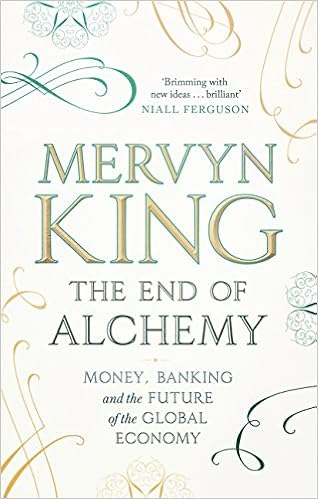
I'm reading Mervyn King's excellent "The End of Alchemy: Money, Banking and the Future of the Global Economy".


Newspaper reviews have been mixed: some commentators clearly wanted the inside story of the crash of 2008. Instead, the former governor of the Bank of England has provided a thoughtful critique of contemporary macroeconomic thinking, both Keynesian and neoclassical.

He gives short shrift to behavioural economics, choosing instead to focus on what he calls radical uncertainty, the unknown unknowns which regularly jeopardise the assumptions built into macroeconomic models. And subvert the policies of politicians.

Here is what he has to say about the prospects for the Euro, the Eurozone and the EU as a whole at the end of chapter 6.
"But in the euro area the fight for survival has become a battle between politicians and arithmetic. Although the future outcome is unknowable, history is on the side of arithmetic. The tragedy of monetary union in Europe is not that it might collapse but that, given the degree of political commitment among the leaders of Europe, it might continue, bringing economic stagnation to the largest currency bloc in the world and holding back recovery of the wider world economy.

"It is at the heart of the disequilibrium in the world today. The French ambition to curtail the economic power of Germany, and especially its central bank the Bundesbank, by drawing it into a monetary union that would be controlled by French civil servants has failed. The French economy is weaker than that of Germany, and monetary union has increased, not reduced, Germany's political dominance.

"Responsibility for the economic conditions in other member states will be laid at the door of Germany. The idea of a federal union was intended to represent the birth of a new Europe, born out of the common experience of defeat and occupation during the Second World War among all the original members of the European Economic Community.

"Attempts to recreate the Holy Roman Empire have often appealed to a European elite, but have foundered on the resistance of its peoples."
In the previous Brexit post I highlighted suggestions that if the European Union survives in any sense it will be led - dominated - by Germany. All other member states, by definition, will then be subordinate. Any path leading to a stable political pecking order in a future EU will be long and complex, and measured in decades, but that's the destination. If it exists at all.

But it seems unlikely that the EU in anything like its current geometry can survive over a period measured in decades. As Mervyn King points out in other chapters of his book, the Greek debt crisis has not gone away and the inevitable Greek default will be hugely unpopular in Germany. And Germany has lent massively to the rest of 'Club Med' in what might be considered belated war reparations.

Historical institutions tend to last longer than anyone thinks possible, and then to collapse faster.

There is a conceivable strategy for the UK in being close to the Northern European axis in the EU, and facilitating the transition to something more sustainable after the EU car crash. But that would demand a political culture in the UK which is communautaire. Such a culture does not exist. The British transactional paradigm for dealing with its EU partners will be worse than useless as the car crash unfolds.

The coming referendum is not the only occasion when the UK's existential relationship with the EU will be confronted - how could a foundational EU crisis not pose it again? - but proponents for staying in should be indicating what tactical advantages the UK gains given the extraordinarily dire outlook in the longer term.

If the UK (England?) decides to abandon ship, or is ejected at some point by a form of constructive dismissal, then it will operate as I imagine Japan will end up in a couple of decades, navigating between powers (the German-dominated EU, America, China) which are so much more powerful than itself.
___

One of the dilemmas facing even the most well-informed voter in the forthcoming referendum is that even when the issue is framed in this way, it's by no means obvious what the optimal answer is. We also have to consider that different sectional groups in the UK (employees of financial institutions and multinationals, the self-employed, trades unionists, blue-collar workers, welfare recipients, the Scots) will have variant interests perhaps best served by voting in different ways.

According to the oddschecker website today, the probability of a 'stay' vote is 69% and of a 'leave' vote is 31%.

Sunday, March 20, 2016

Interrogating Salah Abdeslam

So the Belgians caught Salah Abdeslam, the logistician for the Paris attacks, and he will be extradited to Paris for interrogation. I doubt they'll be gentle, but robust interrogation only takes you so far in a Western European democracy.

Whatever happened to this?


I would have thought intelligence agencies around the world would have been falling over themselves to perfect brain scanning for interrogation. Writing last summer, Eli Wolfe found it very difficult to get anyone to state on the record they were working on this:
"But Conolly, who notes that his lab has designed and built all the MPI scanners in North America, is so adamant that his research (including that funded by the National Institutes of Health via the BRAIN Initiative) not be linked in any way to lie detection that he refused to be interviewed about it."
It seems harder than you might imagine:
"For starters, there’s no consensus in scientific circles about what part of the brain controls deception. The prefrontal cortex, which is responsible for regulating higher planning and other executive goals, is one promising candidate. But according to Jack Gallant, a professor of neuroscience at UC Berkeley, the search for this Holy Grail of deception-control in the brain oversimplifies the complexity involved in planning a lie.

“Most things in the brain are distributed over multiple brain areas, and the patterns relating brain activity to any other sort of behavior state tend to be thoroughly complicated,” Gallant said. “I mean, there are different kinds of lies, there are different motives for lying, there are different ways of telling a lie…. Most memories that people have are not accurate—they’re confabulated.”

"Thus it may not come as a surprise that experiments testing fMRI-based lie detection techniques are riddled with confounds. Last year, Anthony Wagner, a professor of neuroscience at Stanford University and a member of the Law and Neuroscience Project, co-authored a meta-analysis on dozens of lab-based studies testing whether or not fMRI could distinguish the lying mental state. The conclusion: Virtually all fMRI-based lie-detection experiments suffer from serious design flaws."
What you'd like is not so much to detect that the subject is lying per se as to read off what they're actually thinking about - directly from the brain scanner. The Economist wrote about this back in 2011 and I embellished it in a piece I did for sciencefiction.com.


Left: what the subject was viewing. Right: computer reconstruction from scanned brain

We must be further along by now, especially as it seems a natural fit to AI deep-learning.

So if you were dispensing funding for military interrogation R&D in this general area, how would you go about it? How would you avoid the liberal scruples (and PR sensitivities) of academic and industry researchers?

I think I might dress it up as prosthetic assistance for injured veterans.

Friday, March 18, 2016

Brexit: the fundamental issue is the UK vis-à-vis Germany

Henry Kissinger once famously observed, “Poor old Germany. Too big for Europe, too small for the world.”

The British seem to believe that the EU is perpetually on the brink of collapse due to this or that crisis. In fact the EU subsists in a political 'lowest-energy state' - it continually varies its political geometry to accommodate challenges; it endures, it does not collapse. There is, however, an underlying secular trend towards German dominance.

For well-known historical reasons, Germany has hitherto been reluctant to overtly lead the EU - but things are changing. The EU core zone is evolving into Germany and its satellites, client states if you will. The suggestions of a supersized Holy Roman Empire are not misplaced.

The Holy Roman Empire in the early 16th century

Put to one side the headline issues of euro-idealism, immigration scares, trade-tariff issues, easy currency transactions and free-ish travel arrangements. Political strategy is about interests and power. The strategic issue facing the UK (perhaps I mean England) will be the same in the twenty-first century as it was in the twentieth. What's the best way to deal with Germany?

  1. If the UK stays in the EU, will it end up as a German satellite? 
  2. If it leaves, will it still end up as a German satellite, albeit at arm's length?

It might be argued that other countries were quite prepared to tolerate being 'Germany's running dogs' - in that old, unpleasant communist phrase. Sure, they yap, bicker and whine a bit, but they were keen to join the EU and prepared to embrace the Euro. They knew what they were getting into. Even Greece figured it out in the end.

England, you say, has always made it clear we're not signed up to the EU vision. We don't believe the answer is always 'more Europe'.

From Germany's point of view (and that of its allies) that makes the UK a real pain to deal with. The UK is the Kevin Pietersen of the European Union - a big hitter with no loyalty or esprit-de-corps. There are those in the europroject who would be delighted to see such an awkward member-state just push off.

But in or out, we continue to face the fundamental issues of power relationships and the resolution of conflicts of interest between the UK and a German-led Europe.

My feeling is that there can, in the end, only be one leader of the EU and that's Germany. So the answer to question 1 above is 'yes'.

There are historical precedents for offshore islands maintaining independence from a mainland hegemon (Japan, Taiwan, Singapore) although it's never easy. So my answer to question 2 above is 'not necessarily'.

But don't rush to judgement - perhaps there are worse things in the world than being Germany's competent and loyal senior lieutenant?

---

Marl Mardell at the BBC website has a perceptive piece on this.