Thursday, January 14, 2016

Heroes for today

Richard Beard - novelist

I have two heroes for you today. My first is Richard Beard, author of "Acts of the Assassins" which I wrote about yesterday. On his blog he has a post which starts like this:
"Aoccdrnig to rscheearch at Cmabrigde Uinervtisy, it deosn’t mttaer in waht oredr the ltteers in a wrod are, the olny iprmoetnt tihng is taht the frist and lsat ltteer be at the rghit pclae. The rset can be a toatl mses and you can sitll raed it wouthit porbelm. Tihs is bcuseae the huamn mnid deos not raed ervey lteter by istlef, but the wrod as a wlohe."
Do you see what he's doing here?
"... the Cmabrigde rscheearch meme demonstrates that in some cases a reader only needs the first and last letter of individual words ..."
The other letters are (somewhat) randomised. Beard sees this as a metaphor for his novel.

---

Intermission

It's gotten cold. Someone should have told this rose which I photographed for Clare in the garden yesterday.

The January Rose in Wells, Somerset - note the buds
---

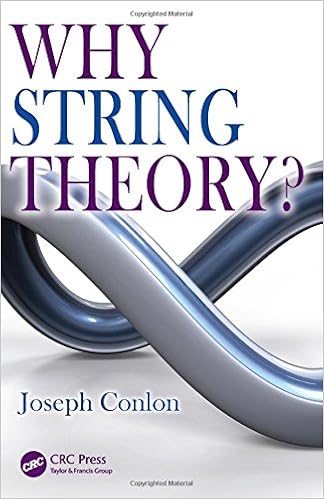
My other hero for today - Professor Joseph Conlon of Oxford University's Physics Department. I'm just completing his excellent book, "Why String Theory", which had me writing the following note-to-self at 1.45 am - in the dark - on a post-it next to my bed.


The answer by the way - it depends.

Prof. Conlon writes well and is ferociously bright (here's his CV).
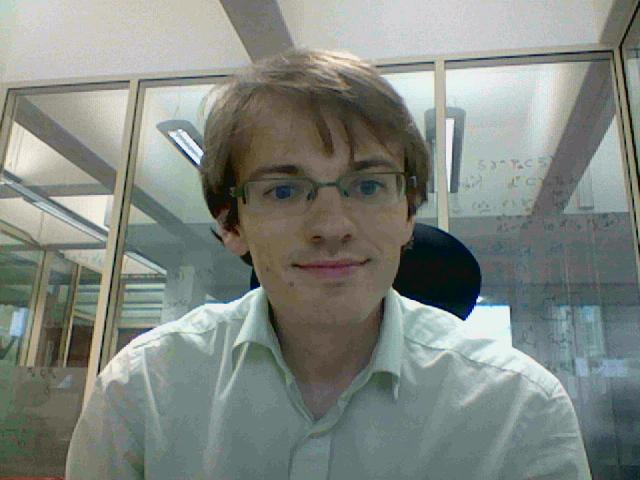
Professor Joe Conlon

I'm looking forwards to reviewing his excellent book (see my review here) but he is sadly mistaken if he thinks his work will inform after-dinner conversations amongst 'lay-people' up and down the land. He may have just a few equations, and those for presentational purposes, but insofar as his treatise is a model of conceptual clarity and sophistication (which it is), to that extent it is sadly inaccessible to anyone lacking a first degree in a STEM subject.

Yes, really.

Once again the truism applies: 'popular' science books are actually read by other scientists, curious outside their own fields.

Incidentally, if anyone from the BBC is reading this, Joe Conlon looks just the guy to explain the frontiers of science to suitably-prepared grown-ups on BBC4. Give him a screen test ... right now.

Wednesday, January 13, 2016

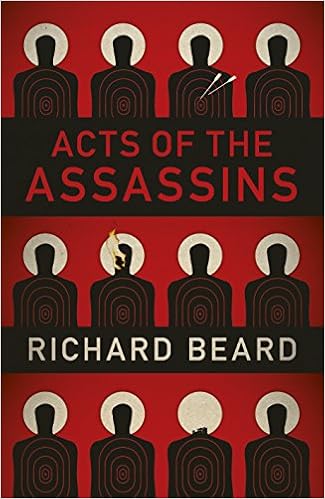
"Acts of the Assassins" by Richard Beard

 Amazon link

So here's an interesting idea. The death of Jesus as a police procedural, updated to a twenty first century Roman Empire. Reviewer Declan Burke writes:
"Gallio is a Speculator – investigator – with the Jerusalem division of the Complex Cases Unit (CCU), an elite department of the Roman military police. The missing body is that of local mystic rabble-rouser Jesus, who was executed by crucifixion only days before. Jesus’ corpse has since gone missing from its tomb, and Gallio – who was charged with overseeing the execution, as a punishment detail for cocking up his investigation into the apparently miraculous resurrection of Lazarus only a few weeks beforehand – can’t afford to allow another stain on his career record.

"A hard-headed veteran, Gallio refuses to believe the rumours being circulated by Jesus’ disciples. “What it can’t possibly be, and what he refuses to contemplate, is died, risen, coming again.” Having witnessed Jesus’ agonies and death on the cross with his own eyes, “Gallio bans all discussion of resurrection as a potential line of enquiry,” and sets out to interrogate the disciples to get at the truth of how they managed to pull off the magnificent trick of stealing Jesus’ body away from a sealed tomb. "
...
" ... the story takes place in a contemporary setting, complete with modern weaponry, travel and attitudes towards terrorism ... a perspective that allows the reader to experience ancient history unfolding in the here-and-now (the origin of the great fire that devastated Rome is referred to as ‘Ground Zero’; Jesus’ Second Coming is taken to mean a spectacular terrorist attack at the heart of the empire).

"It’s a thrilling inventive approach, albeit one leavened by Beard’s slyly absurdist sense of humour. “Whatever the destination is,” Gallio declares as he flies to Antioch from Jerusalem via Amsterdam, “there’s always a change at Schipol.”
Beard is an unusually inventive writer who can disorientate and confuse. The Guardian notes:
"In The Cartoonist, Beard used an artificial, Oulipo-type constraint to illustrate a real-life constraint on the imagination: he wrote an entire novel set in EuroDisney, submitted the text to a libel lawyer, then rewrote the novel from beginning to end, following the lawyer’s instructions to the letter to avoid the risk of defamation. Sometimes, the games that texts are instructed to play are in deadly seriousness."
In this book there are 'continuity errors' which seemed at first to be sub-editing mistakes. The disciples are interrogated by police amidst mausoleums depicting their grisly deaths as ancient history; one surveillance scene shifts inexplicably from the middle of the night to the following evening with no explanation; why would you fly from Antioch to Jerusalem via Schiphol?

I guess if I knew what postmodern was, it wouldn't be, but I do rather draw the line at 'quantum fiction' (Mr Beard, you know who you are).

The Guardian has a good, context-setting review here (the novel appears to have been ignored by the other broadsheets). It's a page-turner, an enhanced experience if you know your New Testament and Acts of the Apostles.

I'm not sure the tricksy stuff entirely does what what I assume the author is trying for - dreamy and disorientating? - but it doesn't derail, just means you have to reflect sometimes rather than just let the narrative sweep you along.

As in many SF stories and thrillers, the narrative tilts just slightly too much to plot vs. characterisation. The main protagonists: Gallia, Valeria, Claudia and Baruch, are real people - I would have liked to have known them a little better.

Monday, January 11, 2016

Desert Island MP3s

So they said, "Like, you're on this desert island and you've got your Nexus 6 but, like, there's no signal but you've got a solar charger and you can have 7 MP3 tracks of your choice and here are the rules ...

"One, nothing classical. Two, no blokes ... ."

'So no "Smoke on the Water", no "Waterloo Sunset", ...  no "Jeepster"?' I replied.

"It's gotta be all chicks."

---

1. Tracey Ullman sings "They Don't Know"


This is pure pop pleasure, dating back to 1983. Tracey Ullman never stops being the comedienne, subverting the song even as she delivers it superbly. I liked her "Move Over Darling" too.


2. The Cardigans sing "My Favourite Game"


A Swedish rock band, a  delectable Nina Persson in leather trousers - and a jaw-dropping video.


3. Shania Twain sings "Black Eyes, Blue Tears"


OK, Shania Twain may not be Miss Supercool but she so delivers. Her most popular may be "That Don't Impress Me Much" but my favourite is this one, delivered with real conviction.


4. Sheryl Crow sings "Abilene"


Best to start one minute in. So much good stuff to choose from with Ms Crow - this seems a bit more thoughtful than her usual "beer buzz in the morning" persona. Sheryl, I forgive you Lance Armstrong too.


5. Chrissie Hynde (The Pretenders) sings "Night in my Veins"


This is catchy and deceptive but so dark - you might want to pay attention to the lyrics.


6. KT Tunstall sings "Suddenly I See"


I was torn between "Other Side of the World", "Another Place to Fall" and this wonderful track.


7.  The Bangles sing "Eternal Flame"


What sort of feminist name is "The Bangles"? All is forgiven for Susanna Hoffs.

--

Find somewhere private, crank up the volume (or put on the headphones) and give yourself half an hour of pure pleasure.

---

De gustibus non est disputandum. Let me know your thoughts in the comments - and if you want the blokes' list ... .

David Bowie

If it can happen to David Bowie, I guess it can happen to any of us.


So much to choose from ...

Saturday, January 09, 2016

Home security: a failure to launch

D-Link home surveillance camera

Here's a surprise: in 2016 we'll be taking a few holidays.

The last time we had an extended break (France/Italy 2014) we left ample dry food for the cat and monitored his feeding habits remotely through the D-Link home security cameras I'd purchased.

The cat survived 14 days human deprivation but appeared to be psychologically-scarred. At the end of the holiday, as Clare entered the front door, it pawed at her feet emitting piteous screams of relief (or that was how it was interpreted).

As a consequence, Clare has engaged a young lady named Susie to pop around daily during our forthcoming absence to feed/mentor/soothe the animal; Susie met with us at home this afternoon.

I draw a different lesson as regards our prospective holidays. My thoughts rather tend to the optimal placement of security cameras so I can check the house (and possibly the pet) during our absence. This morning, I brought one of the cameras into the living room, thinking to attach it to the router next to the TV. Sadly, after a few minutes, Clare caught sight of the wiring.

"What's all this?" she exclaimed, the frown of suspicion on her face.

Difficult to explain one's security deployment concepts when the demerits of surveillance of the cat-visitor are rather forcefully being brought to one's attention. Our little discussion - rather one way in truth - was brought to an end by Clare confiscating and then hiding the offending camera, power supply and ethernet cable.

I got it back this afternoon by grovelling, but apparently European human rights best practice will be applied in future: no surveillance!

---

Technical note: the cameras I have do not record. They provide live streaming when I open the smartphone app ... .

Yeah, like that would work!

Friday, January 08, 2016

"Superintelligence" by Nick Bostrom: a terrible book

Derivative, dreary, uninspiring and not very original

As promised a few days back, I have now force-marched my way through this tedious book, admittedly skimming the last few chapters. There has been a fair amount of hype about the alleged dangers of future-AI. I could never see it myself, but thought it fair to give the proponents of these scare-stories their best shot .. which seems to be Nick Bostrom.

Alas, Professor Bostrom from Oxford University says nothing in this book which hasn't been dealt with more profoundly in a dozen science-fiction stories. I learned literally nothing whatsoever of value. The book is so badly written - endless lists of not-very-insightful conceptual categories & pointlessly over-abstract language - that my eyes glazed over at the prospects of writing a detailed review. Thankfully, someone else with a PhD in artificial intelligence has done the job over at Amazon and I can quote their thoughts verbatim in this vitriolically-amusing review.
"As someone who holds a PhD in AI, I was super-excited to get Nick Bostrom's book "Superintelligence". Finally, mainstream discussions on a topic I care about from a highly ranked academic institution, with a cool looking owl to boot. Yea, owls! Fantastic, right? Wrong. After the first few chapters I had to force myself to finish it; it's miserable.

"This book is a 260 page tribute to Eliezer Yudkowsky that does not appreciate concepts at all in the entire field of constraints nor does it take into account common sense or any practical basis in AI. At best, this is a grammatically well-written sensationalist book designed to inspire irrational fear of a fictional form of AI, but more likely it is but one of many examples of the distilled essence of naivety of people writing on a topic they know nothing about.

"At one point Nick quotes an idea postulated by Eliezer as a practical / credible scenario in the rise of malevolent AI. Eliezer suggests an advanced AI could reassemble a biomimetic computing device using a naive human and a stereo speaker to force certain chemical reactions to create a 'nanosystem' threat inside a glass beaker (p. 98). Oh, but first it needs to 'crack the protein folding problem'. Never mind that problem has been shown to be at least np-hard, and possibly np-complete - a clear demonstration of a lack of understanding of the protein folding problem in the first place, but the notion of basic physics to assemble nano-particles using a liquid substrate through non-uniformed shaped vessel made of glass seems "far-fetched", to put it mildly. I've read more plausible science fiction.

"At one point Nick states that by adding more money, growth in computational capabilities increase linearly. I guess he's never heard of order of operation -- sometimes referred to associativity. You see, we have things like division and subtraction that take precedence in computer science. (Most people are introduced to these concepts before 5th year maths, folks.) This means we cannot just pass along as many computations as we'd like evenly across a giant grid of processors as Nick seems to assume.

"This book is riddled with purple prose and denotatively 'weird' use of terms -- such as "recalcitrance". Ever been next to that person at the party who uses unnecessarily large words when a simplistic explanation will do? You'll get a lot of that sensation in this. You'll also see the occasional spelling error, which is nice -- like at the bottom of page 56, amongst others.

"In addition the citations are dubious at best - e.g 'world robotics 2011'. Was there some big consensus at a conference regarding all of one topic in AI? That'd be a first in history I'm pretty sure for any conference on any topic; I guess I missed one hell of a conference.

"The head of one of Oxford's philosophy departments might be an intelligent person but he's absolutely unqualified to speak on any topic in practical AI - by his own demonstration. I can honestly say that purchasing this book was literally the worst money I've ever spent - and I've bought an Oasis album.

"There is one redeeming quality of this book: The survey of scientists in AI-related fields who believe SGI might become a reality that describes when, at a 50% threshold, that might occur (p. 19), and the general description of the 'types' of SGI and the mediums in which those have been thought to occur in (Chapter 2) -- e.g. whole brain emulation versus evolutionary models, etc, but these come with serious errors in assumptions. Basically, if you had a PhD student and this was their thesis, it'd be s*** except for the second chapter of their work.

"TL;DR: If you want to be told that AIs will take over space and destroy humanity using a stereo speaker then this is the book for you. If you like reason and don't want to waste £20, then may I suggest something of equivalent intelligence such as Where's Wally, or maybe a nice collection of toilet roll? At least the latter would be fit for a higher use. Oxford should be ashamed to have given this guy his own department, but proud he's free of any teaching responsibilities. Who knows how much damage he'd do to graduates."
I like to think that if this were my review, I would have been just a tad politer.

The topic (and indeed danger) of 'superintelligence' is not stupid per se. Evolution tells the story of species being wiped out by changes in their niches or by invaders who can exploit their niche more effectively. Nothing says that humans can't design agents which will out-compete us, even if bio-hacked viruses seem more of a risk than super-AIs.

Nevertheless we will no doubt design at some point very competent competitors. That competence is not reducible to 'superintelligence' however, which properly only refers to a general competence and efficiency of concept management (see here).

The road to systems with the overall competence to take us all out is so complex and multifaceted that the idea that some hacker with a PC is going to come up with the killer algorithm in their bedroom, or that it could all happen over the weekend, is completely fanciful. Might as well write a book about the dangers of black magic.

Thursday, January 07, 2016

Sherlock at Tyntesfield, criminals at the Probate Registry

Today we visited Tyntesfield to explore the Sherlock trail. This National Trust property was used to film scenes for the Sherlock Christmas Special, "The Abominable Bride".

And you could dress up.


Clare considers the clues (look to your left!)

Your author cogitates - to no avail
With a brisk, cold wind from the north, we skipped clues 3-7 and failed to solve the puzzle (to be fair, by that stage we had forgotten what the mystery was). We did not collect a prize.

---

Earlier we had driven to the Bristol Probate Registry near Bristol Bridge. The Probate Registry was not where the satnav had said it was, and when we eventually found it (thanks, Google Maps!) there was no parking. I abandoned the car to Clare, who set off (in central Bristol) to find somewhere to park, while I entered the building, or tried to.

Thinks: 'Why won't this door open?'

A few minutes pass while I try to figure it out.

Passer-by: "That's the exit, try the door to your left."

Having negotiated the policeman searching belongings and the security scanner, I entered the vestibule and found a deserted Probate Office window. I used the phone provided to call down an official, a pleasant and brisk young man who quickly took me through the script. Five minutes later I had affirmed my Oath, signed where necessary and left the building.

Outside on the Plaza ("No skateboarding: the full force of the law will be brought to bear.") I waited for Clare in the chill northerly wind. I was soon joined by a muscular young man in tee-shirt and cords, leather boots and tattoos who was taking a fag break. He glanced-without-glancing at me, a casual superiority already classifying me as prey. Skin prickling, I moved out of his way and inspected the board by the door. Probate was the least of the Justice functions housed in the building - most prominent were the large number of Courts.

Right.

Clare arrived in the car after a further few minutes. How pleased I was that she had failed to find a parking space. We departed forthwith for Tyntesfield.

Wednesday, January 06, 2016

For once, the yeuk factor is real


From the MIT Technology Review today.
" ...  MIT Technology Review estimates that about 20 pregnancies of pig-human or sheep-human chimeras have been established during the last 12 months in the U.S."
So how does that work?
"By modifying genes, scientists can now easily change the DNA in pig or sheep embryos so that they are genetically incapable of forming a specific tissue. Then, by adding stem cells from a person, they hope the human cells will take over the job of forming the missing organ, which could then be harvested from the animal for use in a transplant operation.

“We can make an animal without a heart. We have engineered pigs that lack skeletal muscles and blood vessels,” says Daniel Garry, a cardiologist who leads a chimera project at the University of Minnesota. While such pigs aren’t viable, they can develop properly if a few cells are added from a normal pig embryo. Garry says he’s already melded two pigs in this way and recently won a $1.4 million grant from the U.S. Army, which funds some biomedical research, to try to grow human hearts in swine."
OK, there's a yeuk factor there, but surely if the objectives are good .. ?
"The worry is that the animals might turn out to be a little too human for comfort, say ending up with human reproductive cells, patches of people hair, or just higher intelligence. “We are not near the island of Dr. Moreau, but science moves fast,” NIH ethicist David Resnik said during the agency’s November meeting. “The specter of an intelligent mouse stuck in a laboratory somewhere screaming ‘I want to get out’ would be very troubling to people.”
Oh yes, the screaming mouse.
"... Desperately ill people on organ waiting lists might someday order a chimera and wait less than a year for their own custom organ to be ready. “I really don’t see much risk to society,” he says.

"Before that can happen, scientists will have to prove that human cells can really multiply and contribute effectively to the bodies of farm animals. That could be challenging since, unlike rats and mice, which are fairly close genetically, humans and pigs last shared an ancestor nearly 90 million years ago.

"To find out, researchers in 2014 decided to begin impregnating farm animals with human-animal embryos, says Pablo Ross, a veterinarian and developmental biologist at the University of California, Davis, where some of the animals are being housed. Ross says at Davis he has transferred about six sets of pig-human embryos into sows in collaboration with the Salk Institute and established another eight or 10 pregnancies of sheep-human embryos with Nakauchi. Another three dozen pig transfers have taken place outside the U.S., he says.

"These early efforts aren’t yet to make organs, says Ross, but more “to determine the ideal conditions for generating human-animal chimeras.” The studies at Davis began only after a review by three different ethics committees, and even then, he says, the university decided to be cautious and limit the time the animals would be allowed to develop to just 28 days (a pig is born in 114 days).

"By then, the embryonic pig is only half an inch long, though that’s developed enough to check if human cells are contributing to its rudimentary organs.

“We don’t want to grow them to stages we don’t need to, since that would be more controversial,” says Ross. “My view is that the contribution of human cells is going to be minimal, maybe 3 percent, maybe 5 percent. But what if they contributed to 100 percent of the brain? What if the embryo that develops is mostly human? It’s something that we don’t expect, but no one has done this experiment, so we can’t rule it out.”
So run that past me again ...
 “My view is that the contribution of human cells is going to be minimal, maybe 3 percent, maybe 5 percent. But what if they contributed to 100 percent of the brain? What if the embryo that develops is mostly human? It’s something that we don’t expect, but no one has done this experiment, so we can’t rule it out.”
If a pig-embryo can have its kidney developmental genes knocked out, so growing kidneys constructed from stem cells from a specific person - so that less than a year later there's a non-rejectable transplant available. Well,  it's going to happen.

My question: are we happy to eat the bacon sandwich made from the rest of the pig?

Tuesday, January 05, 2016

Funding the Police

My Speed Awareness course has now been booked for the afternoon of Thursday, February 4th 2016. So that's £80 for a four hour course, paid upfront. We've been warned that if anyone is abusive or non-cooperative, they will be thrown out and will incur the full force of the Force's displeasure: naturally I have no thought but to be fully-engaged and completely docile.

--

Books I'm about to read.

Is Nick Bostrom really the smartest man in Britain?

Good reviews from people who know about this stuff

Hard to tear myself away from Patrick Lee's Travis Chase trilogy though. Who knew books could be this exciting, this page-turning?

Alex and Adrian departed to resume their quotidian lives on Sunday. On Monday all the Christmas decorations were packed away, candle wax removed from the carpet and the house comprehensively vacuumed. It's now sparse, uncluttered and clean while the mountains of laundry have been reduced to mere foothills.

As 2016 gets underway, I have residual probate duties as executor of my mother's Will. The Probate Registry cashed my cheque this morning so I know they're now on the case. Beyond that, no major issues currently loom in the middle distance. I rather like a lack of drama in the personal - the better to engage with the extra-ordinary in the world.

Monday, January 04, 2016

Art

In the great traditions of Clare's Galleria we bring you .. art!

The Male Patriarchy. punching down onto the Oppressed

The Wax Horse

---

Sometimes we get visitors here from the United States. No-one could be more opposed to stereotype threat than myself, but it has to be said that Americans sometimes don't 'get' British humour. So let me clarify.

  • The top picture, sketched by myself on my Nexus 10, is utterly without merit.

  • A child could do better.

  • The Wax Horse demonstrates my wife's extraordinary skill in 'remote art'. In a typical moment of casual inattention, the pink candle on the hearth went into malfunction spilling hot wax across the tiles (and indeed, onto the carpet where it currently remains). The shape, solidified, seems indeed to resemble an equine quadruped.

To be fair, Clare has more success when she is actually in the control loop .. .

---

Did any of that change your view on the quality of the art portrayed above?